Rodent Bait Stations:Safe Use AroundKids and Pets
Rodent bait stations — a rodent bait station is safe around kids and pets only when it is a locked, tamper-resistant enclosure that secures the bait block...
Rodent bait stations are only safe around kids and pets when they are locked, tamper-resistant enclosures that secure the bait block inside, anchored in place, and positioned where children and animals cannot reach the poison. Across Australia, from slab-on-ground homes in Perth to high-set Queenslanders in Brisbane, rodents are a year-round problem — and the way you control them matters just as much as whether you control them. Loose bait pellets in a cupboard remain the single biggest cause of accidental pet poisoning in domestic settings, and a proper rodent bait station removes that risk almost entirely.
This guide covers everything Australian households need to know: what a genuine tamper-resistant station actually is, how anticoagulant choices affect your pets, where to place stations in different housing styles, realistic 2025–26 pricing, and when you should skip bait altogether in favour of trapping. If you already suspect activity, our full checklist of signs of rats or mice in your home is a good companion read.
- A rodent bait station is safe around kids and pets only if it is a locked, tamper-resistant unit with the bait block secured on an internal rod — open trays and loose pellets are not safe options.
- Second-generation anticoagulants (brodifacoum, bromadiolone) persist in the body and pose a secondary poisoning risk; the APVMA has moved to restrict some to professional use.
- Placement does most of the safety work: stations belong flush against walls, behind appliances, or in the roof void — anchored and logged.
- Homes with toddlers, scavenging dogs or nearby native wildlife are often better served by snap traps inside lockable boxes.
- Professional rodent baiting programs in Australia typically cost $250–$600 for an initial treatment, with follow-ups included or discounted.
Why rodent bait stations matter in Australian homes
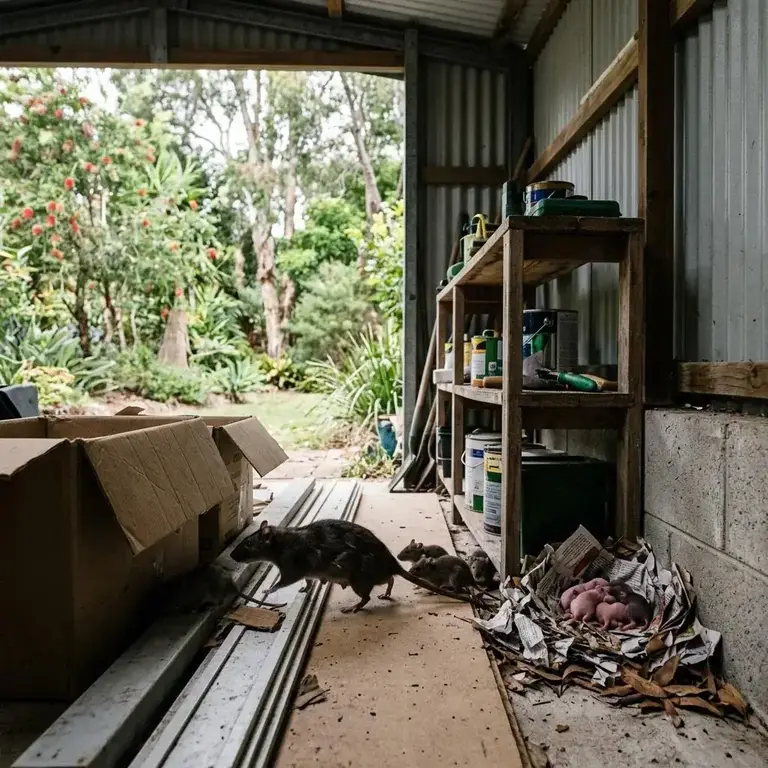
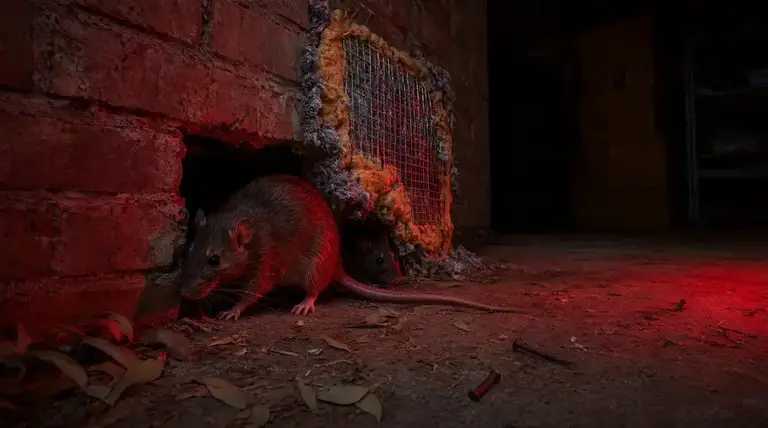
Rodents are one of the most common pest control call-outs in Australia, and our housing styles give them plenty of ways in — which means any baiting program has to be designed around how and where people, kids and pets actually live. Roof rats thrive in the roof voids of tile and tin roofs, while house mice exploit the weep holes and gaps common in brick veneer construction.
Climate plays a big role. In southern states, rats and mice push indoors as autumn temperatures drop, nesting in wall cavities and subfloors. In Queensland and northern NSW, activity stays high year-round, and raised Queenslanders create sheltered subfloor spaces that rodents love — and that curious dogs and toddlers can sometimes access. Older homes on stumps with accessible subfloors, and even modern slab homes with garden beds against the walls, all create rodent runways. Species matter too: roof rats in Australia behave differently to ground-dwelling Norway rats, and bait placement has to match the species. That’s why a one-size-fits-all approach from the hardware store so often fails — or worse, creates a poisoning risk without solving the infestation.
Warning signs of rodents in your home
The clearest signs of a rodent problem are droppings, gnaw marks and night-time noises, and you should act before the population breeds up. Use this checklist to confirm activity before deciding on a baiting or trapping program.
- Droppings — small, dark, rice-sized pellets along walls, in cupboards, or under the sink; rat droppings are larger and capsule-shaped.
- Gnaw marks — on timber architraves, food packaging, electrical cabling and plastic pipes, often with fresh pale wood visible.
- Scratching and scurrying sounds — most often in the ceiling or wall cavities at night, a classic sign of roof rat activity.
- Grease rub marks — dark smears along skirting boards and entry points where oily fur repeatedly brushes past.
- Nesting material — shredded paper, insulation or fabric gathered in hidden spots like behind the fridge or in the roof void.
- Pet behaviour changes — dogs or cats fixating on a wall, appliance or cupboard can indicate movement you can’t hear.
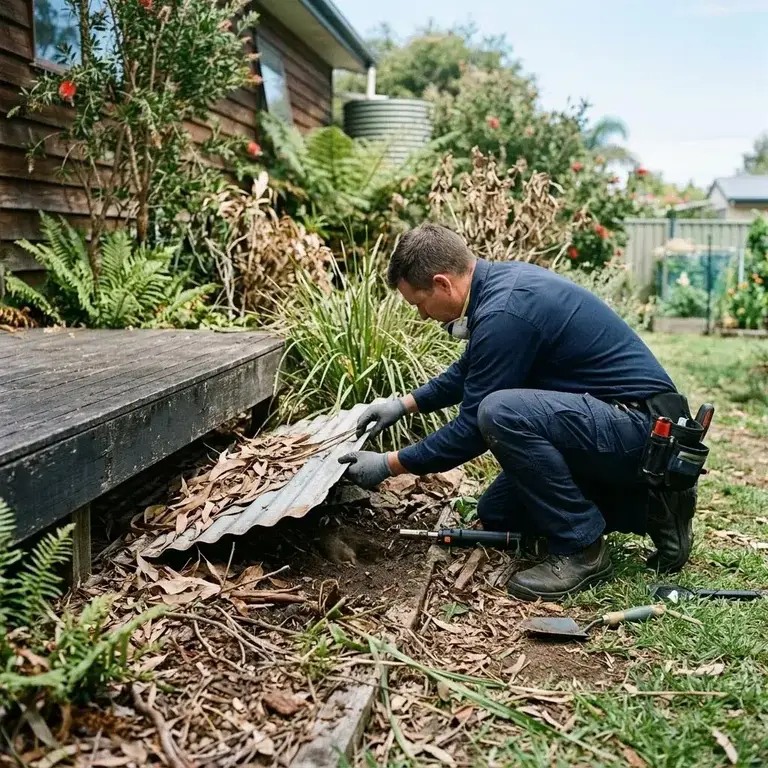
- Burrows and tracks — holes near garden beds, compost bins or under sheds, and dusty tail or footprint trails along runways.
If several of these signs are present, read our signs of rats or mice checklist for confirmation, then move quickly — a pair of mice can produce dozens of offspring in a single season.
What a tamper-resistant rodent bait station actually is
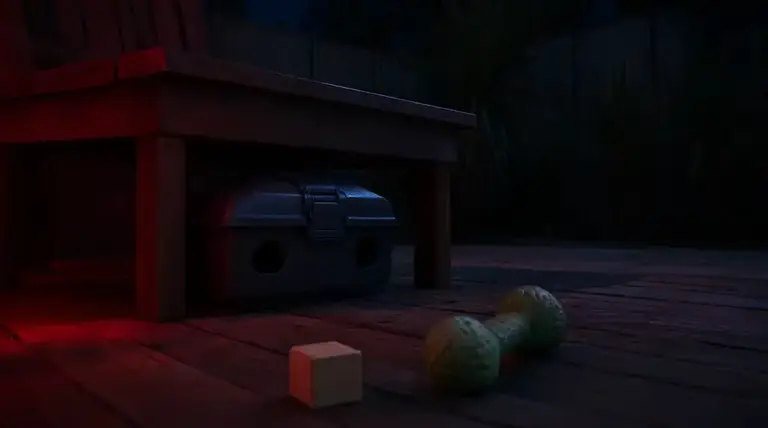
A genuine tamper-resistant rodent bait station is a lockable enclosure with internal baffles that force the rodent to enter and feed inside, a keyed lid, and a fixing point so the unit can be screwed or weighted down. The bait block sits on an internal rod so it cannot be dragged out into the open.
Not every plastic box qualifies. Cheap open trays sold as “bait stations” offer none of this protection — a determined dog can tip them, and a toddler can pick up loose bait from them. When buying, look for a key-lock mechanism, internal baffle walls, bait-securing rods and a mounting point. A station that can be picked up and shaken open is not a station; it’s a hazard with a lid.
Why the anticoagulant matters
Most retail rodent baits contain second-generation anticoagulants such as brodifacoum or bromadiolone. These are potent, persist in the body for weeks, and pose a secondary poisoning risk if a pet eats a dying or dead rodent. The APVMA has moved to restrict some second-generation anticoagulants to professional use because of this wildlife and pet risk, so the strongest product on the supermarket shelf is not necessarily the safest option for your household.
First-generation actives such as warfarin and coumatetralyl break down faster in the body and carry a lower secondary-poisoning risk. This is one reason a licensed technician will often select the active ingredient to suit your household — the presence of dogs, native wildlife or owls on the property all influence the choice — rather than simply reaching for the strongest option.
Watch for signs of poisoning
Watch for lethargy, weakness, pale gums, bruising, nosebleeds, coughing or vomiting blood, black tarry stools, or unexplained bleeding; signs may appear two to five days after swallowing anticoagulant bait. If ingestion is suspected, contact your vet or Animal Poisons Helpline immediately and bring the packaging.
DIY vs professional rodent baiting
DIY bait stations can work for a minor, early-stage mouse problem if you buy genuine tamper-resistant units and follow placement rules strictly. For established infestations, roof void activity, or any home with kids and pets, a licensed pest control technician is the safer and usually faster option — they choose the active ingredient to suit your household, anchor and log every station, and retrieve all bait at the end of the program so nothing is left behind.
| Method | Kid/pet safety | Effectiveness |
|---|---|---|
| Locked tamper-resistant station | High | High when placed on runways |
| Open bait tray | Low | Moderate, but unsafe |
| Loose pellets | Very low — avoid | Unpredictable |
| Snap traps in covered boxes | Moderate to high | High for small infestations |
| Professional baiting program | High — logged and retrieved | Highest, with follow-up visits |
Professionals also bring exclusion knowledge — baiting without sealing entry points is a revolving door. Our rodent proofing and exclusion service addresses how they’re getting in, while our guide to how professionals actually eliminate rats explains the full process step by step.
Placement rules for family homes
Correct placement does most of the safety work, because rodents travel along walls and edges rather than across open floor space. Stations belong in those runways, never in the middle of a room.
- Flush against walls — place stations along skirting boards, behind appliances, or in the roof void where activity is confirmed.
- Anchor every station — screw it down or weight it so a child or dog cannot pick it up or tip it over.
- Never use loose bait — no pellets in accessible cupboards, under sinks, or scattered in the yard.
- Log every location — record each station on a simple map so none are forgotten and left in the home.
- Out of reach first — roof voids, locked subfloor hatches and behind fixed appliances are preferred over any floor-level position in a home with toddlers.
How much does rodent baiting cost in Australia?
Across the Australian pest control industry, professional rodent baiting typically costs between $250 and $600 for an initial treatment in 2025–26, depending on property size, species, and the number of stations required. Follow-up visits are often included or offered at a reduced rate. These are general market rates — here’s what the industry typically charges for each service:
| Service | Typical market rate (AUD) | What’s included/notes |
|---|---|---|
| Inspection and assessment | $0–$150 | Species identification, entry points, treatment plan; often free with treatment booking |
| Standard baiting program (house) | $250–$450 | 4–8 tamper-resistant stations, placement, logging, one follow-up visit |
| Large/severe infestation | $450–$600+ | Roof void and subfloor treatment, multiple follow-ups, carcass retrieval |
| Trapping-only program | $200–$400 | Covered snap traps, daily or scheduled checks, removal of carcasses |
| Rodent proofing/exclusion | $300–$900 | Sealing entry points, mesh over weep holes and vents, door seals |
Market rates vary by city and access — a two-storey Queenslander with roof void and subfloor work costs more to treat than a single-storey slab home. Always confirm whether follow-up visits and station retrieval are included before booking with any provider.
It’s worth noting that Aussie Pest Strike typically comes in well under these general market rates, without cutting corners on treatment quality. For an exact quote tailored to your property, give us a call on [aps_phone] today.
Seasonal rodent activity across Australia
Rodent pressure in most of Australia peaks from late summer through winter, when food outdoors becomes scarce and rats and mice push into warm roof voids and wall cavities. Activity dips slightly in late spring as breeding populations disperse outdoors, but in tropical northern regions activity stays high all year.
Jan
Feb
Mar
Apr
May
Jun
Jul
Aug
Sep
Oct
Nov
Dec
Indicative indoor rodent activity pattern for temperate southern Australia. Call-outs climb sharply from March as rodents move indoors ahead of winter, peaking May–July. Northern Australia sees flatter, year-round activity with wet-season spikes.
The practical takeaway: late summer and early autumn is the best time to install stations and seal entry points, before populations establish inside. Waiting until July usually means treating a breeding infestation rather than preventing one.
When to skip bait entirely
In homes with toddlers, dogs that scavenge, or native wildlife nearby, trapping inside covered boxes is often the better choice. Snap traps set within a lockable trap box deliver a fast, poison-free kill and let you remove the dead rodent immediately, rather than leaving it to die and rot inside a wall cavity — a common source of lingering odour and blowfly problems.
Trapping is also the right call where dead-rodent access is impossible, such as baiting above a sealed cathedral ceiling. For families weighing chemical concerns, our guide to keeping pest control safe for pets and children covers the wider picture. Professionals also carry the emergency contact for the Animal Poisons Helpline in case of accidental ingestion, and will log and later retrieve every station so no bait is ever abandoned in the home.
“Nine times out of ten, the dangerous setup we find isn’t the rats — it’s the bloke’s bag of loose pellets tipped behind the hot water system. A locked station, anchored on a runway with the right active for that household, does the job without putting the family dog at risk. And if I can’t retrieve every block of bait at the end of the job, I don’t put it down.”
If you have young children, pets or native wildlife on the property, book a professional assessment before buying any bait. A licensed technician will choose between secured baiting and covered trapping based on your household, anchor and log every station, and remove all bait once the job is done. Pair treatment with exclusion work or the rodents will simply return next autumn.
Frequently Asked Questions
What makes a rodent bait station genuinely safe around kids and pets?
A genuine tamper-resistant bait station is a lockable enclosure with internal baffles that force the rodent to feed inside, a keyed lid, and a fixing point so it can be screwed down or weighted. The bait block sits on an internal rod so it cannot be dragged out. Cheap open trays sold as bait stations offer none of this protection and should be avoided in homes with children or pets.
Why are loose bait pellets considered the biggest poisoning risk for pets?
Loose pellets left in cupboards, under sinks or scattered in the yard can be found and eaten directly by dogs, cats or toddlers. They are the single biggest cause of accidental pet poisoning in domestic settings. A locked, tamper-resistant station with the bait block secured on an internal rod removes this risk almost entirely because the poison cannot be accessed or carried away.
Which rodent bait active ingredients are safer for households with pets?
First-generation anticoagulants such as warfarin and coumatetralyl break down faster in the body and carry a lower secondary-poisoning risk than second-generation actives like brodifacoum and bromadiolone, which persist for weeks and can poison pets that eat dying or dead rodents. The APVMA has moved to restrict some second-generation anticoagulants to professional use, so the strongest retail product is not necessarily the safest choice.
What are the signs of anticoagulant bait poisoning in a pet?
Watch for lethargy, weakness, pale gums, bruising, nosebleeds, coughing or vomiting blood, black tarry stools, or unexplained bleeding. Signs may appear two to five days after swallowing anticoagulant bait. If you suspect ingestion, contact your vet or the Animal Poisons Helpline immediately and take the product packaging with you so the active ingredient can be identified.
Where should bait stations be placed in a family home?
Place stations flush against walls along skirting boards, behind appliances, or in the roof void where activity is confirmed, because rodents travel along edges rather than across open floor space. Anchor every station so it cannot be picked up or tipped over, prefer roof voids and locked subfloor hatches over floor-level positions when toddlers are present, and log each location on a simple map.
When is trapping a better option than baiting?
Homes with toddlers, scavenging dogs or nearby native wildlife are often better served by snap traps inside lockable boxes, which avoid poison entirely while still delivering high effectiveness for small infestations. Trapping also suits minor, early-stage mouse problems. For established infestations or roof void activity, a licensed technician can advise whether baiting, trapping or a combination is appropriate for your household.
How much does professional rodent baiting typically cost in Australia?
Professional rodent baiting costs vary with property size, the pest species involved and how many tamper-resistant stations are needed. A typical house program includes several stations, professional placement, activity logging and a follow-up visit to check bait levels and rodent movement. Larger properties or heavier infestations generally require more stations and additional visits, which increases the overall cost. Requesting a written quote that outlines station numbers and follow-up visits helps you compare providers.
How do I tell if I have a rodent problem before setting bait stations?
Look for droppings along walls, in cupboards or under the sink; gnaw marks on timber, packaging or cabling; scratching sounds in the ceiling at night; dark grease rub marks along skirting boards; shredded nesting material; burrows near garden beds or sheds; and dogs or cats fixating on walls or appliances. Several signs together confirm activity, and you should act quickly before the population breeds up.
What should I discuss with an Aussie Pest Strike technician about bait station safety?
Ask which active ingredient they plan to use and why it suits your household, especially if you have dogs, cats or native wildlife nearby. Discuss where stations will be anchored and logged, how they will be kept out of reach of children and pets, whether snap traps inside lockable boxes might suit your situation better, and how all bait will be retrieved at the end of the program.
What practical next step should I take after reading about rodent bait station safety?
Start by confirming activity using the signs checklist — droppings, gnaw marks, night-time noises and grease rub marks — then decide between DIY tamper-resistant stations placed strictly against walls and anchored, or engaging Aussie Pest Strike for a professional program. Either way, pair any baiting with exclusion work such as sealing entry points, because baiting alone without proofing leaves your home open to reinfestation.
Sources & further reading
Found Something
Dangerous?
Don’t touch it. Don’t spray it. Keep kids and pets clear, take a photo from a safe distance, and call us — or book a free inspection and we’ll come to you.
02 7235 0050