Are Bird FeedersAttracting Ratsto Your Yard?
Are bird feeders — Bird feeders attracting — Bird feeders rats — Myth: bird feeders only feed birds. Fact: bird feeders are one of the most common causes of...
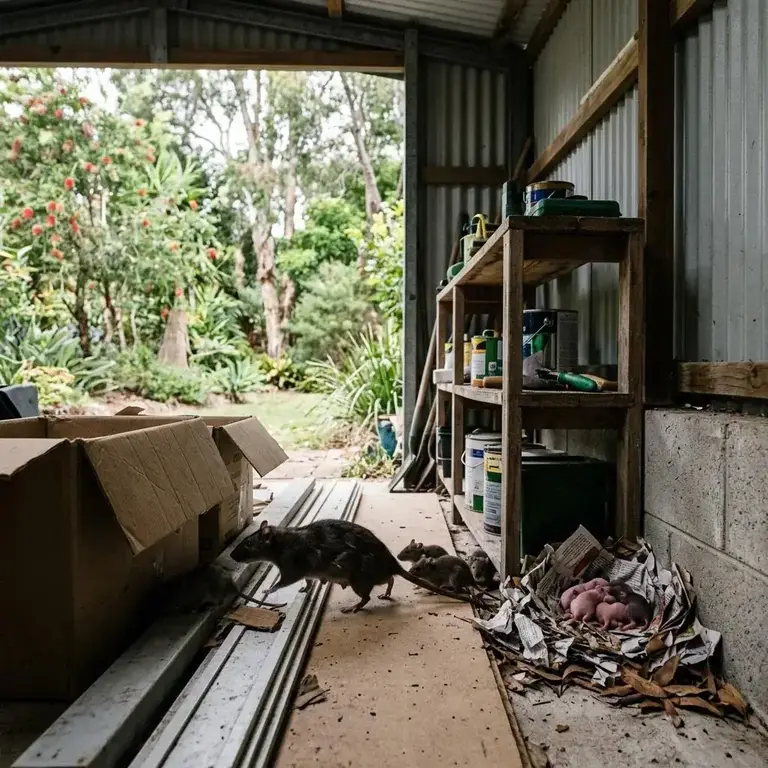
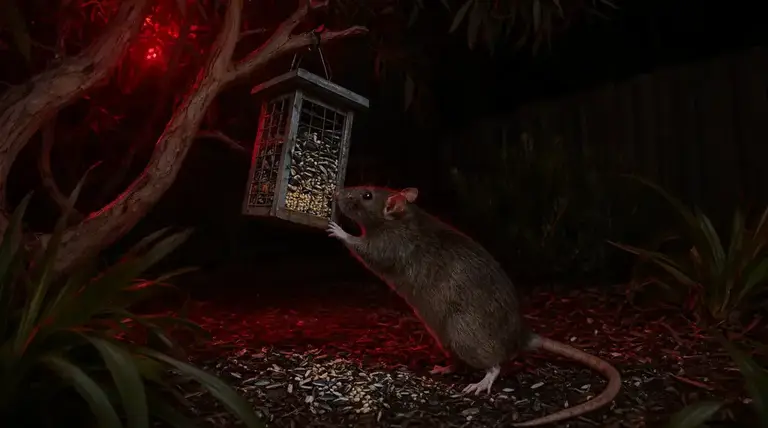
When homeowners type “bird feeders rats” into a search bar, they’ve usually already seen the signs: droppings near the pole, seed husks scattered at dawn, scratching above the ceiling. In most Australian backyards, spilled seed is a nightly buffet that draws roof rats and Norway rats, then keeps them close until the roof void starts looking like home.
The myth is that bird feeders only feed birds. The fact is that a single unguarded feeder can sustain a small rat colony indefinitely, and once that colony is established the short trip from garden to ceiling is how a backyard nuisance becomes a full-blown infestation. Here is how to spot the problem early, what you can do yourself, and when to call in a licensed pest control technician.
- Birds drop 10–20 per cent of seed onto the ground, where rats forage overnight — the feeder is almost always connected to the rat problem.
- Height is no barrier: roof rats climb poles, fences and downpipes, and can jump around a metre vertically.
- Catch trays, pole baffles and bringing feeders in at dusk cut rat risk dramatically without giving up your birds.
- Removing the food source alone rarely clears an established colony — trapping, baiting and proofing are usually needed too.
- Professional Rodent Control & Removal in Australia typically costs $250–$600 for an initial treatment.
Why bird feeders rats are such a problem across Australia
Australian conditions are close to perfect for feeder-driven rat activity: mild winters, long outdoor feeding seasons, and housing styles that give rodents easy routes inside. Two species do most of the damage — the roof rat (Rattus rattus), a superb climber that dominates in most suburbs, and the Norway rat (Rattus norvegicus), which prefers ground-level burrows near sheds, compost heaps and garden beds.
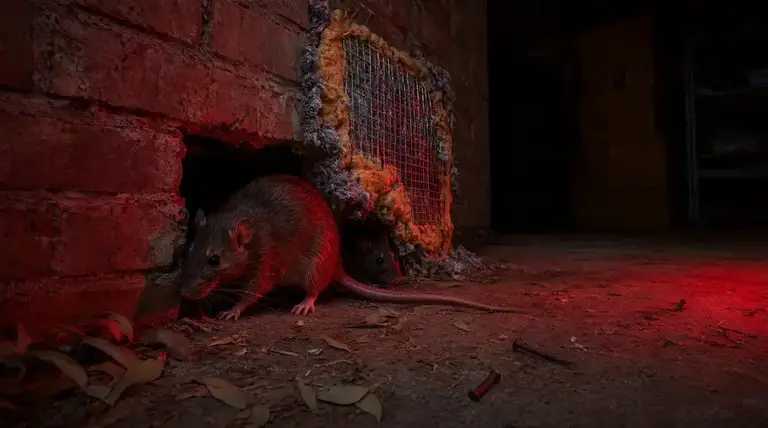
Housing type matters. Older homes on stumps or with raised subfloors — classic Queenslanders and weatherboard cottages — offer ready-made harbourage directly under the floor. Brick veneer homes on slabs keep rats out of the subfloor but still lose them through weep holes, roof gaps and garage doors. In warmer states, feeder-related activity runs almost year-round; in the southern states it peaks through autumn as cooling nights push rats from the garden towards the warmth of roof voids and wall cavities. If you suspect the yard problem has already moved indoors, check the Signs of Rats or Mice in Your Home: The Full Checklist before it gets worse.
Warning signs i look for around a bird feeder
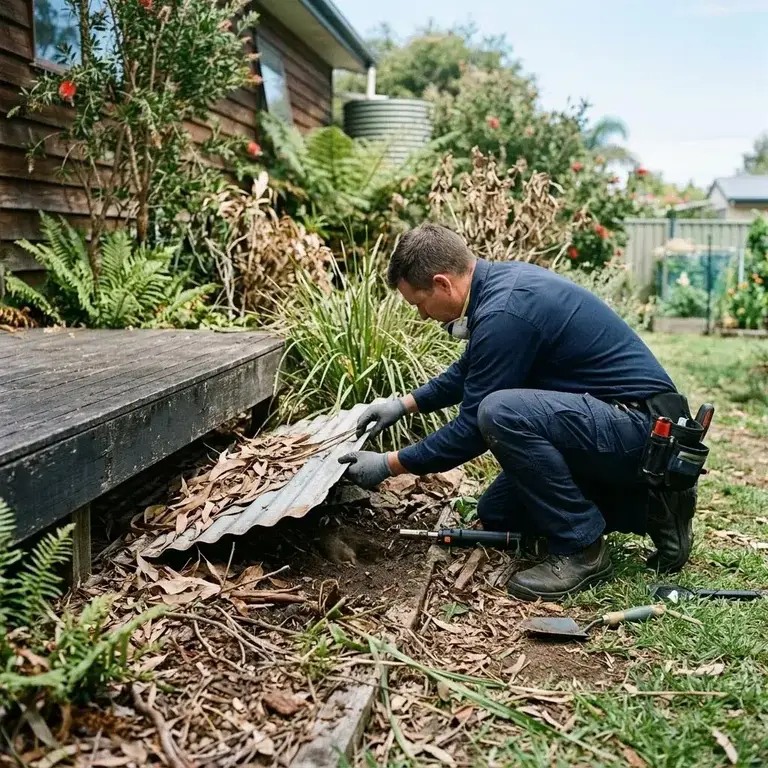
The clearest warning sign is rat activity near the feeder at dawn or dusk, but a proper inspection tells the story even when you never see an animal. Work through this checklist around the feeder, the fence line and the house:
- Droppings beneath the feeder or along fence tops — dark, spindle-shaped, 12–18mm long, often concentrated near the food source.
- Burrow holes in garden beds — 50–100mm openings near compost, sheds or dense ground cover, typical of Norway rats.
- Gnaw marks on the feeder, pole or seed storage — parallel grooves in plastic trays, chewed bags, damaged timber.
- Greasy rub marks along walls and fences — dark smears where fur repeatedly brushes a regular run.
- Spilled seed disappearing overnight — if the ground is suspiciously clean by morning, something is harvesting it after dark.
- Noises in the ceiling at night — scratching and scurrying after dusk suggests the colony has moved from yard to roof. Read up on Roof Rats in Australia: Behaviour, Risks and Control if this sounds familiar.
DIY feeder management vs professional pest control
You do not have to remove the feeder entirely — sensible feeder hygiene breaks the rodent attraction while keeping the birds happy, and it is the right first step for most households. DIY works when the problem is fresh and confined to the garden; once rats are established or have reached the house, professional treatment is the faster, more reliable option.
| Feeding practice | Rat risk | Notes |
|---|---|---|
| Open feeder, seed left out overnight | High | The single most common backyard attractant |
| Feeder with catch tray, emptied daily | Moderate | Good improvement; still sweep the ground |
| Feeder brought in at dusk | Low | Removes the nightly food source entirely |
| Ground feeding scraps for doves or quail | Very high | Avoid completely if rats are present |
Combine that with the right hardware: weight-activated feeders that close the seed ports under anything heavier than a small bird, metal-ported tube feeders that resist gnawing, and a wide smooth pole baffle — the practical fix for bird feeders rats love to raid. Store seed in a sealed metal container, never an open bag in the shed. And if rats have already made themselves at home, our guide on Rat Control: How Professionals Actually Eliminate Rats explains what proper treatment involves, including why licensed technicians are the right choice for any chemical baiting program registered with the APVMA.
What does feeder-related rat control cost in Australia?
Across the Australian pest control industry in 2025–26, typical market rates range from around $200 for a basic inspection and advice visit through to $1,500 or more for a severe infestation needing multiple treatments and full-proofing. What the industry generally charges varies with property size, construction type and how far the colony has spread.
The table below shows the typical Australian market rates — what pest control companies across the country generally charge for these services:
| Service | Typical cost (AUD) | What’s included/notes |
|---|---|---|
| Inspection and assessment | $0–$200 | Industry-wide, often free with treatment; identifies harbourage and entry points |
| Standard rodent treatment | $250–$600 | Trapping and/or tamper-proof bait stations, one follow-up visit — the going market rate |
| Severe or established infestation | $600–$1,500+ | Multiple visits, roof void and subfloor treatment, monitoring at typical industry pricing |
| Rodent proofing and exclusion | $400–$2,000 | Sealing entry points, mesh, door seals — see our Rodent Proofing & Exclusion service |
Here’s the good news: while those figures reflect what the industry generally charges, Aussie Pest Strike typically comes in well under these market rates without cutting corners on quality or safety. Every job is different, so for an exact quote tailored to your property, give us a call on [aps_phone] today.
Seasonal activity: when feeder-fed rats are worst in Australia
Rat pressure around bird feeders builds through autumn and peaks in winter, when cooling nights drive rodents towards houses and natural food becomes scarce. Activity stays lowest in the heat of mid-summer, but in northern Australia feeders keep attracting rats all year.
Jan
Feb
Mar
Apr
May
Jun
Jul
Aug
Sep
Oct
Nov
Dec
Indicative pattern based on typical industry experience: feeder-related rat activity climbs from March, peaks June–August as rats move indoors, and eases through spring and summer — though northern regions see strong activity year-round.
Nine times out of ten, when I trace a backyard rat problem back to its source, there’s a bird feeder at the centre of it. Homeowners are always surprised — but once you remove the nightly food source and proof the house, the colony collapses fast. Keep the feeder if you love your birds; just manage it properly and act before autumn.
Fit a catch tray and pole baffle, feed only what birds finish in a day, and bring the feeder in at dusk. If you are already seeing droppings, burrows or hearing roof noises, book a licensed pest control technician for trapping and proofing before winter — removing the seed alone will not shift an established colony.
Frequently Asked Questions
Do bird feeders really attract rats?
Yes. Birds typically drop 10–20 per cent of seed onto the ground, and rats forage on that spilled seed overnight. In most Australian backyards, an unguarded feeder can sustain a small rat colony indefinitely, keeping rodents close to the house until they move into the roof void or wall cavities.
Which rat species are drawn to bird feeders in Australia?
Two species cause most feeder-related problems: the roof rat (Rattus rattus), an excellent climber that dominates most suburbs, and the Norway rat (Rattus norvegicus), which prefers ground-level burrows near sheds, compost heaps and garden beds. Both will exploit spilled seed beneath feeders.
Can rats climb up to a hanging bird feeder?
Yes. Height is no barrier for roof rats, which can climb poles, fences and downpipes with ease and can jump around a metre vertically. A feeder mounted high or hung from a branch is still reachable, so physical defences like pole baffles matter more than height alone.
What warning signs show rats are using my bird feeder?
Look for dark spindle-shaped droppings 12–18mm long beneath the feeder or along fence tops, burrow holes of 50–100mm in garden beds, gnaw marks on the feeder or seed bags, greasy rub marks along regular runs, spilled seed vanishing overnight, and scratching noises in the ceiling after dusk.
How can I keep feeding birds without attracting rats?
Fit a catch tray under the feeder and empty it daily, add a wide smooth pole baffle, use weight-activated or metal-ported tube feeders that resist gnawing, store seed in a sealed metal container, sweep the ground regularly, and bring the feeder indoors at dusk to remove the nightly food source entirely.
Should I stop ground-feeding birds if I have rats?
Yes. Scattering scraps or seed on the ground for doves or quail carries a very high rat risk and should be avoided completely if rats are present. Ground food is the easiest possible meal for rodents, so switch to elevated feeders with catch trays while the problem is being resolved.
Will removing the bird feeder get rid of my rat problem?
Usually not on its own. Removing the food source is an important first step, but an established colony rarely clears without trapping, baiting and proofing as well. Once rats have reached the roof void or subfloor, professional treatment is generally the faster and more reliable option.
When is feeder-related rat activity worst in Australia?
Rat pressure around feeders builds through autumn and peaks in winter, roughly June to August, when cooling nights push rodents towards houses and natural food becomes scarce. Activity eases through spring and summer, though in northern Australia feeders attract rats year-round due to the warmer climate.
Is a property-specific inspection useful if I suspect rats are visiting my bird feeder?
Yes. An inspection identifies where rats are harbouring, how they are travelling between the feeder and your home, and which entry points need proofing. Aussie Pest Strike can assess your feeder setup, fence lines, roof void and subfloor, then recommend whether DIY feeder hygiene alone will suffice or trapping and baiting are needed.
What should I do first if I hear rats in the ceiling near my feeder?
Treat it as urgent rather than waiting for winter. Bring the feeder in at dusk immediately to cut off the nightly food source, then contact Aussie Pest Strike about a licensed technician inspecting the roof void and arranging trapping, baiting and proofing. Removing the seed alone will not shift a colony already established indoors.
Sources & further reading
Found Something
Dangerous?
Don’t touch it. Don’t spray it. Keep kids and pets clear, take a photo from a safe distance, and call us — or book a free inspection and we’ll come to you.
02 7235 0050