Cockroach Eggs andOothecae: Breakingthe Breeding Cycle
Cockroach eggs and — cockroach eggs are laid inside a hard, purse-shaped capsule called an ootheca, and each one can hold 16 to 48 developing nymphs...
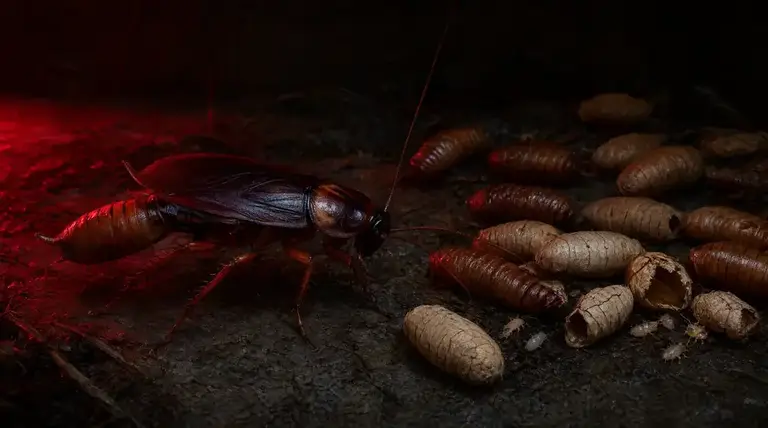
Cockroach eggs are laid inside a hard, purse-shaped capsule called an ootheca — the “o” that keeps an infestation alive long after the adults are gone. Each ootheca can hold 16 to 48 developing nymphs depending on the species, so killing only the roaches you see scuttling across the bench achieves very little. If the capsules survive, new cockroach eggs hatch within days or weeks and the infestation rebuilds.
Breaking the breeding cycle means targeting the ootheca and the females that carry them. This guide explains how cockroach egg cases work in Australian conditions, how to spot them, what treatment actually interrupts the lifecycle, and when a licensed pest control program is the smarter spend.
- An ootheca (the “o” of the cockroach lifecycle) is a hardened egg case holding 16–48 nymphs, and most surface sprays cannot penetrate it.
- German cockroaches carry the ootheca until roughly 24 hours before hatching, protecting up to 40 eggs per capsule.
- One female German cockroach can seed thousands of descendants within a year in warm Australian conditions.
- Effective control pairs physical removal of capsules with residual gel baits and insect growth regulators (IGRs).
- Australian summer heat (25–33°C) accelerates hatching, making December–February peak breeding season.
Why the cockroach “o” matters in Australian homes
The ootheca matters because Australia’s climate turns it into a fast-burning fuse for infestations. Kitchens in Sydney, Brisbane and Perth routinely sit at 25–33°C through summer, and at those temperatures German cockroach nymphs can mature in as little as six to eight weeks, multiplying every missed capsule into dozens of breeding adults.
Housing style adds to the problem. Queenslanders with open subfloors give American and Oriental cockroaches cool, damp harbourage, while brick-veneer homes on concrete slabs hide dropped capsules in wall cavities and around pipe penetrations. Apartment blocks and older terrace kitchens — with shared plumbing runs and warm appliance voids — let the breeding cycle run unchecked between tenancies. Understanding the “o” stage is the difference between knocking numbers back and actually eliminating the population, a theme we cover in depth in our guide to German cockroach infestations and why they’re so hard to kill.
An ootheca is a protective egg case made of a tanned protein that hardens on contact with air. Its rigid shell is exactly why cockroach eggs are so hard to kill: many surface sprays cannot penetrate it, so nymphs emerge unharmed even after a treatment appears to have worked.
Species differ in how they handle the capsule:
- German cockroach (Blattella germanica): the female carries her 6–9 mm ootheca until roughly 24 hours before hatching, protecting up to 40 eggs.
- American cockroach (Periplaneta americana): drops its 8 mm capsule in a hidden crevice, often glued near warmth or moisture, holding about 16 eggs — see our American cockroach ID and control guide for identification details.
- Oriental cockroach: a slower breeder that thrives in cool, damp voids such as drains and subfloors.
Warning signs: how to spot cockroach eggs and oothecae
You can spot cockroach egg cases by inspecting warm, dark, humid zones close to food and water. Dropped oothecae look like tiny brown, segmented seeds, 6–10 mm long, often tucked into seams and crevices you’d never clean routinely.
- Capsules behind appliances: check the fridge motor housing, under the dishwasher and along appliance seams where heat builds.
- Cases inside cupboard hinges: the dark hinge recesses of pantry and under-sink cupboards are classic glue-down spots.
- Brown seed-like debris in drawers and pantries: empty or intact oothecae accumulate near food storage.
- Clustering around plumbing penetrations: gaps where pipes enter walls are sheltered and humid.
- Live females with a capsule protruding: a German cockroach carrying her ootheca is a clear sign breeding is active on-site.
- Other infestation markers: droppings, smear marks and a musty odour usually accompany egg-laying — our 7 signs of a cockroach infestation checklist covers the full picture.
If you find capsules, vacuum them up and empty the canister outside immediately — crushing rarely destroys every egg inside the hardened shell.
DIY vs professional treatment for the cockroach ootheca
DIY can remove visible capsules, but it rarely breaks the cycle on its own because the “o” stage shrugs off most retail sprays. Professionals combine physical removal with residual gel baits and insect growth regulators that stop emerging nymphs ever reaching breeding age.
| Factor | DIY approach | Licensed professional |
|---|---|---|
| Ootheca removal | Vacuuming visible capsules only | Systematic inspection of harbourages and voids |
| Product strength | Retail sprays; poor egg penetration | Professional gel baits and IGRs applied to label |
| Follow-up timing | Often none — hatchlings survive | Second visit 10–14 days later to catch new nymphs |
| Hidden infestations | Wall cavities and subfloors usually missed | Void and cavity treatment included |
| Outcome | Temporary knockdown, rebuilds in weeks | Breeding cycle broken, with service warranty |
Because sprays rarely kill protected cockroach eggs, timing matters as much as chemistry: an IGR starves the next generation, while a follow-up treatment catches nymphs that hatched after the first visit. Any chemical application should be carried out by a licensed pest control technician following APVMA-approved label directions. Our cockroach control and treatment program is built around exactly this two-visit lifecycle approach.
Cockroach egg treatment costs in Australia (2025–26)
Across the Australian pest control industry, professional cockroach treatment generally sits between $180 and $550 AUD depending on property size, species and how established the breeding cycle is. German cockroach programs typically command the higher end of the market because they demand follow-up visits and IGR application.
| Service | Typical market rate (AUD) | What’s included/notes |
|---|---|---|
| Standard treatment (unit/apartment) | $180–$280 | Gel baiting, residual spray to harbourages, kitchen focus |
| Standard treatment (3–4 bed house) | $250–$380 | Internal plus external perimeter, subfloor or cavity dusting where needed |
| German cockroach program | $350–$550 | Two or more visits, IGR application, follow-up 10–14 days later |
| Severe/commercial infestation | $550+ (quoted) | Ongoing monitoring and scheduled treatments |
These figures reflect typical Australian market rates and vary with access, property construction and infestation severity — a free on-site inspection gives an accurate figure.
Aussie Pest Strike typically comes in well under these market rates. For an exact quote tailored to your property, call us on [aps_phone].
Seasonal cockroach breeding activity across Australia
Cockroach egg-laying and hatching peak across the Australian summer, from December to February, when warmth and humidity push development rates to their fastest. Activity dips in winter but rarely stops indoors, where heated kitchens keep the cycle ticking over.
Jan
Feb
Mar
Apr
May
Jun
Jul
Aug
Sep
Oct
Nov
Dec
Indicative relative activity of cockroach breeding in Australian homes: peak hatching runs December–February, easing through the cooler months before climbing again from September as temperatures rise.
Nine times out of ten, when a customer says the treatment “didn’t work”, what actually happened is the eggs hatched a fortnight later. If you don’t deal with the ootheca and the follow-up hatch, you’re just mowing the top off the problem. That’s why we always come back at the 10-to-14-day mark.
Vacuum and remove any oothecae you find today, fix leaking taps, dry out under-sink cupboards, seal food and clean grease from behind the stove. If you’re seeing females carrying capsules, or activity persists past two weeks, book a licensed technician for a gel bait and IGR program with a timed follow-up visit — that’s what actually breaks the cycle rather than delaying it.
Frequently Asked Questions
What is a cockroach ootheca?
An ootheca is a hardened, purse-shaped egg case that cockroaches produce to protect their eggs. It is made of a tanned protein that hardens on contact with air, forming a rigid shell. Depending on the species, each capsule holds roughly 16 to 48 developing nymphs. Because the shell is so tough, many surface sprays cannot penetrate it, meaning nymphs can hatch unharmed even after a treatment appears to have worked.
How many eggs are in a German cockroach ootheca?
A German cockroach ootheca holds up to 40 eggs. The female carries the 6–9 mm capsule with her until roughly 24 hours before hatching, which protects the eggs from many hazards and treatments. In warm Australian conditions, one female can seed thousands of descendants within a year, which is why removing capsules and targeting carrying females is central to breaking the breeding cycle.
Where do cockroaches hide their egg cases in a home?
Oothecae are typically tucked into warm, dark, humid spots close to food and water. Common locations include behind appliances such as fridge motor housings and dishwashers, inside cupboard hinge recesses in pantries and under-sink cupboards, around plumbing penetrations where pipes enter walls, and in drawers or pantries where brown seed-like debris accumulates. Dropped capsules look like tiny brown segmented seeds about 6–10 mm long.
Can I kill cockroach eggs with surface spray?
Most retail surface sprays cannot penetrate the hardened shell of an ootheca, so the nymphs inside usually survive even when adult roaches are knocked down. Effective control pairs physical removal of visible capsules — ideally vacuuming them up and emptying the canister outside immediately — with professional gel baits and insect growth regulators that stop newly hatched nymphs reaching breeding age.
When is cockroach breeding season in Australia?
Cockroach egg-laying and hatching peak across the Australian summer, from December to February, when temperatures of 25–33°C push development rates to their fastest. At those temperatures German cockroach nymphs can mature in as little as six to eight weeks. Activity dips in winter but rarely stops indoors, because heated kitchens keep the cycle ticking over all year round.
Why does treatment seem to fail two weeks later?
In most cases the original treatment worked on adults, but protected eggs hatched afterwards. Because sprays rarely reach the nymphs inside an ootheca, hatchlings emerge days or weeks later and rebuild the population. This is why timing matters as much as chemistry: insect growth regulators starve the next generation, and a follow-up visit 10–14 days after the first treatment catches nymphs that hatched in between.
What can I do myself to break the cockroach breeding cycle?
Start by vacuuming up any oothecae you find and emptying the vacuum outside immediately, since crushing rarely destroys every egg inside the hardened shell. Then fix leaking taps, dry out under-sink cupboards, seal food, and clean grease from behind the stove. These steps remove harbourage and moisture, but DIY alone rarely breaks the cycle because hidden capsules in wall cavities and subfloors are usually missed.
How do different cockroach species handle their egg cases?
German cockroach females carry their 6–9 mm ootheca until roughly 24 hours before hatching, protecting up to 40 eggs. American cockroaches drop their 8 mm capsules in hidden crevices, often glued near warmth or moisture, with about 16 eggs per case. Oriental cockroaches are slower breeders that thrive in cool, damp voids such as drains and subfloors, making housing style a factor in how infestations develop.
What information should I provide when booking help for cockroach eggs and oothecae?
When contacting Aussie Pest Strike about suspected cockroach egg cases, it helps to describe what you have seen: whether you have spotted brown seed-like capsules, live females carrying an ootheca protruding from their abdomen, droppings, smear marks or a musty odour. Note where activity occurs, such as kitchen cupboards, behind appliances or near plumbing penetrations, plus your property type, as units, brick-veneer homes and Queenslanders present different harbourage challenges.
What should I do before a technician arrives for a cockroach egg problem?
Before Aussie Pest Strike attends, remove any oothecae you can see by vacuuming them up and emptying the canister outside immediately. Fix leaking taps, dry out under-sink cupboards, seal food containers, and clean grease from behind the stove so treatments reach harbourages rather than competing with clutter. If you are seeing females carrying capsules or activity persists past two weeks, mention this when booking so a gel bait and IGR program with a timed follow-up visit can be planned.
Sources & further reading
Found Something
Dangerous?
Don’t touch it. Don’t spray it. Keep kids and pets clear, take a photo from a safe distance, and call us — or book a free inspection and we’ll come to you.
02 7235 0050