Pest Control RedFlags: Scams andCowboys to Avoid
Pest control red flags — the biggest pest control scams involve unlicensed door-knockers, fake "emergency" termite finds, high-pressure sales and cash-only...
Pest control red flags — the biggest pest control scams in Australia involve unlicensed door-knockers, fake “emergency” termite finds, high-pressure sales tactics and cash-only jobs with no paperwork, all designed to rush you into overpaying for work that may never be done properly. Put simply, pest control red flags are the warning signs that an operator is unlicensed, dishonest or planning to deliver substandard work, and every homeowner should learn to spot them before handing over a dollar.
Learning to recognise these red flags protects both your wallet and your home, because a botched or fake treatment can leave a real infestation to spread unchecked behind your walls. This guide explains how the cowboys operate, how to verify a legitimate operator, what fair pricing looks like, and what to do if you have already been burned.
- Never sign or pay on the doorstep — legitimate pest control companies do not cold-doorstep with same-day pressure.
- A “free inspection” that miraculously uncovers a catastrophic termite emergency is a classic manufactured-urgency scam; always get an independent second opinion.
- Insist on a written quote and invoice showing the company’s ABN, state licence number, products used and warranty terms.
- Know realistic market pricing so an inflated “emergency” quote stands out immediately.
- If you have been scammed, report the operator to your state consumer affairs body and arrange an independent inspection.
Why pest control scams hit Australian homeowners hard
Australia’s warm climate and pest-heavy environment make households prime targets for scare tactics, because genuine infestations are common enough that a fabricated “emergency” sounds plausible. From humid Queensland, where termites (white ants) threaten timber Queenslanders and subfloor homes year-round, to temperate southern states where spiders, cockroaches and rodents surge each summer, most Australians will need pest control at some point — and scammers know it.
Housing styles add to the vulnerability. Homes on concrete slabs can hide termite entry points, older brick veneer houses have weep holes and cavities that pests exploit, and subfloor homes give operators a dark, out-of-sight space where a fake “discovery” is hard for the owner to verify. Because most homeowners cannot inspect these areas themselves, they are forced to trust what they are told — which is exactly what cowboys count on. Regular, legitimate servicing on a sensible schedule, as outlined in our guide to how often you should book pest control in Australia, removes the panic factor that scammers exploit.
Pest control red flags: the warning-signs checklist
The clearest red flags are pressure, missing paperwork and a refusal to be verified. Most dodgy operators recycle the same handful of tricks, so run any operator against this checklist before agreeing to anything.
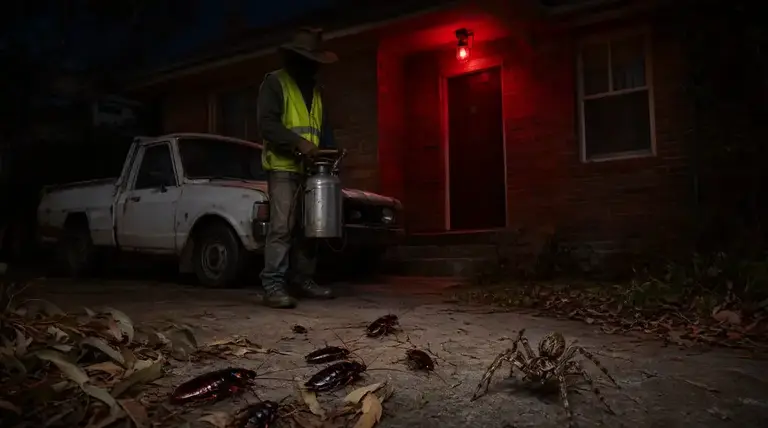
- The unsolicited door-knock: “We’re treating your street today — special price if you sign now.” Legitimate companies do not cold-doorstep with same-day pressure.
- The manufactured emergency: a “free inspection” that miraculously uncovers a catastrophic, urgent termite problem needing thousands of dollars in immediate work.
- Cash-only, no invoice: avoids tax, licensing scrutiny and any paper trail for warranty claims.
- The vanishing warranty: big promises made verbally, nothing in writing, and no way to enforce them later.
- No licence number offered: a genuine operator provides a verifiable state pest-control licence on request.
- Quoting without inspecting: real technicians inspect the property first, then scope and price the job.
- Refusing to name products: legitimate operators happily share the APVMA-registered products they intend to use.
If a “termite emergency” is sprung on you, slow down and get an independent second opinion before paying — genuine urgency still allows time to verify. Our guide to the questions to ask before hiring a pest controller is a ready-made script for putting any operator on the spot.
Cowboys versus legitimate operators: DIY checks and professional standards
You can vet most operators yourself in a few minutes with basic checks, while anything involving chemical application should be left to a licensed professional. The table below shows how red flags stack up against the standards of a legitimate pest control company.
| Red flag | Legitimate operator |
|---|---|
| No licence number offered | Provides a verifiable state licence |
| Pressure to sign immediately | Gives you time and a written quote |
| Quotes without inspecting | Inspects, then scopes the job |
| Cash only, no invoice or ABN | Proper invoice, ABN and receipt |
| Refuses to name products | Shares APVMA-registered product details |
For the full vetting process from licence checks to reviews, read how to choose a pest controller in Australia, steer clear of common pest control scams, and weigh up whether a simple DIY step suffices using our DIY versus professional comparison before agreeing to major work.
What fair pest control pricing looks like in Australia
Knowing typical market rates is your best defence against inflated “emergency” quotes, because a scammer’s price only works if you have nothing to compare it against. The ranges below reflect typical 2025-26 industry figures across Australia; for a detailed breakdown, see how much pest control costs in Australia.
| Service | Typical cost (AUD) | What’s included/notes |
|---|---|---|
| General pest spray (cockroaches, spiders, ants) | $150 – $350 | Interior and exterior treatment of a standard home; written service report |
| Termite inspection | $200 – $350 | Full inspection to Australian Standard with written findings |
| Termite barrier or baiting system | $2,000 – $5,000+ | Varies with home size, slab vs subfloor and system type; always get two quotes |
| Rodent treatment | $180 – $400 | Baiting, trapping and entry-point advice; follow-up visit often included |
| Possum removal | $250 – $500 | Legal removal and proofing; possums are protected in Australia |
A quote dramatically above these ranges — especially one delivered with a same-day deadline — is a red flag in itself. Equally, a price that seems impossibly cheap may signal unlicensed work or watered-down products.
Seasonal pest pressure and when scammers strike
Scam activity follows real pest seasons, because fear sells best when pests are genuinely on people’s minds. Door-knockers and fake termite emergencies peak in the warmer months, when termite activity, spider sightings and cockroach numbers surge across most of the country.
Jan
Feb
Mar
Apr
May
Jun
Jul
Aug
Sep
Oct
Nov
Dec
Indicative pattern: pest activity — and scam approaches exploiting it — peaks through late spring and summer across Australia, easing through winter in southern states while remaining elevated year-round in the tropical north.
In my years on the tools, the jobs I hate most are the ones where a homeowner has already paid a cowboy and the termites are still happily eating the house. Any operator worth their licence will hand you paperwork, name their products and give you time to think. Pressure is the tell — real professionals don’t need it.
Never sign or pay on the doorstep. Take the operator’s details, verify their licence with your state regulator, confirm public liability insurance, and insist on a written quote showing the ABN, products and warranty terms. If a termite emergency is claimed, get an independent inspection before committing — and compare any quote against realistic market pricing before paying a cent.
Frequently asked questions about pest control red flags
Are door-to-door pest control offers a scam?
Not always, but unsolicited door-knocks with same-day pressure and cash-only pricing are a major red flag. Never sign on the spot — take the company’s details, verify their licence and insurance independently, and compare their written quote against typical market rates before agreeing to anything.
How do I know if a termite “emergency” is real?
Slow down and get an independent inspection from a licensed company before paying. Genuine termite issues still allow time to verify and obtain a second quote, whereas a fabricated emergency relies on panic, urgency and same-day pressure to stop you checking the claim.
What paperwork should a legitimate pest controller provide?
A legitimate operator supplies a written quote and invoice showing their ABN, licence details, the products used and any warranty terms. Families concerned about treatments can also ask how the products are applied — see whether pest control is safe for pets and children. Cash-only, no-paperwork jobs are a warning sign.
What to do if you have been scammed
If you have already paid a dodgy operator, act quickly — gather every scrap of evidence and report them through official channels. Collect any paperwork, texts or receipts, then report the business to your state consumer affairs or fair trading body, and to the relevant pest-control regulator if they applied chemicals without a licence. Where payment was made by card, your bank may be able to help with a chargeback for services not delivered. Finally, arrange an independent inspection from a licensed company to confirm whether the “treatment” achieved anything at all, so a real infestation is not left to spread while you assumed it was handled.
Prefer a licensed, transparent team with no pressure and everything in writing? Aussie Pest Strike is exactly that — fully licensed technicians, APVMA-registered products and clear written quotes every time. Call Aussie Pest Strike on [aps_phone] to book your free, no-obligation inspection today and deal with a company that has nothing to hide.
Sources & further reading
Found Something
Dangerous?
Don’t touch it. Don’t spray it. Keep kids and pets clear, take a photo from a safe distance, and call us — or book a free inspection and we’ll come to you.
02 7235 0050