Bed Bugsand Luggage: ThePost-Travel Checklist
Bed bugs and luggage are a top travel risk. Use this post-travel checklist to inspect, wash and heat-treat your bags before they reach your bedroom.
Think “bed bugs luggage” before you unzip: a suitcase rested on an infested hotel floor is still the classic way Cimex lectularius rides into Australian homes. This guide is your post-travel checklist — e.g. the exact steps to follow the day you walk in the door — so a handful of stowaways never reaches your bedroom.
In short: bed bugs and luggage management means unpacking on a hard floor, heat-treating clothing at 60°C, vacuuming the case, and storing it away from sleeping areas. Do that within hours of arriving home and you break the cycle before it starts. Below, we cover why suitcases are the weak point, the warning signs to check for, when DIY is enough and when to call in professional pest control, realistic Australian costs, and the seasonal pattern we see across the country.
- Bed bugs do not fly or jump — they spread almost entirely by being carried, and luggage is their number one vehicle into Australian homes.
- Unpack on a hard, light-coloured floor in the laundry or garage, never in a bedroom.
- Sustained heat above 50°C (a 60°C wash or 30-minute hot tumble dry) kills all life stages, including eggs.
- A single mated female can lay 200–250 eggs, seeding a full infestation within 8–10 weeks.
- If you confirm activity, professional Bed Bug Treatment & Removal typically costs $350–$900+ per room in Australia in 2025–26.
Why bed bugs luggage remain a major problem across Australia
Bed bugs and luggage are a problem Australia-wide because our travel habits, climate and housing stock all favour the pest. Australians take millions of domestic and international trips each year, and every hotel room, hostel bunk and airport carousel is a transfer point for a bug that cannot move on its own.
Adults are 4–5 mm, flat and reddish-brown, so they slip into seams, zips and the corrugated interior of a wheeled case without you noticing. Luggage stored under a hotel bed, on carpet or on a shared carousel is exactly where risk peaks. Once inside your home, our conditions do the rest. Warm Queensland and northern-NSW interiors let bed bugs breed year-round, while heated southern homes keep them active through winter. Housing style matters too: older Queenslanders with wall cavities and timber floors give bugs endless harbourage, brick-veneer homes hide them behind skirtings, and even modern slab-on-ground apartments share wall voids that let bugs travel between units. A single mated female lays 200–250 eggs across her life, so one hidden bug from a hotel can seed a full infestation within 8–10 weeks. Understanding how bed bugs actually spread (and how they don’t) helps you judge which rooms and transport pose real risk — and which don’t.
Post-Travel Warning Signs: What to Check on Your Luggage
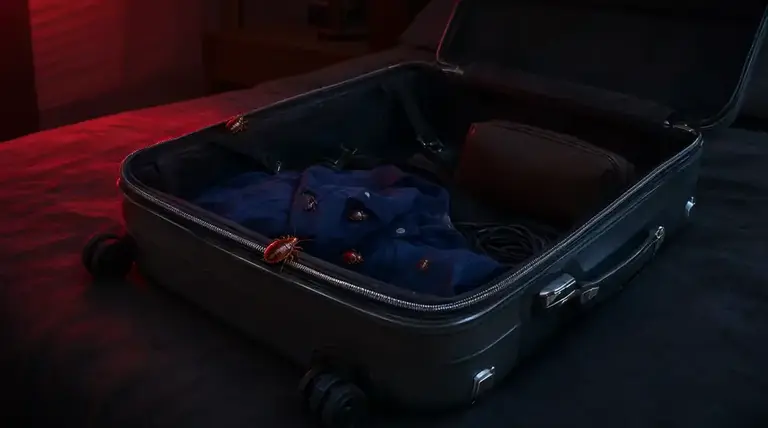
The clearest warning sign is live bugs, dark faecal spotting or rust-coloured smears in the seams and zip channels of your case. Work through this checklist in the laundry, bathroom or garage, where hard floors make an escapee easy to spot.
- Zip channels and zip pulls – check the fabric underneath for live bugs and 1 mm dark faecal dots.
- Internal seams, mesh pockets and elastic straps – prime hiding spots for flat adults and freshly laid eggs.
- Wheel housings and telescopic handle recess – bugs shelter in the corrugations of wheeled cases.
- Folded clothing – inspect waistbands, collars and cuffs as you unpack each item.
- The case exterior – look for pale shed skins and tiny cream-coloured eggs stuck to fabric.
- Your skin – lines or clusters of itchy bites appearing after a trip warrant a fast response; see our guide to bed bug bites: identification and your first steps.
If anything on that list checks out, treat the luggage immediately and monitor sleeping areas for the next few weeks. Catching one hitchhiker is a laundry job; missing it becomes a bedroom infestation.
DIY Luggage Treatment vs Professional Pest Control
For luggage alone, DIY is usually enough: heat, freezing and thorough vacuuming reliably clear a suitcase. Professional pest control becomes necessary the moment bugs have left the bag and established in a bed, bedhead, skirting board or lounge — at that point e.g. eggs hidden in wall voids are beyond the reach of household methods, and chemical treatment should be handled by a licensed technician using APVMA-registered products.
| Factor | DIY (luggage only) | Professional treatment |
|---|---|---|
| Best for | Suitcases, clothing, shoes and travel items | Established infestations in beds, furniture or walls |
| Methods | 60°C wash, hot tumble dry, vacuum, −18°C freezer for 4+ days | Whole-room heat or APVMA-registered chemical applications |
| Typical cost | $0–$50 (household appliances) | $350–$1,800+ depending on scope |
| Effectiveness on eggs | Good, if temperatures are sustained | Strong, with follow-up visits to catch hatchlings |
| When to escalate | Bugs found beyond the luggage | Any confirmed activity in sleeping or living areas |
For bed bugs luggage is a prime hiding spot, so items you cannot wash — shoes, toiletry bags and electronics — can go into a sealed bag in the freezer at −18°C for at least four days, which is lethal to bed bugs. Alternatively, a hard-shell case left in a hot car boot on a 35°C-plus Australian summer day climbs well past 50°C inside within an hour. If activity has spread, the choice between methods is covered in our guide to bed bug treatment: heat vs chemical — which works.
Bed Bug Treatment Costs in Australia (2025–26)
In 2025–26, treating bed bugs and luggage yourself costs little more than a few loads of hot washing, while the typical Australian market rate for professional treatment of an established infestation runs from around $350 for a single room to $1,800 or more for whole-home heat treatment. Prices vary by city, property size and severity; the ranges below reflect what the industry generally charges, not any one company’s pricing.
| Service | Typical market rate (AUD) | What’s included/notes |
|---|---|---|
| Inspection (often free) | $0–$150 | Confirm activity, locate harbourages, quote treatment |
| Chemical treatment – single room | $350–$600 | Licensed technician, APVMA-registered products, usually 2 visits |
| Chemical treatment – whole home | $700–$1,400 | All bedrooms and living areas, follow-up included |
| Heat treatment – whole home | $1,200–$1,800+ | Single-day structural heat, kills all life stages in one pass |
| DIY luggage decontamination | $0–$50 | Hot wash, tumble dry, vacuum, freezer for non-washables |
These figures are general industry benchmarks. Aussie Pest Strike typically comes in well under these market rates for the same licensed, fully guaranteed work — call [aps_phone] today for an exact quote tailored to your property.
Seasonal Bed Bug Activity Across Australia
Bed bugs are active year-round indoors, but reports peak in the warmer, high-travel months from October to March. Summer holidays, school breaks and festive-season travel mean more luggage moving through hotels — and more hitchhikers coming home. Winter dips slightly in the southern states, though heated homes keep infestations ticking over.
Jan
Feb
Mar
Apr
May
Jun
Jul
Aug
Sep
Oct
Nov
Dec
Indicative pattern: travel-related bed bug reports climb through spring and peak across the summer holiday period, then ease through autumn and winter — but heated interiors mean activity never truly stops.
Nine times out of ten, the infestations we treat started in a suitcase someone unpacked straight onto the bed. If every traveller ran a hot wash and vacuumed their case in the garage, half our bed bug work would disappear. The checklist is five minutes of effort that saves you weeks of stress and a sizeable treatment bill.
Make the post-travel routine non-negotiable: unpack on a hard floor in the laundry or garage, wash all clothing at 60°C or tumble dry hot for 30 minutes, vacuum the case inside and out, wipe the seams, and store it away from bedrooms. Freeze non-washables at −18°C for at least four days. If you find live bugs, faecal spotting or bites after a trip, book a professional inspection immediately — early treatment is faster, cheaper and far less disruptive than tackling an established infestation.
Frequently Asked Questions
Why is luggage the main way bed bugs enter Australian homes?
Bed bugs cannot fly or jump, so they spread almost entirely by being carried, and luggage is their number one vehicle into Australian homes. Adults are only 4–5 mm, flat and reddish-brown, letting them slip into suitcase seams, zips and corrugated interiors unnoticed. Cases stored under hotel beds, on carpet or on shared airport carousels sit exactly where the risk peaks.
What should I do with my luggage as soon as I get home from a trip?
Unpack on a hard, light-coloured floor in the laundry or garage — never in a bedroom. Wash all clothing at 60°C or tumble dry hot for 30 minutes, vacuum the case inside and out, wipe the seams, and store the case away from sleeping areas. Freeze non-washables at −18°C for at least four days. Doing this within hours of arriving home breaks the cycle before it starts.
What temperature kills bed bugs and their eggs in clothing?
Sustained heat above 50°C kills all life stages of bed bugs, including eggs. In practice this means a 60°C wash or a 30-minute hot tumble dry for clothing and linens. For items you cannot wash, such as shoes, toiletry bags and electronics, sealing them in a bag in a freezer at −18°C for at least four days is lethal to bed bugs.
Where should I check my suitcase for signs of bed bugs?
Inspect zip channels and zip pulls, including fabric underneath, for live bugs and 1 mm dark faecal dots. Check internal seams, mesh pockets and elastic straps, wheel housings and the telescopic handle recess, folded clothing at waistbands, collars and cuffs, and the case exterior for pale shed skins or tiny cream-coloured eggs stuck to fabric.
Can I treat an infested suitcase myself, or do I need professional pest control?
For luggage alone, DIY is usually enough: heat, freezing and thorough vacuuming reliably clear a suitcase. Professional treatment becomes necessary once bugs have left the bag and established in a bed, bedhead, skirting board or lounge, because eggs hidden in wall voids are beyond household methods and chemical work needs a licensed technician using APVMA-registered products.
How fast can one bed bug turn into a full infestation?
A single mated female bed bug can lay 200–250 eggs across her life, which means one hidden hitchhiker brought home in luggage can seed a full infestation within 8–10 weeks. This is why catching a stowaway during your post-travel luggage check matters — treating one bug is a laundry job, while missing it can become a bedroom infestation.
How long can bed bugs survive inside stored luggage between trips?
Bed bugs can survive for several months inside stored luggage, sometimes up to a year, because they can enter a dormant state and live without feeding. Adults and nymphs tucked into seams, zippers, or linings stay viable as long as temperatures remain moderate. Storing luggage away from bedrooms, sealing it in plastic bags, or placing it in a hot attic or cold garage reduces the chance any hidden bugs survive between trips.
Should I keep my suitcase in the bedroom after travelling, and why not?
Bed bugs are active year-round indoors because heated homes keep them going through winter, but reports peak in the warmer, high-travel months from October to March. Summer holidays, school breaks and festive-season travel mean more luggage moving through hotels and hostels, and more hitchhikers coming home. Reports ease slightly through autumn and winter but never truly stop.
What information should I give Aussie Pest Strike when booking help after finding bed bugs in my luggage?
When you contact Aussie Pest Strike after a trip, describe where you found live bugs, faecal spotting or eggs, when you returned from travel, and whether you have noticed bites or activity near beds or lounges since unpacking. Mention which rooms you have slept in and any DIY steps already taken, such as hot washing or vacuuming, so the inspection can focus on likely harbourages.
I found bed bug signs on my suitcase — what is the practical next step?
First contain the problem: seal the case in a plastic bag, keep it out of bedrooms, and hot wash or tumble dry everything that travelled with it. Then book a professional inspection with Aussie Pest Strike to confirm whether activity has spread beyond the luggage. Early treatment is faster, cheaper and far less disruptive than tackling an established infestation in beds or furniture.
Sources & further reading
Found Something
Dangerous?
Don’t touch it. Don’t spray it. Keep kids and pets clear, take a photo from a safe distance, and call us — or book a free inspection and we’ll come to you.
02 7235 0050