Black HouseSpiders: ID, Bitesand Control
Black house spiders — the black house spider ( Badumna insignis ) is a common, dark, robust web-builder found on window frames, brickwork and eaves across...
Walk outside almost any Australian home at dusk and you’ll find them: messy, lacy webs tucked into window frames, brickwork and eaves, each with a dark hole in one corner. That web belongs to the black house spider, one of the most widespread web-building spiders in the country, from coastal Queenslanders to brick-veneer homes in the southern states.
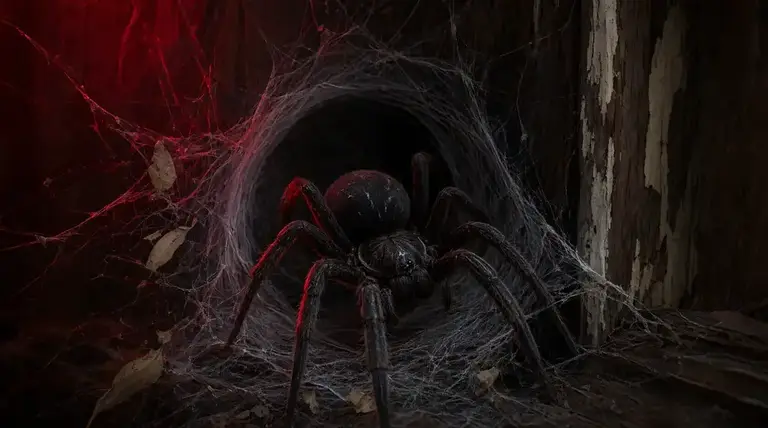
A black house spider (Badumna insignis) is a dark, robust Australian spider that builds a messy sheet web with a funnel-shaped retreat on walls, window frames and eaves; it is venomous but not considered dangerous to humans, and bites are uncommon. This guide covers how to identify one, what its bite actually does, and the pest control steps that stop the same corner re-webbing week after week.
- Females reach about 15 mm in body length; males are smaller at around 9 mm, and both are charcoal to black with pale abdominal markings.
- Bites are uncommon, can be painful with local swelling, nausea or sweating, but are not medically dangerous and no antivenom is needed.
- The same web keeps returning because the female lives in the crevice behind it — remove the spider, not just the silk.
- Thriving webs signal a healthy supply of flying insects around your lights, so reducing outdoor lighting removes the food source.
- A professional residual perimeter treatment deters re-webbing for months and reaches retreats you cannot.
Why the black house spider matters in Australia
The black house spider matters because it is found in every Australian state and territory, thrives around human housing, and is routinely mistaken for far more dangerous species. Our climate and building styles give it everything it needs: dry, sheltered vertical surfaces and a year-round supply of insects.
Housing type shapes where you’ll find webs. Older Queenslanders on stumps offer shaded eaves, weatherboard corners and metre boxes. Brick-veneer homes — the standard across most Australian suburbs — provide weep holes and mortar gaps that make perfect retreats. Slab-on-ground homes still present window frames, fence posts and garage corners. Warm northern regions see activity almost all year, while southern states see a strong spring-to-autumn peak.
Correct identification also prevents needless panic. Because of its dark colour, this spider is sometimes confused with a funnel-web, but the two differ enormously in habitat and risk — our guide to the Funnel-Web Spider: Identification, Danger and Control explains the difference. It’s also worth knowing how it compares to the genuinely risky Redback Spider: Identification, Bites and Safe Removal, which favours similar sheltered spots around sheds and outdoor furniture.
Warning signs you have a black house spider problem
The clearest warning sign is a messy, lacy sheet web with a funnel-shaped hole leading into a crevice, usually on a window frame, eave or brickwork corner. Check for these indicators around your home:
- Messy, lacy webs: Untidy white-grey sheets on window frames, brick corners, fence posts and the underside of eaves, always with a funnel-shaped retreat in one corner.
- Webs that return within days: The same spot re-webs after you brush it away, because the resident female is still tucked into the crevice behind.
- Dark, stocky spider near the web: Charcoal to black, robust hairy legs, with faint white or grey markings on the abdomen; females about 15 mm, males around 9 mm.
- Webs clustered near lights: Heavy webbing around outdoor lights, metre boxes and entry points where moths and midges gather.
- Old, layered silk: Long-established webs that have been extended over months, indicating a sedentary female that has lived there for a year or more.
DIY vs professional spider control
DIY control works well for a handful of accessible webs, but professional pest control is the better option when webs keep returning, retreats sit high on eaves or inside weep holes, or you’re dealing with heavy webbing across the whole exterior. The difference comes down to reach, residual protection and correct product use.
| Factor | DIY | Professional |
|---|---|---|
| Web removal | Brush accessible webs; hidden females often survive | Full exterior de-webbing including eaves and high corners |
| Retreats in crevices | Hard to reach; sealing gaps helps | Targeted treatment of weep holes, frames and cracks |
| Lasting protection | Days to weeks | Residual perimeter application deters re-webbing for months |
| Chemical safety | Off-the-shelf sprays vary; follow labels carefully | Licensed technicians apply APVMA-registered products correctly |
| Best for | Light, occasional webbing | Recurring or widespread infestations |
If you do go the DIY route, focus on the basics: switch to warm-toned or sensor lighting to attract fewer flying insects, brush webs from eaves and window frames regularly, and seal cracks that make ideal retreats. Remember that no spider product — professional or otherwise — can honestly be called 100% safe or guaranteed, which is why chemical treatments are best left to licensed technicians. Our Spider Control & Removal service covers the full exterior treatment.
How much does black house spider control cost in 2025-26?
Across Australia, the pest control industry generally charges between $150 and $450 AUD for professional spider treatment, depending on property size, construction type and treatment scope. The figures below are typical Australian market rates for 2025-26 — what the industry as a whole charges, not any single company’s price list. Individual quotes still vary with access, home size and the severity of the problem.
| Service | Typical market rate (AUD) | What’s included/notes |
|---|---|---|
| External spider spray (standard home) | $180–$280 | Residual perimeter treatment, eaves, window frames, de-webbing |
| Large or two-storey home | $280–$450 | Greater surface area, high-access eaves, Queenslanders on stumps |
| Internal + external combined treatment | $250–$400 | Adds internal skirtings, garages and sheds; useful if other species present |
| Annual maintenance plan | $300–$550/year | Scheduled re-treatments to maintain the residual barrier |
Here’s the good news: Aussie Pest Strike typically comes in well under these market rates, without cutting corners on product quality or coverage. Every property is different, so skip the guesswork — call us on [aps_phone] for an exact quote and we’ll give you a firm price before any work begins.
Seasonal activity: when do webs peak?
Black house spider activity peaks from late spring through autumn, when flying insects are abundant and females extend their webs, and drops to its lowest point in mid-winter. Because females are sedentary and live up to two years, webs persist year-round — it’s the size and number of active webs that changes.
Jan
Feb
Mar
Apr
May
Jun
Jul
Aug
Sep
Oct
Nov
Dec
Indicative web activity across Australia: peak activity runs from November to March in most regions, with warmer northern areas sustaining higher activity through the cooler months.
The mistake we see most often is homeowners brushing the web off and thinking the job’s done. The female is sitting two centimetres away inside her retreat, and she’ll rebuild by morning. Treat the crevice, reduce the insects around your lights, and the problem actually goes away.
Start with prevention: switch outdoor lights to warm-toned or sensor fittings, brush down webs weekly, and seal cracks around window frames and brickwork. If webs keep returning, or you also have concerns about species like the Huntsman Spiders: Dangerous or Harmless Housemates? wandering indoors, book a licensed pest control treatment — a residual perimeter application is the only option that deters re-webbing for months at a time.
Frequently Asked Questions
How do I identify a black house spider?
A black house spider is dark charcoal to black with a robust body, hairy legs and faint white or grey markings on the abdomen. Females reach about 15 mm in body length while males are smaller at around 9 mm. The clearest sign is its messy, lacy sheet web with a funnel-shaped retreat in one corner, usually built on window frames, eaves or brickwork corners.
Is a black house spider bite dangerous?
No. Black house spiders are venomous but not considered dangerous to humans, and bites are uncommon. When a bite does occur it can be painful, with local swelling, nausea or sweating, but it is not medically dangerous and no antivenom is needed. Correct identification also helps avoid needless panic, as this spider is sometimes mistaken for the far more dangerous funnel-web.
Why does the same spider web keep coming back after I remove it?
The web returns because the resident female lives inside the crevice behind it. She is sedentary and can live for a year or more, so brushing away the silk only removes her web, not the spider. She will rebuild, often by morning. To stop the cycle you need to treat the crevice itself, reduce the flying insects around your lights, and seal gaps that make ideal retreats.
Where do black house spiders build their webs around Australian homes?
They favour dry, sheltered vertical surfaces: window frames, eaves, brick corners, fence posts, metre boxes and garage corners. Housing type shapes the exact spots — older Queenslanders on stumps offer shaded eaves and weatherboard corners, brick-veneer homes provide weep holes and mortar gaps as retreats, and slab-on-ground homes still present frames and posts.
When is black house spider activity highest in Australia?
Activity peaks from late spring through autumn, roughly November to March in most regions, when flying insects are abundant and females extend their webs. Warm northern areas sustain higher activity almost year-round, while southern states see a strong spring-to-autumn peak and a drop in mid-winter. Because females live up to two years, webs persist all year; it is their size and number that changes.
Why do black house spiders web around my outdoor lights?
Heavy webbing clusters near outdoor lights, metre boxes and entry points because lights attract moths, midges and other flying insects — the spider's food supply. Thriving webs signal plenty of prey nearby. Switching to warm-toned or sensor-activated lighting reduces the insects drawn to your home, removing the food source and making those spots far less attractive for web-building.
What DIY steps help control black house spiders?
For light, occasional webbing, brush webs from eaves and window frames regularly, switch outdoor lighting to warm-toned or sensor fittings to attract fewer insects, and seal cracks around window frames and brickwork that make ideal retreats. Follow product labels carefully if using sprays. DIY works best for accessible webs; recurring problems, high eaves or weep-hole retreats are better handled professionally.
When should I call a professional for black house spiders?
Professional treatment is the better option when webs keep returning despite regular removal, when retreats sit high on eaves or inside weep holes, or when heavy webbing covers the whole exterior. A licensed technician provides full de-webbing including high corners, targeted treatment of cracks and crevices, and a residual perimeter application that deters re-webbing for months.
Can I check whether Aussie Pest Strike handles black house spider treatments at my property?
Yes. Aussie Pest Strike treats black house spiders as part of its Spider Control & Removal service, which covers full exterior de-webbing, targeted treatment of retreats such as weep holes and window frames, and residual perimeter applications. Because every property differs in size, construction and access, contact Aussie Pest Strike to confirm coverage for your address and discuss the extent of webbing before booking.
What is the next step if black house spider webs keep returning on my home?
If weekly brushing and lighting changes have not stopped re-webbing, book a licensed pest control treatment with Aussie Pest Strike. A residual perimeter application is the option that deters re-webbing for months at a time and reaches retreats you cannot, such as high eaves and weep holes. Aussie Pest Strike can assess the webbing around your home and recommend the right scope of treatment.
Sources & further reading
Found Something
Dangerous?
Don’t touch it. Don’t spray it. Keep kids and pets clear, take a photo from a safe distance, and call us — or book a free inspection and we’ll come to you.
02 7235 0050