Termites in Fences andRetaining Walls: TheBridge to Your Home
Termites in fences — Termites in fence — termites in a fence are more than a boundary problem: a timber fence or retaining wall connected to soil is a...
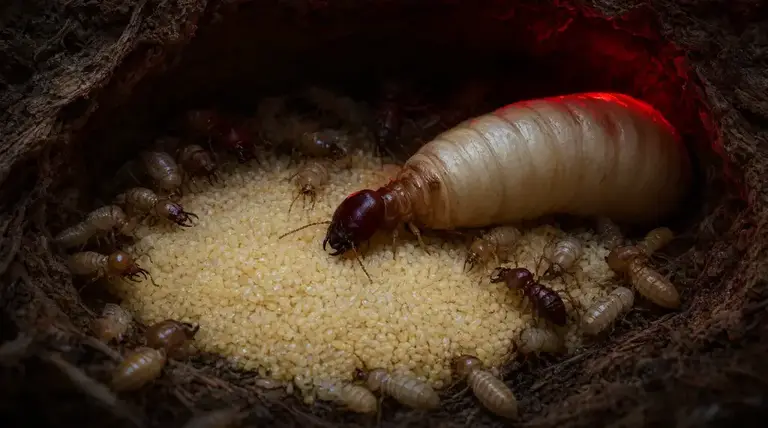
Termites in fences and retaining walls are one of the most overlooked termite risks on Australian properties, and a timber structure in soil contact can act as a covered bridge — call it the “e” factor, for exposure — that leads a colony straight to your home. Because these structures sit in constant ground contact, they are often where subterranean termites first establish, sometimes years before they reach the house itself.
Treating your fence line as an early-warning system is one of the smartest moves an Australian homeowner can make. In simple terms: a termite-infested fence or retaining wall is a boundary colony that gives subterranean termites a shaded, moist, timber-lined route from the soil directly to your home’s structure. This guide explains why fences attract termites, the warning signs to look for, what you can handle yourself, realistic treatment costs, and how to break the bridge before the damage reaches your walls.
- Timber fences and sleeper retaining walls in soil contact are prime establishment sites for subterranean termites such as Coptotermes and Schedorhinotermes.
- A fence line running up to the house gives a colony a covered, moist highway straight to your subfloor or wall frames.
- Hollow-sounding posts, mud packing in joints, crumbling timber and blistering paint are the key warning signs.
- Treated pine resists termites but is not immune — cut ends and weathering expose untreated cores.
- Catching activity at the boundary can be the difference between a routine treatment and a structural repair bill in the tens of thousands.
Why termites in fences matter across Australia
Termites in fences matter because posts and sleepers combine the three things a colony needs — timber, soil contact and moisture — and most of Australia’s climate zones let subterranean termites stay active for much of the year. From the humid coastal strip of Queensland and northern New South Wales through to temperate Victoria and South Australia, the “e” of exposure applies to virtually every timber boundary structure sitting in the ground.
Housing style shapes the risk. Homes on stumps or with suspended floors — classic Queenslanders, older weatherboards and many pre-war brick homes — offer termites easy access from a fence line into the subfloor. Slab-on-ground brick veneer homes are not immune either: foraging workers exploit weep holes, slab edges and garden beds built up against walls. In tropical and subtropical regions, warm wet seasons drive explosive colony growth, while in southern states activity slows but rarely stops completely in sheltered, irrigated gardens.
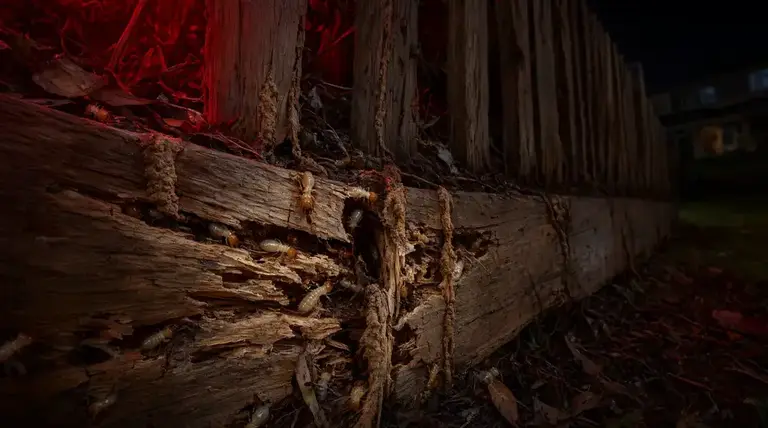
Every buried post is effectively a feeding station with direct access to soil-dwelling Coptotermes and Schedorhinotermes. Softwood pine palings and untreated hardwood posts are especially vulnerable. Timber-sleeper retaining walls make things worse: they trap moisture behind them and hold soil against the wood on one side, so damage often stays hidden until a section collapses — and the backfill can conceal mud leads travelling toward the building.
Warning signs of termites in fences and retaining walls
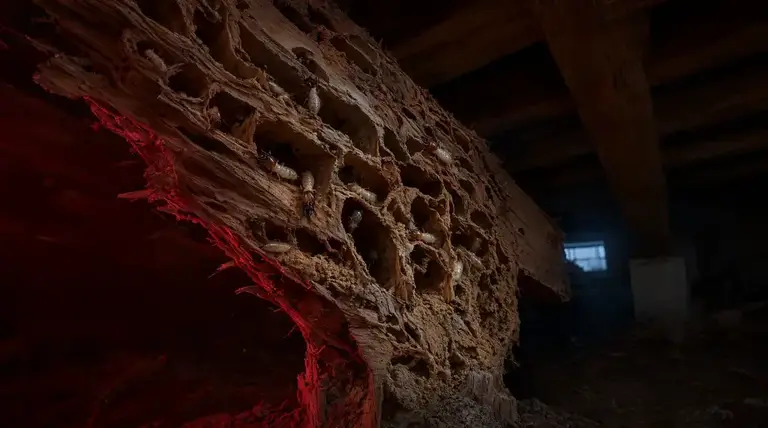
The clearest signs of termites in a fence are hollow-sounding posts, mud packing in cracks and joints, soft crumbling timber and blistered paint. Walk your boundary a couple of times a year and check for the following:
- Hollow posts: Tap along the fence; damaged posts sound papery and may wobble at the base.
- Mud packing: Soil-coloured galleries or mud leads in cracks, joints and along post bases.
- Soft, crumbling timber: Wood that flakes away or crumbles under gentle pressure from a screwdriver.
- Blistering paint: Bubbled or rippled surfaces on painted or capped timber, indicating tunnelling beneath.
- Sagging or leaning sections: Structural failure in palings, rails or sleeper walls that has no other obvious cause.
These are the same clues to look for on the house, so match them against the full list of 10 warning signs of termites in Australian homes. If anything checks out, a professional assessment is the next step — our Termite Inspections & Reports cover fences, retaining walls, gardens and the full building envelope.
DIY checks vs professional pest control for fence termites
You can and should inspect your own fence line regularly, but treating an active colony is a job for a licensed pest control technician — disturbing termites without eliminating the colony usually just scatters them toward the house. Here is how the two approaches compare:
| Task | DIY | Professional |
|---|---|---|
| Visual boundary inspection | Yes — tap posts, probe with a screwdriver twice a year | Annual inspection with moisture meters and experience reading concealed leads |
| Clearing soil, mulch and debris off timber | Yes — reduces moisture and hidden ground contact | Recommended as part of a broader management plan |
| Replacing damaged posts or sleepers | Possible, but only after confirming the colony is inactive | Inspect first — new timber will be re-infested by an active colony |
| Chemical treatment and colony elimination | Not recommended — APVMA-registered termiticides require licensed application | Yes — dusting, baiting or soil treatment by a licensed technician |
| Protecting the home itself | No reliable DIY option | Chemical or physical barrier systems around the structure |
If a boundary colony is active, ask about Termite Treatment & Barrier Systems and read What Is a Termite Barrier and How Does It Protect Your Home? to understand how a treated zone around the building cuts off the route from fence to structure.
Breaking the bridge: costs and prevention measures
Breaking the bridge means removing the direct timber pathway, reducing ground contact and moisture, and treating any active colony before it reaches the house. Practical measures include keeping a gap between fence and house, using treated or steel posts, clearing soil and mulch off timber, and inspecting fences annually. So what does the industry generally charge for this work? Typical Australian market rates for 2025-26 sit in these ranges:
| Service | Typical market rate (AUD) | What’s included/notes |
|---|---|---|
| Termite inspection (house, fences, yard) | $250–$450 | Visual and instrument-assisted inspection with written report; the going rate across most Australian providers |
| Spot treatment of active fence/retaining wall colony | $300–$900 | Dusting, foaming or direct treatment of located activity; market rates vary with colony size and access |
| Termite baiting and monitoring system | $2,000–$4,000 installed, plus annual servicing | In-ground stations around the perimeter; aims at colony elimination — standard industry pricing for a full install |
| Chemical soil barrier around home | $2,500–$5,500 | Trench-and-treat perimeter; the market rate shifts with home size and access |
| Structural repair of termite damage | $5,000–$50,000+ | Typical builder charges where damage has reached frames, bearers or walls |
The contrast between the first four rows and the last is the whole argument: a few hundred dollars of vigilance at the fence line, at standard market rates, can prevent five-figure repairs. Our article on what a termite inspection includes and why it matters explains exactly what you get for the inspection fee.
One thing worth knowing before you budget around those figures: Aussie Pest Strike typically comes in well under these general market rates. For an exact quote tailored to your property, give us a call on [aps_phone] — no obligation, just straight numbers.
Seasonal termite activity around fences in Australia
Subterranean termite pressure around fences and retaining walls peaks through the warmer, wetter months — roughly October to April — when soil moisture and temperature suit foraging and colony expansion. Activity dips in mid-winter, especially in southern states, but rarely drops to zero in irrigated gardens or sheltered, north-facing fence lines.
Jan
Feb
Mar
Apr
May
Jun
Jul
Aug
Sep
Oct
Nov
Dec
Indicative seasonal foraging pressure on timber fences and retaining walls in Australia. Activity climbs sharply from spring, peaks over summer and early autumn when colonies are largest, and eases through the cooler months — which is why late summer is the ideal time to walk your boundary and probe post bases.
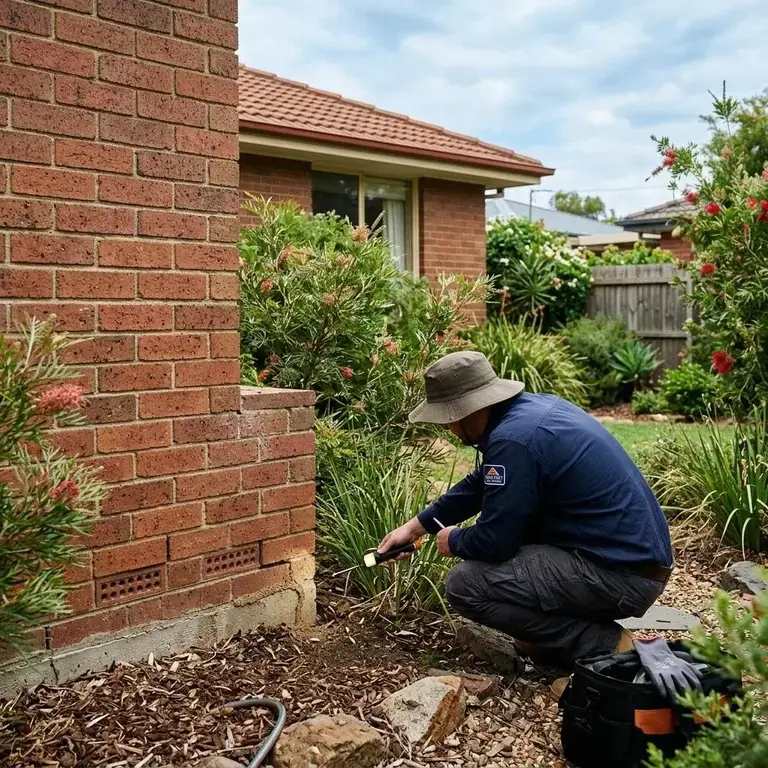
Nine times out of ten, when we find termites in a home’s subfloor, there was activity in a fence or sleeper wall on that block first. The boundary is where we’d rather catch it — a treated fence colony is a straightforward job, while the same colony six metres further in becomes a structural problem. If your posts sound hollow, don’t wait and don’t rip the fence out before it’s inspected.
Inspect your fence line and retaining walls at least twice a year — probe post bases with a screwdriver, look for mud leads, and keep soil and mulch clear of timber. If you find any sign of activity, leave it undisturbed and book a licensed termite inspection so the colony can be treated properly and a barrier put between it and your home.
Frequently Asked Questions
Why are timber fences and retaining walls such a common starting point for termite problems?
Fence posts and sleeper walls combine the three things a subterranean termite colony needs: timber, soil contact and moisture. Because they sit in constant ground contact, species like Coptotermes and Schedorhinotermes often establish there first, sometimes years before reaching the house. A fence line running up to the home then acts as a covered, moist highway leading straight to your subfloor or wall frames.
What warning signs should I look for when checking my fence for termites?
Tap along posts — damaged timber sounds papery or hollow and may wobble at the base. Look for mud packing in cracks, joints and around post bases, soft crumbling wood that flakes under gentle screwdriver pressure, blistered or rippled paint where tunnelling sits beneath, and sagging or leaning sections with no obvious cause. Walk your boundary a couple of times a year and check retaining walls just as carefully.
Are treated pine fence posts safe from termites?
Treated pine resists termites but is not immune. The treatment protects the outer timber, but cut ends, drill holes and weathering can expose untreated cores that termites will readily attack. Over time, surface weathering also reduces protection. Treated pine is still a better choice than untreated softwood palings or hardwood posts, but it should never be relied on as your only defence, especially where posts meet soil.
Why do timber-sleeper retaining walls hide termite damage so well?
Sleeper walls trap moisture behind them and hold soil against the timber on one side, so termites can feed concealed from view. Damage often stays hidden until a section collapses. Worse, the backfill can conceal mud leads travelling toward the building, meaning an infested retaining wall may be quietly bridging termites toward your home long before any visible sign appears on the exposed face.
Can I treat a termite colony in my fence myself?
No. Disturbing termites without eliminating the colony usually just scatters them, often toward the house. APVMA-registered termiticides require licensed application, and chemical treatment, dusting, baiting or soil treatment should be carried out by a licensed pest control technician. What you can do yourself is inspect regularly, probe post bases, clear soil and mulch off timber, and leave any active colony undisturbed until professionally assessed.
How does termite activity around fences change through the year in Australia?
Subterranean termite pressure peaks through the warmer, wetter months, roughly October to April, when soil moisture and temperature suit foraging and colony expansion. Activity dips in mid-winter, especially in southern states, but rarely stops completely in irrigated gardens or sheltered, north-facing fence lines. Late summer, when colonies are largest, is an ideal time to walk your boundary and probe post bases.
Does my home style affect how easily fence termites reach the house?
Yes. Homes on stumps or with suspended floors, such as Queenslanders, older weatherboards and many pre-war brick homes, offer easy access from a fence line into the subfloor. Slab-on-ground brick veneer homes are not immune either — foraging workers exploit weep holes, slab edges and garden beds built up against walls. Keeping a gap between fence and house helps break the pathway in both cases.
What practical steps help break the bridge between a fence colony and my home?
Remove the direct timber pathway by keeping a gap between the fence and house, using treated or steel posts, and clearing soil, mulch and debris off timber to reduce moisture and hidden ground contact. Inspect fences and retaining walls at least twice a year, probing post bases and looking for mud leads. If you find activity, leave it undisturbed and have the colony treated before it reaches the structure.
What happens during a professional inspection for termites in fences and retaining walls?
Aussie Pest Strike inspects the full boundary, not just the house — covering fences, retaining walls, gardens and the entire building envelope. Technicians tap and probe posts, check for mud packing and blistered paint, and use moisture meters and experience to read concealed leads behind sleepers and backfill. You receive a written report detailing any activity found and recommended next steps, so nothing gets disturbed before the colony can be properly treated.
I found hollow-sounding fence posts — what should I do next?
Don't rip the fence out or spray it yourself. Disturbing an active colony scatters termites, often toward the house. Leave the area undisturbed and book Aussie Pest Strike for a licensed termite inspection so the colony can be identified and eliminated properly, with a barrier considered between it and your home. Catching activity at the boundary can mean a straightforward treatment instead of structural repairs running into five figures.
Sources & further reading
Found Something
Dangerous?
Don’t touch it. Don’t spray it. Keep kids and pets clear, take a photo from a safe distance, and call us — or book a free inspection and we’ll come to you.
02 7235 0050