Termite Eggsand Reproduction: WhyColonies Explode
Termite eggs and — termite eggs are the engine behind runaway infestations: a single mature queen of Coptotermes can lay well over 1,000 eggs a day, and...
A single mature Coptotermes queen can lay well over 1,000 termite eggs a day — and that relentless output is why Australian termite infestations escalate so fast. Across Australia, from humid Queensland to temperate Victoria, colonies can swell past a million individuals, quietly consuming timber framing, subfloors and roof trusses while the eggs themselves stay hidden deep inside the nest.
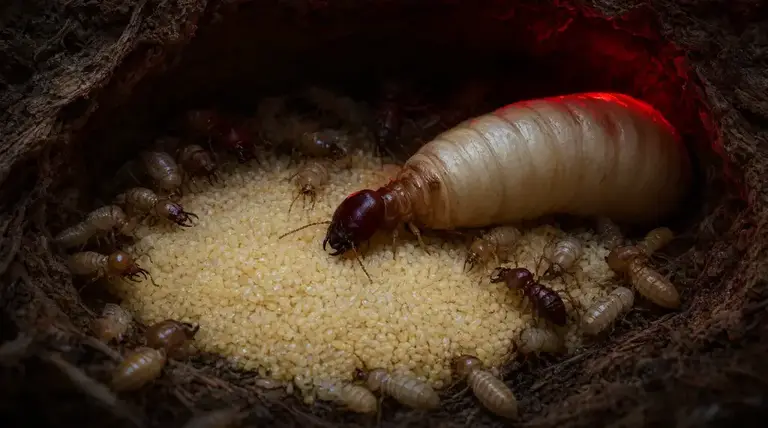
Termite eggs are tiny, translucent-white ovals under 1 mm long, laid in humid nursery chambers where you will almost never see them. Understanding this reproductive machine explains why waiting, or spraying the few workers you can see, never solves the problem — and why professional pest control targets the whole colony, not the symptoms.
- A mature queen of Coptotermes can lay well over 1,000 eggs per day, driving compounding colony growth.
- Termite eggs incubate for around 3–4 weeks, hatching faster in warm Australian summer conditions.
- Secondary reproductives let large colonies spread into wall voids, subfloors and satellite nests.
- Surface sprays never reach the queen or nursery — only colony-wide baiting or barriers work.
- An annual professional inspection is the most reliable defence for Australian homes.
Why termite eggs and reproduction matter for Australian homes
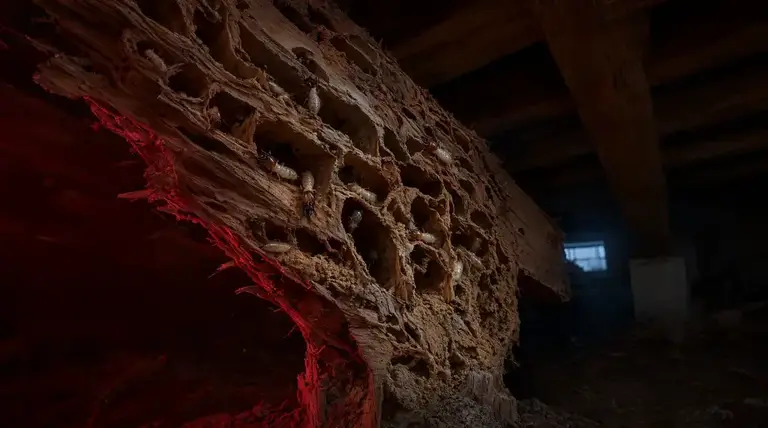
Australia’s climate and housing styles make termite reproduction a year-round national threat. Termites thrive in warm, humid conditions — exactly what much of the country delivers — and the timber-rich construction of Australian homes gives a growing colony everything it needs. In Queensland and the NT, high humidity keeps colonies active almost continuously; in southern states, activity concentrates in the warmer months but rarely stops entirely.
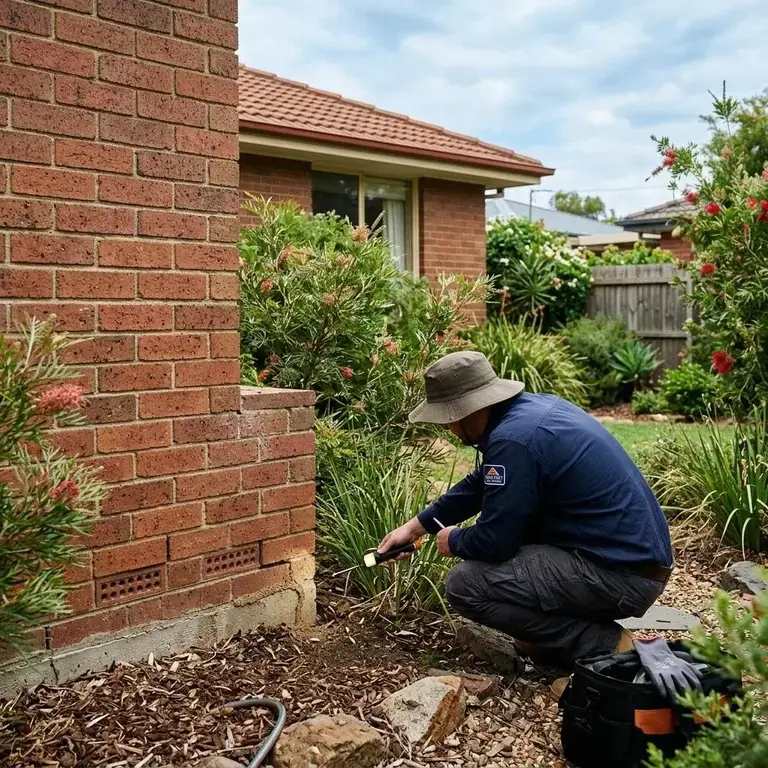
Housing type matters too. Older Queenslanders and homes with timber subfloors give subterranean species easy, concealed access from soil to timber. Brick veneer homes on slabs are not immune — termites exploit weep holes, plumbing penetrations and cracks as fine as a couple of millimetres to reach concealed wall framing. Because the queen keeps producing thousands of eggs regardless of which timber is currently being eaten, a small foothold today becomes structural damage next season. This is why our Termite Inspections & Reports focus on finding active colonies and their entry points, not just visible damage.
For context on how quickly a colony scales, see how a termite colony grows to millions.
Warning signs a termite colony is multiplying on your property
You will almost never see termite eggs themselves, so detection relies on the signs of an established, reproducing colony. Check for these indicators regularly, especially in spring and summer.
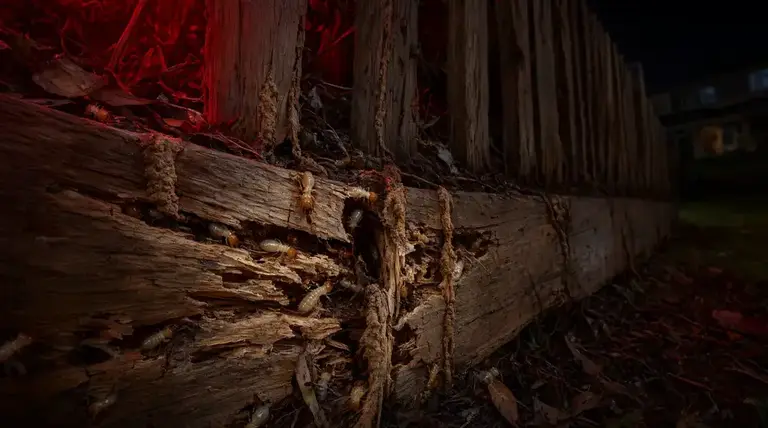
- Mud tubes on walls, piers or slab edges: pencil-width earthen tunnels connecting soil to timber — the highway an active colony uses daily.
- Hollow-sounding or papery timber: skirtings, door frames and floorboards that sound empty when tapped or give under light pressure.
- Discarded wings near windowsills: evidence of alates that have shed their wings to found new colonies — a mature, reproducing nest is nearby.
- Swarming flying termites at dusk: winged reproductives emerging in warm, humid weather; see what flying termites mean for your home.
- Tight-fitting doors and windows: moisture and tunnelling distort frames as colonies expand.
- Faint clicking or rustling in walls: soldier head-banging and worker activity inside timber.
- Bubbling or uneven paint: moisture from termite activity trapped beneath surfaces.
For a fuller checklist, read 10 Warning Signs of Termites in Australian Homes. If you find whitish ovals in the open, they are far more likely to be ant eggs — termites keep their eggs buried in the central nursery, a key difference covered in our guide to subterranean termites in Australia.
The reproductive machine behind runaway colonies
Termite colony growth is exponential because reproduction never pauses: a founding queen starts slowly, but as she matures her abdomen swells and egg output climbs to well over 1,000 per day in peak Coptotermes colonies, sustained over a lifespan of many years.
Development from termite eggs to workers follows a clear pattern:
- Egg: incubates for around 3 to 4 weeks depending on temperature and humidity.
- Larva: hatchlings are fed by workers and moult several times.
- Caste split: larvae develop into workers, soldiers or future reproductives based on colony need.
Critically, many Australian subterranean colonies do not rely on a single queen. Large or fragmented colonies produce supplementary reproductives — sometimes dozens — that lay eggs alongside the primary queen. Satellite nests spring up in wall voids, tree stumps and subfloor timbers, each pumping out its own eggs. This is why an infestation left for even one season can jump from a localised problem to activity in several parts of the structure at once.
DIY vs professional termite control
DIY sprays and hardware-store dusts kill only the workers you can see, leaving the queen, the eggs and the nest untouched. Professional pest control uses colony-wide baiting or chemical barriers designed to eliminate the nest at its source — the only way to stop reproduction.
| Factor | DIY approach | Professional treatment |
|---|---|---|
| Reaches the queen and eggs | No — nursery sits deep in the nest | Yes — baiting/barriers target the whole colony |
| Handles secondary reproductives | No — satellite nests survive | Yes — monitoring covers all activity zones |
| Detection ability | Visual guesswork only | Moisture meters, thermal imaging, experience |
| Ongoing protection | None | Barrier warranty and scheduled monitoring |
Our Termite Treatment & Barrier Systems are installed by licensed technicians using APVMA-registered products, applied strictly to label directions.
Termite treatment costs in Australia (2025–26)
Across the Australian pest control industry, professional termite work typically runs from a few hundred dollars for an inspection through to several thousand for a full chemical barrier on a large home. The figures below are typical Australian market rates — what the industry generally charges — and they shift with house size, construction type and colony activity.
| Service | Typical market rate (AUD) | What’s included/notes |
|---|---|---|
| Termite inspection | $250–$450 | Full timber pest inspection and written report |
| Baiting system installation | $2,000–$3,500 | Stations, installation and initial monitoring |
| Chemical soil barrier | $2,500–$5,000+ | Trenching/drilling around perimeter; sized to home |
| Active colony treatment | $800–$2,500 | Dusting, foaming or baiting of live activity |
To understand what a barrier actually does, read What Is a Termite Barrier and How Does It Protect Your Home? and our breakdown of what a termite inspection includes and why it matters.
Here’s the important part: those are industry-wide market rates, not our pricing. Aussie Pest Strike typically comes in well under these figures, and we’re happy to prove it. Call us on [aps_phone] for an exact, no-obligation quote tailored to your property.
Seasonal termite reproduction and activity in Australia
Termite reproduction and foraging peak from late spring through summer, when warmth speeds egg incubation and triggers swarming. Activity dips in mid-winter but never stops entirely, especially in the northern states.
Jan
Feb
Mar
Apr
May
Jun
Jul
Aug
Sep
Oct
Nov
Dec
Typical seasonal pattern: egg incubation, foraging and swarming peak December–February, building again from September; winter slows but does not stop colonies, particularly in Queensland and northern Australia.
In my experience, homeowners always underestimate how fast a colony compounds. By the time you see damage, the queen has been laying thousands of eggs a day for months. Catch it early with an inspection, and you save yourself the big repair bills.
Book a professional termite inspection at least once a year — twice in high-risk northern regions — and have any live activity treated with colony-wide baiting or a chemical barrier installed by a licensed technician. Never rely on surface sprays: they leave the queen, the termite eggs and the satellite nests intact.
Frequently Asked Questions
What do termite eggs look like?
Termite eggs are tiny, translucent-white ovals measuring under 1 mm long. They are laid deep inside humid nursery chambers within the nest, which is why you will almost never see them. If you find whitish ovals in the open around your home, they are far more likely to be ant eggs, as termites keep their eggs buried in the central nursery rather than exposed.
How quickly can a termite queen's egg production grow a colony?
A mature Coptotermes queen can lay well over 1,000 termite eggs per day once her abdomen swells and she reaches peak output, sustained over a lifespan of many years. This relentless production is what drives exponential colony growth in Australia, allowing colonies to swell past a million individuals and turning a small foothold into structural damage within a season or two.
How long do termite eggs take to hatch?
Termite eggs incubate for around 3 to 4 weeks, depending on temperature and humidity. Hatching happens faster in warm Australian summer conditions, which is why reproduction peaks from late spring through summer. After hatching, the larvae are fed by workers and moult several times before developing into workers, soldiers or future reproductives based on the colony's needs.
What are secondary reproductives in a termite colony?
Secondary reproductives are supplementary egg-laying termites that many large or fragmented Australian subterranean colonies produce — sometimes dozens of them — alongside the primary queen. Each lays its own eggs, and satellite nests can spring up in wall voids, tree stumps and subfloor timbers. This is why an infestation left for even one season can spread to several parts of a structure at once.
Why doesn't spraying visible termites stop an infestation?
Surface sprays and hardware-store dusts kill only the workers you can see. The queen, the termite eggs and the nursery sit deep inside the nest where sprays never reach, and satellite nests with secondary reproductives survive untouched. Only colony-wide baiting or chemical barriers installed by a licensed technician target the whole colony and can stop reproduction at its source.
How does Australian climate affect termite reproduction?
Termites thrive in warm, humid conditions, so in Queensland and the Northern Territory high humidity keeps colonies active almost continuously. In southern states like Victoria, activity concentrates in the warmer months but rarely stops entirely. Egg incubation, foraging and swarming all peak from December to February, building again from September, while winter slows but does not halt colonies.
How do termites get into brick veneer homes on slabs?
Brick veneer homes on concrete slabs are not immune to termites. Subterranean species exploit weep holes, plumbing penetrations and cracks as fine as a couple of millimetres to reach concealed wall framing. Because access is hidden from view, a reproducing colony can feed on timber framing for months before damage becomes visible, which is why regular professional inspections matter regardless of construction type.
What signs show a termite colony is multiplying?
Because you will almost never see the eggs themselves, detection relies on signs of an established, reproducing colony: mud tubes on walls, piers or slab edges; hollow-sounding timber that gives under light pressure; discarded wings near windowsills; swarming flying termites at dusk; tight-fitting doors and windows; faint clicking or rustling in walls; and bubbling or uneven paint. Check regularly, especially in spring and summer.
I have tried checking my home for the warning signs in this article and found something suspicious — how do I arrange help?
If you have spotted mud tubes, hollow-sounding timber, discarded wings or any other sign of a reproducing colony, contact Aussie Pest Strike to arrange a professional termite inspection. A licensed technician can confirm whether activity is present, locate entry points and recommend colony-wide baiting or a chemical barrier suited to your property. You can request a no-obligation quote tailored to your home rather than guessing at the problem yourself.
What is the best next step after reading about termite reproduction to protect my home long term?
The most reliable defence is scheduling an annual professional termite inspection — twice yearly in high-risk northern regions — so a growing colony is caught before the queen has laid thousands of eggs a day for months. Aussie Pest Strike offers Termite Inspections & Reports focused on finding active colonies and their entry points, not just visible damage, and can advise on monitoring or barrier options if activity is found.
Sources & further reading
Found Something
Dangerous?
Don’t touch it. Don’t spray it. Keep kids and pets clear, take a photo from a safe distance, and call us — or book a free inspection and we’ll come to you.
02 7235 0050