Termite Swarmers: WhatFlying Termites Meanfor Your Home
Termite swarmers what — flying termites, properly called alates or swarmers, are winged reproductive termites released by a mature colony to fly off, pair...
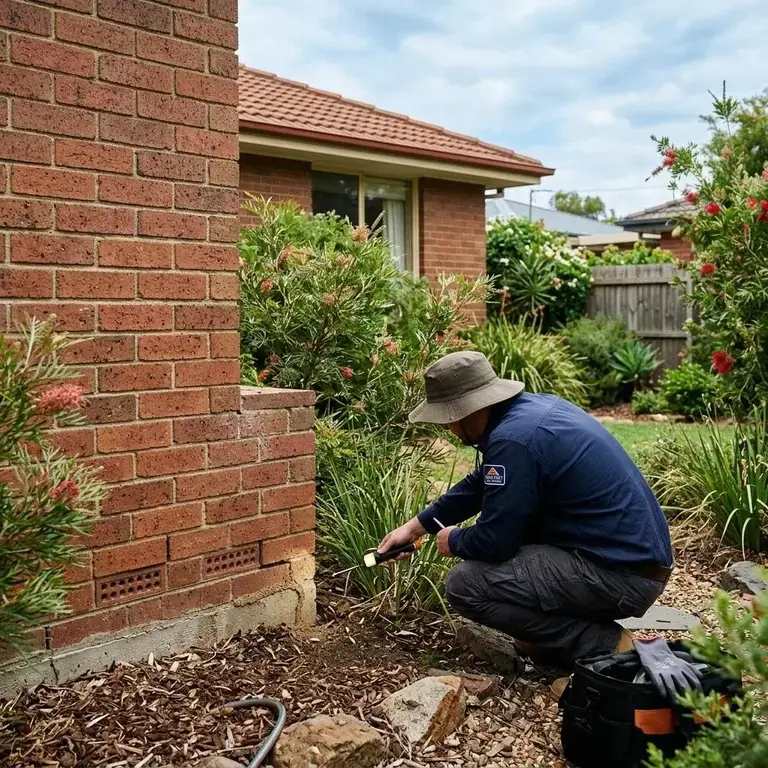
If you’ve spotted flying termites around your home — whether it’s a Queenslander in Brisbane, a brick veneer in Melbourne or a slab home in Perth — you need to treat it as a serious warning, not a curiosity. Those winged insects are reproductive termites, and their presence means a mature colony is operating nearby, often within 50 metres of where you saw them.
Flying termites (properly called alates or swarmers) are winged reproductive termites released by an established colony to pair up and found new nests. Unlike the worker termites that quietly eat your timber, alates are the one life stage you’re likely to see in the open — which makes them a rare, valuable early-warning signal. This guide explains what they are, how to tell them apart from flying ants, what to do next, and what professional termite pest control typically costs in Australia in 2025-26.
- Flying termites (alates) are reproductive termites from a mature colony — seeing them means an established nest is nearby, often within 50 metres.
- Swarmers found indoors are a stronger red flag than those outside; the colony may already be inside your walls or subfloor.
- Tell termites from flying ants by the straight waist, four equal-length wings and straight antennae — and piles of identical shed wings on sills.
- Don’t spray swarmers. Collect a specimen, turn off external lights, and book a professional inspection immediately.
- Most Australian swarms occur on warm, humid evenings from spring through summer, often after rain.
Why Flying Termites Are a Serious Risk Across Australia
Flying termites matter in every Australian state because our climate gives subterranean termites near-ideal conditions for most of the year, and our housing stock gives them plenty of timber to attack. From the tropical north to temperate southern cities, warm humid evenings trigger mass flights — and every flight is proof of a colony that has spent years growing large enough to reproduce.
Housing style shapes your risk. Elevated Queenslanders and older homes with accessible subfloors give termites concealed entry via stumps and ant caps. Slab-on-ground homes — now the dominant construction in newer estates — are vulnerable at slab edges, plumbing penetrations and weep holes in brick veneer. In coastal Queensland and northern NSW, swarming can begin as early as late winter; in southern states it concentrates in late spring and summer. Regardless of postcode, one in several Australian homes will experience termite attack at some point, and swarmers are often the first visible clue. If you want the full picture of what else to look for, our guide to the 10 warning signs of termites in Australian homes is a useful cross-check.
What Swarmers Actually Are
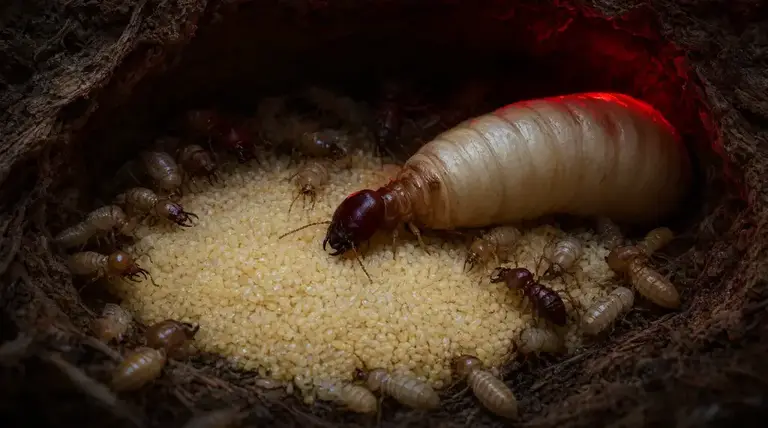
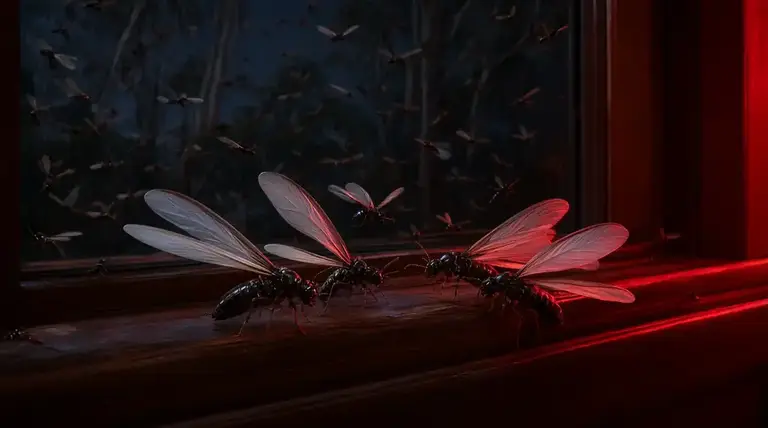
A subterranean termite colony spends years building numbers before it can afford to produce reproductives. Once mature, it releases alates — soft-bodied insects about 8–10 mm long with four equal-length wings roughly twice their body length.
In Australia these flights typically happen on warm, humid evenings from spring into the December–February summer, often after rain, when still, moist air favours survival. The swarm lasts only minutes to hours before the termite swarmers shed their wings and search for a mate. Poor fliers by nature, alates rarely travel far under their own power; they rely on the wind. That is why a swarm concentrated inside one room, rather than scattered across the yard, so often points to timber already under attack in that part of the structure.
Why they appear indoors
Swarmers are drawn to light, so they frequently gather at windows, downlights and glass doors. Finding them inside is worse than finding them outside — it suggests a colony is already established within your walls or subfloor rather than in the garden.
A single mature colony can release thousands of alates in one flight, so a cluster appearing at an internal window on a warm night is a strong indicator the nest is close. Even swarmers that clearly came from outside put your property within range of the parent colony.
Warning Signs That Accompany Flying Termites
Flying termites rarely appear in isolation — an established colony nearby usually leaves other evidence if you know where to look. Work through this checklist after any swarm event:
- Discarded wings. Piles of identical, equal-length wings on windowsills, floors or in spider webs — termites snap their wings off at a basal fracture line once they land.
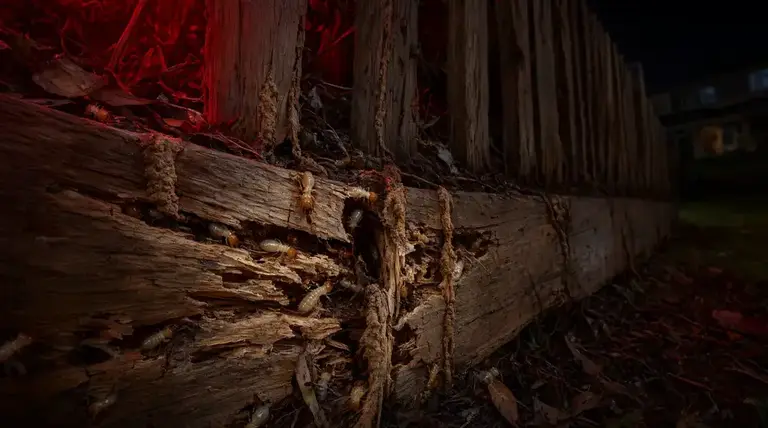
- Mud tubes. Pencil-width earthen tunnels running up stumps, piers, slab edges or internal walls.
- Hollow-sounding timber. Skirtings, architraves or window frames that sound papery when tapped.
- Tight doors and windows. Warping caused by termite moisture and internal damage.
- Fine frass or mud spots. Small patches of mud-like material on walls, ceilings or cornices where termites have repaired breaches.
- Soft or bubbling paint. Damage concealed just beneath the paint film on timber trim.
Any one of these alongside swarmers justifies an urgent professional assessment. Our article on what a termite inspection includes and why it matters explains exactly what a licensed technician checks.
Flying Termites vs Flying Ants
The fastest way to tell flying termites from flying ants is to check the waist, wings and antennae — termites have a straight waist, four equal wings and straight antennae, while ants have a pinched waist, unequal wings and elbowed antennae. Getting this wrong wastes precious time, so use this comparison:
| Feature | Termite alate | Flying ant |
|---|---|---|
| Waist | Straight, no waist | Pinched, narrow waist |
| Wings | Four equal length | Front pair larger than back |
| Antennae | Straight, bead-like | Bent (elbowed) |
| Shed wings | Piles of equal wings on sills | Rarely shed in piles |
A telltale sign is a scatter of discarded, identical wings on windowsills or floors — you often find the wings before you find the insects. Ant wings, by contrast, are unequal in size and rarely shed in tidy piles.
DIY vs Professional Termite Pest Control
There is no effective DIY fix for an established termite colony — killing visible swarmers does nothing to the nest, and scattering foragers can actually make the problem harder to treat. Your job is identification and damage limitation; a licensed technician’s job is locating and eliminating the colony with APVMA-approved products applied to label.
| Approach | What it achieves | Limitations |
|---|---|---|
| DIY: collect specimens, reduce lighting, check for mud tubes | Confirms identity, reduces attraction, documents evidence | Does not touch the colony or stop timber damage |
| DIY: hardware-store sprays | Kills visible insects only | Can scatter foragers and mask the true extent of activity |
| Professional inspection and treatment | Locates the nest, species and entry points; eliminates colony; installs protection | Upfront cost, but far cheaper than structural repairs |
For long-term protection, ask about termite treatment and barrier systems — our explainer on what a termite barrier is and how it protects your home covers chemical and physical options in plain language.
How Much Does Termite Pest Control Cost in Australia?
As a guide for 2025-26, typical Australian market rates for termite work are as follows: a professional termite inspection generally costs $250–$450 across the industry, while full colony treatment and barrier installation usually ranges from $1,500–$4,500 depending on home size and construction. These are broad industry figures — actual quotes vary with slab versus subfloor access, perimeter length and soil type.
| Service | Typical Australian market rate (AUD) | What’s included/notes |
|---|---|---|
| Termite inspection (timber pest inspection to AS 3660) | $250–$450 | Full interior, roof void, subfloor and grounds; moisture meter and thermal imaging; written report |
| Spot/active treatment of located colony | $300–$900 | Dusting, foaming or baiting of active workings by a licensed technician |
| Chemical soil barrier (full perimeter) | $1,500–$4,500 | Trenching/drilling and application of registered termiticide; typical 5–8 year product life |
| Baiting and monitoring system | $1,800–$3,500 installed + $300–$600/yr monitoring | In-ground stations with ongoing colony elimination and servicing |
Compare those figures with structural repair bills, which routinely run into the tens of thousands once termites reach load-bearing timber. An annual inspection through a professional termite inspections and reports service is the cheapest insurance available.
Keep in mind the rates above are the general industry standard — Aussie Pest Strike typically comes in well under these market rates while delivering the same licensed, fully insured service. For an exact quote tailored to your property, give us a call on [aps_phone] today.
When Do Termites Swarm in Australia? Seasonal Activity
Termite swarming peaks from late spring through summer — October to February — when warm, humid evenings follow rain, though tropical northern Australia can see flights almost year-round. The bar chart below shows typical relative swarm activity by month across most populated regions.
Jan
Feb
Mar
Apr
May
Jun
Jul
Aug
Sep
Oct
Nov
Dec
Typical Australian termite swarm activity peaks November–February after humid, rainy evenings; winter lows apply mainly to southern states, while northern regions stay active longer.
When a customer calls about swarmers at a window, I treat it as an active job until proven otherwise. In most cases the colony has been feeding for years before it ever produced wings — the swarm is just the first time the termites showed themselves. The worst thing you can do is spray the swarm and assume the problem is gone.
If you’ve seen flying termites or found shed wings indoors, book a professional inspection within days, not weeks. Don’t disturb mud tubes or spray anything. A licensed technician will identify the species, locate the colony and recommend treatment or a barrier suited to your home’s construction. Chemical treatments should always be applied by licensed pest-control technicians using APVMA-registered products.
Frequently Asked Questions
What are flying termites and why do they appear around my home?
Flying termites, properly called alates or swarmers, are winged reproductive termites released by a mature colony to pair up and found new nests. They are about 8–10 mm long with four equal-length wings roughly twice their body length. Seeing them means an established nest is operating nearby, often within 50 metres of where you spotted them, so they should be treated as a serious warning rather than a curiosity.
Do flying termites damage my home themselves or are they a sign of a hidden colony?
Check the waist, wings and antennae. Termite alates have a straight waist with no pinch, four wings of equal length, and straight bead-like antennae. Flying ants have a pinched waist, a front wing pair larger than the back pair, and bent or elbowed antennae. A telltale termite sign is piles of identical shed wings on windowsills or floors, because alates snap their wings off at a basal fracture line once they land.
What does it mean if I find flying termites inside my house?
Swarmers found indoors are a stronger red flag than those outside. Because alates are poor fliers and rely on wind to travel, a swarm concentrated in one room often points to timber already under attack in that part of the structure. It suggests a colony may already be established within your walls or subfloor rather than in the garden, so book a professional inspection immediately.
What should I do if I see flying termites?
Do not spray them. Collect a specimen for identification, turn off external lights that attract swarmers, and check for other evidence such as mud tubes, hollow-sounding timber or discarded wings. Then book a professional inspection straight away. Killing visible swarmers does nothing to the parent colony, and scattering foragers can make the true extent of activity harder for a technician to assess.
When do termites swarm in Australia?
Termite swarming peaks from late spring through summer, roughly October to February, when warm, humid evenings follow rain. Still, moist air favours survival during these mass flights. In coastal Queensland and northern NSW, swarming can begin as early as late winter, while tropical northern Australia can see flights almost year-round. Southern states concentrate their activity in late spring and summer.
What other warning signs usually appear alongside flying termites?
An established colony nearby usually leaves other evidence. Look for pencil-width mud tubes on stumps, piers, slab edges or internal walls; hollow-sounding skirtings, architraves or window frames; tight doors and windows from warping; fine frass or mud-like patches on walls and cornices; soft or bubbling paint on timber trim; and piles of identical shed wings. Any one of these alongside swarmers justifies an urgent professional assessment.
Can I get rid of flying termites myself?
There is no effective DIY fix for an established termite colony. Collecting specimens, reducing lighting and checking for mud tubes confirms identity and documents evidence but does not touch the colony. Hardware-store sprays kill only visible insects and can scatter foragers, masking the true extent of activity. Locating and eliminating the colony requires a licensed technician using APVMA-approved products applied to label.
Why do slab homes and Queenslanders both face termite risk?
Housing style shapes how termites enter. Elevated Queenslanders and older homes with accessible subfloors give termites concealed entry via stumps and ant caps. Slab-on-ground homes, now dominant in newer estates, are vulnerable at slab edges, plumbing penetrations and weep holes in brick veneer. Australia's climate gives subterranean termites near-ideal conditions most of the year, so every housing style needs vigilance.
When is it worth asking Aussie Pest Strike for an on-site assessment after seeing flying termites?
Any sighting of swarmers indoors, or outdoors alongside mud tubes, shed wings or hollow-sounding timber, is the right moment to request an on-site assessment. A licensed technician can confirm whether the insects are termites or ants, locate the nest, species and entry points, and recommend appropriate treatment before damage reaches load-bearing timber. An annual inspection is also worthwhile even without a swarm event.
What practical next step should I take after collecting a termite specimen?
Once you have collected a specimen and turned off external lights, contact Aussie Pest Strike to arrange a professional timber pest inspection carried out to AS 3660. The inspection covers the interior, roof void, subfloor and grounds using moisture meters and thermal imaging, and results in a written report identifying any activity. That report gives you clear evidence of what is happening before any treatment decisions are made.
Sources & further reading
Found Something
Dangerous?
Don’t touch it. Don’t spray it. Keep kids and pets clear, take a photo from a safe distance, and call us — or book a free inspection and we’ll come to you.
02 7235 0050