Termite Mud Tubes:What They Are andWhere to Look
Termite mud tubes are an early warning of infestation. Learn what they are, where to look and what to do next, with a free inspection to confirm activity.
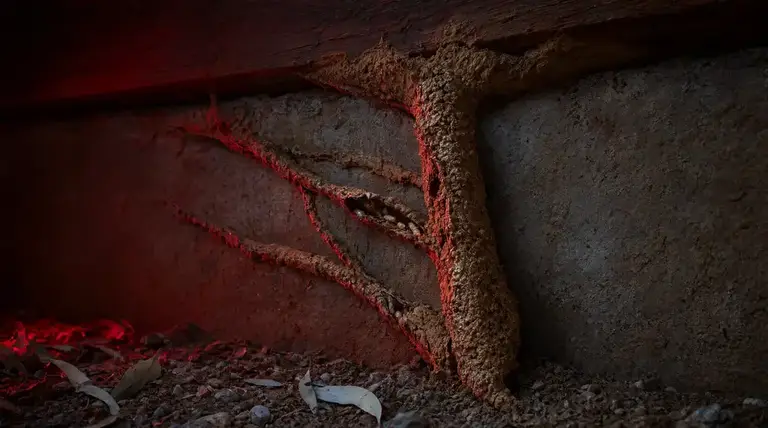
Termite mud tubes are pencil-thin tunnels of soil, saliva and faeces that subterranean termites build to travel between their underground nest and a timber food source while staying hidden and humid. Every homeowner in Australia should know how to recognise them, because spotting a tube early is one of the most reliable warning signs of an active infestation — and early detection is what separates a quick treatment from a five-figure repair bill.
These tubes usually appear on foundations, subfloor piers and inside wall cavities, and they tell you two things at once: termites are present, and they’ve already found a route into your timber. This guide explains why termites build mud tubes, the four types you’ll encounter, exactly where to look around your home, what to do (and not do) when you find one, and what professional inspection and treatment typically costs in 2025-26.
- Termite mud tubes are sealed soil tunnels, roughly 5–8 mm wide, that keep subterranean termites humid and hidden while they travel between nest and timber.
- There are four types — exploratory, working, drop and swarm tubes — and each tells you something different about colony behaviour.
- Never knock a tube down; photograph it and book a licensed inspection so a technician can confirm activity and trace the foraging path.
- Professional termite inspections in Australia typically cost $250–$450, while full treatment and barrier systems generally range from $2,000 to $5,000 depending on the home.
- Tube activity peaks in the warmer, wetter months, but in northern Australia termites forage year-round.
Why Termite Mud Tubes Matter in Australian Homes
Mud tubes matter because Australia’s climate and housing stock create near-perfect conditions for subterranean termites, and tubes are often the first visible clue they’ve moved in. Warm temperatures, seasonal rainfall and widespread timber construction mean most mainland homes sit within foraging range of at least one colony.
Australia’s most destructive species, Coptotermes acinaciformis, has a soft, thin cuticle that dries out and kills the insect within hours of exposure to open air or sunlight. To bridge the gap between damp soil and the dry timber in your home, workers construct sealed galleries in which humidity stays near 100%, letting the colony forage day and night, undetected.
Construction style shapes the risk. Slab-on-ground homes typically show tubes along slab edges, weep holes and the cavity between brick veneer and framing. Older Queenslanders and weatherboard homes with raised subfloors are vulnerable at stumps, bearers and joists — especially where poor ventilation traps moisture. Recognising termite mud tubes early in any of these construction types can save tens of thousands of dollars in structural repairs, which is why a regular Termite Inspections & Reports schedule is standard practice for switched-on homeowners. If you want to understand what a professional actually checks, our guide to a Termite Inspection: What It Includes and Why It Matters walks through the process step by step.
The Four Types of Mud Tube and Where to Look
Mud tubes come in four recognisable forms, and each one signals a different stage of colony activity. Learning to tell them apart helps you describe what you’ve found when you speak to a pest control technician.
- Exploratory tubes — thin, fragile tunnels that branch out as termites search for food; they often break off mid-air where the search was abandoned.
- Working tubes — thicker highways carrying heavy foot traffic between the nest and a confirmed timber food source; these are the ones that indicate established feeding.
- Drop tubes — suspended tubes hanging from ceilings, bearers or joists back down toward the ground, connecting an elevated food source to the soil.
- Swarm tubes — wider, temporary exit points built so winged reproductives (alates) can leave the colony during the spring–summer swarming season.
Mud tubes favour dark, humid, undisturbed spots. Grab a torch and check these zones every few months, especially through the December–February breeding surge:
- Slab edges and weep holes — inspect the exposed perimeter of concrete slabs and every weep hole in brick veneer for thin earthen lines climbing upward.
- Subfloor stumps, bearers and joists — crawl the subfloor of raised homes and check every pier; tubes on stumps are the classic find in Queenslanders.
- Skirting boards, architraves and garage slab joins — look behind and beneath timber trim and where the internal slab meets the wall.
- Hot-water systems, taps and air-conditioning condensate lines — any persistent moisture source attracts foragers and anchors tube construction.
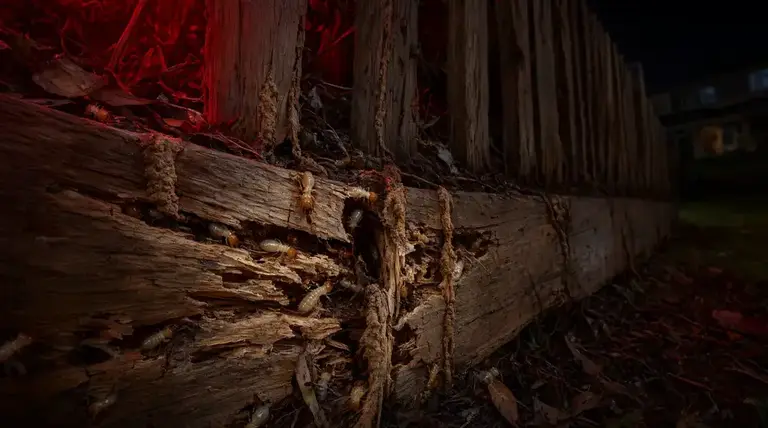
- Garden beds, fences and stored timber against the house — timber-to-ground contact gives termites a covered bridge straight to your walls.
For a broader picture of what else to watch for, see our rundown of the 10 Warning Signs of Termites in Australian Homes.
What to Do If You Find a Tube: DIY Checks vs Professional Inspection
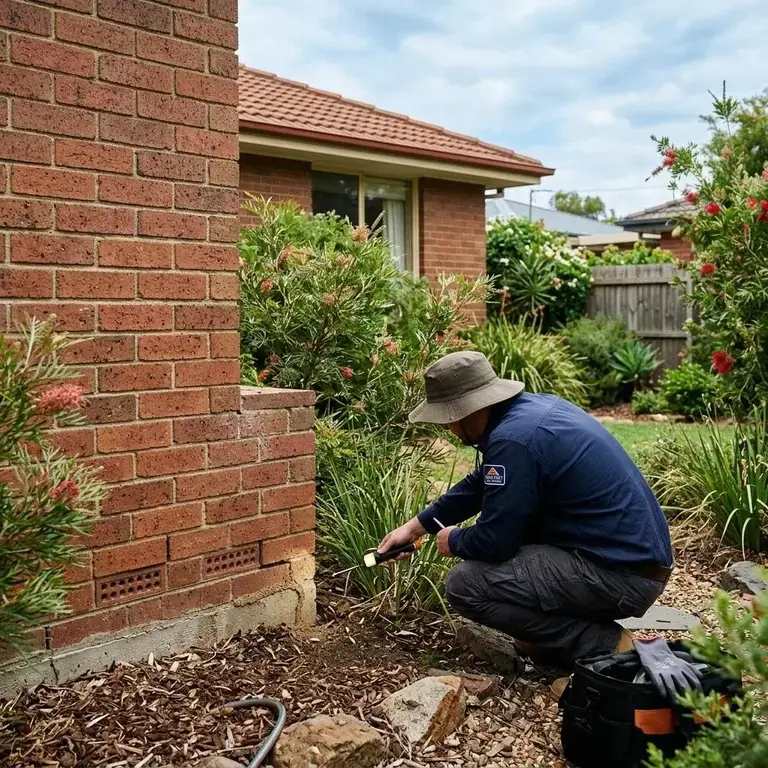
If you find a tube, do not knock it down or disturb it. Leaving it intact lets a technician confirm whether the colony is still active and trace the foraging path back toward the nest; if you break a working tube open, termites often retreat and rebuild elsewhere, making detection harder. Photograph it, note the location, and use the simple checks below while you arrange a professional assessment.
| Test | Active tube | Old / abandoned tube |
|---|---|---|
| Break open a small section | Live white workers inside | Empty, dry, crumbly |
| Colour and moisture | Dark, damp, freshly repaired | Pale, brittle |
| Repair after 24 hours | Tube resealed by workers | Stays open |
These checks tell you whether a tube is live, but they don’t tell you how far the infestation has spread. Because mud tubes only reveal the surface trail, a full assessment typically uses moisture meters and thermal imaging to map activity inside walls and floors. Chemical treatment should always be carried out by a licensed technician using APVMA-registered products applied to label directions — no product is 100% risk-free, and correct application is what keeps your household safe.
Termite Inspection and Treatment Costs in Australia (2025-26)
Across the Australian pest control industry, termite work typically ranges from a few hundred dollars for an inspection to several thousand for a full chemical barrier on a large home. What the industry generally charges varies with construction type, block size, access and how advanced the infestation is, but the figures below reflect typical Australian market rates for 2025-26.
| Service | Typical market rate (AUD) | What’s included / notes |
|---|---|---|
| Standard termite inspection | $250–$450 | Visual and moisture assessment of accessible areas with a written report; higher for large or subfloor homes. |
| Inspection with thermal imaging | $350–$600 | Adds thermal and moisture-mapping tools to locate concealed activity behind walls. |
| Spot treatment of active tubes | $300–$800 | Localised dusting or foaming of confirmed workings; usually a first step, not a whole-of-home solution. |
| Termite baiting system | $2,000–$3,500 | Stations installed around the perimeter plus ongoing monitoring visits; colony elimination over time. |
| Chemical soil barrier | $2,500–$5,000 | Trenching and treating soil around the perimeter; cost scales with lineal metres and drilling required. |
Our breakdown of Termite Treatment & Barrier Systems explains how each option works, and What Is a Termite Barrier and How Does It Protect Your Home? is a good primer if you’re weighing up baiting versus a chemical barrier.
Keep in mind these are typical market rates across the industry — Aussie Pest Strike typically comes in well under these figures. For an exact quote tailored to your property, give us a call on [aps_phone].
Seasonal Termite Activity Across Australia
Tube building and foraging surge in the warm, wet months from October through March, when soil moisture and temperature are ideal, and ease off through the southern winter. In tropical northern Australia, activity stays high almost year-round, so the chart below reflects a typical temperate-to-subtropical pattern.
Jan
Feb
Mar
Apr
May
Jun
Jul
Aug
Sep
Oct
Nov
Dec
Indicative relative termite foraging and tube-building activity by month in temperate/subtropical Australia. Peaks align with warm, humid conditions and the summer breeding surge; northern regions sustain higher year-round activity.
The worst thing a homeowner can do is rip a tube off the wall before we arrive. An intact tube is a map — it shows us where the colony is feeding and which way the traffic runs. Leave it alone, take a photo, and let a licensed technician read it properly.
Inspect your slab edges, weep holes, subfloor and moisture-prone areas every three months, and monthly through summer. If you find any mud tube — active or not — don’t disturb it. Book a licensed termite inspection promptly; if activity is confirmed, a professionally installed baiting program or chemical barrier is the reliable path to protecting the structure.
Frequently Asked Questions
What are termite mud tubes and why do termites build them?
Termite mud tubes are sealed tunnels, roughly 5–8 mm wide, made from soil, saliva and faeces. Subterranean termites build them to travel between their underground nest and a timber food source while staying hidden. Because species like Coptotermes acinaciformis dry out and die within hours of exposure to open air, the tubes keep humidity near 100%, letting workers forage day and night undetected.
What are the four types of termite mud tubes?
The four types are exploratory tubes (thin, fragile tunnels that branch out as termites search for food), working tubes (thicker highways carrying heavy traffic between nest and a confirmed timber source), drop tubes (suspended tubes hanging from ceilings, bearers or joists back toward the soil) and swarm tubes (wider, temporary exit points built for winged reproductives during spring–summer swarming). Each type signals a different stage of colony activity.
Where should I look for mud tubes around my home?
Check slab edges and weep holes in brick veneer, subfloor stumps, bearers and joists on raised homes, skirting boards, architraves and garage slab joins, plus areas near hot-water systems, taps and air-conditioning condensate lines where moisture attracts foragers. Also inspect garden beds, fences and stored timber touching the house, as timber-to-ground contact gives termites a covered bridge straight into your walls.
How can I tell if a mud tube is active or abandoned?
Break open a small section: an active tube contains live white workers and is dark, damp and freshly repaired, while an old tube is empty, dry, pale and crumbly. You can also check repair after 24 hours — workers will reseal an active tube but leave an abandoned one open. These checks confirm whether the tube is live but not how far the infestation has spread.
What should I do if I find a termite mud tube?
Do not knock it down or disturb it. An intact tube lets a licensed technician confirm whether the colony is still active and trace the foraging path toward the nest; breaking a working tube often causes termites to retreat and rebuild elsewhere, making detection harder. Photograph the tube, note its location, and book a professional inspection promptly.
When is termite tube-building activity highest in Australia?
Tube building and foraging surge during the warm, wet months from October through March, when soil moisture and temperature are ideal, and ease off through southern winter. In tropical northern Australia, activity stays high almost year-round. Homeowners are advised to inspect slab edges, weep holes, subfloors and moisture-prone areas every three months, and monthly through summer.
How does home construction affect termite mud tube risk?
Slab-on-ground homes typically show tubes along slab edges, weep holes and the cavity between brick veneer and framing. Older Queenslanders and weatherboard homes with raised subfloors are vulnerable at stumps, bearers and joists, especially where poor ventilation traps moisture. Knowing your construction type helps you focus inspections on the spots where tubes most commonly appear.
Why is a professional inspection needed even if I have checked a tube myself?
Mud tubes only reveal the surface trail, so they cannot show how far activity has spread inside walls and floors. A full assessment typically uses moisture meters and thermal imaging to map concealed activity. Any chemical treatment must also be carried out by a licensed technician using APVMA-registered products applied to label directions, as correct application keeps your household safe.
What information should I provide when booking help with suspected termite mud tubes?
When contacting Aussie Pest Strike about mud tubes, describe what you found and where — for example, whether it was on a slab edge, weep hole, stump or joist — and note whether the tube looked dark and damp or dry and crumbly. Photos of the intact tube are especially helpful, along with details of your home's construction type, such as slab-on-ground or raised subfloor.
What is the best next step after finding a mud tube at my home?
Leave the tube undisturbed, photograph it and note its location, then arrange a licensed termite inspection with Aussie Pest Strike. A technician can confirm whether the colony is active, trace the foraging path and recommend an appropriate response, such as a baiting program or chemical barrier, based on what the assessment finds.
Sources & further reading
Found Something
Dangerous?
Don’t touch it. Don’t spray it. Keep kids and pets clear, take a photo from a safe distance, and call us — or book a free inspection and we’ll come to you.
02 7235 0050