Termite Lifecycle: Howa ColonyGrows to Millions
Termite lifecycle how — a termite colony grows from a single mated pair into hundreds of thousands sometimes over a million individuals over several years,...
The termite lifecycle is the reason a handful of insects can turn into one of the most expensive structural problems an Australian homeowner will ever face. From a single mated pair, a colony can grow into hundreds of thousands — sometimes over a million — individuals in just a few years, driven by a long-lived queen that can lay thousands of eggs a day.
In simple terms, the termite lifecycle is the process by which a colony develops from two winged founders through egg, nymph and caste stages into a mature, self-sustaining nest that produces new swarmers each summer. Understanding how that growth works explains why killing the termites you can see achieves almost nothing, and why effective pest control always targets the nest itself. Whether you own a brick veneer in Melbourne, a Queenslander in Brisbane or a slab home in Perth, this is knowledge worth having.
- A termite colony starts with one king and one queen, grows slowly for a year, then expands exponentially.
- A mature Coptotermes queen can lay over 1,000 eggs a day and live well over a decade.
- Colonies can reach hundreds of thousands of termites within three to five years, foraging up to 50 metres from the nest.
- Killing visible workers fails because the queen keeps replacing them — treatment must reach the nest.
- Early detection through annual inspections is far cheaper than repairing structural damage.
Why the Termite Lifecycle Matters for Australian Homes
Understanding the termite lifecycle matters in Australia because our climate and housing styles give colonies everything they need to grow fast and stay hidden. Warm temperatures, seasonal humidity and abundant timber framing create ideal conditions for subterranean species such as Coptotermes and Schedorhinotermes across most of the mainland.
Queensland and northern New South Wales face the highest pressure, where hot, wet summers trigger mass swarming events and colonies can forage year-round. But southern states are far from safe. Melbourne’s older weatherboard homes, Adelaide’s villas and Perth’s sandy soils all support active termite populations, and even Canberra’s cold winters only slow colonies rather than stop them.
Housing design plays a big role too. Homes built on concrete slabs conceal termite entry points through cracks and service penetrations, while homes with subfloors give colonies dark, moist access to bearers and joists. Raised Queenslanders offer ventilation but also expose stumps and timber stairs. In every case, the termite lifecycle ticks away out of sight — which is why a yearly termite inspection and report is standard practice for responsible Australian homeowners.
Stage One of the Termite Lifecycle: The Founding Pair
Every termite colony begins when two winged alates — a male and a female — pair off after a swarm, shed their wings and dig a small chamber in moist soil or timber. This founding king and queen produce their first tiny batch of eggs and personally tend the earliest young, because there are no workers yet to help.
Growth in this first stage is deliberately slow. A new colony may number only a few hundred termites after its first year, and it poses little immediate threat to a home. But the machinery of growth is being built, and once enough workers mature, the pace changes dramatically.
Caste development
Termites are hemimetabolous, meaning eggs hatch into nymphs that develop gradually rather than passing through a pupal stage as beetles or moths do. The colony chemically regulates which caste each nymph becomes, adjusting the mix to match current needs — more soldiers if the nest comes under attack from ants, more workers when a rich food source is found. Depending on those needs, a nymph can become one of three castes:
- Workers — blind, sterile and creamy-white; they forage, feed the colony and cause all of the timber damage.
- Soldiers — armed with large mandibles to defend the nest, primarily against ants.
- Reproductives — future kings and queens, produced once the colony matures.
Stage Two: Exponential Growth
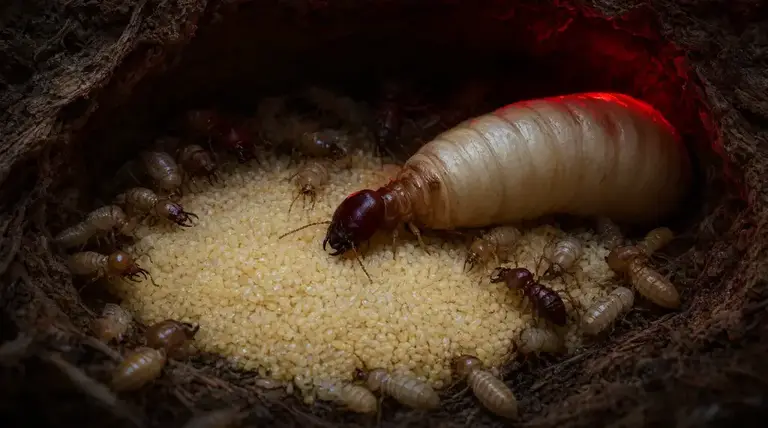
Once the first workers mature and take over foraging and brood care, the queen is freed to focus entirely on laying — and growth becomes exponential. A mature Coptotermes queen can lay well over 1,000 eggs a day, her abdomen swelling enormously as her egg-laying capacity increases.
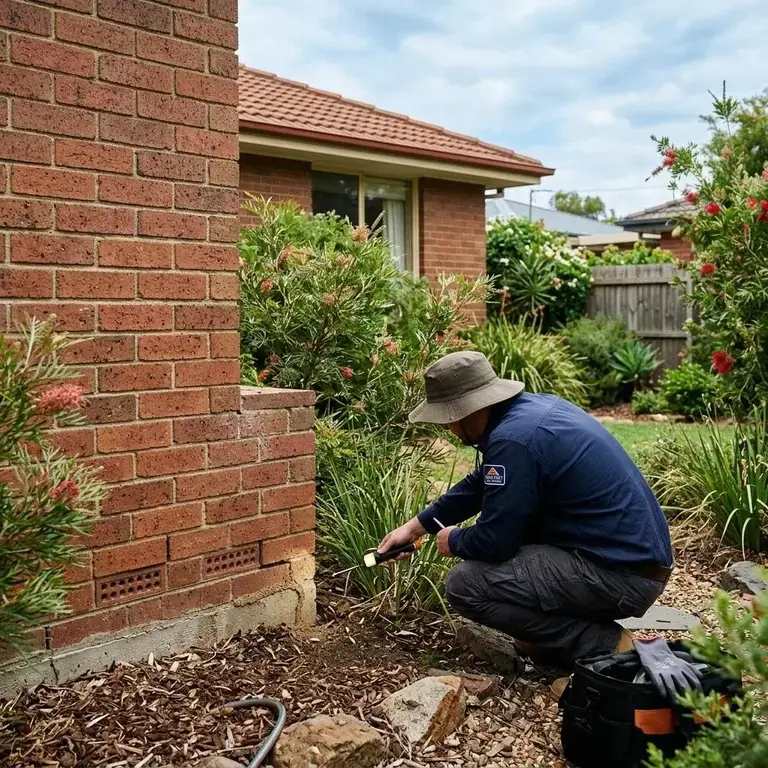
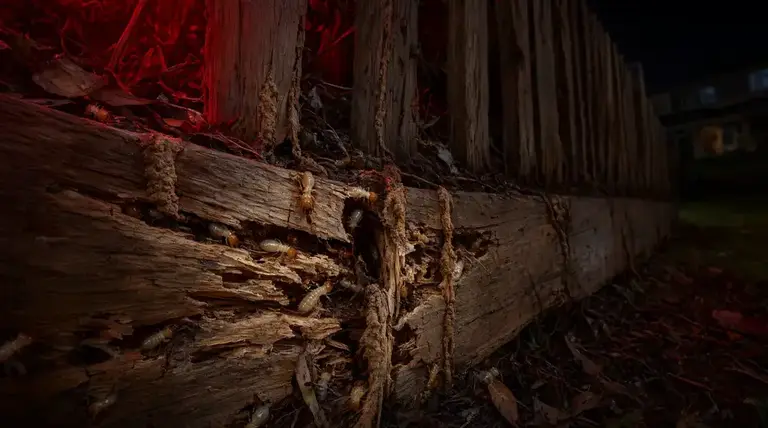
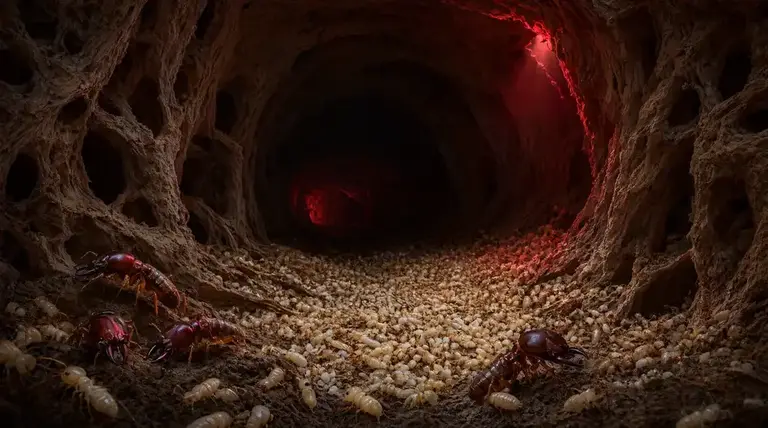
This is the phase where a colony transforms from a hidden nuisance into a genuine structural threat. Within three to five years, populations can reach hundreds of thousands, with foragers travelling up to 50 metres or more from the nest through concealed mud galleries. A colony of this size can consume significant amounts of timber, and because workers eat wood from the inside out, damage often stays invisible until it is severe. This is exactly why our technicians focus on the warning signs of termites in Australian homes rather than waiting for obvious damage.
| Colony age | Approx. population | Damage risk |
|---|---|---|
| Year 1 | Hundreds | Minimal, hard to detect |
| Years 2–3 | Tens of thousands | Timber feeding begins |
| Years 3–5 | Hundreds of thousands | Significant structural risk |
| Mature | Up to 1 million+ | Releases new swarmers |
Stage Three: Maturity and Swarming
Only when a colony is mature — usually several years old — does it invest in winged reproductives. These alates fly off during warm, humid evenings, most often in late spring and summer, to pair up and found new colonies, restarting the termite lifecycle all over again.
This is how a single untreated nest becomes a neighbourhood-wide problem over time. Each mature colony can release thousands of swarmers, and while most die, the small percentage that succeed seed new nests across fences, gardens and neighbouring homes. Seeing winged termites — or their discarded wings on windowsills — near your property is a red flag that demands immediate attention.
Colonies also carry an insurance policy. They keep spare reproductives in reserve, so if the queen dies or part of the nest is isolated, supplementary reproductives can mature and take over egg-laying. This is one of the main reasons partial or DIY treatments so often fail: wound the colony and it simply reorganises and rebuilds.
Warning Signs a Colony Is Growing in or Near Your Home
Because the termite lifecycle plays out behind walls and under floors, the earliest clues are subtle. Check for these signs regularly, especially before and after summer:
- Mud tubes — pencil-width earthen tunnels running up foundations, stumps or brickwork; break one open and look for live workers.
- Discarded wings — piles of equal-sized wings near windowsills, doors or light fittings after a humid evening indicate a swarm has landed.
- Hollow-sounding timber — skirtings, architraves or door frames that sound papery when tapped may be eaten from the inside.
- Tight doors and windows — moisture from termite activity warps frames, causing them to stick suddenly.
- Fine frass or bubbling paint — rippled paintwork or sandy deposits can signal feeding activity behind the surface.
- Soft or sagging floors — a spongy feel underfoot in older subfloor homes warrants urgent investigation.
If any of these appear, arrange a professional assessment promptly. Our article on what a termite inspection includes and why it matters explains exactly what a licensed technician checks.
DIY vs Professional: Why the Termite Lifecycle Defeats DIY
The short answer: DIY sprays and baits rarely beat a growing colony because they never reach the queen. Surface sprays kill the workers you can see — a fraction of the population — while the nest keeps producing replacements, and disturbing activity can even push the colony deeper into the structure. Professional pest control uses transfer-effect treatments, foams and monitoring systems designed to be carried back to the nest, collapsing the colony at its source.
| Factor | DIY approach | Professional treatment |
|---|---|---|
| Reaches the queen | Almost never | Designed to, via transfer effect |
| Detection ability | Visual guesswork only | Moisture meters, thermal imaging, sounding tools |
| Supplementary reproductives | Colony reorganises and rebuilds | Colony-wide elimination targeted |
| Ongoing protection | None | Chemical barriers or bait monitoring for years |
| Chemical handling | Consumer-grade only | APVMA-registered products applied by licensed technicians |
Given the stakes, professional termite treatment and barrier systems are the sensible investment. All chemical applications should be carried out by licensed technicians using APVMA-registered products in line with label directions.
Termite Treatment and Inspection Costs in Australia
Across the Australian pest control industry in 2025–26, typical market rates for termite work range from around $300 for an inspection to several thousand dollars for a full perimeter barrier on a large home. What the industry generally charges varies with property size, construction type, soil conditions and the extent of activity. Here are realistic market ranges you’ll see quoted around the country:
| Service | Typical market rate (AUD) | What’s included/notes |
|---|---|---|
| Timber pest inspection | $280–$450 is the typical industry rate | Full visual inspection to AS 4349.3, moisture readings, written report |
| Spot treatment of active nest/gallery | Industry rates generally sit at $400–$900 | Dust or foam application to active workings; colony collapse may take weeks |
| Chemical soil barrier | The market typically charges $2,500–$4,500 | Trench-and-treat perimeter; higher for large homes or subfloors |
| Baiting/monitoring system | $2,000–$3,500 installed is the going market rate | Stations plus ongoing monitoring visits, typically billed at $300–$600/year across the industry |
| Structural timber repair | Market rates run $1,500–$15,000+ | Varies hugely with damage extent; not covered by standard home insurance |
Compare those industry figures with what the market charges for routine pest control and the maths is clear: prevention beats repair every time. To understand how barriers work before you commit, read what a termite barrier is and how it protects your home.
It’s worth knowing that Aussie Pest Strike typically comes in well under these typical Australian market rates while still delivering the same licensed, standards-compliant workmanship. For an exact quote tailored to your property, give us a call on [aps_phone] today.
Seasonal Termite Activity in Australia
Termites are active all year in Australia, but visible activity and swarming peak from late spring through summer, driven by warmth and humidity. The chart below shows typical relative activity across the calendar for temperate and subtropical regions:
Jan
Feb
Mar
Apr
May
Jun
Jul
Aug
Sep
Oct
Nov
Dec
Relative termite activity across Australia. Swarming peaks in November–January, while winter dips in the south; northern regions remain active year-round. Feeding continues even in the cooler months, so a quiet winter never means a colony has left.
Most homeowners only ever see a few workers or a few wings on a windowsill. What they don’t see is the queen laying over a thousand eggs a day, twenty or thirty metres away under a tree stump or garden bed. Once people understand how fast a colony grows, they stop asking whether an annual inspection is worth it.
Book an annual timber pest inspection, install a chemical barrier or bait monitoring system if your home has none, and treat any confirmed activity immediately with a colony-targeting treatment. The termite lifecycle rewards homeowners who act early and punishes those who wait.
Frequently Asked Questions
How does a termite colony start?
A termite colony begins when two winged alates, a male and a female, pair off after a swarm, shed their wings and dig a small chamber in moist soil or timber. This founding king and queen produce the first batch of eggs and personally tend the earliest young, because there are no workers yet. Growth is deliberately slow at first, with a new colony numbering only a few hundred termites after its first year.
How many eggs can a termite queen lay per day?
A mature Coptotermes queen can lay well over 1,000 eggs a day once workers have taken over foraging and brood care. Her abdomen swells enormously as her egg-laying capacity increases, and she can live well over a decade. This constant output is why killing visible workers achieves little — the queen keeps replacing them — and why effective treatment must reach the nest itself rather than just the termites you can see.
How long does it take for a termite colony to become dangerous to a home?
Growth accelerates sharply once the first workers mature. Within two to three years, populations reach tens of thousands and timber feeding begins. By three to five years, colonies can number hundreds of thousands of termites, with foragers travelling up to 50 metres or more from the nest through concealed mud galleries. At this stage the risk of significant structural damage is real, and because workers eat wood from the inside out, damage often stays invisible until severe.
What are the different termite castes and what do they do?
Termites are hemimetabolous, meaning eggs hatch into nymphs that develop gradually without a pupal stage. The colony chemically regulates which caste each nymph becomes based on current needs. Workers are blind, sterile and creamy-white; they forage, feed the colony and cause all the timber damage. Soldiers have large mandibles to defend the nest, mainly against ants. Reproductives are future kings and queens, produced once the colony matures.
What is swarming and when do termites swarm in Australia?
Swarming happens when a mature colony, usually several years old, releases winged reproductives called alates. These fly off during warm, humid evenings, most often in late spring and summer, to pair up and found new colonies. Each mature colony can release thousands of swarmers, and while most die, a small percentage succeed in seeding new nests across fences, gardens and neighbouring homes, turning one untreated nest into a neighbourhood-wide problem.
What are the warning signs that a termite colony is growing near my home?
Look for mud tubes — pencil-width earthen tunnels running up foundations, stumps or brickwork. Piles of equal-sized discarded wings near windowsills or light fittings indicate a swarm has landed. Hollow-sounding skirtings or door frames, doors and windows that suddenly stick, rippled paintwork, sandy frass deposits and soft or sagging floors all suggest feeding activity behind surfaces. If any of these appear, arrange a professional assessment promptly.
Why do DIY termite treatments usually fail?
DIY sprays and baits rarely beat a growing colony because they never reach the queen. Surface sprays kill only the fraction of workers you can see, while the nest keeps producing replacements. Colonies also keep spare reproductives in reserve, so if the queen dies or part of the nest is isolated, supplementary reproductives mature and take over egg-laying. Wound the colony and it simply reorganises and rebuilds, which is why partial treatments so often fail.
Why are Australian homes particularly vulnerable to termite colonies?
Warm temperatures, seasonal humidity and abundant timber framing give subterranean species such as Coptotermes and Schedorhinotermes ideal conditions across most of the mainland. Slab homes conceal entry points through cracks and service penetrations, while homes with subfloors offer dark, moist access to bearers and joists.
Can I check whether Aussie Pest Strike covers my area for termite problems?
Yes. Because termite pressure varies by region, construction type and soil conditions, the simplest way to confirm coverage for your property is to contact Aussie Pest Strike directly with your location and details of the activity you have noticed. They can advise whether technicians service your area and what an inspection would involve for homes like yours, whether it is a slab home, a Queenslander or an older weatherboard property.
What should I do next if I spot signs of termites in my home?
If you notice mud tubes, discarded wings, hollow-sounding timber or sagging floors, avoid disturbing the area and arrange a professional assessment promptly. Aussie Pest Strike can carry out a thorough termite inspection using tools such as moisture meters, thermal imaging and sounding equipment to locate activity and assess the colony's size. An annual inspection and report is standard practice for responsible homeowners and is far cheaper than repairing structural damage.
Sources & further reading
Found Something
Dangerous?
Don’t touch it. Don’t spray it. Keep kids and pets clear, take a photo from a safe distance, and call us — or book a free inspection and we’ll come to you.
02 7235 0050