Termites in TreesNear Your House:A Risk Guide
Termites in trees near your house can forage straight into your walls. Learn which trees are risky, how to assess them and what to do. Free inspection.
Yes, termites in trees near your house are a serious risk — a live nest in a gum tree, stump or hollow-trunked eucalypt gives subterranean termites a protected base from which to forage straight into your walls. Put simply, termites in trees near your house means a colony is sitting within striking distance of your biggest asset, and every e in “treat early” counts when workers can travel 50 metres or more from a single nest. Not every tree is a threat, but dead wood, old stumps and decaying heartwood within foraging range deserve a professional look.
This guide explains which trees and timber attract termites, how to assess the risk yourself, what the safe treatment sequence looks like, and what professional Termite Inspections & Reports typically cost across Australia in 2025-26.
- Subterranean termites routinely forage 50 metres or more from a nest, so a colonised tree at the back fence is well within reach of your home.
- Old stumps, hollow eucalypts, trees touching the roofline and mulch stacked against trunks are the highest-risk features in an Australian yard.
- Never hack into a suspected nest or remove a tree before treating the colony — disturbance can push termites toward the house.
- The safe sequence is inspect, treat the colony, then decide on tree works — always in that order.
- A professional termite inspection typically costs $250-$450 AUD and confirms whether the colony has bridged to your home.
Why Termites in Trees Near Your House Matter Across Australia
Australia’s warm climate, timber-framed housing stock and love of native gardens make tree-nesting termites a genuine nationwide concern, not just a tropical problem. From Queenslanders on stumps in Brisbane to brick-veneer homes on concrete slabs in Melbourne’s outer suburbs, most Australian houses sit within foraging range of mature eucalypts — and e is for eucalypt, the favourite nesting tree of our most destructive species.
Subterranean termites nest in soil but readily colonise the moist, decaying heartwood of living trees. Coptotermes species — the termites responsible for most structural damage in Australia — commonly build nests inside living gums, while Nasutitermes build the dark arboreal mounds you see clinging to trunks. The real danger is proximity: workers routinely forage 50 metres or more from a nest, travelling under paths, garden beds and even concrete slabs to reach a house frame, often with no visible trail across open ground in between.
Housing style shapes the risk. Homes with a subfloor give termites sheltered, dark access to bearers and joists, while slab-on-ground construction can be breached through weep holes, plumbing penetrations and hairline cracks. Either way, a colony in a nearby tree treats everything in its radius as potential food. Native gardens and mature street trees are part of what makes Australian suburbs so liveable, so the aim is not to clear every tree — it is to identify which ones actually harbour a colony and manage those before they bridge to your home. These conducive conditions overlap with the general warning signs of termites every owner should know.
Warning Signs: Which Trees and Timber Attract Termites
The highest-risk trees are those with dead, decaying or hollow timber — especially stumps and eucalypts with soft heartwood — combined with anything that creates a hidden bridge to the house. Use this checklist to do a first-pass assessment of your yard:
- Old stumps left in the ground after tree removal — a perfect starter nest for a new colony.
- Dead or hollow trees with soft, decaying heartwood that subterranean termites colonise readily.
- Trees touching the roofline or walls, giving termites a hidden bridge straight into the building.
- Mulch and firewood stacked against the trunk or the house, providing food and moisture in one package.
- Root systems of removed trees, which keep decaying underground for years after the tree itself is gone.
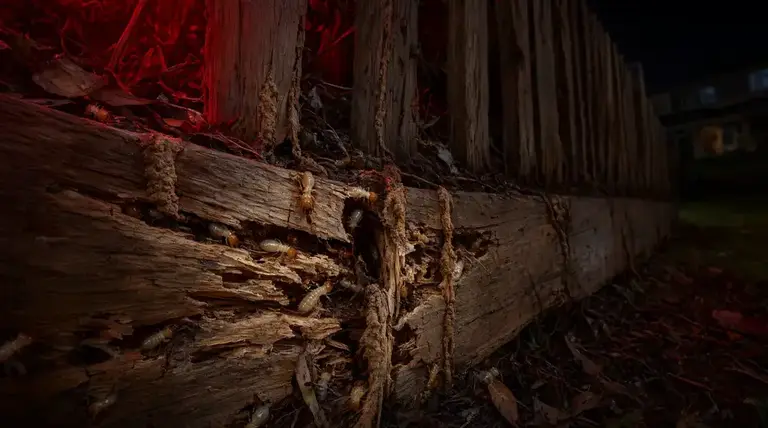
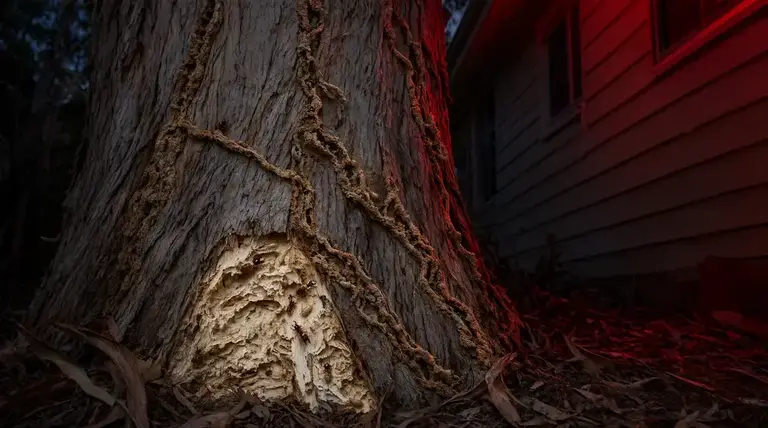
- Mud packing in trunk cracks — a strong sign of active subterranean termites.
- Hollow sound when tapped, suggesting internal galleries through the heartwood.
- Dark arboreal nests on trunks, indicating a Nasutitermes colony that should still be identified professionally.
Sawdust-like frass around a tree can point to drywood termite or borer activity rather than subterranean termites, which is another reason species identification matters. A nest in a tree does not automatically mean the same colony is in your home — but it sharply raises the odds. If any of these signs are present, booking a professional termite inspection covering exactly what’s included and why it matters is the sensible next step.
DIY Checks vs Professional Termite Treatment
You can do a first-pass check yourself — tapping trunks, looking for mud packing and noting stumps — but confirming a live nest, identifying the species and treating the colony is licensed-technician work. Crucially, don’t hack into a suspected nest: disturbing it can scatter foragers and push them toward the house, and removing a tree without treating the colony can drive termites to seek a new food source — namely your timber.
| Approach | What it can achieve | Limitations |
|---|---|---|
| DIY visual check | Spot stumps, mud packing, hollow-sounding trunks and risk features near the house | Can’t confirm a live nest, identify species or check whether termites have reached the building |
| DIY prevention (thin mulch, remove stumps, fix drainage) | Reduces conducive conditions, since damp soil favours termites | Does nothing to eliminate an existing colony |
| Licensed pest control technician | Species identification, colony treatment, home inspection and barrier recommendations | Upfront cost, and chemical treatments must be applied by licensed professionals under APVMA-registered labels |
The safe sequence is always inspect, treat the colony, then decide on tree works. Once the colony is managed, longer-term protection through Termite Treatment & Barrier Systems can stop the next nest in the street from becoming your problem — our guide on what a termite barrier is and how it protects your home explains the options in plain terms.
What Does It Cost? Australian Pricing Guide (2025-26)
Across the Australian pest control industry, typical market rates put a professional termite inspection at $250-$450 AUD, with colony treatment and barriers adding to that depending on property size and construction. What the industry generally charges varies between a small brick-veneer on a slab and a large Queenslander with a full subfloor, so treat these figures as ballpark market ranges rather than quotes.
| Service | Typical Australian market rate (AUD) | What’s included/notes |
|---|---|---|
| Termite inspection (standard home) | $250-$450 | Visual and moisture assessment of the house, yard, trees and stumps, plus a written report |
| Tree colony treatment / nest destruction | $300-$900 | Direct treatment of the nest by a licensed technician; price depends on access and colony size |
| Chemical soil barrier (perimeter) | $2,000-$5,000 | Treated zone around the home; varies with perimeter length and slab vs subfloor construction |
| Baiting and monitoring system | $1,800-$3,500 installed, plus annual monitoring | Stations around the property intercept foraging termites before they reach the house |
| Annual re-inspection | $200-$350 | Recommended yearly in most of Australia; often required to keep barrier warranties valid |
It’s worth knowing that Aussie Pest Strike typically comes in well under these typical Australian market rates. For an exact quote tailored to your property, call [aps_phone] and we’ll sort you out.
Seasonal Termite Activity Around Australian Trees
Termites are active all year in Australia, but swarming and foraging peak through the warmer, wetter months from October to March, when colonies expand and new nests establish in stumps and hollow trees. Activity dips in winter, particularly in the southern states, but never stops entirely — a warm, damp winter in Queensland keeps colonies busy year-round.
Jan
Feb
Mar
Apr
May
Jun
Jul
Aug
Sep
Oct
Nov
Dec
Indicative national pattern: termite activity peaks in the hot, humid months (Nov-Mar) when swarms establish new colonies in trees and stumps, and slows — but never stops — through the southern winter.
The worst call-outs we get start with a homeowner grinding out a stump or cutting down a gum full of termites. Six months later the colony has relocated into the wall frame. Treat the nest first, give it time to collapse, then do your tree works — that order saves people thousands.
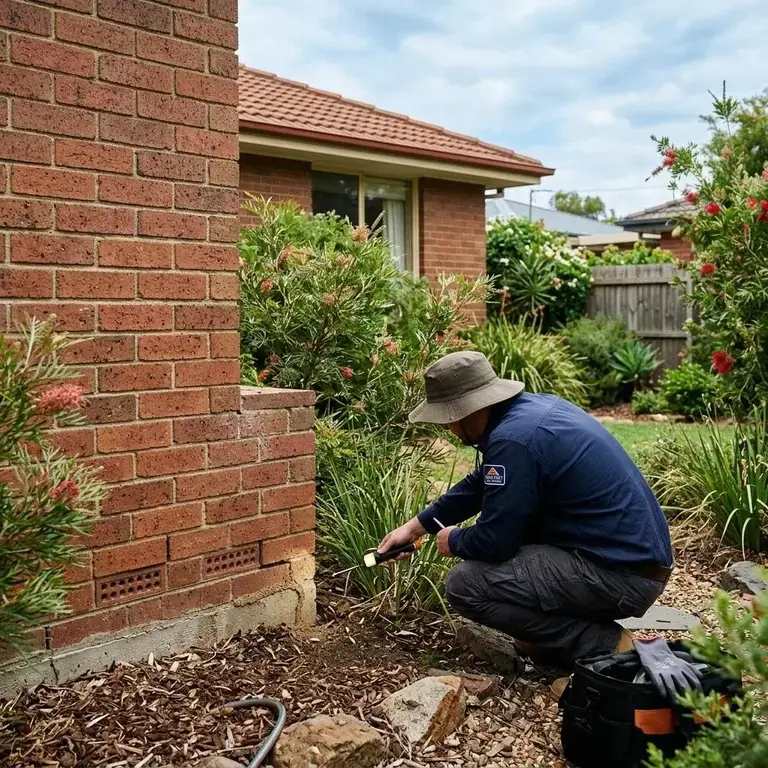
If you have a suspect tree, stump or hollow eucalypt within 50 metres of your home, book a professional inspection before touching anything. Have the colony identified and treated by a licensed technician, keep mulch thin, remove old stumps, fix drainage, and consider a barrier or baiting system for ongoing protection — because with termites, prevention is always cheaper than repairs.
Frequently Asked Questions
Are termites in trees near my house actually a risk?
Yes. A live nest in a gum tree, stump or hollow eucalypt gives subterranean termites a protected base within foraging range of your home. Workers routinely travel 50 metres or more from a nest, moving under paths, garden beds and even concrete slabs to reach a house frame, often with no visible trail across open ground. Not every tree is a threat, but dead wood, old stumps and decaying heartwood near the house deserve a professional look.
Which trees and yard features attract termites most?
The highest-risk features are old stumps left in the ground after tree removal, dead or hollow trees with soft decaying heartwood, trees touching the roofline or walls, mulch and firewood stacked against trunks or the house, and the root systems of removed trees, which keep decaying underground for years. Eucalypts are a favourite nesting tree of Australia's most destructive species, so hollow gums deserve particular attention.
How can I tell if a tree has an active termite colony?
Look for mud packing in trunk cracks, which strongly suggests active subterranean termites, and tap the trunk to check for a hollow sound indicating internal galleries through the heartwood. Dark arboreal nests clinging to trunks point to a Nasutitermes colony, while sawdust-like frass around a tree can indicate drywood termite or borer activity instead. These checks give a first-pass assessment only — confirming a live nest requires professional identification.
Should I remove or cut down a tree that has termites in it?
Not before treating the colony. Removing a tree without treating the nest first can drive termites to seek a new food source, which may be your house timber. The safe sequence is always inspect, treat the colony, then decide on tree works. Once the colony is managed and given time to collapse, tree works can proceed without pushing the infestation toward your home.
Can I treat a termite nest in a tree myself?
No. Tapping trunks and spotting stumps is fine as a DIY check, but confirming a live nest, identifying the species and treating the colony is licensed-technician work. Never hack into a suspected nest either — disturbing it can scatter foragers and push them toward the house. Chemical treatments must also be applied by licensed professionals using APVMA-registered labels.
How do termites get from a tree into my house?
Subterranean termites nest in soil but colonise moist, decaying heartwood in living trees, then forage outward from there. Homes with a subfloor give them sheltered access to bearers and joists, while slab-on-ground homes can be breached through weep holes, plumbing penetrations and hairline cracks. Trees touching the roofline act as hidden bridges straight into the building.
When are termites around trees most active in Australia?
Termites stay active all year, but swarming and foraging peak through the warmer, wetter months from October to March, when colonies expand and new nests establish in stumps and hollow trees. Activity dips in winter, particularly in southern states, but never stops entirely — warm, damp winters in Queensland keep colonies busy year-round.
Does a termite nest in a tree mean my house is infested too?
No, not automatically. A professional inspection confirms whether the colony has bridged to your building, checking the house, yard, trees and stumps before recommending treatment or barrier options. The practical next step is to note the signs, inspect the relevant area carefully, and seek property-specific advice if the issue continues.
Is a property-specific inspection worthwhile if I have a suspect tree near my home?
Yes. Every property differs — a Queenslander on stumps faces different risks than a brick-veneer home on a slab, and the distance, species and condition of nearby trees all matter. Aussie Pest Strike can assess your specific yard, identify any colony in suspect trees or stumps, and check whether termites have reached the building, giving you a clear picture before you touch anything.
What should I do next if I find mud packing or a hollow-sounding trunk on a tree near my house?
Leave the tree alone and book a professional inspection rather than hacking into the suspected nest or removing the tree, as disturbance can push termites toward your home. Aussie Pest Strike can identify the species, treat the colony if one is confirmed, and advise on the right order of works — treating the nest first, then deciding on tree works, mulch management and longer-term barrier or baiting protection.
Sources & further reading
Found Something
Dangerous?
Don’t touch it. Don’t spray it. Keep kids and pets clear, take a photo from a safe distance, and call us — or book a free inspection and we’ll come to you.
02 7235 0050