Does Home InsuranceCover TermiteDamage in Australia?
Does home insurance cover termite damage in Australia? Almost never. Learn why it's excluded, the rare exceptions and how to protect yourself. Free inspection.
If you’re banking on your home insurance to bail you out after a termite attack, here’s the hard truth: it almost certainly won’t. Standard Australian home insurance excludes termite damage, which is why “termite insurance” is one of the most searched — and most misunderstood — phrases among homeowners from Brisbane to Perth. Across Australia, termites cause damage worth hundreds of millions of dollars a year, and virtually none of it is recoverable through a standard policy.
In plain terms, termite insurance refers to any financial protection against the cost of termite damage — and in Australia, that protection rarely comes from an insurer. Instead, it comes from prevention: regular inspections, compliant barrier systems, and treatment warranties. This guide explains exactly why insurers exclude termites, the rare exceptions, what your real options are, and how much proper protection costs in 2025-26.
- Standard Australian home insurance policies almost universally exclude termite damage as a preventable, gradual loss.
- Even secondary or “resulting” damage caused by termites is usually denied, and poor maintenance records can sink borderline claims.
- Termite repairs routinely run into the tens of thousands of dollars — the bill lands on you, not your insurer.
- Annual professional inspections and a compliant barrier or baiting system are the closest thing to real termite insurance.
- A written treatment warranty from a licensed pest control provider offers protection your home policy never will.
Why Termites Are Such a Serious Risk Across Australia
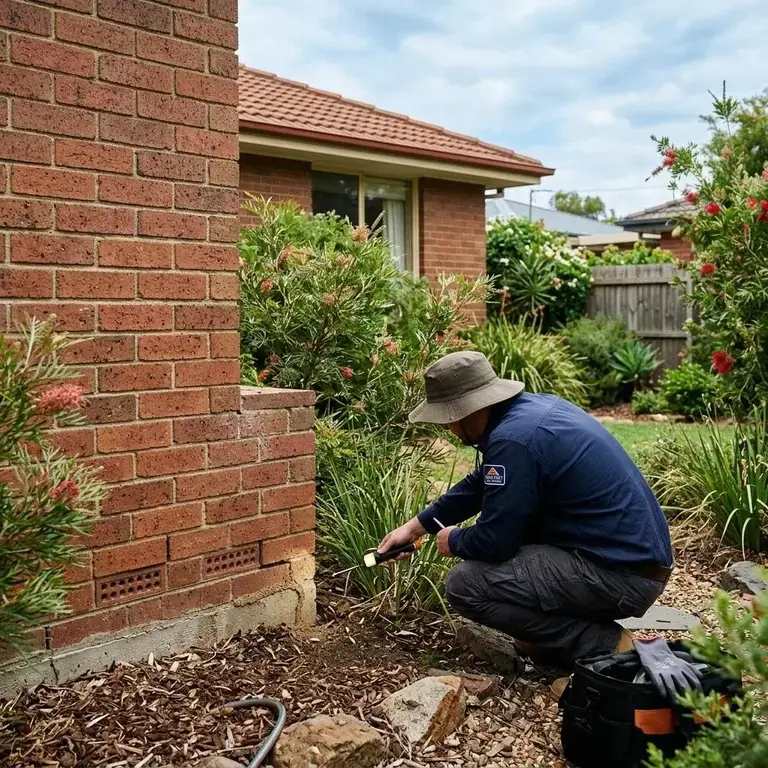
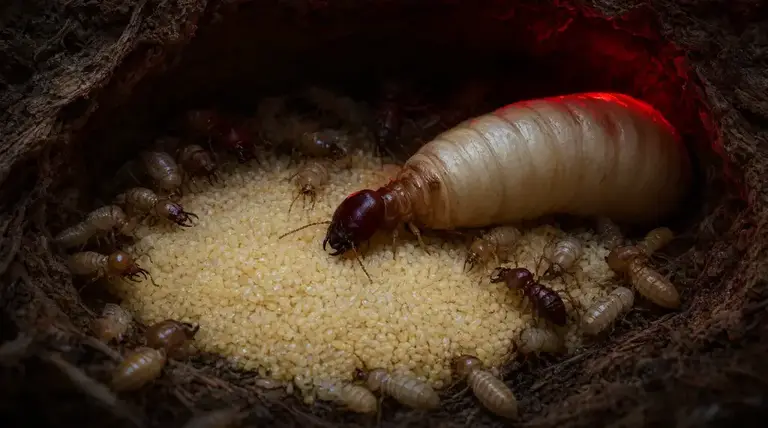
Australia has some of the most termite-prone conditions on earth, and no mainland state is genuinely safe. Warm, humid conditions across Queensland, northern New South Wales, the NT and WA let aggressive species like Coptotermes acinaciformis stay active nearly year-round, while southern states still see heavy pressure through spring and summer.
Housing style plays a big role too. Elevated Queenslanders and older weatherboard homes with accessible subfloors give termites concealed entry points, while slab-on-ground brick veneer homes — the dominant construction type in newer estates — can hide activity behind weep holes, garden beds and slab edges. Industry estimates commonly suggest around one in three Australian homes will experience termite activity at some point, yet most owners only discover it during renovation or when a floorboard gives way.
That combination — high likelihood, high concealment and zero insurance cover — is exactly why understanding your options for termite insurance, in the practical sense, matters so much. Our guide to the 10 warning signs of termites in Australian homes is a good place to start if you want to know what to look for.
Why Home Insurance Excludes Termite Damage
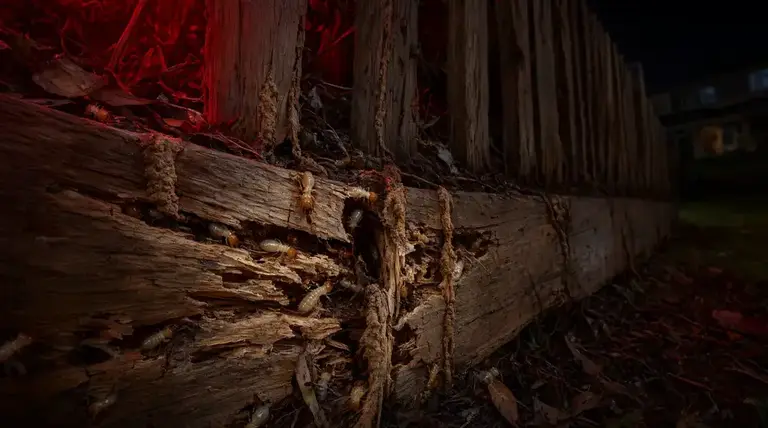
Home insurance is written to cover sudden, unforeseen events — fire, storm, theft, burst pipes — and termite damage is the opposite: gradual, silent and considered preventable. Australian insurers almost universally list “damage caused by insects, vermin or termites” as a standard exclusion, grouped with wear and tear and lack of maintenance.
The reasoning is simple from the insurer’s perspective. Termites feed on timber over months or years, and routine maintenance — inspections, barriers, fixing leaks — would have prevented or caught the problem early. Because the loss is deemed avoidable, it’s classed alongside neglect rather than accident.
Here is the myth-versus-fact snapshot every homeowner should read:
- Myth: “My building insurance will cover it if termites eat the frame.” Fact: gradual pest damage is excluded.
- Myth: “It was sudden, so it’s an accident.” Fact: insurers class termite feeding as gradual, not accidental.
- Myth: “Resulting damage is always covered.” Fact: even secondary damage from termites is usually denied.
- Myth: “A new home is automatically protected.” Fact: insurance still excludes termites regardless of the home’s age.
The Rare Exceptions — and Why You Shouldn’t Rely on Them
There are narrow cases where a claim might succeed — for example, where resulting damage flows from a separately covered event — but these are uncommon and fiercely contested. You should never assume coverage, and you should read your product disclosure statement carefully.
| Scenario | Typically covered? |
|---|---|
| Termites eat structural timber | No |
| Gradual damage over years | No |
| Sudden covered event unrelated to termites | Yes (the covered event only) |
| Cost of pest treatment itself | No |
Insurers will also point to any period a home went without inspection or treatment as evidence the loss was preventable, so poor maintenance can undermine even a borderline claim. If in doubt, ask your insurer in writing exactly how the policy treats termite and resulting damage before you need to rely on it.
Warning Signs Your Home May Already Be at Risk
Because you can’t claim for termite damage, early detection is your only real safety net. Check your home regularly for these red flags, especially in subfloors, roof voids, garages and anywhere timber meets soil or moisture.
- Mud tubes or leads — pencil-width earthen tunnels running up brickwork, piers or slab edges.
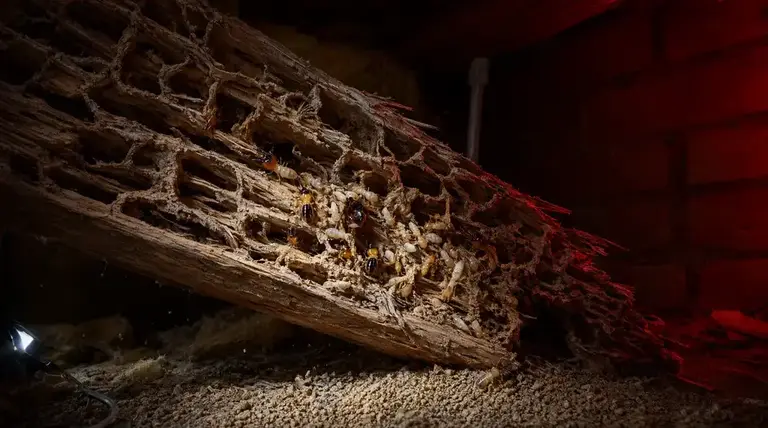
- Hollow-sounding timber — skirtings, door frames and floorboards that sound papery when tapped.
- Discarded wings — small piles near windowsills after warm, humid evenings signal an alate (flying termite) swarm.
- Bubbling or uneven paint — moisture and tunnelling beneath painted timber surfaces.
- Tight doors and windows — warped frames caused by termite activity and moisture.
- Frass or fine debris — sawdust-like material near skirtings or in roof voids.
- Soft or sagging floors — a late-stage sign that structural timber is already compromised.
If you spot any of these, book professional Termite Inspections & Reports immediately — every week of delay adds to the repair bill you’ll be paying yourself.
DIY vs Professional: What’s Realistic for Termite Protection?
DIY can help with general vigilance and moisture control, but detection and treatment of termites is squarely professional territory — and no DIY effort replaces what genuine termite insurance-style protection requires.
| Factor | DIY | Professional pest control |
|---|---|---|
| Detection | Visual checks only; hidden activity easily missed | Moisture meters, thermal imaging, trained inspection to AS 3660 |
| Treatment | Hardware-store sprays; surface-level at best | Chemical barriers and baiting systems installed by licensed technicians |
| Warranty | None | Written treatment warranty available from reputable providers |
| Cost (typical) | $50-$200 in products | $250+ for inspection; $2,000-$5,000+ for barriers |
| Risk if wrong | Colony continues unseen; uninsured repair bill | Covered by warranty terms and professional accountability |
For a full picture of what a proper assessment involves, read Termite Inspection: What It Includes and Why It Matters.
What Termite Insurance-Style Protection Costs in 2025-26
Across the Australian market, budgeting for prevention typically runs from a few hundred to a few thousand dollars — a fraction of the tens of thousands a structural repair bill can reach. The figures below are typical industry-wide rates, not quotes from Aussie Pest Strike; what any provider charges will depend on home size, construction type and location.
| Service | Typical market rate (AUD) | What’s included/notes |
|---|---|---|
| Annual termite inspection | $250-$450 | Full inspection to AS 3660 with written report |
| Pre-purchase timber pest inspection | $300-$600 | Often combined with building inspection before settlement |
| Chemical barrier treatment | $2,000-$5,000+ | Perimeter treatment; price varies with slab/subfloor access |
| Baiting and monitoring system | $1,500-$3,500 + annual servicing | Stations installed and monitored around the property |
| Structural termite repairs | $5,000-$50,000+ | Not covered by insurance; depends on extent of damage |
Our Termite Treatment & Barrier Systems page explains the options in detail, and What Is a Termite Barrier and How Does It Protect Your Home? breaks down how each barrier type works on slab and subfloor construction.
It’s worth knowing that Aussie Pest Strike typically comes in well under these typical Australian market rates while still delivering a fully compliant, warranty-backed service. For an exact quote tailored to your property, give us a call on [aps_phone].
Seasonal Termite Activity Across Australia
Termite pressure peaks in the warmer, wetter months — roughly October through March — when colonies forage hardest and alates swarm after humid evenings. Activity never fully stops, though, which is why year-round protection matters more than a once-off treatment.
Jan
Feb
Mar
Apr
May
Jun
Jul
Aug
Sep
Oct
Nov
Dec
Typical relative termite activity across most of Australia. Warm-season rainfall and humidity drive peak foraging and swarming; cooler southern winters reduce but never eliminate activity, and northern regions stay elevated year-round.
Every few weeks I walk into a home where the owners assumed their insurance would sort it out. It never does. The houses that hold up are the ones with an annual inspection and a barrier in place — that’s the only real termite insurance there is in this country.
Don’t wait for a claim that will never be paid. Book an annual inspection, keep a compliant barrier or baiting system in place, fix leaks and drainage promptly, and ask any provider for their written warranty terms before committing. Treat this package as your de facto termite insurance — because it’s the only version that actually pays out.
Frequently Asked Questions
Will my home insurance policy pay for repairs after termites damage my house?
No. Insurers class termite feeding as gradual rather than accidental because routine inspections and maintenance would have caught or prevented it. This means the cost of repairs, which can run into tens of thousands of dollars, generally lands on the homeowner.
Why do insurers exclude termite damage from home coverage policies?
Termite damage is the opposite: gradual, silent and considered preventable through regular inspections, compliant barriers and fixing leaks. Because the loss is deemed avoidable with proper maintenance, insurers group it with neglect rather than accident, so it appears as a standard exclusion in most Australian policies.
Is resulting or secondary termite damage covered by coverage?
Usually not. Even where termites cause secondary or resulting damage, insurers typically deny these claims, treating the entire loss as gradual pest damage. There are narrow exceptions, such as when resulting damage flows from a separately covered event like a storm, but these cases are uncommon and fiercely contested. Never assume coverage; read your product disclosure statement carefully and ask your insurer in writing how the policy treats termite-related damage.
What does termite coverage actually mean in Australia?
Instead, it comes from prevention: annual professional inspections, compliant barrier or baiting systems, and written treatment warranties from licensed pest control providers. The practical next step is to note the signs, inspect the relevant area carefully, and seek property-specific advice if the issue continues.
How common is termite activity in Australian homes?
Industry estimates commonly suggest around one in three Australian homes will experience termite activity at some point. No mainland state is genuinely safe: warm, humid conditions across Queensland, northern New South Wales, the NT and WA allow aggressive species like Coptotermes acinaciformis to stay active nearly year-round, while southern states see heavy pressure through spring and summer. Most owners only discover activity during renovation or when a floorboard gives way.
What warning signs suggest my home may already have termites?
Key red flags include mud tubes or leads running up brickwork, piers or slab edges; hollow-sounding timber that feels papery when tapped; discarded wings near windowsills after warm, humid evenings; bubbling or uneven paint; tight doors and windows from warped frames; frass or sawdust-like debris near skirtings; and soft or sagging floors, which signal late-stage structural compromise. Check subfloors, roof voids, garages and anywhere timber meets soil or moisture.
Can I handle termite detection and treatment myself instead of hiring a professional?
DIY efforts are limited to general vigilance and moisture control. Hidden activity is easily missed without moisture meters, thermal imaging and inspections trained to AS 3660, while hardware-store sprays offer only surface-level results at best. Professional technicians install chemical barriers and baiting systems and provide written treatment warranties. A missed DIY colony can continue unseen, leaving you with an uninsured repair bill.
When is termite activity highest across Australia?
Termite pressure peaks during the warmer, wetter months, roughly October through March, when colonies forage hardest and alates swarm after humid evenings. Activity never fully stops, though. Cooler southern winters reduce but never eliminate activity, and northern regions such as Queensland, the NT and WA stay elevated year-round. That continuous pressure is why year-round protection matters more than a once-off treatment.
Can Aussie Pest Strike check whether they service my area for termite problems?
Yes. If you have spotted possible termite signs such as mud tubes, hollow-sounding timber or discarded wings, you can contact Aussie Pest Strike to confirm whether they service your property's location. Availability depends on where you live, so it is best to ask directly rather than assume coverage. They can also discuss inspection options suited to your home's construction type, whether slab-on-ground or elevated with a subfloor.
How quickly can termites cause serious structural damage to a home?
Aussie Pest Strike offers termite inspections and reports carried out to AS 3660, along with treatment and barrier system options explained on their website. Avoid disturbing or spraying any termites you find, as this can push activity deeper into concealed areas of the home.
Sources & further reading
Found Something
Dangerous?
Don’t touch it. Don’t spray it. Keep kids and pets clear, take a photo from a safe distance, and call us — or book a free inspection and we’ll come to you.
02 7235 0050