Termites and Moisture:The Connection EveryOwner Should Know
Termites and moisture are closely linked: damp soil and leaks invite attack. Learn the hotspots, fixes and a prevention checklist. Free on-site inspection.
Ask any licensed pest control technician what drives termite activity in Australian homes and the answer is always the same: termites moisture. Subterranean termites — the species responsible for most structural damage across Australia — depend on constant humidity to survive, and damp soil, leaking pipes and poor drainage make a property far more attractive and far easier to attack. From Queenslanders in Brisbane to brick veneer homes in Melbourne and slab-on-ground builds in Perth, the connection holds everywhere.
Put simply, termites and moisture go hand in hand: controlling moisture is one of the cheapest, most effective forms of termite prevention any Australian homeowner can do. This guide explains why termites need water, where it hides around your home, what you can fix yourself, and when to call in professional pest control.
- Subterranean termites dehydrate rapidly and need constant humidity — damp areas around your home are an open invitation.
- Leaks, poor subfloor ventilation, blocked gutters and mulch against walls are the most common moisture sources in Australian homes.
- Moisture doesn’t just attract termites — it softens and pre-decays timber, making it faster and easier for a colony to eat.
- Moisture control reduces risk but won’t remove an established colony; professional treatment is still required.
- An annual Termite Inspections & Reports visit catches activity early, before structural damage builds.
Why the Termites Moisture Connection Matters Across Australia
The termites moisture link matters in every Australian state because our dominant pest species — Coptotermes, Schedorhinotermes and Nasutitermes — are all subterranean termites that rely on soil contact and humidity to survive. Australia-wide, our climate and housing stock create ideal conditions: humid coastal regions from Cairns to the Gold Coast, older weatherboard homes with poorly ventilated subfloors in Melbourne and Adelaide, and modern slab-on-ground builds where a slow pipe drip beneath the slab can feed a colony unnoticed for years.
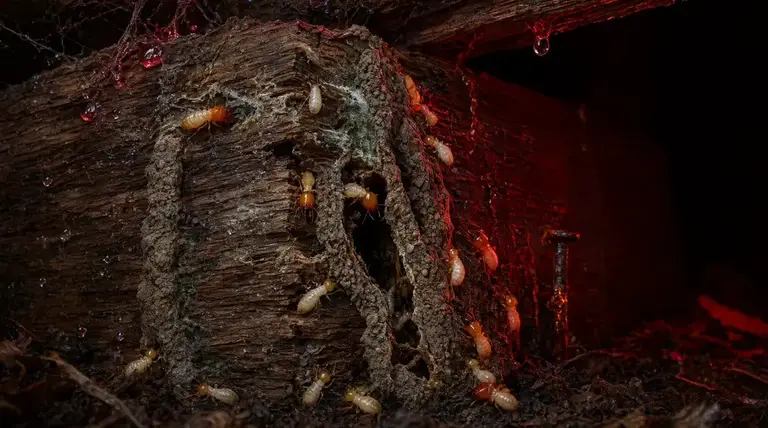
Termite workers have thin, permeable cuticles and dehydrate rapidly in dry air. To feed on the dry timber in your walls, they must maintain a humid microclimate — which is exactly why they build sealed mud tubes and favour damp subfloors. A leaking hot-water system or a slow pipe drip under the slab creates a perfect, permanently moist harbourage that lets a colony thrive year-round, even through a dry Australian summer. That’s why our guide to what a termite inspection includes places so much emphasis on moisture readings.
Warning Signs: Moisture Problems That Invite Termites
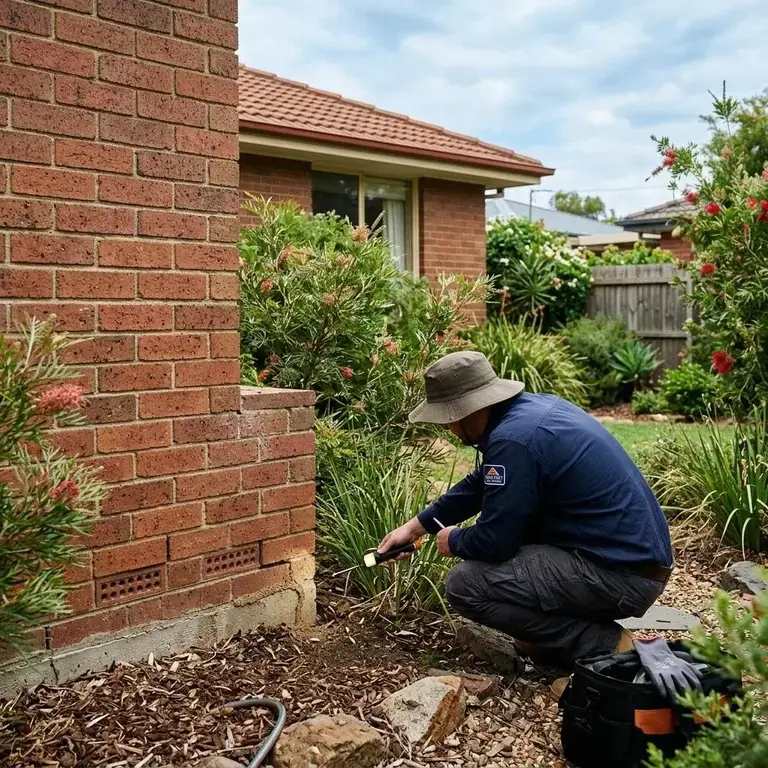
The clearest warning signs of elevated termite risk are damp zones and water sources close to timber or your foundations. Watch for these hotspots around your property:
- Leaking taps, pipes and hot-water units — a constant water source running against timber or into soil beside footings.
- Poor subfloor ventilation — stagnant, humid air in older weatherboard and Queenslander homes keeps soil and timber damp.
- Blocked gutters and downpipes — overflowing water discharging directly against the foundation.
- Garden beds and mulch — banked against walls, holding damp soil at timber level or burying weep holes.
- Air-conditioner condensate — dripping onto the ground beside the house, creating a permanent wet patch.
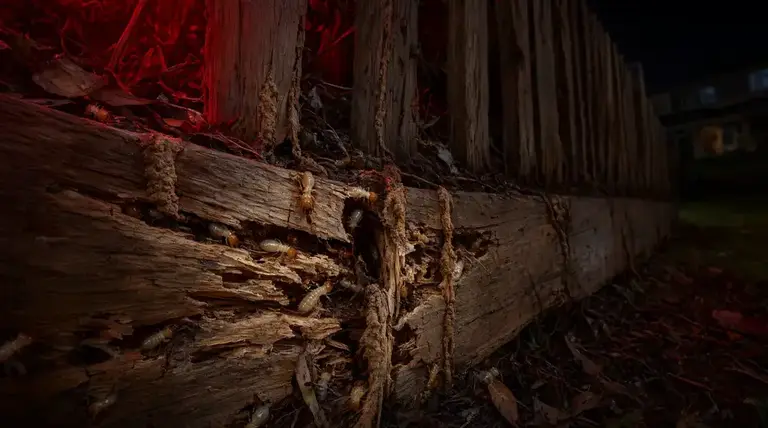
- Mud tubes on piers, slabs or walls — termites already exploiting a humid route into the structure.
These are the same conducive conditions technicians assess with moisture meters during inspections. A reading that spikes in a wall or subfloor timber often flags a leak or damp zone before any termites are visible — and pairs well with our checklist of 10 warning signs of termites in Australian homes.
How Damp Timber Raises Your Risk
Moisture doesn’t just attract termites — it also softens and pre-decays timber, making it easier and faster to eat. Wood-decay fungi thrive in the same moist conditions, and partially rotted timber is a favourite target because it takes less effort to chew. High-humidity regions amplify the problem, which is why coastal Queensland and the Northern Territory see such intense pressure. Even in drier climates like inland New South Wales or South Australia, a single ongoing leak can create a localised danger zone that a colony will exploit for years.
DIY Moisture Control vs Professional Termite Protection
Homeowners can and should fix moisture problems themselves — it cuts risk dramatically — but DIY moisture control cannot replace a professional barrier, monitoring system or colony treatment. Here’s how the two compare:
| Approach | What it involves | What it achieves |
|---|---|---|
| DIY moisture control | Fixing leaks, adding vents, redirecting downpipes, pulling mulch back 75+ mm from weep holes | Removes attractants and conducive conditions; lowers risk significantly |
| Professional inspection | Licensed technician using moisture meters, thermal imaging and timber sounding | Detects hidden leaks, damp zones and active termites before damage spreads |
| Chemical barrier / baiting | APVMA-approved termiticides or in-ground bait stations installed by licensed technicians | Kills or repels colonies at the soil level; long-term structural protection |
Our explanation of what a termite barrier is and how it protects your home covers these systems in more detail.
Costs: Inspections, Barriers and Pest Control in 2025-26
Across the Australian pest control industry, termite services generally range from around $250 for a standard inspection to $4,500 or more for a full chemical barrier on a large home. Moisture repairs themselves — a plumber’s call-out or subfloor ventilation upgrade — are usually the cheapest part of the equation. The table below shows the typical market rates charged across the industry:
| Service | Typical market rate (AUD) | What’s included / notes |
|---|---|---|
| Termite inspection with moisture readings | $250 – $450 | Full visual inspection, moisture meter and thermal imaging, written report |
| Subfloor ventilation upgrade | $500 – $2,000 | Extra vents or mechanical fans; rate varies with home size and access |
| Chemical soil barrier | $2,000 – $4,500 | Trenching and termiticide application around the perimeter; see our Termite Treatment & Barrier Systems |
| Baiting / monitoring system | $1,500 – $3,500 | In-ground stations plus scheduled monitoring visits |
| Active infestation treatment | $500 – $2,500+ | Dusting, foaming or baiting an active colony; depends on size and location |
These figures reflect what the Australian industry generally charges — and Aussie Pest Strike typically comes in well under these market rates for the same scope of work. For an exact quote tailored to your property, give us a call on [aps_phone].
Seasonal Termites Moisture Activity in Australia
Termite pressure peaks in the warm, wet months from October through March, when humidity is highest and colonies swarm. In tropical and coastal regions activity stays high year-round, while southern states see a clear winter dip — but a permanent leak keeps a localised colony active in any season.
Jan
Feb
Mar
Apr
May
Jun
Jul
Aug
Sep
Oct
Nov
Dec
Indicative national pattern: termite activity and moisture-driven risk climb with spring storms, peak over the humid summer swarming season, and ease during cooler, drier winter months — though hidden leaks can keep pressure high all year.
Nine times out of ten, when I find active termites in a subfloor there’s a moisture problem right next to them — a weeping pipe, a blocked vent or mulch piled against the wall. Fix the water source early and you’ve removed the colony’s lifeline before it even finds your timber. It’s the cheapest insurance a homeowner can buy.
Work through the moisture-control checklist: repair every leak promptly, keep weep holes clear, improve subfloor ventilation, redirect gutters and AC condensate away from footings, and pull mulch back at least 75 mm from weep holes. Then back it up with an annual professional inspection and a chemical barrier or monitoring system — moisture control complements professional protection, it doesn’t replace it.
Frequently Asked Questions
Why do termites need moisture to survive?
Subterranean termites, the species responsible for most structural damage in Australia, have thin, permeable cuticles and dehydrate rapidly in dry air. To feed on dry timber in your walls, they must maintain a humid microclimate, which is why they build sealed mud tubes and favour damp subfloors. A constant water source such as a leaking pipe lets a colony thrive year-round, even through a dry Australian summer.
How does moisture help termites establish a colony near my home?
The dominant pest species across Australia — Coptotermes, Schedorhinotermes and Nasutitermes — are all subterranean termites. They rely on soil contact and constant humidity to survive, which is why the termites and moisture connection matters in every state, from humid coastal regions like Cairns and the Gold Coast to drier inland areas of New South Wales and South Australia.
What moisture problems around my home attract termites?
Common hotspots include leaking taps, pipes and hot-water units running against timber or into soil beside footings; poor subfloor ventilation keeping older homes damp; blocked gutters and downpipes discharging water against the foundation; garden beds and mulch banked against walls; air-conditioner condensate dripping beside the house; and mud tubes on piers, slabs or walls showing termites already exploiting a humid route inside.
How does damp timber increase my termite risk?
Moisture does more than attract termites — it softens and pre-decays timber, making it faster and easier for a colony to eat. Wood-decay fungi thrive in the same moist conditions, and partially rotted timber is a favourite target because it takes less effort to chew. Even one ongoing leak can create a localised danger zone that a colony will exploit for years.
Can I control moisture myself instead of getting professional termite treatment?
Homeowners can and should fix moisture problems themselves by repairing leaks, adding vents, redirecting downpipes and pulling mulch back from walls. This removes attractants and lowers risk significantly. However, DIY moisture control cannot replace professional protection — it will not remove an established colony, so chemical barriers, baiting systems or colony treatments by licensed technicians are still required.
How far should mulch be kept from my walls?
Mulch and garden beds should be pulled back at least 75 millimetres from weep holes and walls. Mulch banked against the house holds damp soil at timber level or buries weep holes, creating exactly the kind of permanently moist harbourage that attracts subterranean termites and gives them a hidden route into your structure.
Does seasonal rainfall change how likely termites are to target my home?
Termite pressure peaks during the warm, wet months from October through March, when humidity is highest and colonies swarm. In tropical and coastal regions activity stays high year-round, while southern states see a clear winter dip. However, a permanent leak can keep a localised colony active in any season, so fixing water sources matters all year round.
What role do moisture readings play in a termite inspection?
Licensed technicians use moisture meters, along with thermal imaging and timber sounding, during inspections. A reading that spikes in wall or subfloor timber often flags a leak or damp zone before any termites are visible. Because subterranean termites depend on humidity, these readings identify conducive conditions early, catching risk before structural damage builds up.
What information should I provide when booking Aussie Pest Strike about termites and moisture?
When contacting Aussie Pest Strike about termites and moisture, it helps to describe any leaks, damp patches or drainage issues you have noticed, where they occur around the property, and whether you have seen mud tubes or other signs of termite activity. Mentioning your home's construction type, such as weatherboard, brick veneer or slab-on-ground, also helps the technician plan an appropriate inspection.
What practical next steps can Aussie Pest Strike help with after I fix moisture problems?
Once you have repaired leaks, improved subfloor ventilation and cleared mulch from weep holes, Aussie Pest Strike can arrange a professional inspection using moisture meters and thermal imaging to check for hidden damp zones or active termites. They can also discuss longer-term options such as chemical barriers or in-ground baiting and monitoring systems, which complement your moisture-control work rather than replace it.
Sources & further reading
Found Something
Dangerous?
Don’t touch it. Don’t spray it. Keep kids and pets clear, take a photo from a safe distance, and call us — or book a free inspection and we’ll come to you.
02 7235 0050