Drywood Termitesin Australia: IDand Treatment
Drywood Termites in Australia — Drywood termites in — drywood termites are a distinct group that lives entirely inside dry, seasoned timber without any...
If you’ve found tiny piles of what looks like coarse sand beneath a skirting board or an old piece of furniture, you may be dealing with drywood termites. Across Australia, these pests are far rarer than the subterranean termites most homeowners worry about — but they’re regulated under biosecurity law, behave completely differently, and demand a very different pest control response. Getting the identification right is the critical first step.
Drywood termites are termites that live entirely inside dry, seasoned timber, drawing all the moisture they need from the wood itself, with no contact with soil or groundwater at any stage of their life cycle. That single fact shapes everything: how they spread, how you spot them, and how they’re treated. This guide walks Australian homeowners through identification, warning signs, treatment options, realistic costs and when to call a licensed technician.
- Drywood termites (family Kalotermitidae) need no soil contact and can infest furniture, roof timbers and window frames anywhere in the home.
- The classic giveaway is frass — hard, six-sided pellets like coarse sand or coffee grounds — with no mud tubes present.
- They are rare in Australia and certain species, including the West Indian drywood termite, are declared quarantine pests that may need to be reported.
- Treatment options include timber injection, heat treatment, fumigation or removing the infested item — always after professional identification.
- Colonies are small and slow-growing, so damage builds over years; early detection through regular inspections saves money.
Why Drywood Termites Matter in Australian Homes
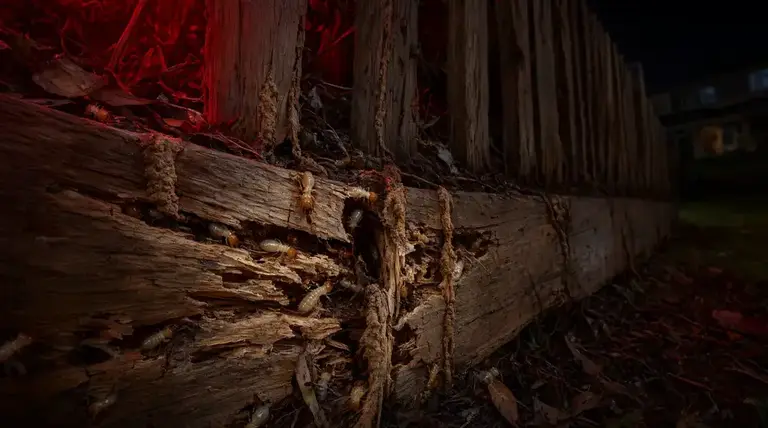
Drywood termites matter because they can establish in parts of an Australian home that subterranean termites simply can’t reach — upstairs rooms, roof voids and furniture with zero ground contact. While subterranean species cause the overwhelming majority of termite damage across Australia, drywood infestations slip in through imported goods, second-hand furniture and timber crates, and they can persist undetected for years.
Australian housing styles create plenty of suitable habitat. Queenslanders with their extensive timber framing, older brick veneer homes with hardwood roof timbers, and even modern slab-on-ground builds all contain dry, seasoned timber above ground level. Our warm climate — particularly across Queensland, northern New South Wales and coastal regions — suits these insects well, and heated homes in cooler southern states keep timber dry year-round. Because one infested antique or imported piece can seed a colony in an upstairs room, no home is automatically out of reach. That’s why our Termite Inspections & Reports always check above-ground timber, not just the subfloor and perimeter.
Warning Signs of Drywood Termites
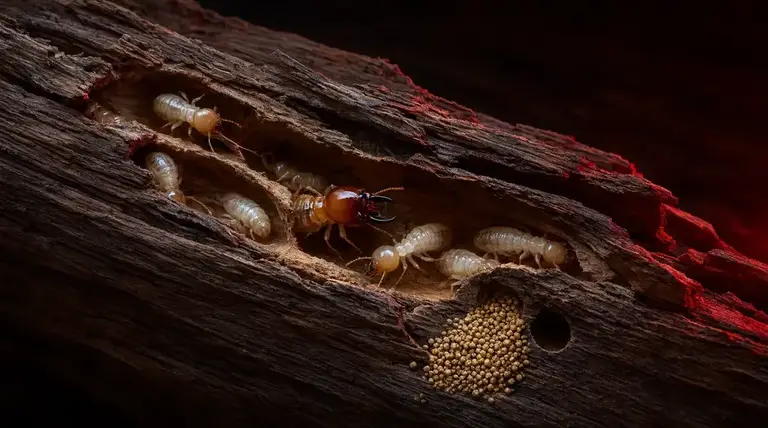
The most reliable sign of drywood termites is frass: small piles of hard, sand-like pellets pushed out of tiny “kick-out” holes in infested timber. Unlike subterranean termites, they never build mud tubes, so an absence of mud alongside visible timber damage is itself an important clue.
- Frass pellets — tiny, hard, six-sided droppings resembling coarse sand or coffee grounds, collecting beneath skirting boards, furniture or window frames.
- Kick-out holes — pin-sized holes in timber surfaces where pellets are ejected; often the only visible opening.
- No mud tubes — a crucial differentiator from subterranean species; see our guide to the 10 Warning Signs of Termites in Australian Homes for the full comparison.
- Hollow-sounding or weakened timber — furniture joints, picture frames or architraves that suddenly give way or sound papery when tapped.
- Discarded wings or swarmers — alates emerging from furniture or roof timbers, often near windows and light sources.
- Recent second-hand or imported timber items — infestations frequently trace back to an antique, crate or carved wooden item brought into the home.
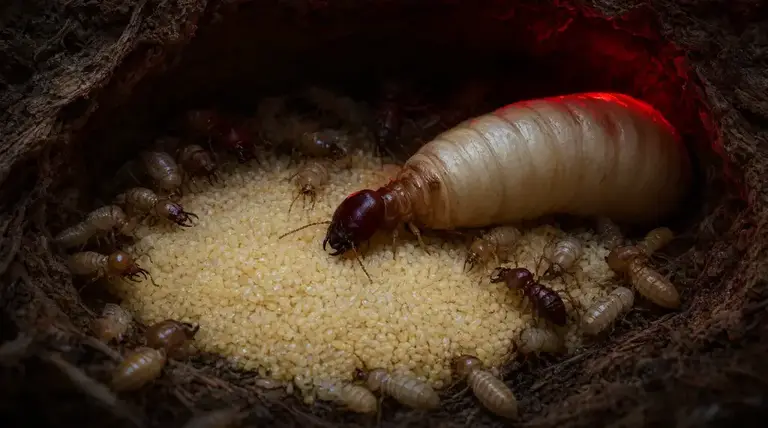
Colonies typically number only a few hundred to a couple of thousand insects and grow slowly, so damage accumulates gradually. Fresh frass appearing after you’ve swept a pile away is a strong sign of live activity and warrants a professional assessment.
DIY vs Professional Treatment
DIY treatment of drywood termites is risky because misidentification can spread a regulated pest and void your ability to treat the real problem correctly. Surface sprays and hardware-store products rarely penetrate to the gallery system inside the timber, and disposing of an infested item without identification can breach biosecurity obligations. Professional pest control technicians confirm the species first, then match the treatment to the extent of spread.
| Factor | DIY approach | Professional treatment |
|---|---|---|
| Identification | Guesswork; easily confused with subterranean species or borers | Confirmed species ID; biosecurity reporting handled where required |
| Reach of treatment | Surface-only; galleries deep in timber survive | Timber injection, heat or fumigation reaching the whole colony |
| Spread risk | High — moving infested items can seed new colonies | Contained and managed under a treatment plan |
| Legal obligations | Declared-pest reporting easily missed | Licensed technicians handle quarantine requirements |
| Long-term protection | None; no follow-up or monitoring | Ongoing monitoring and prevention advice for the whole structure |
Where subterranean termites are also a concern, professionals can combine localised drywood treatment with broader protection such as our Termite Treatment & Barrier Systems. If you’re unsure what a barrier involves, our explainer on What Is a Termite Barrier and How Does It Protect Your Home? breaks it down in plain language.
Drywood Termite Treatment Costs in Australia
Across the Australian market, professional drywood termite treatment generally costs between $250 and $4,000 or more, depending on how localised the infestation is and which treatment method is required. As a guide to what the industry charges, a single infested item sits at the cheaper end, while whole-of-structure fumigation of a large Queenslander sits at the top. The figures below reflect typical 2025-26 market rates across the Australian pest control industry in AUD — any individual quote will depend on inspection findings, property size and access.
| Service | Typical market rate (AUD) | What’s included/notes |
|---|---|---|
| Timber pest inspection and species ID | $250–$450 | Full visual inspection, moisture readings, written report; see Termite Inspection: What It Includes and Why It Matters |
| Removal and destruction of infested item | $150–$400 | Suitable for a single piece of furniture; includes safe disposal |
| Localised timber injection | $400–$1,200 | Termiticide injected into galleries by a licensed technician; APVMA-registered products |
| Heat treatment | $800–$2,500 | Chemical-free option for rooms or large items; temperature monitored throughout |
| Whole-of-structure fumigation | $2,500–$4,000+ | Reserved for widespread infestations; property must be vacated during treatment |
Whichever provider you choose, chemical treatments should always be carried out by licensed pest control technicians using APVMA-registered products, applied according to label directions. Beware any operator promising chemicals are “100% safe” or offering “guaranteed” eradication — reputable companies provide realistic warranties and follow-up inspections instead.
One more thing worth knowing before you book: Aussie Pest Strike typically comes in well under these market rates for the same licensed, APVMA-compliant work. For an exact quote tailored to your property and infestation, give us a call on [aps_phone] and we’ll sort you out.
Seasonal Activity of Drywood Termites
Drywood termites are active inside timber all year, but swarming — when winged reproductives emerge to start new colonies — peaks through the warmer months, roughly October to March in most of Australia. Because colonies live entirely within wood, winter slows them only modestly, and heated homes barely slow them at all.
Jan
Feb
Mar
Apr
May
Jun
Jul
Aug
Sep
Oct
Nov
Dec
Indicative activity pattern: swarming and visible signs (fresh frass, alates) peak from late spring through summer, while feeding continues year-round inside dry timber. Northern regions typically see a longer, earlier peak than southern states.
Nine times out of ten, the “sand” a customer has been sweeping up for months is frass, and the colony behind it has been quietly working for years. The biggest mistake we see is people throwing the infested item in a skip before we’ve identified the species — with a regulated pest, that can turn one small problem into a neighbourhood one. Get it identified first; the treatment decision becomes simple after that.
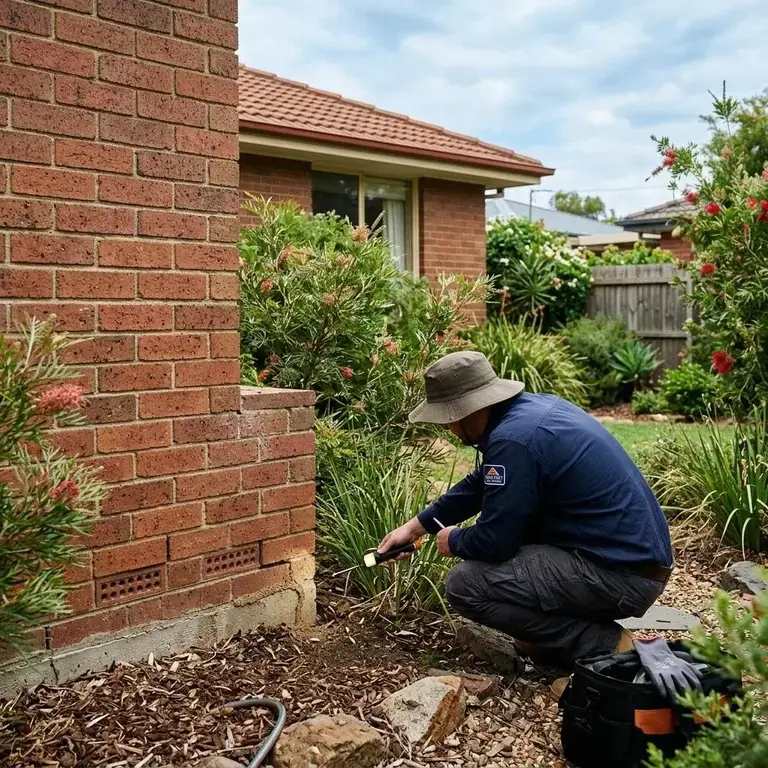
Don’t disturb or move any timber you suspect is infested. Photograph the frass, note where it appeared, and book a professional inspection so the species can be confirmed and any biosecurity reporting handled correctly. If the infestation is localised, timber injection or heat treatment usually resolves it; widespread activity may require fumigation. Pair treatment with an annual inspection program so any recurrence is caught early.
Frequently Asked Questions
How do I tell drywood termites apart from subterranean termites?
The clearest difference is frass and mud. Drywood termites push out small piles of hard, six-sided pellets that look like coarse sand or coffee grounds, and they never build mud tubes because they live entirely inside dry timber with no soil contact. Subterranean termites, by contrast, rely on soil moisture and typically leave mud tubes along foundations and timber surfaces. Hollow-sounding timber with pellet piles but no mud is a strong indicator of a drywood problem.
What does drywood termite frass look like?
Drywood termite frass consists of tiny, hard, six-sided droppings that resemble coarse sand or coffee grounds. The termites eject these pellets through pin-sized kick-out holes in the timber surface, so you will usually find small accumulations beneath skirting boards, window frames or furniture. If fresh frass reappears after you have swept a pile away, that suggests live activity inside the timber and warrants a professional assessment.
Where in the home can drywood termites infest?
Because drywood termites need no soil contact and draw all their moisture from the timber itself, they can establish anywhere there is dry, seasoned wood above ground level. That includes furniture, roof timbers, window frames, skirting boards, picture frames and upstairs rooms that subterranean termites cannot reach without ground contact. Queenslanders with extensive timber framing, older brick veneer homes with hardwood roof timbers, and even modern slab-on-ground builds all provide suitable habitat.
Are drywood termites common in Australia?
No. Drywood termites are far rarer in Australia than subterranean termites, which cause the overwhelming majority of termite damage nationally. However, they still matter because they slip in through imported goods, second-hand furniture and timber crates, and can persist undetected for years in warm coastal regions such as Queensland and northern New South Wales. Certain species, including the West Indian drywood termite, are declared quarantine pests under biosecurity law.
Why should an infested item not be thrown out before identification?
With regulated species such as the West Indian drywood termite, disposing of an infested item before it has been identified can breach biosecurity obligations and potentially spread the pest to other properties. Moving infested timber can also seed new colonies elsewhere. The recommended approach is to leave the item undisturbed, photograph the frass, note where it appeared, and have a licensed technician confirm the species so any required reporting and treatment decisions are handled correctly.
What treatment options exist for drywood termites?
Treatment options include localised timber injection, where termiticide is injected into the galleries by a licensed technician; heat treatment, a chemical-free option for rooms or large items; whole-of-structure fumigation for widespread infestations, which requires the property to be vacated; and removal and destruction of a single infested furniture item. Professional identification of the species always comes first, because the right method depends on how far the infestation has spread.
How do drywood termites spread from one piece of timber to another?
Swarming, when winged reproductives emerge to start new colonies, peaks through the warmer months, roughly October to March across most of Australia. Northern regions typically see a longer and earlier peak than southern states. Feeding continues year-round inside dry timber, and winter slows colonies only modestly, while heated homes barely slow them at all. Discarded wings or swarmers near windows and light sources are a warning sign worth acting on.
Why is DIY treatment of drywood termites risky?
DIY treatment risks misidentification, since drywood termites are easily confused with subterranean species or borers. Surface sprays from hardware stores rarely penetrate to the gallery system deep inside the timber, so the colony survives. Disposing of an infested item without identification can breach biosecurity obligations for declared pests, and moving items can spread colonies. Licensed technicians confirm the species first, handle any reporting requirements, and match the treatment to the extent of spread.
I have followed the advice in this article but still suspect drywood termites — how do I arrange practical help?
If you have photographed the frass, left suspected timber undisturbed and still believe drywood termites are present, the next step is booking a professional inspection so the species can be confirmed. Aussie Pest Strike provides timber pest inspections with written reports, and its licensed technicians can handle species identification and any biosecurity reporting where required. Once the extent of the infestation is known, they can recommend whether timber injection, heat treatment, fumigation or item removal suits your situation.
What happens after Aussie Pest Strike confirms drywood termites in my home?
Once species identification is confirmed, Aussie Pest Strike matches the treatment to the extent of spread. A single infested item may only need removal and safe destruction, while localised activity often responds well to timber injection using APVMA-registered products or monitored heat treatment. Widespread infestations may require whole-of-structure fumigation, which means vacating the property during treatment. Follow-up monitoring and prevention advice for the rest of the structure form part of a proper treatment plan.
Sources & further reading
Found Something
Dangerous?
Don’t touch it. Don’t spray it. Keep kids and pets clear, take a photo from a safe distance, and call us — or book a free inspection and we’ll come to you.
02 7235 0050