Can You HearTermites? The Soundsof an Infestation
Termite sounds: Can You Hear Termites? The Sounds of an Infestation. Can you hear — yes, you can sometimes hear termites, but the sound is faint and easy to...
Can you hear termites? Yes — termite sounds are real, and across Australia, from Cairns to Perth, homeowners report faint clicking and rustling inside walls. The catch is that these noises are soft, mechanical and easy to miss, especially during the day when household noise drowns them out. By the time a colony is audible, it is usually well established, which makes listening a useful early-warning tool rather than a party trick.
Termite sounds are the faint mechanical noises — clicking, ticking and rustling — produced by soldier termites banging their heads as an alarm and by thousands of workers chewing through timber inside walls, floors and roof framing. This article explains what those noises are, how to test for them safely, what else they could be, and when to call in a licensed pest control professional.
- Termites have no vocal organs — audible noises come from soldiers head-banging at roughly 6 taps per second and workers chewing and moving mud.
- Termite sounds are easiest to hear at night when background noise drops, and activity peaks through the Australian summer.
- Tapping suspect timber is a useful DIY check — hollow or drummy sounds suggest galleried wood.
- Never disturb a suspected nest with sprays or probing; it scatters the colony and complicates treatment.
- Audible termites usually mean an established infestation — book a professional inspection promptly.
Why Termite Sounds Matter Across Australia
Termites are active in every mainland state and territory, and hearing them early can save thousands of dollars in structural repairs. Australia is home to some of the world’s most aggressive timber pests, and our housing stock gives them plenty to eat.
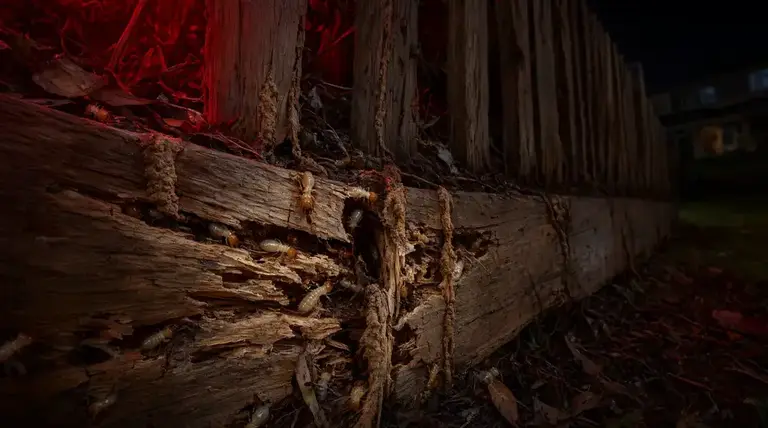
Warm, humid conditions across Queensland, northern New South Wales, the Northern Territory and coastal Western Australia suit Coptotermes acinaciformis, the country’s most destructive species. Traditional Queenslanders on stumps offer open subfloors and easy timber access; older brick-veneer homes hide activity behind plasterboard; and even modern slab-on-ground construction is vulnerable where the slab edge is concealed or garden beds bridge the damp course. Because termites consume timber from the inside out while leaving the outer shell intact, sound is sometimes the only clue before visible damage appears — which is why understanding termite sounds is genuinely useful for Australian homeowners.
What Termite Sounds Actually Are
The noises you hear are mechanical, not vocal. Termites have no voice box, so every sound traces back to physical behaviour inside the colony.
Head-banging soldiers
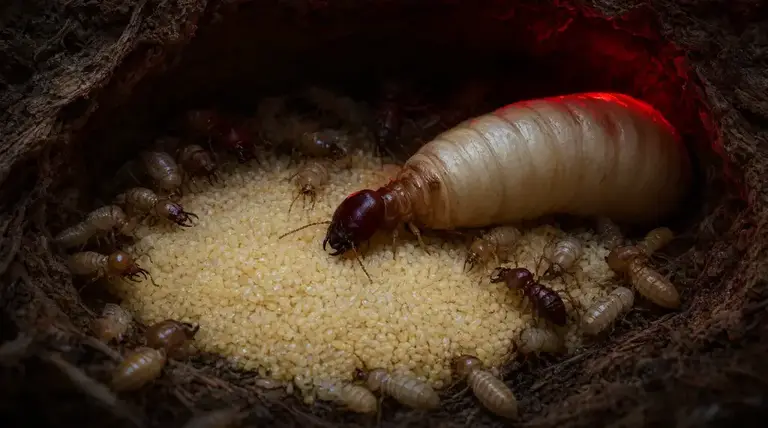
When a nest is disturbed by vibration or light, soldier termites bang their heads against gallery walls, producing a rapid clicking or ticking of around 6 taps per second. This defensive alarm ripples through the colony and is the noise people most often report hearing at night.
Workers chewing and moving
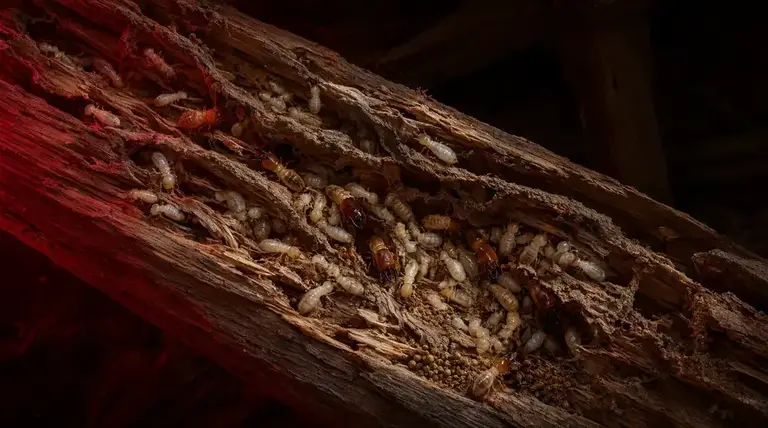
The worker caste does the actual damage. In a heavy infestation you may hear faint rustling, like light rain on paper, as thousands of workers excavate galleries and shift mud. Because the outer timber shell stays intact, this noise travels through wall cavities rather than into the room.
Warning Signs to Listen and Look For
Sound alone never confirms termites — combine what you hear with physical evidence. Use this checklist as a first pass before calling a technician.
- Hollow-sounding timber: knock along skirting boards, architraves and door frames — healthy hardwood is dense, while galleried timber sounds hollow or drummy.
- Faint clicking at night: turn appliances off and press your ear to suspect walls; alarm clicking becomes detectable when background noise drops.
- Rustling inside walls: a soft papery sound, like drizzle on cardboard, suggests active workers in a heavy infestation.
- Blistered or rippled paint: surfaces that flex under gentle pressure often sit over an active gallery.
- Mud leads or tubes: earthen tunnels on slab edges, stumps or brickwork point to subterranean termites.
- Tight-fitting doors and windows: warped frames can indicate moisture and termite activity behind the jamb.
- Discarded wings near sills: evidence of a recent alate flight and a nearby mature nest.
Cross-check anything suspicious against the visual 10 warning signs of termites in Australian homes before drawing conclusions.
Other Noises People Mistake for Termite Sounds
Not every noise in the wall is a termite. Rodents, borers and even heat expansion can mimic termite sounds, so use the differences below to narrow things down.
| Noise | Likely source | Tell-tale difference |
|---|---|---|
| Rapid clicking in walls | Termite soldiers | Stops when you knock, resumes at night |
| Scratching or scampering | Rodents or possums | Louder, irregular, heard in roof void |
| Tapping at dusk | Wood-boring beetles | Fine powdery frass (dust) below timber |
| Creaking | Timber expanding with heat | Follows temperature swings, not constant |
If you find no dust but do see mud, you are more likely dealing with subterranean termites — check the tell-tale termite mud tubes and where to look and learn what termite damage looks like.
DIY Listening Tests vs Professional Pest Control
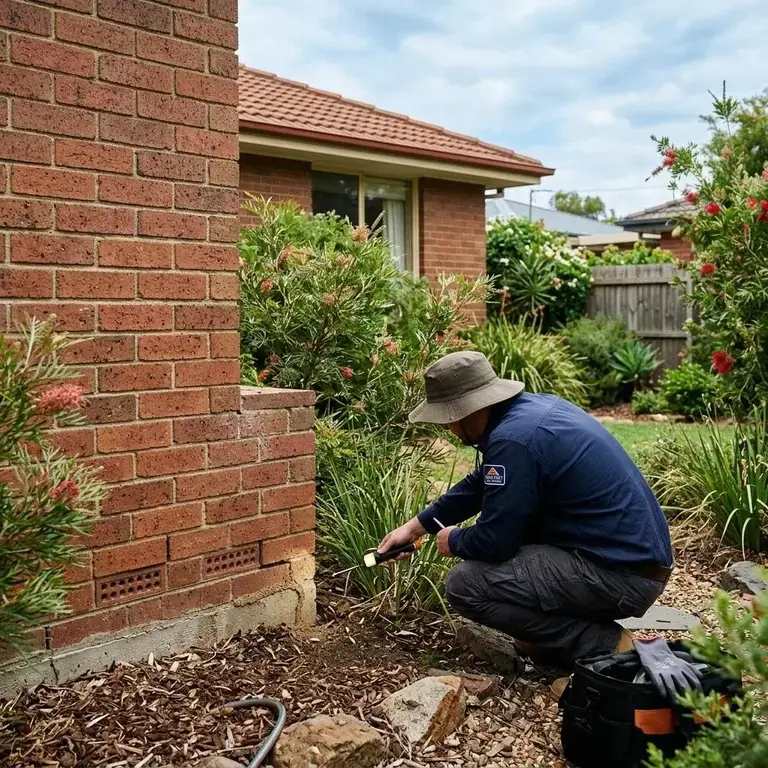
Home listening tests are a legitimate first step — tapping timber and listening at night can flag a problem — but they cannot confirm the species, locate the nest or measure how far damage has spread. Professional pest control technicians use moisture meters, thermal imaging and acoustic detection tools to find activity you cannot hear.
| Factor | DIY listening/tapping | Professional inspection |
|---|---|---|
| Cost | Free | $200–$350 typical |
| Detects active termites | Sometimes, if loud enough | Yes — acoustic, thermal, moisture tools |
| Identifies species | No | Yes |
| Risk of disturbing nest | Moderate if probing or spraying | Low — trained, non-invasive methods |
| Leads to treatment plan | No | Yes — written report and options |
If a listening test raises suspicion, the next step is a professional Termite Inspections & Reports service. Our guide to what a termite inspection includes and why it matters walks through the process room by room.
Typical Costs for Termite Services in Australia (2025–26)
Across the Australian market, the industry generally charges roughly $200–$350 for a standard inspection and anywhere from $2,000 to $5,000 for a full chemical barrier around an average home. These are the going market rates — pricing varies with home size, construction type (slab versus subfloor) and how established the infestation is.
| Service | Typical market rate (AUD) | What’s included/notes |
|---|---|---|
| Standard termite inspection | $200–$350 | Visual and instrument inspection, written report |
| Pre-purchase timber pest inspection | $300–$500 | Often combined with building inspection |
| Chemical soil barrier | $2,000–$5,000 | Trenching/drilling, APVMA-registered termiticide, applied by licensed technicians |
| Baiting and monitoring system | $2,500–$4,500 installed, plus $300–$600/yr monitoring | In-ground stations, colony elimination over time |
| Active infestation treatment (dust/foam) | $500–$1,500 | Direct treatment before barrier installation |
Under Australian regulations, chemical treatments must be applied by licensed pest control technicians using APVMA-registered products. For long-term protection, see our Termite Treatment & Barrier Systems page and the explainer What Is a Termite Barrier and How Does It Protect Your Home?.
One thing worth knowing: Aussie Pest Strike typically comes in well under these market rates for the same licensed, APVMA-compliant work. Every property is different, so for an exact quote tailored to your home, give us a call on [aps_phone] — no obligation, just straight answers.
Seasonal Termite Activity Across the Year
Termite activity — and therefore how audible colonies are — climbs with warmth and humidity, peaking through the Australian summer from December to February. Higher soil temperatures speed up foraging in species like Coptotermes acinaciformis, meaning more workers moving and more soldiers ready to raise the alarm.
Jan
Feb
Mar
Apr
May
Jun
Jul
Aug
Sep
Oct
Nov
Dec
Indicative activity pattern: termites are busiest and loudest through the warmer months (October–March), with alate flights often after spring and summer rain. Activity never stops — cooler months simply slow foraging while colonies keep consuming timber year-round.
If you first notice termite sounds in summer, do not assume they will fade with autumn. The colony is pacing itself with the season, not leaving.
When a homeowner tells me they hear ticking in the wall at night, I take it seriously — that clicking is usually soldier termites, and soldiers only show up in numbers when the colony is strong. The worst thing anyone can do is spray or poke at it. Leave it alone, and get a licensed technician out with the right detection gear.
If you suspect termite sounds in your home, do not tap, drill or spray — disturbing the nest scatters termites and makes treatment harder. Note where and when you hear the noise, run the visual checklist above, and book a professional inspection promptly. Audible colonies are established colonies, so time matters.
Frequently Asked Questions
Can you actually hear termites in your walls?
Yes. Termite sounds are real, and homeowners across Australia report faint clicking and rustling inside walls. The noises are mechanical rather than vocal — soldier termites bang their heads against gallery walls as an alarm, while thousands of workers chew through timber and move mud. The sounds are soft and easy to miss during the day, so they are most often noticed at night when household background noise drops away.
What do termite sounds actually sound like?
Termite noise is usually described as faint clicking or ticking, produced by soldier termites head-banging at roughly six taps per second when the nest is disturbed by vibration or light. In a heavy infestation, workers chewing through timber and shifting mud can create a soft rustling, like light rain on paper or drizzle on cardboard. Because termites eat from the inside out, these sounds travel through wall cavities rather than clearly into the room.
Why are termite sounds easier to hear at night?
Termite sounds are soft, mechanical noises that household activity easily drowns out during the day. At night, when appliances, televisions and general movement quieten down, alarm clicking from soldier termites becomes detectable if you press your ear to a suspect wall. Activity also peaks through the Australian summer from December to February, when warmth and humidity speed up foraging, meaning more workers moving and more soldiers ready to raise the alarm.
How can I test for termites myself using sound?
A simple DIY check is to tap along skirting boards, architraves and door frames. Healthy hardwood is dense, while galleried timber sounds hollow or drummy. You can also turn off appliances at night and press your ear to suspect walls to listen for alarm clicking or papery rustling. These tests are free and legitimate first steps, but they cannot confirm the species, locate the nest or measure how far damage has spread.
What else could be making noises that sound like termites?
Several other sources mimic termite sounds. Rodents or possums produce louder, irregular scratching or scampering, often heard in the roof void. Wood-boring beetles create tapping at dusk, usually with fine powdery frass below the timber. Creaking from timber expanding with heat follows temperature swings rather than staying constant. Termite clicking typically stops when you knock and resumes at night, and is more likely accompanied by mud than dust.
Should I spray or probe a wall where I hear termites?
No. Spraying or probing a suspected nest disturbs the colony and scatters termites, which complicates professional treatment. If you hear ticking or rustling in a wall, leave it alone, note where and when you hear the noise, run through visual checks such as blistered paint, mud tubes or discarded wings, and book a licensed pest control technician who has the right detection equipment to assess it properly.
Does hearing termites mean I have a serious infestation?
Usually yes. By the time a colony is audible, it is generally well established — soldiers only show up in numbers when the colony is strong, and heavy worker activity is needed to produce noticeable rustling. Audible termites should be treated as an early-warning signal rather than a minor curiosity. Book a professional inspection promptly, because termites consume timber from the inside out while leaving the outer shell intact.
Do termite sounds stop in winter?
No. Termite activity climbs with warmth and humidity, peaking through the Australian summer from December to February, but colonies keep consuming timber year-round. Cooler months simply slow foraging while the colony continues feeding inside walls, floors and roof framing. If you first notice termite sounds in summer, do not assume they will fade with autumn — the colony is pacing itself with the season, not leaving your home.
What does a professional inspection involve if I have heard termite sounds?
If a listening test raises suspicion, Aussie Pest Strike can carry out a professional termite inspection and provide a written report. Technicians use moisture meters, thermal imaging and acoustic detection tools to find activity you cannot hear, identify the species involved and locate the nest without disturbing it. Unlike DIY tapping, a professional inspection measures how far damage has spread and leads to a clear treatment plan tailored to your home's construction.
What should my next step be after hearing possible termite noise?
Do not tap, drill or spray the area, because disturbing the nest scatters termites and makes treatment harder. Instead, note exactly where and when you hear the noise, run through the visual checklist of signs such as mud leads, blistered paint and hollow-sounding timber, then contact Aussie Pest Strike to arrange a licensed inspection. Chemical treatments must be applied by licensed technicians using APVMA-registered products, so professional assessment is the practical next step.
Sources & further reading
Found Something
Dangerous?
Don’t touch it. Don’t spray it. Keep kids and pets clear, take a photo from a safe distance, and call us — or book a free inspection and we’ll come to you.
02 7235 0050