Termite Damage: What ItLooks Like andHow to Act Fast
Termite damage what — Termite damage usually looks like hollowed or blistered timber, sagging floors, buckling skirting boards and paint that bubbles as if...
Termite damage is one of the costliest problems facing Australian homeowners, and it almost never announces itself until it’s well advanced. Because termites consume timber from the inside out, the surface of a skirting board, door frame or floor joist can look perfectly sound while the structure behind it has been hollowed to a paper-thin shell. Acting within days — not weeks — can be the difference between a minor repair and a five-figure rebuild.
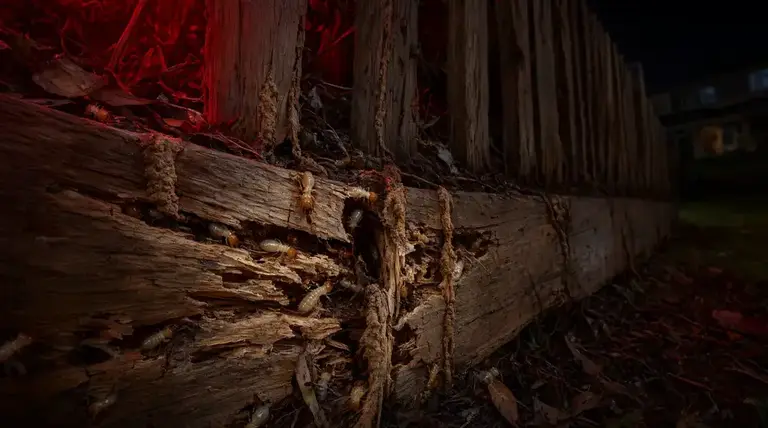
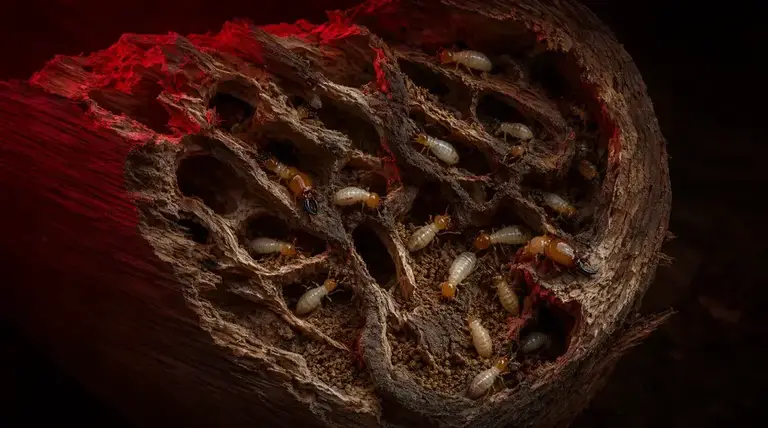
Termite damage is the structural and cosmetic harm caused when termites consume the cellulose in timber and other building materials, typically leaving wood hollowed along the grain with only a thin outer skin intact. This guide covers what that damage actually looks like, where it starts first in Australian homes, how fast it progresses, and the right order of action once you’ve spotted it.
- Termite damage usually looks like hollowed or blistered timber, sagging floors, bubbling paint and mud packing in cracks — the surface often appears intact until the timber is seriously weakened.
- An established Coptotermes colony can cause structurally significant damage within 3 to 6 months, faster in warm, humid regions.
- Never spray or disturb termites yourself — it scatters the colony and makes professional treatment harder.
- Home insurance almost never covers termite damage, so prevention and early detection are your financial safety net.
- Annual professional inspections remain the single most effective way to catch activity before it becomes expensive.
Why Termite Damage Is Such a Big Problem in Australian Homes
Australia’s climate and construction styles create near-ideal termite conditions across most of the country, which is why termite damage costs homeowners more each year than fire, flood and storms combined by typical industry estimates. Warm temperatures, seasonal humidity and a housing stock rich in timber framing give subterranean termites everything they need to thrive.
The risk profile shifts with construction type. Homes on a concrete slab aren’t immune — termites routinely enter through hairline cracks, plumbing penetrations and the slab edge. Homes with a suspended subfloor, common in older Queenslanders and pre-war brick veneer houses, offer dark, damp, timber-rich environments that termites favour. Elevated Queenslanders are particularly exposed: abundant untreated or ageing timber, stumps in ground contact, and enclosed under-house areas that stay humid year-round.
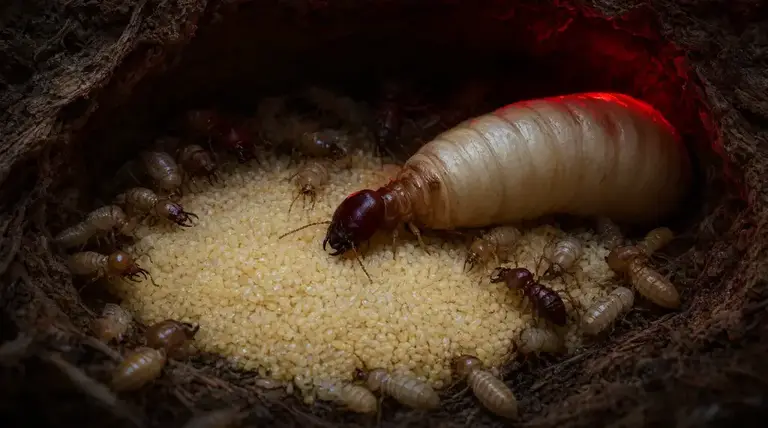
The most destructive species across the eastern seaboard are Coptotermes and Schedorhinotermes. These subterranean termites favour softwood framing and untreated pine, which they can hollow within a few months. If you’re not sure what species you’re dealing with, our guide to the warning signs of termites in Australian homes is a good cross-check before you book anyone in.
What Termite Damage Looks Like: The Warning-Signs Checklist
The clearest signs of termite damage are hollow-sounding timber, blistered paint, sagging floors, tight-fitting doors and windows, and mud packing in cracks and joins. The visible clues are subtle because termites hollow timber along the grain, leaving a thin painted shell that hides the destruction inside.
Work through this checklist if you suspect activity:
- Hollow-sounding timber — tap architraves and skirting boards; a papery, drum-like sound signals internal galleries.
- Blistered or rippled paint — moisture from termite activity distorts the surface and is frequently mistaken for water damage.
- Sagging or spongy floors — soft spots underfoot near bathrooms, laundries and kitchens suggest joist damage.
- Tight-fitting doors and windows — galleries and moisture swell and warp frames so they stick.
- Mud packing — brown, soil-like material filling cracks, joins and wall junctions where termites have sealed themselves in.
- Crumbling skirting or reveals — a finger, screwdriver or vacuum nozzle pushing straight through timber that looked solid days earlier.
Most Australian termite damage begins in warm, damp, hidden areas: subfloors, wall cavities behind wet rooms, door frames near leaking showers, and around hot-water overflow points. Skirting boards, window reveals and the base of timber-framed walls are classic starting points because they combine cellulose and moisture in one place.
Termites avoid light and open air, so they never break through the outer paint layer unless disturbed. That’s why an active infestation can run for a year or more before anyone notices — and why routine inspection matters even when nothing looks wrong. The pace of damage depends on colony size, timber type and moisture: an established Coptotermes colony working undisturbed can cause structurally significant damage within 3 to 6 months, and in humid parts of Queensland and northern NSW that timeline shortens because foraging continues year-round.
DIY vs Professional Termite Damage Response
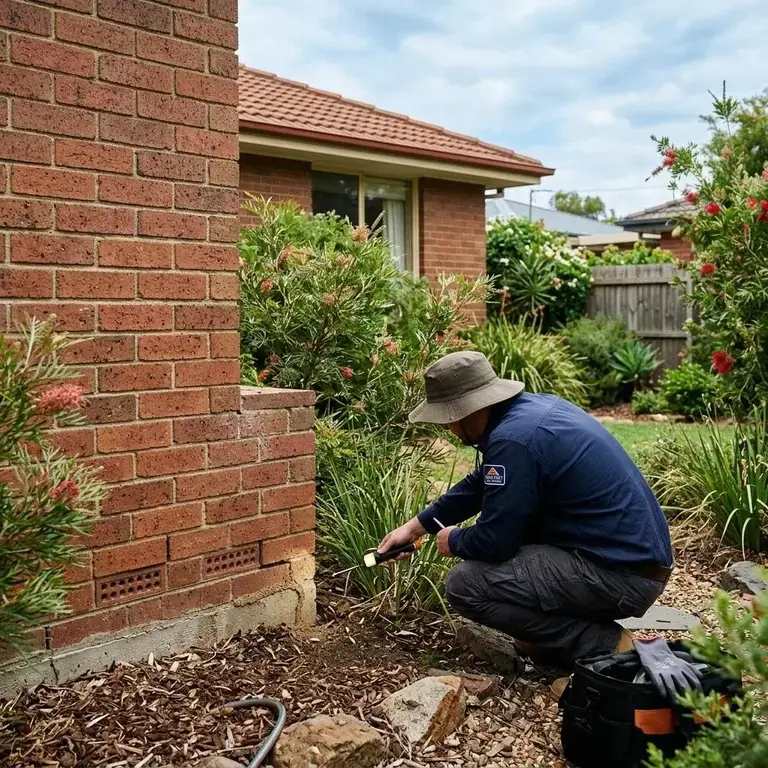
DIY has almost no role in treating termite damage — your job is to avoid making things worse and get a licensed technician on site quickly. Spraying, poking or opening walls scatters the colony and destroys the evidence a professional needs to locate and eliminate it at the source.
| Factor | DIY approach | Professional pest control |
|---|---|---|
| Identification | Guesswork; easy to confuse with water damage or borer | Species identified, colony located, moisture mapping done |
| Treatment | Hardware-store sprays scatter the colony; no lasting effect | Colony eliminated at the source using APVMA-approved methods |
| Evidence | Opening walls destroys the trail technicians need | Damage documented and a treatment plan provided |
| Long-term protection | None — reinfestation is likely | Barrier systems and monitoring protect against return |
| Cost risk | Cheap upfront, expensive when the colony resurfaces | Higher upfront, but addresses the root cause |
The correct DIY response is limited to four steps: don’t spray or disturb the area, don’t open up walls yourself, photograph and mark the site and restrict access, then book a professional inspection. Understanding what a termite inspection includes and why it matters helps you know exactly what to expect on the day.
Termite Damage and Treatment Costs in Australia (2025–26)
Across the Australian market, homeowners can typically expect to pay roughly $250–$450 for a professional termite inspection, $2,000–$5,000 for a full chemical barrier, and anywhere from a few hundred dollars for minor timber replacement to $20,000 or more for structural repairs in severe cases. These are general industry rates — actual quotes vary with home size, construction type, colony size and how far the damage has progressed.
| Service | Typical market rate (AUD) | What’s included/notes |
|---|---|---|
| Termite inspection and written report | $250–$450 | Full internal/external assessment, moisture readings, subfloor and roof void where accessible |
| Active infestation treatment (dust/foam/bait) | $800–$2,500 | Colony elimination at the source; follow-up visits typically included |
| Chemical barrier system | $2,000–$5,000 | Treated zone around the perimeter; applied by licensed technicians using APVMA-registered products |
| Baiting and monitoring system | $2,500–$4,500 installed, plus annual servicing | Stations around the home with scheduled monitoring |
| Timber repairs (builder) | $500 for skirting replacement up to $20,000+ for structural work | Only after the colony is professionally eliminated |
The figures above reflect what the Australian industry generally charges. Remember that insurance almost never covers termite damage, so the market cost of prevention — annual Termite Inspections & Reports and a properly installed barrier — is nearly always far cheaper than the repair bill. If you want to understand how a physical or chemical zone stops termites before they reach your framing, read our explainer on what a termite barrier is and how it protects your home.
Here’s the good news: Aussie Pest Strike typically comes in well under these typical market rates, without cutting corners on licensing, products or thoroughness. For an exact quote tailored to your property, give us a call on [aps_phone] today.
Seasonal Termite Activity Across Australia
Termite activity peaks in the warmer, wetter months — spring and summer — when colonies forage hardest and swarmers take flight, but in northern Australia activity continues at a meaningful level all year. The chart below shows typical relative activity across the calendar.
Jan
Feb
Mar
Apr
May
Jun
Jul
Aug
Sep
Oct
Nov
Dec
Typical relative termite activity across Australia. Activity climbs sharply from September, peaks through the late spring and summer wet season, and eases over winter in the south — though colonies in Queensland and northern NSW forage year-round. Indicative pattern only; local conditions vary.
The practical takeaway: don’t treat a quiet winter as all-clear. Colonies keep eating inside wall cavities regardless of the season — they’re just harder to detect when foraging slows.
“Nine times out of ten, the skirting board that looks fine is the one that’s been hollowed out behind the paint. Homeowners almost always underestimate how much timber is gone because they can only see the surface. Get eyes on it early, and don’t disturb anything before we arrive — a scattered colony is a much harder colony to kill.”
If you’ve spotted any of the warning signs above, photograph the area, leave it completely undisturbed and book a professional inspection within days. Once the colony is eliminated, protect the home long term with Termite Treatment & Barrier Systems and commit to annual inspections — it’s the cheapest insurance against termite damage you’ll ever buy.
Frequently Asked Questions
What does termite damage actually look like in a home?
Termite damage usually appears as hollow-sounding timber, blistered or rippled paint, sagging or spongy floors, tight-fitting doors and windows, and brown mud packing in cracks and joins. Because termites eat timber from the inside out along the grain, the painted surface often looks intact while the wood behind it has been hollowed to a thin shell. Crumbling skirting boards that give way under light pressure are a classic late-stage sign.
Where does termite damage usually start first in an Australian home?
Damage typically begins in warm, damp, hidden areas such as subfloors, wall cavities behind wet rooms, door frames near leaking showers, and around hot-water overflow points. Skirting boards, window reveals and the base of timber-framed walls are common starting points because they combine cellulose and moisture. Homes on concrete slabs can be entered through hairline cracks and plumbing penetrations, while suspended subfloors in older homes offer ideal conditions.
How quickly can termites cause serious structural damage?
An established Coptotermes colony working undisturbed can cause structurally significant damage within three to six months. In warm, humid regions such as Queensland and northern NSW, the timeline shortens because foraging continues year-round. The pace depends on colony size, timber type and moisture levels, and because termites avoid breaking through outer paint layers, an infestation can run for a year or more before anyone notices.
Why should I never spray or disturb termites myself?
Spraying, poking or opening walls scatters the colony and destroys the evidence a professional needs to locate and eliminate it at the source. Hardware-store sprays have no lasting effect and make professional treatment harder. The correct response is limited to four steps: don't spray or disturb the area, don't open up walls yourself, photograph and mark the site and restrict access, then book a licensed professional inspection.
Does home coverage cover termite damage?
In most cases, standard home insurance policies do not cover termite damage, because insurers class it as gradual damage that develops over time rather than a sudden, unexpected event. This means repairs usually come out of your own pocket. Check your specific policy wording to confirm what is and is not included, and treat regular professional inspections as your main line of defence against costly structural repairs.
How much does termite inspection and treatment typically cost in Australia?
Costs depend on your home's size, construction type and how far any infestation has spread. A professional inspection with a written report, active treatment using dust, foam or baiting systems, a chemical soil barrier, or ongoing monitoring all carry different price points. Timber repairs add further expense, from minor skirting replacement to major structural work. Request itemised quotes from several licensed pest controllers so you can compare what each service includes before committing.
Are homes on concrete slabs safe from termites?
No — homes on concrete slabs are not immune. Termites routinely enter through hairline cracks in the slab, plumbing penetrations and the slab edge. By contrast, homes with suspended subfloors, such as older Queenslanders and pre-war brick veneer houses, offer dark, damp, timber-rich environments termites favour. Elevated Queenslanders are particularly exposed due to abundant untreated timber, stumps in ground contact and humid enclosed under-house areas.
Is winter a safe time to stop worrying about termites?
No. While termite activity peaks in spring and summer when colonies forage hardest and swarmers take flight, colonies keep eating inside wall cavities regardless of the season. In Queensland and northern NSW, foraging continues at a meaningful level year-round. In southern areas, activity eases over winter but becomes harder to detect rather than stopping entirely, so a quiet winter should never be treated as an all-clear.
Can I check whether Aussie Pest Strike services my area for termite damage?
Yes. If you've spotted signs of termite damage such as hollow-sounding timber, blistered paint or mud packing, you can contact Aussie Pest Strike to confirm they cover your location and arrange a licensed inspection. They use APVMA-approved methods and provide documented findings with a treatment plan. Reaching out promptly matters, since acting within days rather than weeks can be the difference between a minor repair and a major rebuild.
What should I do after booking a termite inspection with Aussie Pest Strike?
Before the technician arrives, leave any suspected termite activity completely undisturbed — don't spray, poke or open up walls, as this scatters the colony and destroys evidence needed to locate it at the source. Photograph and mark the site and restrict access to the area. Aussie Pest Strike will identify the species, map moisture sources and document the damage, then provide a treatment plan covering colony elimination and long-term protection options.
Sources & further reading
Found Something
Dangerous?
Don’t touch it. Don’t spray it. Keep kids and pets clear, take a photo from a safe distance, and call us — or book a free inspection and we’ll come to you.
02 7235 0050