Wolf Spiders inAustralia: HarmlessHunters or Threat?
Wolf spiders in Australia are harmless ground hunters, not a deadly threat. Learn to identify them, the truth about bites, and when to act. Free quote today.
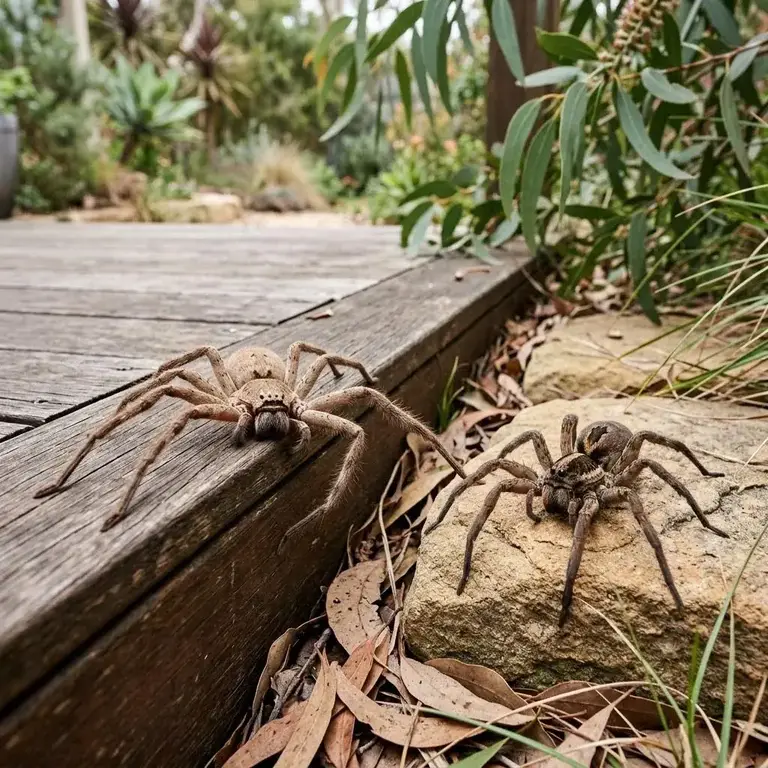
Wolf spiders are one of the most common spiders Australian homeowners encounter, yet they’re also one of the most misunderstood. A wolf spider is a fast-moving, ground-dwelling hunter that chases down prey rather than catching it in a web, and it poses no serious threat to healthy adults. From Sydney’s brick veneer suburbs to Queenslanders on stumps in Brisbane and slab homes across Perth and Melbourne, these spiders turn up in lawns, garden beds and occasionally the laundry floor.
So are they harmless hunters or a genuine threat? The honest answer is mostly the former. Their bite can be painful and cause local swelling, but no Australian species is considered life-threatening, and they actually earn their keep by eating pest insects. This guide covers identification, behaviour, when control is warranted, what professional pest control costs in 2025-26, and when it’s time to call in a licensed technician.
- Wolf spiders are solitary ground hunters that don’t build webs — a spider sitting in a web is not one of them.
- Bites cause local pain and swelling only; no Australian species is life-threatening and no antivenom exists because none is needed.
- Peak indoor sightings occur in autumn (March–May) when mature males roam for mates and heavy rain floods burrows.
- Occasional garden sightings should be left alone — they’re effective natural pest controllers.
- General spider pest control typically costs $180–$350 AUD for a standard home, with exclusion work extra.
Why wolf spiders matter in Australian homes
Wolf spiders matter because they’re frequently misidentified as more dangerous species, leading to unnecessary panic — or unnecessary spraying. Australia’s warm climate, irrigated lawns and garden beds create ideal hunting ground, and our housing styles give them easy entry.
Homes on concrete slabs often have gaps under external doors and weep holes in brick veneer that ground hunters walk straight through. Older Queenslanders and homes with subfloor voids offer cool, sheltered hunting territory directly beneath living areas. In southern states, autumn cooling pushes males indoors; in Queensland and northern NSW, wet-season downpours flood burrows and drive spiders to higher, drier ground — sometimes your kitchen. Understanding these patterns helps you react proportionately instead of reaching for a spray can every time. For confident identification across all species you might encounter, our Spider Control & Removal team deals with everything from harmless wanderers to genuine problem species.
Myth vs fact: the wolf spider reputation
Most of what people fear about wolf spiders is wrong. Three persistent myths deserve correcting, because they drive a lot of unnecessary worry and over-treatment.
Myth: wolf spiders are deadly. Fact: no Australian wolf spider is considered life-threatening. There is no specific antivenom because bites are managed with basic first aid. Older claims that their bite causes necrotic wounds have not held up under investigation.
Myth: they invade in swarms. Fact: wolf spiders are solitary hunters. What looks like a swarm is often dozens of tiny spiderlings riding on a mother’s back — a distinctive behaviour she keeps up for weeks after they hatch.
Myth: they build webs in your house. Fact: wolf spiders do not spin snare webs at all. They rely on speed and eyesight to run down prey across open ground, so a spider sitting in a web on a wall or in a corner is something else — a useful shortcut when identifying what you’ve seen. If you do have a genuinely dangerous web-builder, read our guides on the Funnel-Web Spider: Identification, Danger and Control and the Redback Spider: Identification, Bites and Safe Removal.
Warning signs of wolf spider activity around your property
The clearest signs of wolf spider activity are burrows in the lawn, green eyeshine at night and fast-moving spiders at ground level. Use this checklist to gauge how many you’re actually dealing with — it’s usually fewer than nervous homeowners assume.
- Burrows in soil or lawn edges: small round holes, sometimes with a silk-lined rim, especially along garden beds and retaining walls.
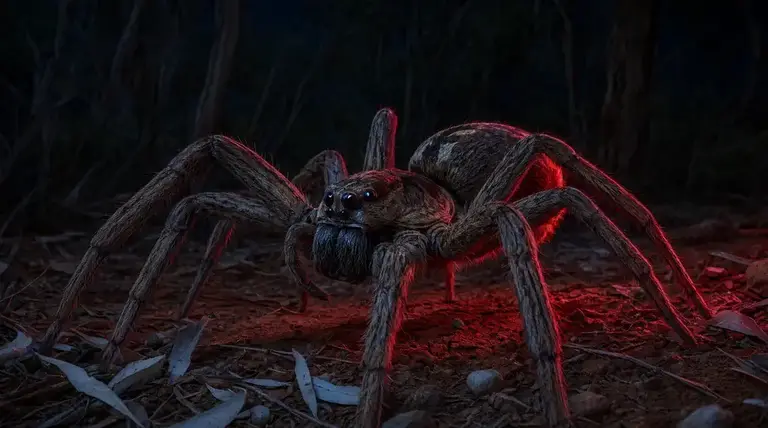
- Green eyeshine at night: sweep a torch across the lawn after dark — their two large forward-facing eyes reflect light brightly.
- Fast ground-level movement: a hairy spider sprinting across pavers, garage floors or laundry tiles rather than sitting in a web.
- Spiders under leaf litter or pot plants: they shelter in debris, mulch and stored items during the day.
- Autumn indoor wanderers: a handful of males appearing between March and May, especially after rain.
- Females carrying egg sacs or spiderlings: a spider with a round sac at the rear, or a “fuzzy” back of riding young, confirms the species.
Their speed and hairy build see them confused with other species, so our article on Huntsman Spiders: Dangerous or Harmless Housemates? helps rule out the most common lookalike.
DIY vs professional wolf spider control
Because wolf spiders are beneficial, blanket spraying gardens is rarely warranted — exclusion and habitat changes handle most situations, while professionals suit persistent indoor activity or mixed-species problems. Here’s how the two approaches compare.
| Factor | DIY approach | Professional treatment |
|---|---|---|
| Best for | Occasional wanderers, garden sightings | Frequent indoor activity, multiple species, peace of mind |
| Typical methods | Door seals, reduced outdoor lighting, less lawn moisture, catch-and-release | Licensed technician-applied residual treatments, web removal, exclusion advice |
| Cost | $20–$80 for seals and deterrents | $180–$350 for a standard home treatment |
| Identification certainty | Relies on your own judgement | Confirmed species ID on site |
| Warranty | None | Service warranty periods commonly offered |
If you handle a bite yourself: apply a cold pack, clean the wound and monitor. Seek medical advice if symptoms worsen or the person bitten is a child or has health concerns. For any chemical treatment, we recommend licensed technicians — professional-grade products applied correctly beat hardware-store sprays every time.
How much does spider pest control cost in Australia?
Across the Australian pest control industry, a standard three-to-four-bedroom home generally attracts a market rate of between $180 and $350 AUD for professional spider treatment in 2025-26, with larger properties and add-on services pushing higher. Industry pricing varies by city, property size and construction type — subfloor homes and Queenslanders take longer to treat than simple slab constructions, and the market reflects that.
| Service | Typical cost (AUD) | What’s included/notes |
|---|---|---|
| General spider treatment (standard home) | $180–$280 | External perimeter, eaves, fences, garden edges, internal skirting as needed |
| Large property or acreage | $280–$450 | Extended external zones, sheds, outbuildings |
| Subfloor / roof void dusting | $80–$150 add-on | Targets harbourage in Queenslanders and older homes |
| Combined spider + general pest package | $250–$400 | Often better value; covers cockroaches, ants, silverfish |
| Inspection and identification visit | Often free–$120 | Species confirmation and written quote |
The figures above are typical Australian market rates — what the industry generally charges — not fixed quotes, and an on-site assessment is always the reliable way to pin down accurate pricing for your property.
Here’s the good news: Aussie Pest Strike typically comes in well under these market rates while delivering the same thorough, professional treatment. For an exact quote tailored to your home, give us a call on [aps_phone] today.
Seasonal wolf spider activity across Australia
Wolf spider activity peaks from late summer through autumn, when males roam for mates and rain floods burrows, and drops to its lowest point in mid-winter. Northern regions see a longer active season tied to the wet, while southern states compress activity into the warmer months.
Jan
Feb
Mar
Apr
May
Jun
Jul
Aug
Sep
Oct
Nov
Dec
Indicative activity pattern: indoor sightings spike March–May as mature males abandon burrows to search for mates, while winter burrow-dwelling keeps encounters low. Heavy rain in any month can trigger a temporary surge.
Nine times out of ten, the “dangerous spider” a customer shows me is a wolf spider that’s just wandered in after rain. I’d rather see homeowners seal a door gap than spray a whole garden — these spiders are doing free pest control on your lawn every night. When they’re persistent indoors, a targeted professional treatment sorts it without nuking the backyard.
Leave garden wolf spiders alone — they’re allies. If they’re regularly turning up inside, start with exclusion: door seals, screens, reduced outdoor lighting and less lawn moisture near the house. If activity continues or you want certainty about every species on the property, book a professional inspection and targeted treatment rather than blanket DIY spraying.
Frequently Asked Questions
Are wolf spiders in Australia dangerous to humans?
No Australian wolf spider species is considered life-threatening. Their bite can be painful and cause local swelling, but it is managed with basic first aid such as a cold pack and cleaning the wound. Older claims that their bites cause necrotic wounds have not held up under investigation, and no specific antivenom exists because none is needed.
How do I identify a wolf spider in my home or garden?
Wolf spiders are fast-moving, hairy ground hunters that chase prey rather than sitting in a web. Look for small round burrows with a silk-lined rim along garden beds, green eyeshine when you sweep a torch across the lawn at night, and spiders sprinting across pavers or tiles at ground level. A spider resting in a web is not a wolf spider.
Why do I keep seeing wolf spiders indoors in autumn?
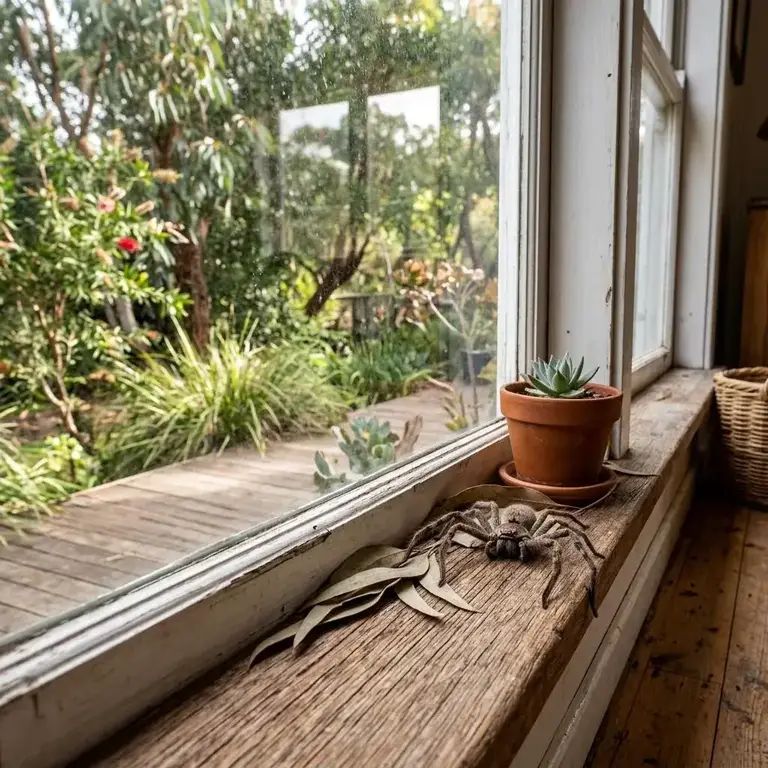
Indoor sightings peak between March and May, when mature male wolf spiders leave their burrows to roam for mates. Heavy rain can also flood burrows and push spiders toward higher, drier ground, sometimes inside homes. Homes on slabs with gaps under external doors and weep holes give ground hunters easy entry.
Do wolf spiders build webs?
No. Wolf spiders do not spin snare webs at all; they rely on speed and eyesight to run down prey across open ground. This makes identification easier: any spider sitting in a web on a wall or in a corner is something else entirely, so you can rule out a wolf spider immediately if you find one in a web.
What should I do if a wolf spider bites me?
Apply a cold pack to the bite, clean the wound and monitor symptoms. The practical next step is to note the signs, inspect the relevant area carefully, and seek property-specific advice if the issue continues.
Should I kill wolf spiders I find in my garden?
No. Garden wolf spiders are beneficial allies that eat pest insects, providing free natural pest control on your lawn every night. Occasional garden sightings should be left alone. Blanket spraying gardens is rarely warranted because exclusion work and habitat changes handle most situations without harming these useful hunters.
Do wolf spiders in Australia pose a threat to pets or livestock?
Professional spider treatment costs vary depending on property size, the extent of the infestation, and whether extras like subfloor dusting or external barrier sprays are needed. Most pest controllers quote after inspecting the home, so obtaining several written quotes is the best way to compare. For wolf spiders specifically, mention where you have seen burrows or sightings so the technician can target those areas effectively.
When should I call a professional about wolf spiders instead of handling them myself?
DIY approaches suit occasional wanderers and garden sightings through door seals, reduced outdoor lighting, less lawn moisture and catch-and-release. Call a licensed technician for frequent indoor activity, multiple spider species on the property, or when you want confirmed species identification and targeted residual treatment rather than blanket DIY spraying.
What information should I provide when booking Aussie Pest Strike for a wolf spider problem?
Describe where and how often you are seeing spiders, whether they were moving at ground level or sitting in webs, and note any burrows, eyeshine sightings or females carrying egg sacs or spiderlings. Mention your construction type too, since slab homes, Queenslanders and subfloor voids affect how treatment is planned. Photos of any spiders you have seen help with identification before an on-site visit.
What is the best next step after spotting what I think is a wolf spider indoors?
Start with exclusion: fit door seals, check screens, reduce outdoor lighting that attracts prey insects and cut back lawn moisture near the house. If indoor activity continues despite these changes, contact Aussie Pest Strike for an inspection so the species can be confirmed and a targeted treatment applied rather than blanket spraying your garden.
Sources & further reading
Found Something
Dangerous?
Don’t touch it. Don’t spray it. Keep kids and pets clear, take a photo from a safe distance, and call us — or book a free inspection and we’ll come to you.
02 7235 0050