Trapdoor Spiders: IDand RiskAround the Home
Trapdoor spiders id — Q: Are trapdoor spiders dangerous? No. Trapdoor spiders are shy, ground-dwelling spiders whose bite is not considered dangerous to...
Trapdoor spiders are shy, ground-dwelling spiders whose bite is not considered dangerous to humans — but they look enough like the deadly funnel-web that misidentification is a real safety risk, whether you live in Sydney, Brisbane or a regional town. If you have ever spotted a neat, lidded burrow in the lawn or an embankment, knowing what you are looking at matters far more than reaching for the spray.
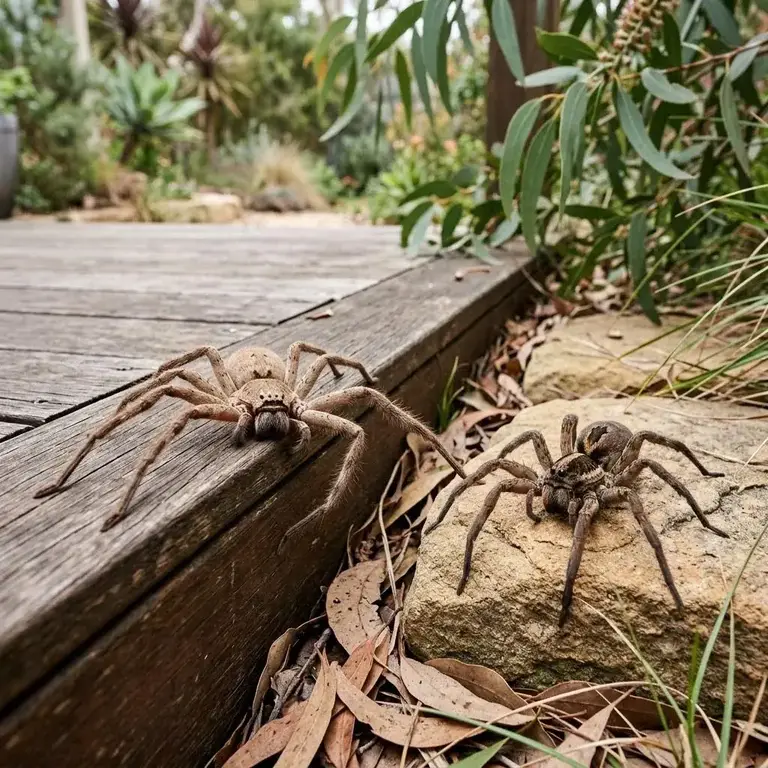
A trapdoor spider is a stocky, brown mygalomorph spider, roughly 20 to 35 mm in body length, that lives in a silk-lined burrow sealed with a hinged, camouflaged lid and ambushes passing insects at night. This guide covers how to identify one, how it compares to a funnel-web, the genuine risk around Australian homes, and when professional pest control is worth the call.
- Trapdoor spiders are not dangerous; bites cause only local pain and mild swelling.
- The real concern is confusion with the funnel-web — when in doubt, treat it as a funnel-web and stay clear.
- Trapdoors have a hinged burrow lid and a shy nature; funnel-webs are glossy black, aggressive, and leave open burrows with silk trip-lines.
- Most encounters happen in autumn when males wander looking for mates.
- Coexistence is usually the best approach, but a licensed technician can confirm the species and advise on control.
Why trapdoor spiders matter for Australian homeowners
Trapdoor spiders matter because they are common across Australia and are routinely mistaken for funnel-webs, causing unnecessary panic — or, worse, dangerous complacency in the opposite direction. Correct identification is the single most important skill a homeowner can have here.
Australia’s climate suits them perfectly. They thrive in lawns, garden beds, embankments and the soft soil around retaining walls, and our long warm seasons keep their insect prey active for much of the year. Housing style plays a role too: homes on concrete slabs tend to see burrows in surrounding turf, while older Queenslanders and houses with subfloors can harbour burrowing spiders in the damp soil beneath. Because a trapdoor can sit unnoticed in a front lawn for years, many people only discover them during landscaping or after heavy rain floods the burrows. If you also deal with web-building species indoors, our Spider Control & Removal service covers the full range.
Warning signs of trapdoor spiders around your property
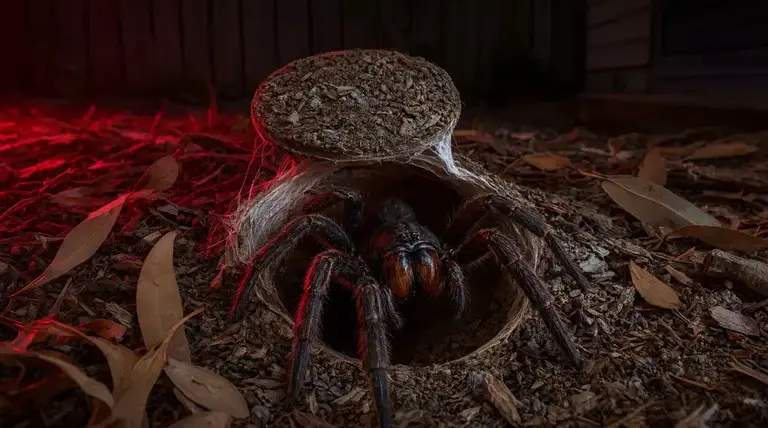
The clearest warning sign is a neat, round burrow in soil or lawn topped with a camouflaged hinged lid — the namesake trapdoor. Use this checklist to assess your property.
- Burrows with lids: Small, tidy holes in lawns, garden beds, embankments or soft soil, each closed by a silk-and-soil flap that blends into the ground.
- Night-time activity: A spider sitting just inside the burrow entrance after dark, waiting to ambush beetles, crickets and other insects.
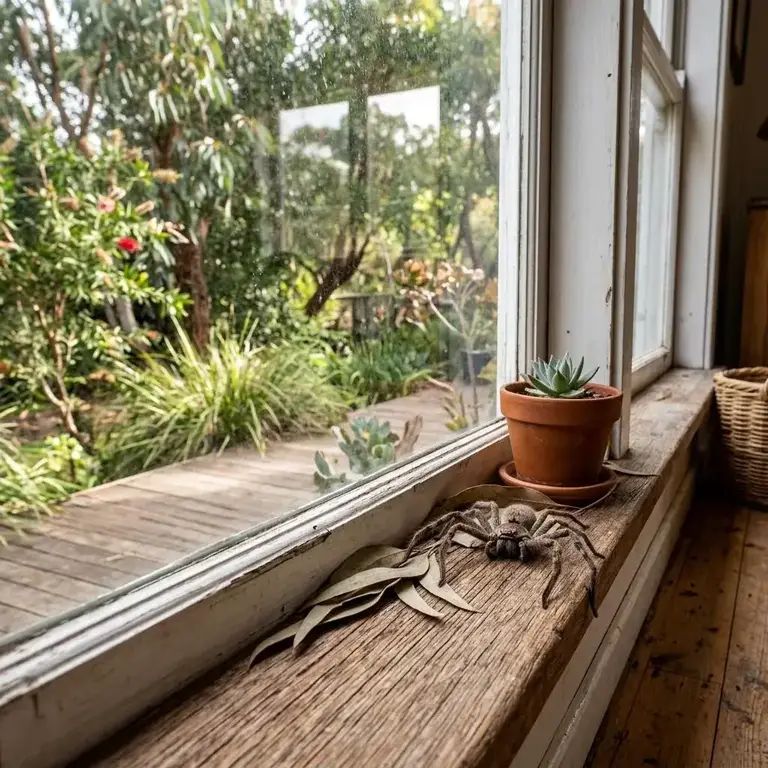
- Wandering males in autumn: Stocky brown spiders found on paths, in garages or occasionally indoors between March and May.
- Robust build: A thick-bodied, brown spider with a slightly glossy carapace and downward-pointing fangs, never seen in a web on a wall.
- Multiple burrows: Clusters of lidded holes near high-traffic areas such as paths, doorways or children’s play spaces.
DIY management vs professional spider control
For most households, simple DIY habits are enough — trapdoor spiders are reluctant to bite and rarely cause problems. Professional help is the right move when identification is uncertain, burrows sit in high-traffic zones, or you suspect a funnel-web. Any chemical treatment should be carried out by a licensed technician using APVMA-registered products, applied according to the label.
| Factor | DIY approach | Professional service |
|---|---|---|
| Identification | Compare against photos; risk of confusion with funnel-webs | Licensed technician confirms species on site |
| Safety | Fine for confirmed trapdoors; risky if species is uncertain | Safe handling of lookalikes, including funnel-webs |
| Treatment | Exclusion, garden hygiene, leaving burrows alone | Targeted, label-compliant treatments around the perimeter |
| Best for | A few burrows in low-traffic garden areas | Burrows near play areas, repeated indoor sightings, uncertain ID |
How much does spider control cost in Australia?
Across the Australian market, professional spider control typically runs between $150 and $450, depending on property size, the species involved and whether follow-up visits are needed. These are general industry price ranges for 2025-26 — what pest control companies across the country commonly charge — and any firm quote would follow an on-site inspection.
| Service | Typical market rate (AUD) | What’s included/notes |
|---|---|---|
| Inspection and species identification | $0 – $120 | On-site assessment; the industry often waives this with a booked treatment |
| General spider treatment (standard home) | $180 – $300 | External perimeter, eaves, garden beds and entry points |
| Large property or acreage treatment | $300 – $450+ | Extended coverage of lawns, sheds, fences and subfloor areas |
| Funnel-web or suspected dangerous spider response | $200 – $400 | Priority attendance, safe capture/removal, targeted treatment |
The figures above reflect typical Australian market rates — what the industry generally charges, not what you’ll pay with Aussie Pest Strike. We typically come in well under these market rates while still delivering a thorough, professional treatment. For an exact quote tailored to your property, give us a call on [aps_phone] today.
Seasonal activity of trapdoor spiders in Australia
Trapdoor spider activity peaks in autumn, when males leave their burrows to search for mates, with a secondary rise through the wetter summer months. The chart below shows typical relative activity across the year.
Jan
Feb
Mar
Apr
May
Jun
Jul
Aug
Sep
Oct
Nov
Dec
Activity peaks March to May as males wander in search of mates — this is when most indoor sightings occur. Winter is quietest, with spiders sealed in their burrows.
Nine times out of ten, the “funnel-web” in someone’s lawn turns out to be a harmless trapdoor, and we’re happy to give them that peace of mind. But we’d much rather a customer call us for the tenth harmless one than assume the eleventh is safe. If you can’t confidently tell the difference, don’t touch it — send us a photo or book an inspection.
Leave confirmed trapdoor burrows alone — these spiders are beneficial pest controllers in their own right. Wear enclosed shoes when gardening at dusk, teach children not to poke burrows, and clear leaf litter near doorways. If burrows sit near play areas, males keep turning up inside, or you have any doubt about the species, book a professional identification before attempting anything yourself. Our guides on the Funnel-Web Spider: Identification, Danger and Control, the Redback Spider: Identification, Bites and Safe Removal and Huntsman Spiders: Dangerous or Harmless Housemates? will help you compare other common species.
Frequently Asked Questions
How do I identify a trapdoor spider?
A trapdoor spider is a stocky, brown mygalomorph spider, roughly 20 to 35 mm in body length, with a slightly glossy carapace and downward-pointing fangs. It is never seen in a web on a wall. The clearest sign of its presence is a neat, round burrow in soil or lawn sealed by a silk-and-soil flap that blends into the ground.
What does a trapdoor spider burrow look like?
Trapdoor spider burrows are small, tidy holes found in lawns, garden beds, embankments or soft soil around retaining walls. Each hole is closed by a hinged lid made of silk and soil that camouflages into the ground. You may see the spider sitting just inside the entrance after dark, waiting to ambush passing insects such as beetles and crickets.
Are trapdoor spiders dangerous to humans?
No. Trapdoor spider bites are not considered dangerous to humans, typically causing only local pain and mild swelling. They are shy, ground-dwelling spiders that are reluctant to bite. The genuine concern is misidentification: trapdoors look enough like the deadly funnel-web that confusion creates a real safety risk, so correct identification matters more than reaching for a spray.
How do trapdoor spiders differ from funnel-web spiders?
Trapdoor spiders are brown, shy, and live in burrows sealed with a hinged, camouflaged lid. Funnel-webs are glossy black, aggressive, and leave open burrows lined with silk trip-lines rather than lidded holes. If you cannot confidently tell the difference between the two, treat the spider as a funnel-web and stay clear until the species has been confirmed.
When are trapdoor spiders most active around Australian homes?
Trapdoor spider activity peaks in autumn, from March to May, when males leave their burrows to wander in search of mates. This is when most sightings occur on paths, in garages or occasionally indoors. There is a secondary rise through the wetter summer months, while winter is quietest, with spiders sealed inside their burrows.
Where do trapdoor spiders commonly build their burrows?
They thrive in lawns, garden beds, embankments and the soft soil around retaining walls. Homes on concrete slabs tend to see burrows in surrounding turf, while older Queenslanders and houses with subfloors can harbour burrowing spiders in damp soil beneath. Burrows can sit unnoticed for years and are often discovered during landscaping or after heavy rain floods them.
Can I manage trapdoor spiders myself?
For confirmed trapdoor spiders, simple DIY habits are usually enough because they rarely cause problems. Leave the burrows alone, wear enclosed shoes when gardening at dusk, teach children not to poke burrows, and clear leaf litter near doorways. Professional help is the right move when identification is uncertain, burrows sit in high-traffic zones, or you suspect a funnel-web.
Why should I leave trapdoor spiders alone if possible?
Coexistence is usually the best approach because trapdoor spiders are beneficial pest controllers in their own right, ambushing insects such as beetles and crickets at night. They are reluctant to bite and their bites are not dangerous. Leaving confirmed burrows undisturbed avoids unnecessary treatment while still keeping your household safe through sensible habits like enclosed footwear outdoors.
What should I discuss with an Aussie Pest Strike technician about trapdoor spiders?
An Aussie Pest Strike technician can confirm whether the spider you have seen is a harmless trapdoor or a funnel-web lookalike, assess where burrows sit relative to paths, doorways and play areas, and advise whether targeted perimeter treatment is needed. Any chemical work would use APVMA-registered products applied according to the label, and coexistence remains the usual recommendation for confirmed trapdoors.
What is the best next step if I find a lidded burrow in my lawn?
If you cannot confidently identify the species, avoid touching the burrow and send Aussie Pest Strike a photo or book an inspection for professional identification before attempting anything yourself. Most lidded burrows turn out to be harmless trapdoors, but treating every uncertain case as potentially a funnel-web keeps your household safe while the species is confirmed.
Sources & further reading
Found Something
Dangerous?
Don’t touch it. Don’t spray it. Keep kids and pets clear, take a photo from a safe distance, and call us — or book a free inspection and we’ll come to you.
02 7235 0050