Mouse Spiders:TheFunnel-Web Lookalike
Mouse spiders the — the mouse spider is a stocky, ground-dwelling Australian spider that is frequently mistaken for a funnel-web, and because its venom...
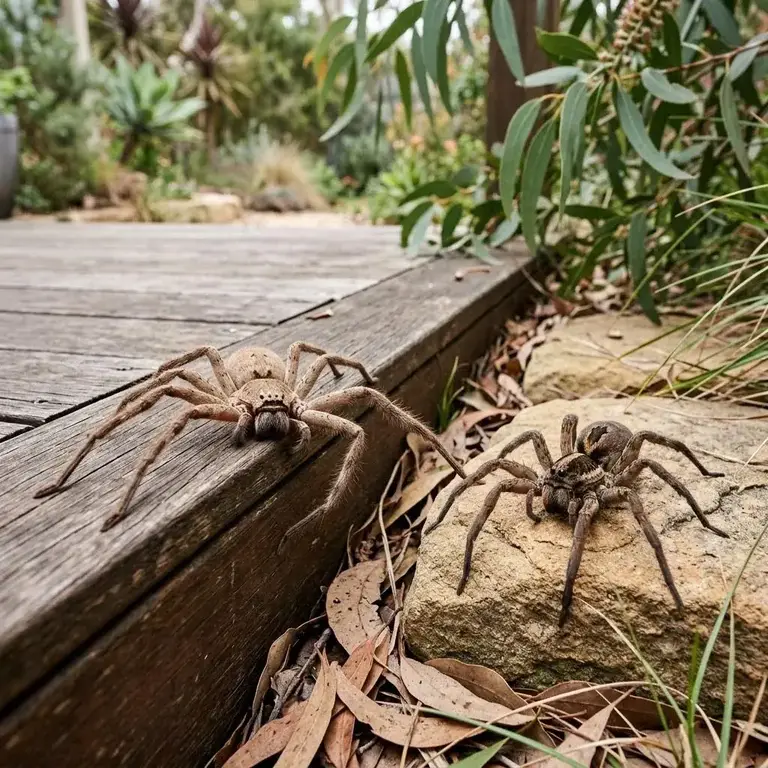
Few spiders cause more double-takes in an Australian backyard than the mouse spider — a stocky, ground-dwelling hunter that looks unsettlingly like a funnel-web and carries venom with real similarities. Whether you live on a Brisbane suburban block, a Sydney quarter-acre or a rural property in Victoria, this is a spider worth recognising on sight.
A mouse spider is a compact, burrowing Australian spider from the genus Missulena, distinguished by its very large, bulbous head and jaws, and frequently mistaken for the far more dangerous funnel-web. While mouse spiders bite far less often than funnel-webs, any bite should be treated as potentially serious — and identification errors happen constantly, which is why understanding this species matters for every household.
- The mouse spider is a stocky, burrowing Australian spider often confused with the funnel-web — treat any large dark spider as dangerous until identified.
- Bites are uncommon but potentially serious; funnel-web antivenom has been used successfully against severe envenomation.
- Males wander by day, especially after summer and autumn rain — daylight sightings are typical mouse spider behaviour.
- Habitat reduction and exclusion around the home is the most effective DIY defence; licensed technicians should handle active burrows near living areas.
- Professional spider treatments in Australia typically range from $150 to $450+ depending on property size and treatment scope.
Why the mouse spider matters in Australian homes
Mouse spiders are found across mainland Australia, thriving in the same conditions that suit our housing — garden beds, lawn edges, retaining walls and the soft soil around slab foundations and subfloor stumps. Because they burrow into undisturbed ground, any property with established gardens, mulched beds or creek-frontage soil is potential habitat.
Australian conditions suit them well. Warm, wet summers trigger male dispersal, and our preference for outdoor living — decks, patios, bare feet on lawns — puts people in direct contact with wandering spiders. Queenslanders on stumps, brick-veneer homes on slabs and older weatherboard cottages all present slightly different risk points, but the common thread is soil contact near the home. Unlike the redback, which favours dry sheltered crevices, or the huntsman, which wanders walls and ceilings, the mouse spider is a ground-dweller — your encounters will happen at ankle height.
The real concern is misidentification. A mouse spider and a funnel-web can look nearly identical at a glance, particularly the uniformly dark females. Anyone living in funnel-web country across eastern New South Wales and south-east Queensland should review our funnel-web spider identification, danger and control guide so the distinction becomes second nature.
Warning signs: is that a mouse spider?
The clearest signs of mouse spider activity are the spiders themselves — males wandering in daylight — plus their distinctive burrows in soft soil. Look for the following indicators around your property:
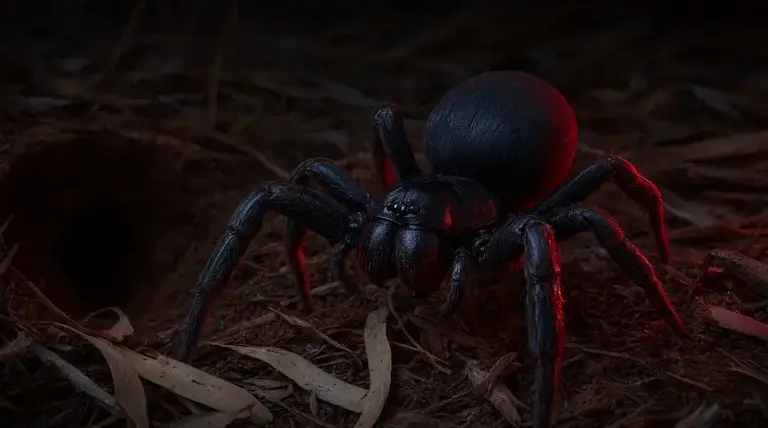
- Bulbous head and enormous fangs: The defining feature — a disproportionately large head region and jaw structure relative to a body of roughly 10–35 mm.
- Colouring: The red-headed mouse spider has a glossy black body with a bright red-orange head and jaws; male eastern mouse spiders may show a bluish-white abdominal patch; females are uniformly dark.
- Daylight wandering: Males crossing patios, driveways or pool surrounds by day — especially after rain in summer and autumn — is classic mouse spider behaviour.
- Burrows in garden beds: Vertical holes in soft, undisturbed soil, sometimes a metre deep, often along lawn edges and in mulched beds.
- Stocky, glossy build: A broad shiny carapace and short, thick legs distinguish them from the longer-legged huntsman and the round-bodied redback.
If you can’t confirm the identification from a safe photograph, assume the worst and keep everyone — especially children and pets — well away.
DIY management vs professional pest control
Sensible DIY measures genuinely reduce encounters: minimise burrow habitat near the house, seal gaps and photograph rather than handle any suspect spider. But when active burrows sit close to doorways, play areas or pool fencing, professional spider control and removal is the safer path, because disturbing a burrow you can’t identify is how bites happen.
| Approach | DIY | Professional pest control |
|---|---|---|
| Identification | Photograph from a distance; cross-check guides | On-site expert identification of species and burrows |
| Habitat reduction | Clear mulch near doorways, fill disused burrows, seal gaps | Full property assessment with targeted recommendations |
| Chemical treatment | Hardware-store sprays offer limited burrow penetration | APVMA-registered products applied by licensed technicians |
| Safety | Risk of disturbing a defensive spider | Trained handling with protective equipment |
Professional spider treatment costs in Australia (2025–26)
Across the Australian pest control market, most households are quoted between $150 and $450 for professional spider treatment, depending on property size, construction type and whether internal, external and subfloor areas all need attention. The figures below reflect what the industry generally charges in 2025–26 — typical market rates, not fixed quotes from any single provider.
| Service | Typical cost (AUD) | What’s included/notes |
|---|---|---|
| General spider treatment (standard home) | Industry average: $150–$250 | External perimeter spray, eaves, fences, garden beds |
| Internal + external treatment | Industry average: $220–$350 | Adds skirting boards, roof void and garage treatment |
| Large property / acreage / subfloor | Industry average: $300–$450+ | Queenslanders and subfloor homes take longer to treat |
| Targeted dangerous-spider callout | Industry average: $180–$320 | Identification, removal and localised treatment |
It’s worth knowing that Aussie Pest Strike typically comes in well under these typical Australian market rates, because we keep overheads low and pass the savings straight on to you. For an exact quote tailored to your property, give us a call on [aps_phone] — we’ll talk you through the options and lock in a fair, upfront price with no surprises.
Seasonal activity: when mouse spiders appear
Mouse spider encounters peak from late spring through autumn, when males leave their burrows to search for females — with a noticeable surge after summer and autumn rain. Females stay underground year-round, so winter sightings are uncommon but not impossible.
Jan
Feb
Mar
Apr
May
Jun
Jul
Aug
Sep
Oct
Nov
Dec
Activity peaks in March–April when autumn rain pushes wandering males above ground, with a secondary rise from late spring. Winter months see minimal surface activity as spiders remain in their burrows.
Most callouts we get for a “funnel-web” turn out to be a mouse spider wandering across the patio after rain. That’s actually good news — they’re far less aggressive — but we always tell customers the same thing: don’t try to tell them apart up close. Photograph it, keep the kids inside and let us handle the rest.
If you’re finding burrows near doorways, play equipment or the pool area — or you’ve spotted wandering males more than once this season — book a professional inspection. A licensed technician can confirm the species, treat active areas with APVMA-registered products and advise on habitat changes so encounters don’t repeat. Never handle a suspect spider yourself.
Frequently Asked Questions
What is a mouse spider and why is it often mistaken for a funnel-web?
A mouse spider is a compact, burrowing Australian spider from the genus Missulena, distinguished by a very large, bulbous head and jaws. It looks unsettlingly like the funnel-web at a glance, particularly the uniformly dark females, and its venom has real similarities to funnel-web venom. Bites are far less common than funnel-web bites, but any large dark spider should be treated as dangerous until properly identified.
How do I identify a mouse spider in my garden?
Look for a stocky, glossy spider with a disproportionately large head region and enormous fangs on a body of roughly 10–35 mm. The red-headed mouse spider has a glossy black body with a bright red-orange head and jaws; male eastern mouse spiders may show a bluish-white abdominal patch, while females are uniformly dark. Short, thick legs distinguish them from huntsmans, and they are ground-dwellers rather than wall-climbers.
Are mouse spiders dangerous?
Mouse spider bites are uncommon but potentially serious, as their venom shares similarities with funnel-web venom. Funnel-web antivenom has been used successfully against severe mouse spider envenomation. Because identification errors happen constantly, treat any large dark ground-dwelling spider as dangerous until confirmed otherwise, keep children and pets well away, and never handle a suspect spider yourself.
When are mouse spiders most active?
Encounters peak from late spring through autumn, when males leave their burrows to search for females. Activity peaks in March–April, when autumn rain pushes wandering males above ground, with a noticeable surge after summer and autumn rain generally. Females stay underground year-round, so winter sightings are uncommon but not impossible.
Why do male mouse spiders wander during the day?
Daylight wandering by males is classic mouse spider behaviour, especially after summer and autumn rain. Males leave their burrows to search for females, crossing patios, driveways and pool surrounds by day. This puts them in direct contact with people enjoying outdoor living areas, so bare feet on lawns and decks increase the chance of an encounter.
Where do mouse spiders live around Australian homes?
Mouse spiders are found across mainland Australia and thrive in garden beds, lawn edges, retaining walls and soft soil around slab foundations and subfloor stumps. They burrow into undisturbed ground, sometimes up to a metre deep, so properties with established gardens, mulched beds or creek-frontage soil offer potential habitat. Encounters typically happen at ankle height because they are ground-dwellers.
How can I reduce mouse spider habitat around my home?
Habitat reduction and exclusion are the most effective DIY defences. Clear mulch near doorways, fill disused burrows and seal gaps around the home. Photograph any suspect spider from a distance rather than handling it. However, if active burrows sit close to doorways, play areas or pool fencing, professional removal is safer, because disturbing a burrow you cannot identify is how bites happen.
What should I do if I find a large dark spider near my home?
Do not try to tell a mouse spider apart from a funnel-web up close. Photograph it from a safe distance, keep everyone — especially children and pets — well away, and assume it is dangerous until identified by someone qualified. If you cannot confirm the identification from a safe photograph, or burrows appear near living areas, contact a licensed pest control technician.
When should I call a pest professional about mouse spiders around my home?
An on-site assessment makes sense if you are finding burrows near doorways, play equipment or the pool area, or you have spotted wandering males more than once this season. Aussie Pest Strike technicians can confirm whether the spider is a mouse spider or a funnel-web, inspect active burrows, and advise on habitat changes so encounters do not repeat. Many callouts for suspected funnel-webs turn out to be less aggressive mouse spiders.
What happens during a professional mouse spider treatment visit?
A licensed technician will identify the species on site, assess burrow locations relative to your living areas, and apply APVMA-registered products where appropriate. Treatments can cover external perimeters, eaves, fences and garden beds, with internal, roof void and subfloor attention added where needed. Aussie Pest Strike also advises on habitat changes, such as clearing mulch near doorways, so wandering males are less likely to return after rain.
Sources & further reading
Found Something
Dangerous?
Don’t touch it. Don’t spray it. Keep kids and pets clear, take a photo from a safe distance, and call us — or book a free inspection and we’ll come to you.
02 7235 0050