Garden OrbWeavers: Friendor Foe?
Garden orb weavers are beneficial spiders, not a threat. Learn to identify them, why their webs appear overnight, and how to manage them. Free quote today.
Walk out your front door on a summer morning anywhere in Australia and there is a fair chance you will meet a garden orb weaver face-first — literally. These large, wheel-web builders are among the most common spiders in Australian backyards, and they trigger more panicked phone calls than almost any other harmless species.
Here is the short version: an orb weaver is a timid, nocturnal spider that spins a classic wheel-shaped web across paths and between shrubs, and its bite is not medically significant. This guide explains how to identify them, why they are mostly a friend, how to manage the nuisance of nightly webs, and when professional pest control is — and is not — warranted.
- Garden orb weavers are not dangerous — bites cause only mild local pain, and the spiders are timid and quick to flee.
- They provide free pest control, eating mosquitoes, moths, flies and beetles every night through summer and autumn.
- Females reach 20-30 mm in body length and build large, near-vertical orb webs at head height, rebuilt fresh each evening.
- Relocating the spider and clearing webs from walkways is better than spraying; chemical treatment is rarely justified.
- Peak nuisance runs from late summer into autumn, after which the spiders die off naturally with the cooler weather.
Why orb weavers matter in Australian backyards
Orb weavers thrive across every Australian state because our climate delivers exactly what they need: warm nights, abundant flying insects and dense garden vegetation to anchor webs. From tropical Queensland to temperate Tasmania, they are one of the most visible spiders a homeowner will encounter between December and May.
Australian housing styles play a role too. Queenslanders on stumps, brick veneer homes with deep eaves, and older weatherboards with established gardens all provide ideal anchor points — verandah posts, clotheslines, guttering and shrubbery strung along paths. Outdoor entertaining areas and garden lighting attract moths and mosquitoes after dark, which is effectively a dinner bell for web-building spiders. Homes with subfloors and shaded garden beds tend to carry higher spider numbers generally, so an orb weaver in the front yard often signals a healthy local spider population overall. Understanding that context helps you decide what genuinely needs attention and what is simply an Australian backyard doing its job.
Meet the garden orb weaver: identification signs
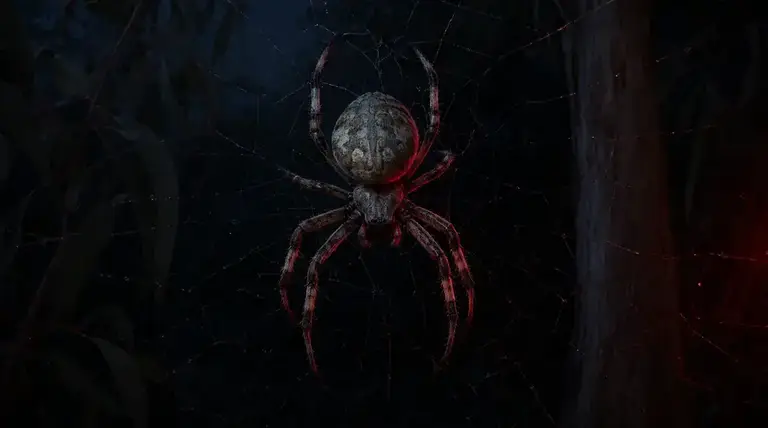
The garden orb weaver is a large, reddish-brown to grey spider, most commonly from the genus Eriophora, that builds a wheel-shaped orb web overnight and hides in foliage during the day. If you tick most of the boxes below, that is almost certainly what you are dealing with.
- Size: Females are large, with a body length of 20 to 30 mm; males are far smaller and rarely noticed.
- Colour: Reddish-brown to grey, often with a leaf-shaped pattern across a fat, roughly triangular abdomen.
- Web: A large, near-vertical wheel-shaped orb, typically strung across open spaces at head height — paths, doorways, between shrubs.
- Behaviour: Sits head-down in the centre of the web at night; retreats into leaves or a curled leaf hideout by day.
- Timing: Webs appear from nowhere overnight because the spider rebuilds each evening and often eats the web again by dawn.
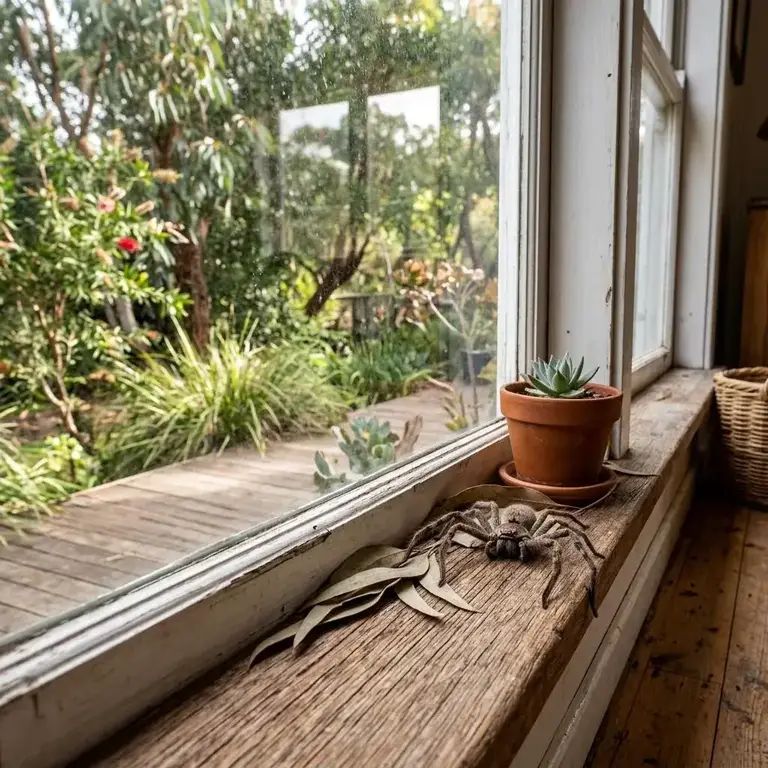
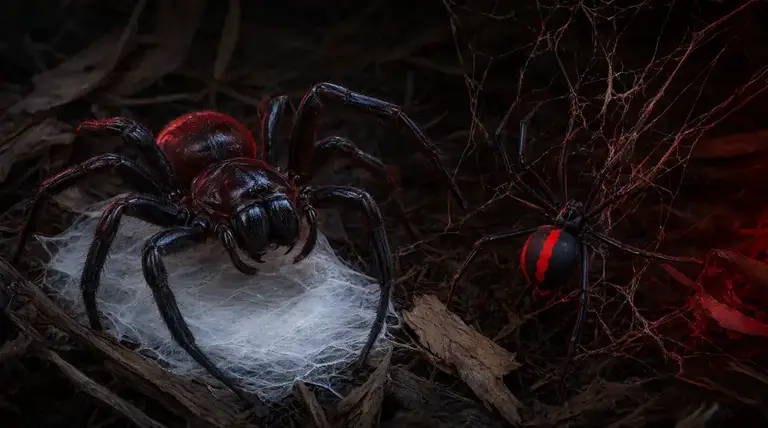
Their size alarms people, but they are unrelated to Australia’s dangerous species. If you are unsure what you are looking at, our guides to the Funnel-Web Spider: Identification, Danger and Control and the Redback Spider: Identification, Bites and Safe Removal will help you rule out the spiders that genuinely warrant caution. Even the large and hairy Huntsman Spiders: Dangerous or Harmless Housemates? are more bluster than bite.
DIY management vs professional pest control
For orb weavers, DIY management is almost always the right call — relocate the spider, clear webs from walkways and reduce the insects that attract them. Professional pest control only becomes relevant when webs are overwhelming your entries, or when orb weavers are sharing the property with genuinely risky species that do need treatment.
| Consideration | DIY approach | Professional approach |
|---|---|---|
| Best for | A few webs across paths and doors | Heavy web pressure or mixed spider species |
| Method | Relocate on a stick, sweep webs from entries, reduce night lighting | Targeted treatment and exclusion by a licensed technician |
| Cost | Free to minimal | Typical callout and treatment fees (see below) |
| Impact on beneficial spiders | None — spider survives and keeps hunting | Treatments are targeted to minimise off-target impact |
Practical DIY steps that work: gently move the spider on a stick to a back corner of the garden, clear webs only from doorways and walkways while leaving garden webs intact, switch to warmer-toned or sensor lighting so fewer insects gather near entries, and carry a stick at head height on evening walks to avoid the face-first encounter. Because orb weavers are beneficial, blanket spraying is discouraged — the exclusion tips in our spider-proofing guide reduce webbing without chemicals, and our look at wolf spiders in Australia covers another useful garden hunter worth keeping around.
What does spider pest control cost in Australia?
Across the Australian market, professional spider treatment generally costs between $150 and $450 depending on property size, construction type and whether internal and external areas are both treated. The figures below reflect typical 2025-26 industry rates — what pest control companies around the country generally charge — and actual quotes vary with access, subfloor or roof void work, and the species involved.
| Service | Typical market rate (AUD) | What’s included/notes |
|---|---|---|
| Inspection and identification | $0-$120 | Species ID and risk assessment; industry often waives this with a treatment booking |
| External spider treatment (standard home) | $180-$280 | Eaves, fences, windows, garden edges; web removal typically included |
| Internal + external treatment | $250-$380 | Adds skirtings, garages and sheds; suited to mixed infestations |
| Large acreage or Queenslander with subfloor | $350-$450+ | Subfloor dusting, roof void, extensive perimeter work |
These are broad Australian industry figures, not any one company’s price list. Regardless of who you hire, any chemical treatment should be carried out by a licensed technician using APVMA-registered products, applied in line with the label. No reputable operator will promise a treatment is completely risk-free, and you should be wary of anyone who does. Our Spider Control & Removal service explains exactly what a professional treatment covers.
Here’s the good news: Aussie Pest Strike typically comes in well under these market rates, so the ranges above should be treated as a worst-case benchmark rather than what you’ll actually pay. For an exact quote tailored to your property, give us a call on [aps_phone].
Seasonal activity: when orb weavers peak
Garden orb weavers follow a predictable annual rhythm across most of Australia: spiderlings hatch in spring, grow through summer, and reach full size by late summer and autumn — exactly when homeowners notice the biggest webs and the fattest spiders. By late autumn, mature females lay egg sacs hidden in foliage and die off with the cooler weather, so the annoyance is self-limiting.
Jan
Feb
Mar
Apr
May
Jun
Jul
Aug
Sep
Oct
Nov
Dec
Indicative activity levels for garden orb weavers in southern and eastern Australia. Webs and nuisance peak from February to April when spiders reach full size; activity drops sharply in winter as adults die off, with spiderlings emerging again in spring. Northern regions often see activity extended through the dry season.
Nine times out of ten, when a customer calls us about a “massive dangerous spider” on the front path, it’s a garden orb weaver doing them a favour. We’ll identify it properly, and if there’s nothing risky on the property, the honest advice is usually to relocate it and manage the webs — not spray a beneficial spider for the sake of it.
Leave garden orb weavers in place wherever practical — relocate persistent individuals away from doorways, clear webs from walkways, and cut night lighting near entries. If webs are genuinely overwhelming your home, or you suspect redbacks or funnel-webs alongside them, book a licensed inspection and let targeted pest control deal with the risky species while sparing the helpful ones.
Frequently Asked Questions
Are garden orb weavers dangerous to people or pets?
No. Garden orb weavers are timid, nocturnal spiders that prefer to flee rather than bite, and their bite is not medically significant. At worst, a defensive bite causes mild local pain. They are unrelated to Australia's dangerous species such as funnel-webs and redbacks, so an orb weaver on your path is a nuisance rather than a genuine threat.
How do I identify a garden orb weaver?
Look for a large, reddish-brown to grey spider, usually from the genus Eriophora, with a fat, roughly triangular abdomen often marked with a leaf-shaped pattern. Females reach 20-30 mm in body length while males are far smaller and rarely noticed. The giveaway is a large, near-vertical wheel-shaped web strung at head height across paths, doorways or between shrubs.
Why does the orb web disappear during the day?
Garden orb weavers rebuild their wheel-shaped web fresh each evening and often eat it again by dawn, which is why webs seem to appear from nowhere overnight. During daylight hours the spider retreats into foliage or a curled leaf hideout, sitting head-down in the centre of its web only after dark when flying insects are active.
When is orb weaver activity worst in Australian gardens?
Nuisance peaks from late summer into autumn, roughly February to April in southern and eastern Australia, when spiders reach full size and build their biggest webs. Spiderlings hatch in spring and grow through summer, mature females lay egg sacs by late autumn, then die off with cooler weather. Northern regions may see activity extended through the dry season.
Are garden orb weavers beneficial?
Yes. Orb weavers provide free pest control, eating mosquitoes, moths, flies and beetles every night through summer and autumn. Garden lighting and outdoor entertaining areas attract these insects after dark, effectively ringing the dinner bell for web-building spiders. Because they are beneficial, blanket spraying is discouraged and relocation is preferred wherever practical.
How can I stop orb weaver webs across my doorways?
Relocate persistent individuals on a stick to a back corner of the garden, clear webs from doorways and walkways while leaving garden webs intact, and switch to warmer-toned or sensor lighting near entries so fewer insects gather there. Carrying a stick at head height on evening walks also helps you avoid the classic face-first encounter.
Should I spray for garden orb weavers?
Chemical treatment is rarely justified for orb weavers alone. Relocating the spider and clearing webs from walkways is better than spraying a beneficial hunter. Professional pest control becomes relevant mainly when webs are overwhelming your entries, or when orb weavers share the property with genuinely risky species such as redbacks or funnel-webs that do warrant targeted treatment.
What should professional spider treatment cost me?
Professional spider treatment costs vary with property size, construction type and whether internal areas are included. External-only work is usually cheaper than combined internal and external treatments, while homes with subfloors, large gardens or acreage blocks tend to cost more. Because orb weavers build webs on eaves, fences and outdoor structures, a quote often reflects the extent of webbing removal needed. Treat any published figures as broad benchmarks only.
Is a property-specific inspection worthwhile if I keep finding large orb webs?
Yes. Because large webs at head height are often mistaken for dangerous spiders, an inspection lets a technician identify the species properly and assess overall risk. Aussie Pest Strike will identify what is actually on your property, and if it is only harmless garden orb weavers, the honest advice is usually relocation and web management rather than spraying a beneficial spider.
What is the best next step if I suspect redbacks or funnel-webs alongside my orb weavers?
Book a licensed inspection rather than reaching for general spray. A technician can confirm which species are present and apply targeted treatment to the risky ones while sparing helpful hunters like orb weavers. Aussie Pest Strike focuses treatment where it is genuinely needed, using APVMA-registered products applied in line with the label, and can advise on exclusion measures that reduce webbing without chemicals.
Sources & further reading
Found Something
Dangerous?
Don’t touch it. Don’t spray it. Keep kids and pets clear, take a photo from a safe distance, and call us — or book a free inspection and we’ll come to you.
02 7235 0050