Cockroach GelBait: How ProfessionalsUse It
Cockroach gel bait wipes out whole colonies through secondary kill. Learn how professionals place it, the active ingredients and why DIY often fails. Free quote.
Cockroach gel bait is the professional’s first-choice weapon against roaches across Australia because it exploits their feeding and grooming habits to wipe out an entire colony, not just the insects that eat it directly. Rather than chasing insects around a kitchen with a can o’ surface spray, a licensed technician places tiny dabs of gel in the exact crevices where cockroaches harbour, and a cascade effect spreads the active ingredient through the population.
Put simply, cockroach gel bait is a slow-acting, APVMA-registered insecticide formulated into a moist, attractive food matrix that cockroaches eat, carry back to their harbourage and share with nestmates — killing insects that never touch the bait themselves. That colony-level kill is exactly why gel sits at the heart of any professional Cockroach Control & Treatment program, and why it outperforms almost everything on a supermarket shelf.
- Gel bait kills the whole colony through secondary and tertiary transfer, not just the roaches that feed on it.
- Placement within 1–2 metres of the harbourage matters more than the product itself.
- Common Australian actives include fipronil and indoxacarb, both registered with the APVMA.
- DIY gel often fails through poor placement, spraying over bait, or bait-averse German cockroach strains.
- Professional gel baiting typically forms part of a treatment costing $180–$450 AUD for an average home.
Why cockroach gel bait matters in Australian homes
Australia’s warm, humid climate lets cockroaches breed year-round, which means a small problem in spring can become a full infestation by Christmas. Gel bait matters because it is one of the few tools that reaches the hidden nesting sites where most of the colony actually lives.
Our housing stock makes the problem worse. Older Queenslanders on stumps give American cockroaches cool, damp subfloor voids to breed in; post-war brick veneer homes on concrete slabs offer tight wall cavities and weep holes; and modern apartments share plumbing risers that let German cockroaches spread unit to unit. In tropical Queensland and the Northern Territory, activity barely pauses in winter, while southern states see surges from October through April. If you are dealing with the large reddish-brown invaders common around drains and subfloors, our American Cockroaches in Australia: ID and Control Guide covers identification, but for the smaller, faster-breeding kitchen species, gel bait is the backbone of control.
Warning signs you need gel bait treatment
You likely need professional gel baiting if you are seeing cockroaches during the day, because daytime activity means harbourages are overcrowded. Use this checklist to gauge the severity of the problem:
- Live roaches in daylight – especially small tan German cockroaches around the fridge, kettle or dishwasher.
- Pepper-like droppings – dark specks in cupboard corners, drawer runners and along benchtop splashbacks.
- Egg cases (oothecae) – brown, ridged capsules glued behind appliances or inside pantries.
- Musty, oily odour – a distinctive smell in enclosed kitchens that intensifies as numbers grow.
- Smear marks – dark streaks along wall-floor junctions in humid areas like bathrooms and laundries.
- Roaches scattering when lights turn on – the classic late-night kitchen test.
If three or more of these sound familiar, read our breakdown of the 7 Signs of a Cockroach Infestation You Shouldn’t Ignore before the population doubles again.
How professionals apply cockroach gel bait
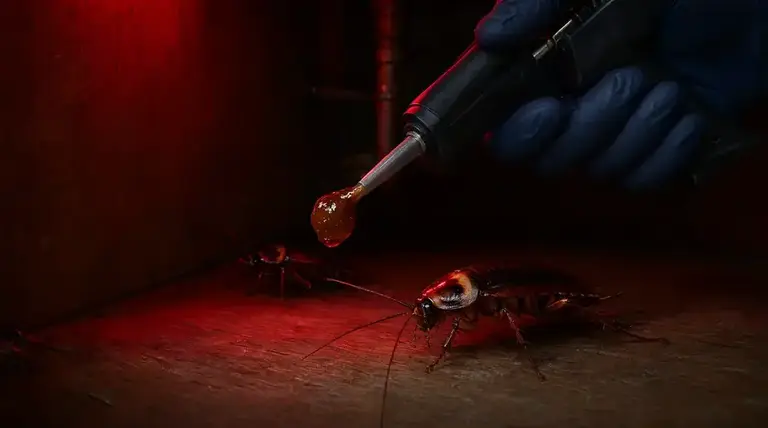
Professionals apply gel bait as many small, precisely placed dabs inside harbourage zones rather than large blobs on open surfaces. Correct placement within 1–2 metres of the nest dramatically increases uptake and speeds up colony collapse.
Technicians target cupboard hinges, appliance seams, under sinks, behind kickboards, around fridge motors and inside wall voids — spots pea-sized to pinhead-sized, spaced every 30–50 cm in high-activity areas. Kitchens and bathrooms get the densest coverage because that is where German cockroaches (Blattella germanica) concentrate. A follow-up visit after 7–14 days tops up consumed bait before it runs out.
The chemistry is deliberate. Common APVMA-registered actives such as fipronil and indoxacarb are slow-acting by design, so a roach survives long enough to return to the harbourage, where others feed on its droppings and carcass and ingest the same active. Indoxacarb is bioactivated inside the roach and passes through its droppings, boosting this domino effect. A fast knock-down poison would break the chain — the first roach would die before reaching the nest. This targeted approach is why gel features so heavily in professional cockroach pest control programs, and why German cockroach jobs in particular demand it — see German Cockroach Infestations: Why They’re So Hard to Kill.
DIY vs professional gel baiting
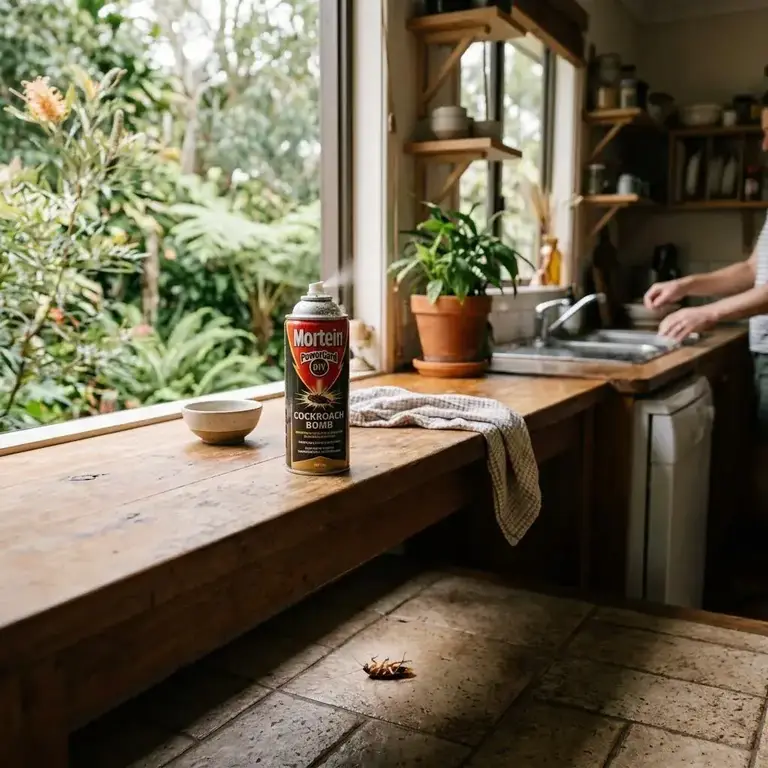
DIY gel can knock back a very light, localised problem, but professionals consistently outperform it because they control placement, formulation and follow-up. The four most common DIY failures are spraying insecticide over gel (contaminating it), placing dabs on clean open benches, using blobs that dry out, and hitting bait-averse German cockroach strains that reject sugary gels — a problem technicians counter by rotating formulations.
| Factor | DIY gel bait | Professional treatment |
|---|---|---|
| Placement | Often on open, visible surfaces | Inside harbourages, voids and hinges within 1–2 m of nests |
| Formulation | Single retail product | Rotated commercial gels to beat bait aversion |
| Follow-up | Rarely topped up | Recorded placements, re-baited at 7–14 days |
| Outcome for German roaches | Frequently fails | Colony-level kill, warranty-backed |
What does professional gel baiting cost in Australia?
Across the Australian pest control industry in 2025–26, the going market rate for professional cockroach gel baiting on a standard home generally sits between $180–$450 AUD, depending on species, severity and property size. Heavy German cockroach infestations or commercial kitchens tend to attract rates at the higher end of the market because they require multiple visits.
| Service | Typical market rate (AUD) | What’s included/notes |
|---|---|---|
| Standard gel bait treatment (house/unit) | Industry rates typically $180–$280 | Kitchen, bathroom and laundry gel placement plus inspection |
| German cockroach program | Industry rates typically $280–$450 | Initial treatment plus 1–2 follow-up bait top-ups at 7–14 days |
| Commercial kitchen/food premises | Industry rates typically $250–$600+ per visit | Ongoing service agreement, monitoring and documentation |
These figures reflect typical Australian market rates charged across the industry. Aussie Pest Strike typically comes in well under these market rates for the same professional-grade treatment, so it’s worth getting a tailored figure before you commit anywhere. Call [aps_phone] for an exact quote on your property.
Seasonal cockroach activity across Australia
Cockroach activity in Australia peaks from late spring through summer and dips in mid-winter, though heated homes keep German cockroaches breeding all year. Northern states see a flatter, higher baseline than the cooler south.
Jan
Feb
Mar
Apr
May
Jun
Jul
Aug
Sep
Oct
Nov
Dec
Indicative activity pattern: cockroach pressure climbs from September, peaks over December–February, and eases through the cooler months — book treatment in early spring before populations explode.
Nine times out of ten, a failed gel job is a placement problem, not a product problem. We put the bait where the roaches actually live — inside the hinge, behind the kickboard, beside the fridge motor — and we come back to top it up. That follow-up visit is what turns a good product into a reliable result.
If you are seeing roaches more than once a week, skip the DIY tube and book a licensed technician. Professional gel baiting targets the harbourage, rotates formulations to beat bait aversion, and includes a follow-up top-up — the three things that actually collapse a colony.
Frequently Asked Questions
How does cockroach gel bait kill an entire colony?
Gel bait is a slow-acting, APVMA-registered insecticide in a moist food matrix that cockroaches eat and carry back to their harbourage. Nestmates then feed on the droppings and carcasses of affected roaches, ingesting the same active ingredient. This secondary and tertiary transfer creates a cascade effect that kills insects which never touched the bait directly, collapsing the whole colony rather than just the individuals that fed.
Which active ingredients are used in professional cockroach gel baits?
Common actives in Australian professional gel baits include fipronil and indoxacarb, both registered with the APVMA. These are deliberately slow-acting so a roach survives long enough to return to its harbourage before dying, allowing the active to spread through the colony. Indoxacarb is bioactivated inside the roach and passes through its droppings, further boosting this domino effect through the population.
Where do technicians place gel bait for best results?
Professionals apply many small dabs — pea-sized to pinhead-sized — inside harbourage zones rather than large blobs on open surfaces. They target cupboard hinges, appliance seams, under sinks, behind kickboards, around fridge motors and inside wall voids, spaced every 30–50 cm in high-activity areas. Placement within 1–2 metres of the nest matters more than the product itself, with kitchens and bathrooms receiving the densest coverage.
Why does DIY gel baiting often fail against German cockroaches?
The four most common DIY failures are spraying insecticide over the gel and contaminating it, placing dabs on clean open benches where roaches rarely travel, using blobs that dry out before being eaten, and encountering bait-averse German cockroach strains that reject sugary gels. Professionals counter aversion by rotating commercial formulations, placing bait inside harbourages, and re-baiting at follow-up visits.
What warning signs suggest I need professional gel bait treatment?
Key signs include live roaches seen during daylight, especially small tan German cockroaches around the fridge, kettle or dishwasher; pepper-like droppings in cupboards and drawer runners; brown ridged egg cases glued behind appliances; a musty, oily odour in enclosed kitchens; dark smear marks along wall-floor junctions; and roaches scattering when lights turn on at night. Three or more signs indicate a serious infestation needing professional attention.
Is there a follow-up visit after gel baiting?
Yes, professionals typically schedule a follow-up visit 7–14 days after the initial treatment to top up consumed bait before it runs out. This top-up is critical because bait can be depleted as roaches feed, and replenishing it keeps the transfer chain going until the colony collapses. Recorded placements also help technicians track uptake and target any remaining activity during the return visit.
How long does it take for gel bait to eliminate a cockroach infestation?
Cockroach pressure climbs from September, peaks over December–February, and eases through cooler months, though heated homes keep German cockroaches breeding year-round. Northern states such as tropical Queensland and the Northern Territory see a flatter, higher baseline, while southern states experience surges from October through April. Booking treatment in early spring, before populations explode, gives the best outcome.
Can gel bait work if I have already sprayed insecticide in my kitchen?
Surface sprays can undermine gel baiting because residue contaminating the gel makes it unattractive or toxic before roaches carry it back to the nest. A fast knock-down poison also breaks the transfer chain by killing roaches before they reach their harbourage. If you have sprayed recently, let residues clear and avoid spraying near bait placements, or have a technician assess whether fresh bait points are needed.
Can Aussie Pest Strike confirm availability for treating my cockroach problem with gel bait?
Aussie Pest Strike offers professional-grade cockroach gel baiting for homes dealing with German, American or other cockroach species, including follow-up top-ups at 7–14 days. Availability for your property depends on your location and scheduling, so the practical step is to contact the team to check whether they service your area and arrange an inspection. They can tailor a treatment plan to your species, severity and property type rather than applying a one-size-fits-all approach.
What should I do next if I keep seeing cockroaches despite trying DIY gel bait?
If you are seeing roaches more than once a week, the article recommends skipping further DIY attempts and booking a licensed technician. Aussie Pest Strike places bait inside harbourages such as hinges, kickboards and fridge motor areas, rotates formulations to beat bait aversion, and returns to top up bait at 7–14 days. Contact them for a tailored quote based on your property, the species involved and the severity of the infestation.
Sources & further reading
Found Something
Dangerous?
Don’t touch it. Don’t spray it. Keep kids and pets clear, take a photo from a safe distance, and call us — or book a free inspection and we’ll come to you.
02 7235 0050