Common House Spidersin Australia:An Identification Guide
Common house spiders — most spiders you'll see inside an Australian home are harmless web-builders and roaming hunters black house spiders, daddy long-legs,...
Walk into almost any Australian home and you’ll share it with spiders — the question is which ones. This guide to house spiders Australia-wide covers the species you’re most likely to meet, from the black house spider in the window frame to the huntsman behind the curtain, and the two that genuinely warrant caution: the redback and the funnel-web. Whether you’re in a Brisbane Queenslander, a Melbourne brick veneer or a Sydney apartment on a concrete slab, the cast of eight-legged housemates is remarkably consistent across the country.
House spiders in Australia are the common web-building and roaming spider species that regularly live alongside people indoors, the overwhelming majority of which are harmless and even beneficial. Accurate identification is the first step in deciding whether you need pest control at all — because in most cases, the answer is no. This guide gives you fast identification clues, a seasonal activity calendar, realistic treatment costs and clear advice on when to call in a licensed technician.
- Most spiders found inside Australian homes — black house spiders, daddy long-legs, huntsmen and orb-weavers — are harmless and help control flies, mosquitoes and cockroaches.
- Only two spiders demand genuine caution: the redback (found Australia-wide) and the Sydney funnel-web (eastern NSW).
- Location and web type are your fastest identification clues — a lacy funnel in a window frame means black house spider; a messy tangle low down means redback or daddy long-legs.
- Blanket spraying every spider you see removes useful predators; targeted identification and treatment is smarter.
- Professional general spider treatments typically cost $180–$350 AUD for a standard home in 2025–26.
Why House Spiders Australia-Wide Thrive in Our Homes
Australia’s climate and housing styles create ideal spider habitat almost everywhere. Warm temperatures for much of the year keep insect prey abundant, and where there are insects, spiders follow. The details vary by region: Queensland’s humidity drives year-round activity, while southern states see sharp summer peaks and quieter winters.
Housing design matters just as much. Older homes on stumps — classic Queenslanders and weatherboard cottages — have open subfloors where redbacks and black house spiders establish themselves around piers and stored timber. Modern slab-on-ground brick veneer homes offer fewer entry points, but weep holes, window frames and garage roller doors still funnel spiders inside. Homes surrounded by garden beds, mulch and outdoor lighting attract orb-weavers and huntsmen that wander in through open doors on warm nights. Australia is home to around 10,000 spider species, yet only a handful regularly share our living spaces — which makes narrowing down what you’ve found easier than it first seems.
The Common Species You’ll Actually Meet
The five spiders below account for the vast majority of indoor sightings across Australia, and all are essentially harmless to people. Learn to recognise them and you’ll stop worrying about most of what you see.
Black House Spider (Badumna insignis)
Dark, robust and 10–18 mm in body length, the black house spider builds a lacy, funnel-shaped web in window frames, brickwork, fences and around outdoor lights. It is timid and bites are rare, causing only local pain and swelling. These webs are also the hunting grounds of the white-tail spider — read more in our white-tail facts vs myths guide.
Daddy Long-Legs (Pholcus phalangioides)
Tiny-bodied with absurdly long, thin legs, the daddy long-legs builds messy, tangled webs in ceiling corners, garages and behind furniture. It is completely harmless to humans and famously preys on other spiders — including redbacks — making it one of the most useful spiders you can have indoors.
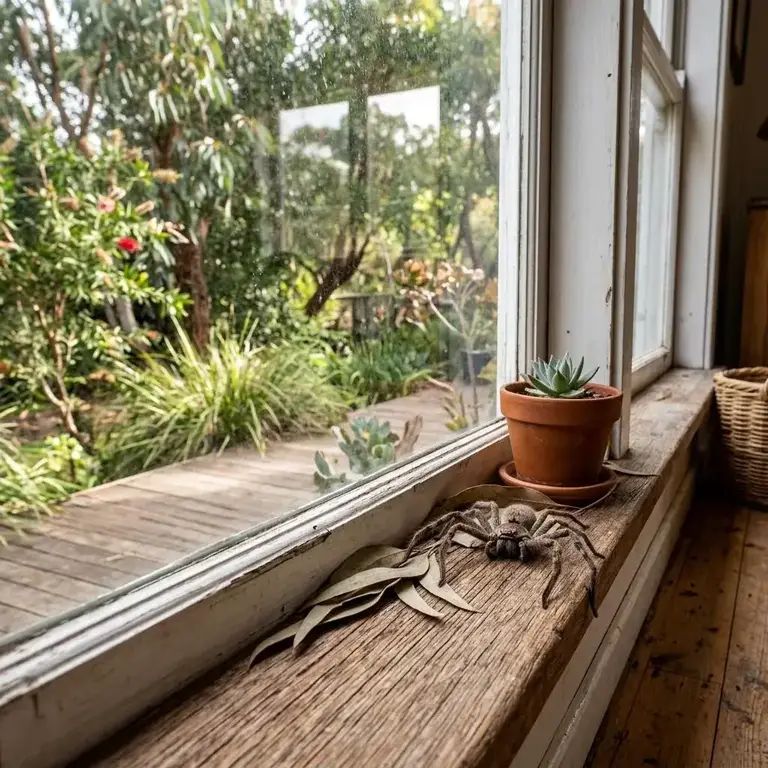
Huntsman (Isopeda, Holconia)
Large (up to a 15–16 cm leg span), flat, grey-brown and startlingly fast, the huntsman builds no web and hunts by speed. Despite the fright factor, it is essentially harmless — our article Huntsman Spiders: Dangerous or Harmless Housemates? explains why these giants deserve tolerance rather than terror.
Garden Orb-Weaver (Eriophora)
Orb-weavers build large, circular webs overnight across paths, verandas and doorways, retreating into foliage by day. The bulky body looks intimidating but the spider is harmless — though walking face-first into a fresh web is a very Australian summer experience.
St Andrew’s Cross Spider (Argiope keyserlingi)
This common garden spider sits head-down in the centre of its web on a distinctive white zig-zag cross of silk. Its slender, banded body and calm temperament make it easy to recognise, and it poses no threat to people at all.
The Two Spiders to Respect
Only two spiders commonly encountered around Australian homes are medically significant: the redback and the Sydney funnel-web. If a spider matches either description, treat it seriously and keep children and pets away.
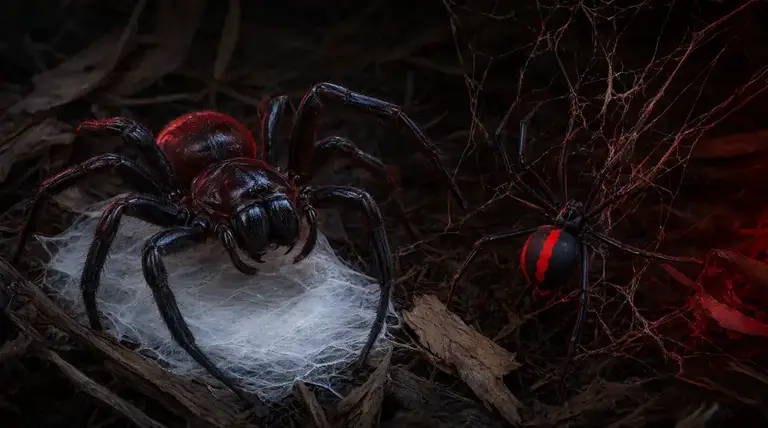
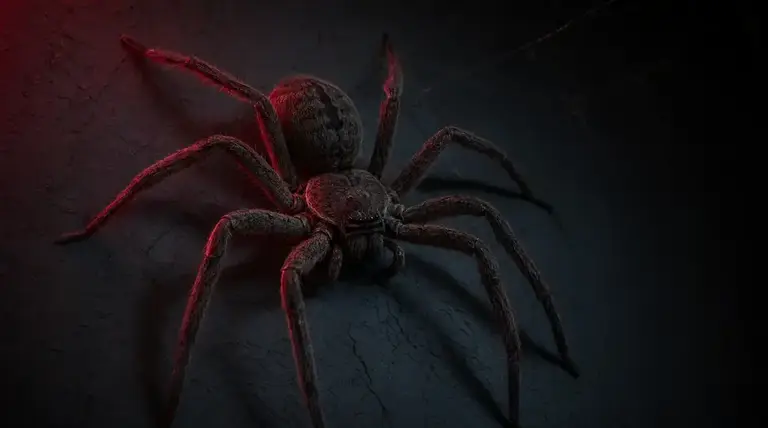
The redback female is about 10 mm, black with a red or orange stripe on the abdomen, and hangs upside-down in a messy tangle web in dry, sheltered spots — under outdoor furniture, in sheds, letterboxes and meter boxes. Bites are medically significant and require attention; our Redback Spider: Identification, Bites and Safe Removal guide walks through positive identification and safe response. The Sydney funnel-web is glossy black, ground-dwelling and rears up when threatened; its bite is potentially life-threatening, and it occurs mainly within about 160 km of Sydney. See Funnel-Web Spider: Identification, Danger and Control if you’re in that region.
Warning Signs You Have a Spider Problem
A single spider is normal; recurring signs suggest a population that warrants attention. Check for the following around windows, eaves, sheds and subfloors:
- Multiple webs appearing within days of removal: Established spiders rebuild quickly; recurring funnel or tangle webs signal a resident population.
- Egg sacs in webs or sheltered corners: Round, papery sacs mean numbers will jump within weeks, especially in spring and summer.
- Redbacks in high-traffic areas: Tangle webs under outdoor furniture, play equipment or letterboxes are a genuine safety risk.
- Heavy insect activity around lights: Moths and midges at night draw black house spiders and orb-weavers to windows and eaves.
- Webbing across sheds, garages and subfloor piers: Undisturbed storage areas let populations build quietly for months.
- Regular indoor sightings of large roaming spiders: Frequent huntsmen inside often means easy entry points such as gaps under doors or damaged screens.
DIY vs Professional Spider Control
For one or two harmless spiders, DIY is sensible — catch-and-release or a vacuum handles most situations. For redbacks near living areas, recurring web-builders, or any suspected funnel-web, a licensed technician is the safer and more effective option, since APVMA-approved residual treatments should only be applied by trained professionals.
| Factor | DIY approach | Professional treatment |
|---|---|---|
| Best for | Single harmless spiders, web removal | Redbacks, recurring infestations, funnel-web risk areas |
| Typical cost (AUD) | $0–$30 (vacuum, brush, supermarket spray) | $180–$450 depending on service |
| Safety | Fine for harmless species; risky near redbacks | Licensed technician applies APVMA-registered products correctly |
| Lasting effect | Days to weeks | Typically 3–6 months of residual protection |
| Identification expertise | Relies on your own guesswork | On-site ID and honest advice on whether treatment is needed |
Spider Pest Control Costs in Australia (2025–26)
Across the Australian pest control industry, the going market rate for professional spider treatment on a standard home sits around $180–$350 AUD in 2025–26, with larger properties and combined treatments at the higher end. Industry rates vary by state, property size and whether the home has a slab or an accessible subfloor.
| Service | Typical market rate (AUD) | What’s included / notes |
|---|---|---|
| General spider spray (standard 3–4 bed home) | $180–$300 | External perimeter, eaves, windows, fences; web knockdown |
| Internal + external treatment | $250–$400 | Adds skirtings, garage, roof void dusting where accessible |
| Subfloor treatment (homes on stumps) | $80–$150 add-on | Targets redbacks and black house spiders around piers |
| Large property / acreage | $350–$450+ | Extended perimeter, sheds, outbuildings |
| Annual protection plan | $300–$550/yr | Two scheduled visits, typically spring and late summer |
No treatment can honestly be called 100% safe or guaranteed — reputable operators across the industry use APVMA-registered products, applied by licensed technicians, and will tell you plainly if your situation doesn’t need spraying at all. Our Spider Control & Removal service page outlines exactly what a standard visit covers.
The figures above are typical Australian market rates — Aussie Pest Strike typically comes in well under them. For an exact quote tailored to your property, call us on [aps_phone].
Seasonal Spider Activity in Australia
Spider activity across Australia peaks from late spring through summer and drops sharply in winter. Warm months bring more insect prey, more breeding and more wandering males entering homes, while cooler months see most species slow down or shelter.
Jan
Feb
Mar
Apr
May
Jun
Jul
Aug
Sep
Oct
Nov
Dec
Indicative activity levels for house spiders in Australia: sightings peak December–February as heat, insect prey and breeding activity converge, then taper through autumn to a winter low. Northern states maintain higher baseline activity year-round.
Timing matters for treatment. A late-spring spray (October–November) knocks populations down before the summer peak, and a follow-up in late summer catches new hatchlings. Booking in winter is fine for redback spot-treatments in sheds and garages, where spiders shelter regardless of season.
Nine times out of ten, the spider a customer is worried about is a black house spider or a huntsman — completely harmless. The jobs that genuinely matter are redbacks under the kids’ trampoline or funnel-webs turning up in Sydney laundries. Identify first, treat second; that’s how you avoid wasting money and killing off the spiders that are actually helping you.
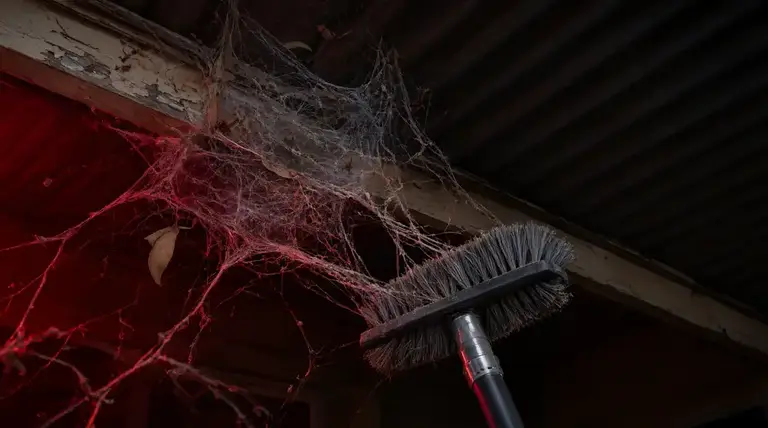
Leave harmless web-builders and daddy long-legs alone — they’re free pest control. Remove webs with a broom, seal gaps under doors and around windows, and reduce outdoor lighting that attracts insect prey. If you find redbacks near living areas, suspect a funnel-web in eastern NSW, or webs keep returning within days, book a licensed technician for a targeted treatment rather than reaching for a supermarket spray.
House Spiders Australia: Frequently Asked Questions
How do I know if a spider in my house is dangerous?
Check for a redback’s red abdominal stripe or a funnel-web’s glossy black, ground-dwelling body — the vast majority of other house spiders in Australia are harmless. Note the web type, body markings and size, and compare against the species in this guide. If you’re still unsure, photograph it from a safe distance and ask a licensed pest technician to identify it.
What is the most common spider found indoors in Australia?
The black house spider is among the most common spiders found indoors across Australia, recognised by its lacy, funnel-shaped web built into window frames, brickwork and around external lights. Daddy long-legs in ceiling corners and wandering huntsmen are close runners-up. All three are harmless to people and help control household insects.
Are daddy long-legs really venomous?
No — the claim that daddy long-legs are the world’s most venomous spider is a myth. They are completely harmless to humans, their fangs pose no meaningful risk, and they actually help around the home by preying on other spiders, including redbacks. Keeping a few in ceiling corners is genuinely useful, not dangerous.
Not sure what you’ve found? Whether it’s a redback nest in the shed or just a parade of huntsmen, Aussie Pest Strike offers a free on-site inspection and honest advice on whether treatment is even needed. Call Aussie Pest Strike on [aps_phone] and speak with our licensed team today for straightforward identification, transparent pricing and pest control that’s targeted at the spiders that actually matter — not the ones quietly doing you a favour.
Sources & further reading
Found Something
Dangerous?
Don’t touch it. Don’t spray it. Keep kids and pets clear, take a photo from a safe distance, and call us — or book a free inspection and we’ll come to you.
02 7235 0050