Spider Treatment:What ProfessionalsActually Do
Spider treatment what — professional spider treatment isn't just spraying it's a survey to identify species and harbourage, a targeted residual application...
If you’re seeing webs reappear days after clearing them, it’s time to think about professional spider treatment. Across Australia — from humid Brisbane Queenslanders to Sydney’s brick veneer suburbs and Melbourne’s weatherboard rentals — spiders thrive wherever there’s shelter, moisture and a steady supply of insects. A professional spider treatment is a targeted pest control service that identifies the species on your property, applies residual products to the surfaces spiders actually travel, and removes the conditions that attract them in the first place.
This isn’t a bloke with a spray can giving the back fence a quick once-over. Done properly, one treatment keeps working for weeks to months, because spiders pick up the residual product as they move across treated surfaces long after the technician has left. Here’s exactly what licensed professionals do, what it costs, and when it’s worth booking.
- Professional spider treatment starts with a species and harbourage inspection — not blind spraying.
- Residual sprays, void dusts and web knock-down target where spiders live and travel.
- Expect to pay roughly $180–$450 (AUD) for a standard residential treatment in 2025–26.
- Australian spider activity peaks in spring and summer, but subfloor species stay active year-round.
- Pairing treatment with insect control and spider-proofing delivers the longest-lasting result.
Why Spider Treatment Matters in Australian Homes
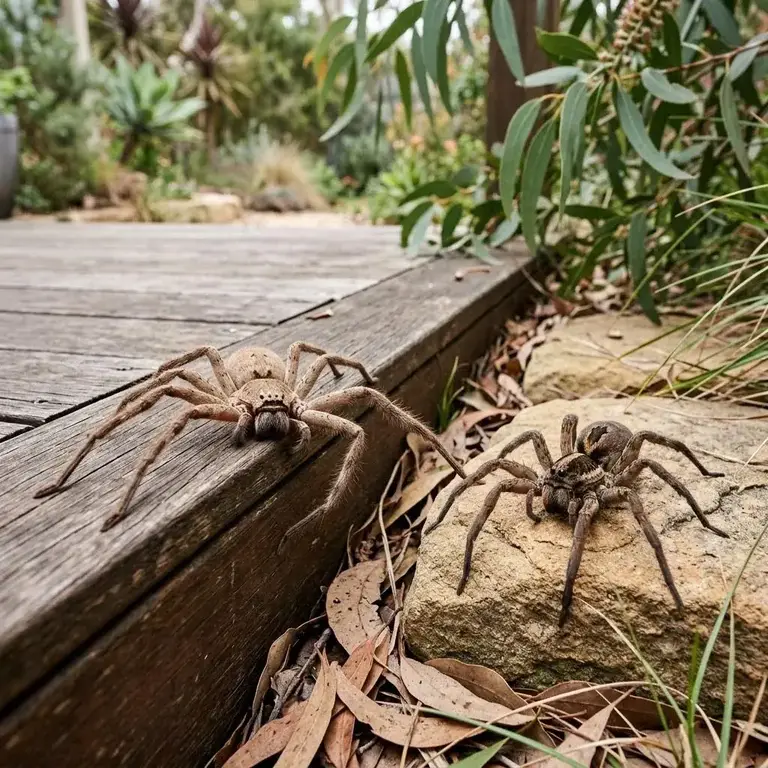
Australia hosts some of the world’s most medically significant spiders, and our climate and housing styles give them ideal habitat. Warm, humid conditions along the eastern seaboard drive heavy insect populations — which means heavy spider populations — while our building styles provide endless harbourage.
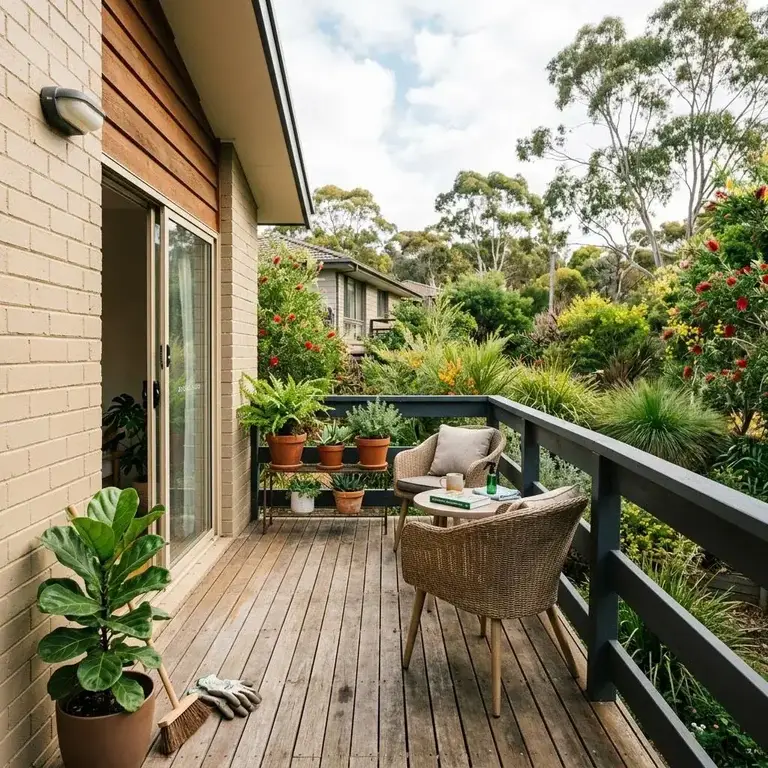
Subfloor homes and Queenslanders offer cool, dark voids that suit web-building species and ground hunters. Brick veneer houses have weep holes and wall cavities that funnel spiders inside. Retaining walls, garden edges, sheds and stacked firewood give redback spiders exactly the dry, undisturbed shelter they prefer, while Sydney’s sandstone country and leafy suburbs remain prime funnel-web territory.
Most Australian spiders are harmless — a huntsman behind the curtain is more startling than dangerous. But because redbacks and funnel-webs share the same environment, knowing precisely what’s on your property — and treating accordingly — is the safest approach for your household.
Warning Signs You Need Professional Spider Treatment
The clearest sign you need professional spider treatment is recurring webbing and repeat sightings despite your own cleaning and spraying. One-off spiders are normal in Australia; a pattern of activity is not.
- Webs rebuilding within days — cleared webs reappearing on eaves, windows and outdoor furniture signal an established population.
- Egg sacs on webs or in sheltered spots — each sac can hold dozens to hundreds of spiderlings.
- Funnel-shaped webs in gardens or lawns — possible funnel-web burrows, especially in NSW; do not disturb them.
- Redback sightings near ground level — messy tangled webs in meter boxes, under outdoor furniture, in sheds or along retaining walls.
- Heavy night-time insect activity — moths and insects around lights mean spiders will follow the food source.
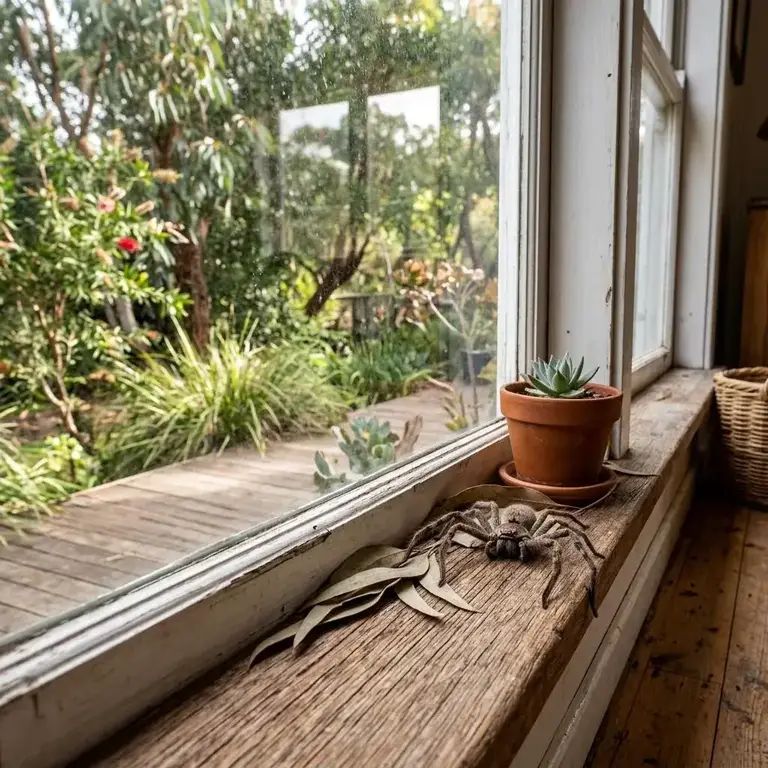
- Spiders indoors during warmer months — regular indoor sightings suggest entry points and interior harbourage.
- Recent move or renovation — disturbed soil, new landscaping and vacant subfloors often bring a spike in activity.
Step 1: Inspection and Species Identification
Every professional job starts with identifying what you’re dealing with, because a web-building black house spider, a roaming huntsman and a ground-dwelling funnel-web each need a different approach. This inspection is what separates targeted treatment from a wasteful blanket spray.
A technician checks eaves, window frames, subfloors, sheds, retaining walls and garden edges, noting webbing, egg sacs and moisture problems. If dangerous species are present, that shapes the whole plan — a suspected funnel-web burrow, for example, demands the caution outlined in our funnel-web identification and control guide.
Australian technicians work under state licensing and must follow product label directions as a legal requirement. The inspection also confirms which products are appropriate for your home, pets, and any nearby waterways or vegetable gardens.
Step 2: Targeted Residual Treatment
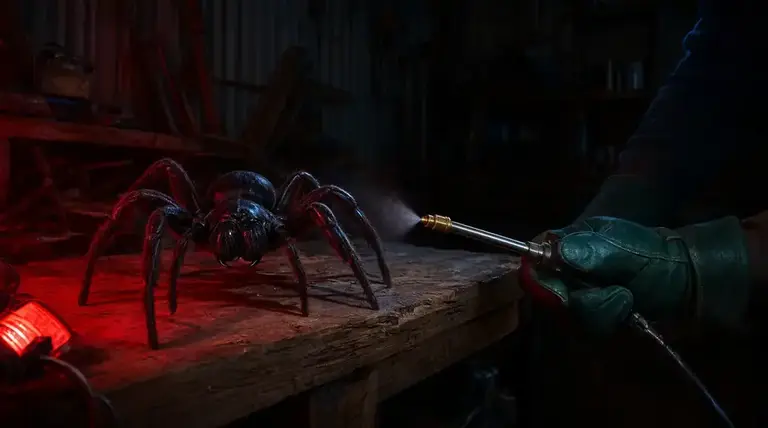
Rather than blanket spraying, professionals apply products precisely where spiders live and travel. The goal is a residual film that keeps controlling spiders for weeks to months after the visit.
- Residual surface sprays to eaves, weep holes, window reveals, fence lines and door frames — the surfaces spiders cross.
- Insecticidal dusts injected into wall voids, subfloors and cracks where webbing spiders shelter.
- Web knock-down to remove existing webs and egg sacs, forcing spiders onto freshly treated surfaces.
All products are applied strictly to label rates by licensed technicians, which is why professional application — rather than DIY overuse — is the responsible choice for households with children and pets.
DIY vs Professional Spider Treatment
A supermarket spray can kill the spider you can see, but it does nothing about the egg sacs, harbourage and travel paths you can’t. Professional spider treatment covers the whole system — which is why results last months rather than days.
| Factor | DIY spray can | Professional treatment |
|---|---|---|
| Coverage | Visible spiders only | Harbourage + travel paths |
| Residual life | Days | Weeks to months |
| Egg sacs | Usually missed | Removed and treated |
| Species targeting | Generic | Matched to the spider |
| Safety oversight | User’s judgement | Licensed, label-rate application |
Spiders are also a symptom of an insect food supply. Good technicians address the cause — recommending lighting changes, moisture fixes and gap sealing — so spiders have less reason to return. Pairing your treatment with our home spider-proofing steps delivers the longest-lasting result.
How Much Does Spider Treatment Cost in Australia?
Across the Australian pest control industry in 2025–26, a standard residential spider treatment typically sits between $180 and $450 (AUD). These are general market rates — not any single operator’s price list — and what you’ll be quoted depends on property size, construction type and the species involved. Larger homes, subfloor access or dangerous-species work push towards the higher end of the market range.
| Service | Typical market rate (AUD) | What’s included / notes |
|---|---|---|
| Standard exterior + interior treatment (unit/small home) | $180–$260 | Residual spray to eaves, entry points; web knock-down |
| Standard house (3–4 bedroom) | $250–$380 | Full perimeter, subfloor dusting where accessible, garage/shed |
| Large or multi-storey / Queenslander | $350–$450+ | Extended eaves, under-house voids, steep or complex access |
| Funnel-web / redback targeted program | $300–$500 | Burrow treatment, harbourage dusting, follow-up visit |
| Combined general pest package (spiders + insects) | $300–$550 | Removes the food source; best long-term value |
Rather than quoting blind, most reputable pest control companies offer a free on-site inspection so their price reflects your actual property — the market rates above are a benchmark, not a fixed tag. You’re welcome to see how we present our approach on the pricing page.
As a guide, Aussie Pest Strike typically comes in well under these market rates for the same scope of work. For an exact quote tailored to your property, call [aps_phone] and we’ll talk you through it straight away.
When Are Spiders Most Active in Australia?
Spider activity in Australia peaks from late spring through summer and early autumn, when warmth and insect numbers are highest. Subfloor and shed-dwelling species remain active year-round, but visible activity drops in the cooler months — which is actually a smart time to treat preventatively.
Jan
Feb
Mar
Apr
May
Jun
Jul
Aug
Sep
Oct
Nov
Dec
Typical spider activity pattern across most of Australia: activity builds through spring, peaks November–February, and eases over winter. Booking treatment in early spring (September–October) puts a residual barrier in place before the summer surge.
What to Expect on the Day
A standard residential spider treatment takes 45–90 minutes depending on property size. You’ll typically be asked to keep pets indoors briefly while surfaces dry, and to leave treated webs and surfaces untouched afterwards so the product can keep working.
It’s normal to see more spider activity for a day or two after treatment, as spiders are flushed out of harbourage and cross treated surfaces. That’s the product doing its job — not a sign it has failed. Many providers also offer a service warranty on treated areas, so ask what’s covered when you book.
The biggest mistake homeowners make is treating the spider, not the property. If you knock webs down every weekend but never touch the eaves, subfloor or the insects they’re feeding on, you’ll be doing it forever. One properly targeted treatment, matched to the species, changes the whole picture.
Book a professional inspection if webs keep returning, you’ve spotted egg sacs, or you’ve seen redbacks or funnel-shaped burrows. For most homes, a spring treatment combined with insect control and basic spider-proofing gives 3–6 months of protection. Our Spider Control & Removal service is species-matched and starts with a free on-site inspection.
Frequently Asked Questions
What does a professional spider treatment actually involve?
A professional spider treatment starts with an inspection to identify the species and locate harbourage areas such as eaves, subfloors, sheds and garden edges. The technician then applies residual surface sprays to the paths spiders travel, injects insecticidal dusts into wall voids and cracks, and knocks down existing webs and egg sacs. The residual film keeps working for weeks to months as spiders cross treated surfaces.
How much does spider treatment cost in Australia?
Professional spider treatment pricing varies with property size, construction type, and the severity of the infestation. Units and small homes usually cost less, while larger or multi-storey properties, homes with subfloor voids, and targeted programs for dangerous species such as redbacks or funnel-webs cost more. Because every property differs, most pest control companies inspect the site first and provide a tailored quote based on what they find.
What are the warning signs I need professional spider treatment?
The clearest sign is recurring webbing that rebuilds within days of clearing it, along with repeat sightings despite cleaning. Other indicators include egg sacs on webs, funnel-shaped webs in gardens or lawns, redback sightings near ground level in meter boxes or sheds, heavy night-time insect activity around lights, regular indoor sightings during warmer months, and a spike in activity after moving house or renovating.
Why is species identification part of spider treatment?
Different spiders need different approaches. A web-building black house spider, a roaming huntsman and a ground-dwelling funnel-web each require distinct treatment methods, so identifying what is on your property separates targeted treatment from wasteful blanket spraying. Identification also confirms which products are appropriate for your home, pets, nearby waterways and vegetable gardens, and shapes caution if dangerous species like funnel-webs are present.
Is DIY spraying as effective as professional spider treatment?
A supermarket spray can kill the spider you can see, but it usually misses egg sacs, harbourage areas and travel paths, so results last days rather than weeks to months. Professional treatment covers the whole system: residual products applied at label rates by licensed technicians, web and egg sac removal, and advice on the insects and conditions attracting spiders in the first place.
When are spiders most active in Australia?
Spider activity peaks from late spring through summer and early autumn, when warmth and insect numbers are highest, typically building through spring and peaking between November and February. Subfloor and shed-dwelling species stay active year-round, but visible activity drops over winter. Booking treatment in early spring, around September to October, puts a residual barrier in place before the summer surge.
What should I expect on the day of a spider treatment?
A standard residential treatment takes roughly 45 to 90 minutes depending on property size. You will typically be asked to keep pets indoors briefly while treated surfaces dry, and to leave treated webs and surfaces untouched afterwards so the residual product keeps working. It is normal to see more spider activity for a day or two as spiders are flushed out of harbourage and cross treated surfaces.
Why do spiders keep coming back after I clear their webs?
Webs reappearing days after clearing them signal an established population, not just stray spiders. Spiders return because the property offers shelter, moisture and a steady supply of insects — eaves, subfloors, wall cavities, retaining walls and stacked firewood all provide ideal habitat. Knocking down webs without treating those harbourage areas or addressing the insect food source means you will keep doing it indefinitely.
How can Aussie Pest Strike help me plan next steps for recurring spider problems?
If webs keep rebuilding despite your own efforts, Aussie Pest Strike can start with an inspection to identify which species are on your property and where they are harbouring — whether that is eaves, subfloors, sheds or garden edges. From there they can explain the targeted treatment options suited to your home's construction and the spiders involved, and suggest practical steps such as insect control and proofing to reduce the chance of spiders returning.
What is a practical next step if I have spotted possible redbacks or funnel-web burrows?
Avoid disturbing suspected funnel-web burrows in gardens or lawns, and leave redback webs in meter boxes, sheds or along retaining walls untouched until a technician has assessed them. Contacting Aussie Pest Strike for an inspection lets them confirm the species and recommend a targeted program, such as burrow treatment and harbourage dusting, so dangerous spiders are handled safely rather than with guesswork.
Sources & further reading
Found Something
Dangerous?
Don’t touch it. Don’t spray it. Keep kids and pets clear, take a photo from a safe distance, and call us — or book a free inspection and we’ll come to you.
02 7235 0050