Spiders in Garagesand Sheds:A Prevention Guide
Spiders in garages — garages and sheds attract spiders because they offer exactly what spiders want dark, undisturbed clutter, gaps to enter through, and...
Garage spiders are a fact of life across Australia — garages and sheds offer everything a spider wants: dark, undisturbed clutter, easy entry gaps and a steady supply of insects drawn to stored goods and outdoor lighting. Whether you live in a Queenslander with a subfloor, a brick-veneer home on a slab or a newer estate with a detached shed, these outbuildings quickly become spider habitat if left unmanaged.
Put simply, garage spiders are spiders that colonise garages, sheds and outbuildings because these structures provide shelter, prey and low disturbance — and the most effective prevention combines decluttering, sealing entry points and reducing insect activity. This guide covers why these spaces attract spiders, which species to watch for, what you can do yourself, and when professional Spider Control & Removal is the smarter call.
- Garages and sheds attract spiders because they offer darkness, clutter, entry gaps and insects — remove those four things and numbers drop sharply.
- Redbacks are the main risk species in Australian outbuildings, favouring undisturbed spots under benches, in stored pots and inside wall cavities.
- Store goods in sealed plastic tubs, raise items off the floor, and seal gaps 2 mm and wider around doors, walls and vents.
- Warm/yellow LED lighting and a clear perimeter cut the insect population that feeds spiders.
- Multiple redbacks or egg sacs warrant a licensed residual treatment — expect $180–$450 for a typical garage or shed treatment in 2025–26.
Why Garage Spiders Thrive in Australian Homes
Garage spiders thrive in Australia because our climate and housing styles create near-perfect spider habitat right beside the home. A shed is essentially a purpose-built spider shelter: stacked boxes and timber create dark, stable voids; roller-door gaps let spiders in freely; and outdoor lights pull in the insects spiders eat.
In warmer regions — coastal Queensland, northern New South Wales and inland areas — spiders remain active for most of the year, while in southern states activity peaks through spring and summer. Housing design matters too. Queenslanders on stumps often have open subfloors and attached storage areas that stay humid and sheltered. Brick-veneer homes on concrete slabs typically have weep holes and garage-to-house wall penetrations that spiders exploit. Detached Colorbond sheds heat up by day and cool slowly at night, staying warm, dry and undisturbed for months.
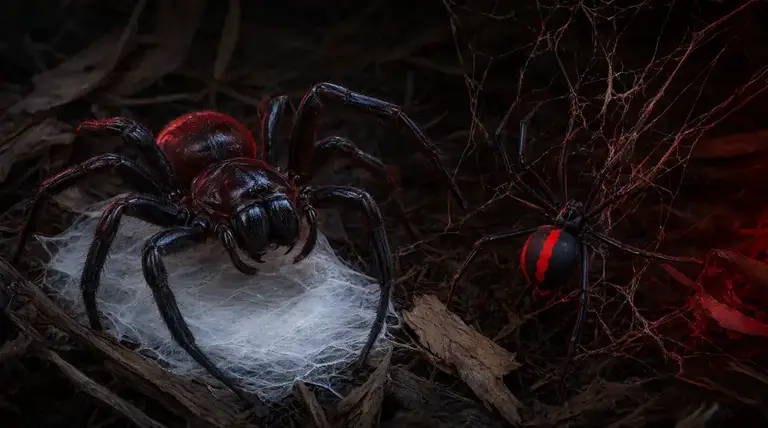
This matters most for the redback (Latrodectus hasselti), a strongly synanthropic species that flourishes alongside people and man-made structures. A quiet shed opened only occasionally is ideal: a female can build her messy tangle web and lay several egg sacs, each capable of holding around 250 eggs. That’s how one spider quietly becomes many. Our Redback Spider: Identification, Bites and Safe Removal guide covers this species in detail.
Warning Signs: How to Tell If Garage Spiders Are Establishing
The clearest warning signs of garage spiders establishing are messy webs in corners and door tracks, visible egg sacs, and spiders appearing when you move long-stored items. Check these indicators before the problem grows.
- Messy tangle webs near ground level — under workbenches, behind stored goods and around pots; the classic redback sign.
- Round or papery egg sacs — cream-coloured sacs suspended in webs or tucked into voids; each can hold hundreds of eggs.
- Webs along roller-door tracks and ceiling corners — black house spiders and other web-builders favour these spots.
- Spiders inside stored boots, gloves or helmets — sheltering redbacks are a genuine bite risk when gear is used blind.
- Heavy insect activity — moths and beetles around lights, or insects in stored goods, mean spider food is abundant.
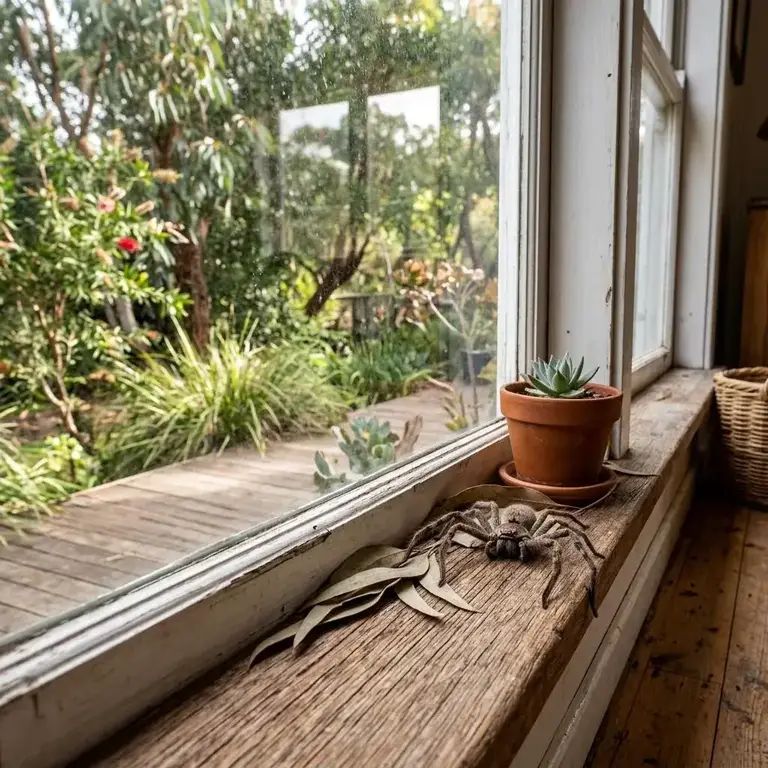
- Large flat spiders on walls at night — huntsmen wandering in through gaps; mostly harmless, but a sign of easy entry. See Huntsman Spiders: Dangerous or Harmless Housemates?
- Funnel-shaped burrows in soil around slab edges (southern and eastern regions) — if you’re in funnel-web territory, read Funnel-Web Spider: Identification, Danger and Control before disturbing anything.
DIY Prevention vs Professional Treatment for Garage Spiders
Most homeowners can significantly reduce garage spiders with consistent DIY prevention, but established redback populations or recurring infestations are best handled by a licensed pest control technician. Here’s how the two approaches compare.
The DIY priorities are straightforward. First, declutter and raise: redbacks and black house spiders love undisturbed cardboard and clutter, so store items in sealed plastic tubs rather than boxes, keep goods off the floor on shelving, and periodically move stored items so nothing sits untouched for months. Second, seal entry points: fit a brush or rubber seal along the base of roller and tilt doors, fill wall and eave gaps 2 mm and wider with sealant or steel wool, screen wall vents, and check where conduit or pipes penetrate walls. Third, control the insects: swap white external globes for warm/yellow LEDs, clear leaf litter and vegetation from around the structure, and keep firewood, unused pots and abandoned toys away from walls — ground-level harbourage feeds spiders straight into the building.
When cleaning, always wear gloves when reaching into dark spaces or moving long-stored items, and check under outdoor furniture and inside stored footwear before use. If you find a red-striped spider, don’t handle it.
| Factor | DIY approach | Professional treatment |
|---|---|---|
| Best for | Prevention and light spider activity | Established redbacks, egg sacs, recurring problems |
| Typical cost | $30–$120 (seals, tubs, LED globes) | $180–$450 per visit |
| Duration of effect | Ongoing only while habits are maintained | Residual barrier typically lasts several months |
| Safety | Low risk if gloves worn and spiders not handled | APVMA-registered products applied by licensed technicians |
| Time required | A weekend plus quarterly upkeep | 1–2 hours on site |
What Does Professional Garage Spider Treatment Cost in Australia?
In 2025–26, the typical Australian market rate for professional pest control on a garage or shed sits between $180 and $450, depending on the structure’s size, the species involved and whether it’s bundled with a whole-home treatment. The figures below are general industry rates across Australia — not a quote from any one company — and what you actually pay will depend on your property and location.
| Service | Typical market rate (AUD) | What’s included/notes |
|---|---|---|
| Garage/shed inspection and quote | Free – $90 | Species identification, harbourage mapping, entry-point assessment |
| Standalone shed/garage spider treatment | $180 – $300 | Interior residual spray, door tracks, web removal, perimeter barrier |
| Redback-focused treatment | $220 – $450 | Targeted treatment of voids, stored goods areas and egg sac sites; follow-up often recommended |
| Whole-home + outbuilding bundle | $300 – $550 | House, garage, shed and fence lines; usually the best value |
| Annual maintenance program | $250 – $450/yr | Scheduled re-treatments before peak season; keeps residual barrier active |
A residual barrier is particularly worthwhile for sheds used to store items you reach into blind — gardening kits, children’s outdoor gear, camping equipment — where the risk of an accidental redback bite is highest. All chemical treatments should be carried out by licensed technicians using APVMA-registered products, and no reputable operator will claim any treatment is 100% safe or permanently guaranteed.
These are the going rates across the Australian industry — and it’s worth knowing that Aussie Pest Strike typically comes in well under these market figures. For an exact quote tailored to your property, give the team a call on [aps_phone].
Seasonal Garage Spider Activity in Australia
Garage spider activity across Australia peaks from late spring through summer and early autumn, when warmth drives both spider movement and insect prey. Northern regions see longer active seasons; southern states see a sharper winter lull — but sheds stay warm enough that spiders never fully disappear.
Jan
Feb
Mar
Apr
May
Jun
Jul
Aug
Sep
Oct
Nov
Dec
Typical Australian pattern: garage and shed spider activity builds from September, peaks November–February, and eases through autumn and winter. In Queensland and the NT, expect activity 10–20% higher through the cooler months than shown here. Book treatments in early spring to get ahead of the breeding season.
Most garage spider jobs we attend come down to the same three things: clutter on the floor, a gap under the roller door, and a white floodlight pulling in moths all night. Fix those and you’ve done 80% of the work — the residual treatment just locks in the result. Where people get caught is reaching blindly into stored gear in summer; that’s exactly when redbacks are most active and most likely to be sitting in a boot or a glove.
Start with a weekend of DIY prevention: swap cardboard for sealed tubs, raise everything off the floor, seal door and wall gaps, and change external globes to warm LEDs. If you’re still finding redbacks, egg sacs or fresh webs after a month — or if the shed stores gear your family reaches into regularly — book a licensed treatment. A spring residual barrier on the interior, door tracks and perimeter gives the most durable protection through peak season.
Frequently Asked Questions
Why do garages and sheds attract so many spiders?
Garages and sheds offer everything spiders need: darkness, undisturbed clutter, easy entry gaps and a steady supply of insects drawn to stored goods and outdoor lighting. Stacked boxes and timber create stable voids, roller-door gaps let spiders in freely, and external lights pull in the moths and beetles that spiders feed on. Remove those four attractants and spider numbers drop sharply.
Which spider species should I watch for in my garage or shed?
Redbacks are the main risk species in Australian outbuildings, favouring undisturbed spots under benches, in stored pots and inside wall cavities. Black house spiders build webs along roller-door tracks and ceiling corners. Huntsmen may wander in through gaps at night and are mostly harmless. In funnel-web territory, funnel-shaped burrows around slab edges warrant caution before disturbing anything.
What warning signs show spiders are establishing in my shed?
Look for messy tangle webs near ground level under workbenches and behind stored goods, which is the classic redback sign. Cream-coloured, papery egg sacs suspended in webs can each hold hundreds of eggs. Other indicators include webs along door tracks, spiders inside stored boots or gloves, heavy insect activity around lights, and huntsmen appearing on walls at night.
How can I prevent spiders in my garage using DIY methods?
Focus on three priorities: declutter by storing items in sealed plastic tubs on shelving rather than cardboard boxes on the floor; seal entry points with brush or rubber door seals, filling gaps 2 mm and wider with sealant or steel wool; and control insects by swapping white globes for warm or yellow LEDs and clearing leaf litter and harbourage from walls. Wear gloves when reaching into dark spaces.
When should I call a professional instead of handling garage spiders myself?
DIY prevention suits light activity and ongoing maintenance, but established redback populations, visible egg sacs or recurring problems are best handled by a licensed pest control technician. Professionals apply APVMA-registered residual products to voids, stored-goods areas and egg sac sites, typically taking one to two hours on site, with a barrier that lasts several months.
How much does professional garage or shed spider treatment cost in Australia?
Professional spider treatment for a garage or shed is usually priced as a small standalone job, so it generally costs less than a full-house service. Redback-focused treatments tend to cost more because they involve careful inspection of webs, cracks and cluttered corners. Many pest controllers offer cheaper rates when the outbuilding is treated alongside the main home, or through annual maintenance plans. Final pricing depends on shed size, accessibility, infestation severity and your local provider's rates.
When is spider activity highest in garages and sheds?
Activity builds from September, peaks from November through February, and eases through autumn and winter as temperatures fall. Northern regions such as Queensland and the NT see longer active seasons with 10 to 20 percent more cool-month activity than southern states, where winter lulls are sharper. Sheds stay warm enough that spiders never fully disappear, so book treatments in early spring ahead of breeding season.
Why is a redback in stored gear such a serious bite risk?
A female redback can build her messy tangle web in a quiet shed and lay several egg sacs, each holding around 250 eggs, turning one spider into many. Redbacks commonly shelter inside stored boots, gloves, helmets and gardening gear. Reaching blindly into these items during summer, when redbacks are most active, is exactly how accidental bites happen, so always check footwear and wear gloves.
Can Aussie Pest Strike help me tell the difference between dangerous redbacks and harmless spiders in my shed?
Yes. Many web-building spiders found in garages and sheds look similar at a glance, but the risks differ greatly. An Aussie Pest Strike technician can identify whether you are dealing with redbacks, black house spiders or huntsmen, map where harbourage and egg sacs are located, and assess entry points. That identification determines whether targeted redback treatment or simple prevention is the right response.
What is a practical next step if I keep finding webs in my garage despite decluttering?
If DIY measures like sealed tubs, door seals and LED lighting have not stopped webs returning, an inspection is a sensible next step. Aussie Pest Strike can assess your structure, identify the species involved and pinpoint the gaps, clutter zones and lighting issues sustaining the population. They can then recommend whether a residual treatment of the garage or shed would lock in your prevention efforts.
Sources & further reading
Found Something
Dangerous?
Don’t touch it. Don’t spray it. Keep kids and pets clear, take a photo from a safe distance, and call us — or book a free inspection and we’ll come to you.
02 7235 0050