Heat Treatment inPest Control:Uses and Limits
Heat Treatment in Pest Control — Heat treatment in — heat treatment for pests raises the temperature of a room or item to a lethal level usually 50 to 60 C...
When Australians search for heat treatment pests, they’re usually chasing a chemical-free fix that actually works, not another spray-and-hope visit. Heat treatment can be outstanding for bed bugs, pantry moths and some timber borers, but it is not the right answer for every infestation; know how it works, where its limits sit, and you’ll save money and frustration from a Sydney apartment to a Brisbane Queenslander or Melbourne brick veneer.
Heat treatment in pest control is the process of raising the temperature of a room, structure or item to a lethal level — typically 50 to 60°C sustained for several hours — killing insects and their eggs without leaving any chemical residue. It is the gold standard for bed bugs and useful for some pantry and timber pests, but it has real limits that make it the wrong choice for many common jobs. This guide explains where heat shines, where it fails, what it costs in Australia in 2025-26, and how to decide if it suits your situation.
- Heat treatment kills pests and their eggs by holding a space at 50 to 60°C for several hours, with zero chemical residue.
- It is the gold standard for bed bugs and works well for pantry pests in stored goods and some drywood timber pests.
- Heat leaves no residual protection, so it is often paired with a chemical perimeter to stop reinfestation.
- Cockroaches and ants are better handled with baiting, and whole-structure timber jobs may suit fumigation better.
- Typical Australian pricing runs from roughly $400 for a single room to $3,500+ for a whole house.
Why heat treatment pests control matters for Australian homes
Heat treatment matters in Australia because our warm climate and diverse housing styles create ideal conditions for the pests heat handles best — particularly bed bugs in high-turnover accommodation and pantry pests in stored food. Australian homes also have construction quirks that make chemical-only approaches unreliable, which is where heat’s ability to penetrate earns its keep.
Older Queenslanders on stumps have countless wall cavities, VJ board gaps and subfloor voids where bed bugs and borers hide beyond the reach of surface sprays. Brick veneer homes in the southern states have wall cavities that stay cooler than the room air, letting pests shelter from conventional treatments. Australia’s long, hot summers also accelerate pest breeding cycles, meaning a missed clutch of eggs can restart an infestation within weeks. Because heat penetrates cracks, fabrics and wall voids that sprays miss, it closes those gaps in a single visit — provided every cold spot reaches the kill zone.
How Heat Treatment Kills Pests
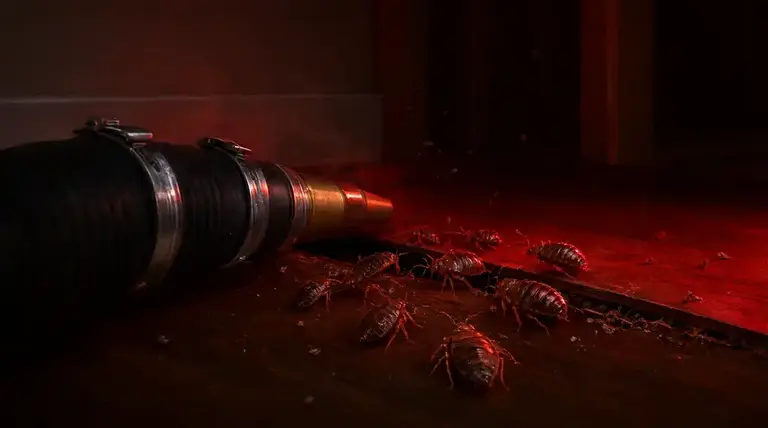
Heat treatment kills pests because insects are cold-blooded and cannot regulate their body temperature, so most pests and their eggs die when held above roughly 48°C for long enough. Professionals target 50 to 60°C to build in a safety margin, using specialised electric or diesel heaters and high-volume fans to circulate hot air while probes confirm every corner reaches the kill zone.
The monitoring is the critical part. Technicians place wireless temperature sensors at the coldest points — skirtings, mattress cores, wall voids, behind bedheads — to prove the lethal temperature was achieved everywhere, not just in the middle of the room. Done correctly, the approach offers three big advantages:
- No chemical residue, so it suits sensitive homes and food-related areas.
- Deep penetration into cracks, seams and fabrics that sprays miss.
- All life stages killed in a single treatment when the target temperature is held properly.
Warning Signs You May Need Heat Treatment
The clearest warning signs that heat treatment may be the right solution are confirmed bed bug activity, recurring pantry pest problems, or a failed round of chemical treatments. Watch for these indicators before deciding on any method:
- Itchy bites in rows or clusters appearing overnight, especially after travel or visitors.
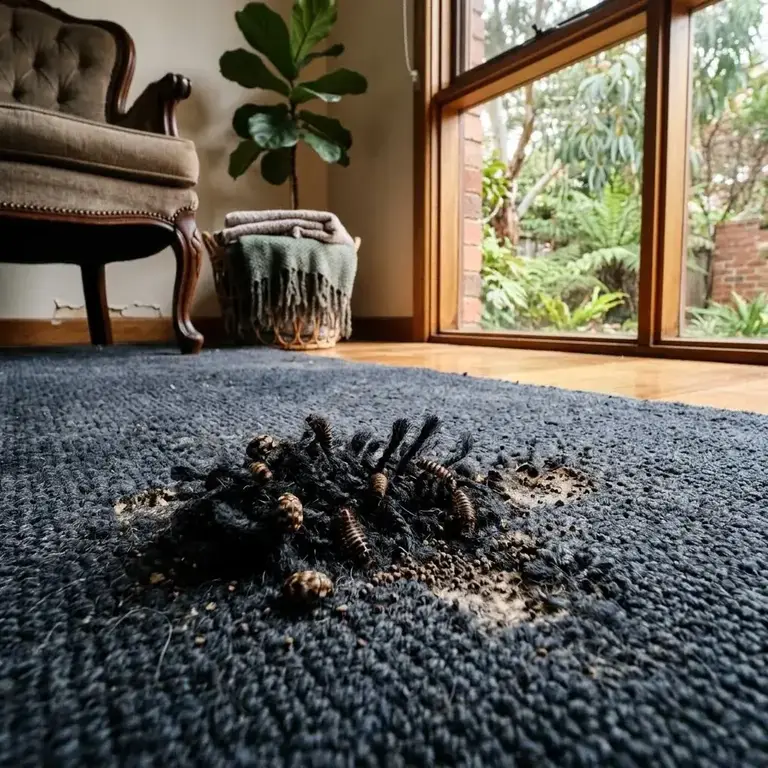
- Rust-coloured spots or shed skins on mattress seams, bedheads and bedside furniture.
- Live moths, larvae or webbing in flour, cereal, rice or pet food stored in the pantry.
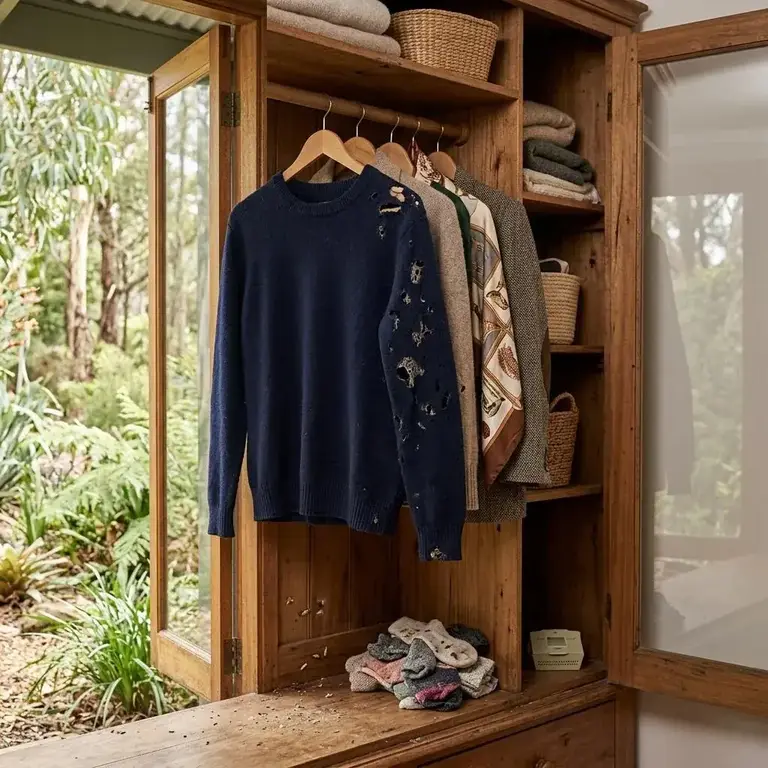
- Fine frass or exit holes in timber furniture suggesting drywood pest activity.
- Infestations that keep returning after standard spray treatments, pointing to surviving eggs.
DIY vs Professional Heat Treatment
DIY heat attempts — running household heaters, closing up a car in the sun, or hiring a single industrial heater — almost never reach or hold lethal temperatures evenly, so professional treatment is strongly recommended. Professionals bring calibrated heaters, multiple fans and wireless sensors that prove the kill zone was reached, and they know how to protect your belongings while doing it.
| Factor | DIY heat attempts | Professional heat treatment |
|---|---|---|
| Temperature control | Uneven; cold spots let pests survive | Held at 50-60°C with sensor verification |
| Kills eggs | Rarely, eggs survive in cool pockets | Yes, in a single controlled cycle |
| Fire and item damage risk | High | Managed; sensitive items removed |
| Likely outcome | Partial kill, infestation returns | Full knockdown when held correctly |
If you are weighing heat against chemical options, our comparison of heat versus chemical bed bug treatment breaks down the trade-offs in detail. For a broader look at what either approach will cost, see How Much Does Pest Control Cost in Australia?
Where Heat Treatment Excels — and Its Real Limits
Heat treatment pests like bed bugs, pantry pests in stored goods and some drywood timber pests respond well, but its two hard limits are that it leaves no residual protection and it can damage heat-sensitive belongings. Knowing both sides prevents wasted money.
Bed bugs are the flagship use. Because their eggs are shielded from many chemicals, a single controlled heat cycle can clear an infestation that would otherwise need multiple chemical rounds. Heat also treats infested stored goods and, in some cases, drywood timber pests. The limits are just as real: the moment a room cools, a new pest walking in from next door faces no barrier — which is why heat is often paired with a residual chemical perimeter applied by a licensed technician. Heat also struggles to reach beneath concrete slabs or deep into masonry, and items like candles, vinyl records and some plastics can warp.
When another method is smarter:
- Cockroaches — gel baiting is more practical and cheaper.
- Ants — baiting reaches the colony; heat does not.
- Whole-structure timber pests — fumigation may penetrate better; see our fumigation guide.
Concerned about residues around your family? Our guide on whether pest control is safe for pets and children explains how heat and low-risk chemical options compare in sensitive households.
Heat Treatment Costs in Australia (2025-26)
Across the Australian pest control industry, professional heat treatment generally costs between $400 and $3,500 or more depending on the size of the area, the pest and how long the space must be held at temperature. As a market rule of thumb, single-room bed bug jobs sit at the lower end of what operators charge; whole-house treatments for large Queenslanders or multi-bedroom brick veneer homes sit at the top of the national range.
| Service | Typical market rate (AUD) | What’s included/notes |
|---|---|---|
| Single room bed bug heat treatment | $400 – $800 | 6-8 hours at temperature, sensor monitoring, furniture manipulation |
| Multi-room / apartment heat treatment | $900 – $2,000 | Multiple heaters and fans, full-day job, optional residual perimeter |
| Whole-house heat treatment | $2,000 – $3,500+ | Large homes, diesel heaters, whole-structure monitoring |
| Heat plus residual chemical perimeter | Add $150 – $400 | Applied by licensed technician to guard against reinfestation |
These figures are typical Australian market rates — what the industry generally charges — rather than any one company’s price list. What you’ll actually be quoted depends on access, room size and infestation severity. For context on how heat compares with standard spray pricing across the market, check our Australian pest control cost guide.
Here’s the good news: Aussie Pest Strike typically comes in well under these market rates, without cutting corners on equipment, monitoring or licensing. For an exact quote tailored to your property, call [aps_phone] and we’ll talk you through it.
Seasonal Pest Activity and When to Book Heat Treatment
Pest pressure that leads to heat treatments — especially bed bugs and pantry pests — peaks through the warmer months from October to March, when heat accelerates breeding and holiday travel spreads bed bugs between homes and accommodation. Winter sees a dip, though heated indoor environments keep activity alive year-round.
Jan
Feb
Mar
Apr
May
Jun
Jul
Aug
Sep
Oct
Nov
Dec
Indicative demand pattern: bed bug and pantry pest activity climbs with summer heat and holiday travel, peaking December to February, then eases through the cooler months. Because summer is the busiest period, booking early avoids delays — our guide on how often you should book pest control in Australia helps you plan a sensible schedule.
What a Heat Job Looks Like on the Day
A typical bed bug heat treatment for a single room runs six to eight hours once the target temperature is reached and held, with the whole visit usually taking most of a day. Technicians position multiple heaters and high-volume fans so hot air circulates rather than pooling, and they move furniture, open drawers and lift mattresses to expose every harbourage.
Preparation on your part makes or breaks the result. Before the crew arrives:
- Remove aerosols, pressurised cans, medications and pets from the treatment zone.
- Take out candles, wax items, vinyl records and delicate electronics that could warp or fail.
- Leave clutter open and spread out so heat can penetrate it evenly.
The jobs that go wrong are the ones where the temperature is chased, not proven. If you cannot show me a sensor reading of 50-plus degrees in the coldest corner of that mattress, you have not killed the eggs — you have just given the room a warm day. We treat to the probe, not the thermostat, every single time.
Use heat treatment where it is proven — bed bugs, infested stored goods and localised drywood pests — and pair it with a residual chemical perimeter applied by a licensed technician to guard against reinfestation. For cockroaches, ants or widespread timber pests, choose baiting or fumigation instead, and always get an on-site assessment before committing to any method.
Frequently Asked Questions
What temperature does heat treatment need to kill pests?
Heat treatment works because insects are cold-blooded and cannot regulate their body temperature. Most pests and their eggs die when held above roughly 48°C for long enough. Professionals target 50 to 60°C to build in a safety margin, using electric or diesel heaters with high-volume fans, while wireless sensors confirm that even cold spots like skirtings, mattress cores and wall voids reach the lethal temperature.
Which pests respond best to heat treatment in Australia?
Bed bugs are the flagship use for heat treatment, as a single controlled cycle can clear an infestation that would otherwise need multiple chemical rounds. Heat also works well for pantry pests such as moths and larvae living in stored flour, cereal, rice or pet food, and can be useful against some drywood timber pests. Cockroaches and ants are better handled with baiting instead.
What are the main limits of heat treatment?
Heat treatment leaves no residual protection, so once a room cools, new pests arriving from next door face no barrier — it is often paired with a residual chemical perimeter applied by a licensed technician. It also struggles to reach beneath concrete slabs or deep into masonry, and heat-sensitive items like candles, vinyl records and some plastics can warp during treatment.
Can I do heat treatment myself with household heaters or a hot car?
DIY heat attempts almost never reach or hold lethal temperatures evenly. Household heaters, cars parked in the sun or a single hired heater leave cold pockets where pests and eggs survive, and they carry high fire and item damage risks. Professionals use calibrated heaters, multiple fans and wireless sensors to prove the kill zone was reached everywhere, and they know how to protect your belongings.
How long does a typical heat treatment session take to complete?
Professional heat treatment pricing varies with the size of the area, the pest being targeted, and how long the space must be held at lethal temperatures. Single-room bed bug jobs are usually the cheapest option, multi-room or apartment treatments cost more, and whole-house treatments sit at the top of the range. Factors such as insulation, clutter and equipment needs can also affect the final quote.
Why is heat treatment often paired with a chemical perimeter?
Because heat kills everything present but leaves behind zero chemical residue, it offers no ongoing protection once the room cools. A new bed bug or pantry pest walking in afterwards faces no barrier. Pairing heat with a residual chemical perimeter applied by a licensed technician guards against reinfestation, which is why many operators offer this combination as an add-on service.
What warning signs suggest heat treatment may be right for my home?
The clearest indicators are confirmed bed bug activity — itchy bites in rows or clusters overnight, rust-coloured spots or shed skins on mattress seams and bedheads — plus recurring pantry pest problems like live moths, larvae or webbing in stored food. Fine frass or exit holes in timber furniture suggesting drywood pest activity, or infestations returning after standard sprays, also point towards heat.
When is pest activity highest and when should I book heat treatment?
Pest pressure leading to heat treatments peaks through the warmer months from October to March, when summer heat accelerates breeding cycles and holiday travel spreads bed bugs between homes and accommodation. Demand typically peaks December to February, then eases through cooler months, though heated indoor environments keep activity alive year-round. Booking early ahead of summer avoids delays.
How can Aussie Pest Strike help with Heat Treatment in Pest Control: Uses and Limits?
Yes, an inspection tailored to your property is worthwhile before committing to heat treatment. Housing styles affect how heat behaves — older Queenslanders on stumps have wall cavities and subfloor voids where pests hide, while brick veneer homes have cavities that stay cooler than room air. An assessment of your rooms, access points and infestation severity helps determine whether heat alone suits your situation or should be paired with other methods.
How do I get started with Aussie Pest Strike for heat treatment?
A practical first step is contacting Aussie Pest Strike to discuss your situation and arrange a quote tailored to your property. Factors like room size, access, the pest involved and infestation severity all influence what treatment approach makes sense. Aussie Pest Strike uses calibrated heaters, multiple fans and wireless sensor monitoring, and can talk you through whether heat alone or heat combined with a residual perimeter best fits your needs.
Sources & further reading
Found Something
Dangerous?
Don’t touch it. Don’t spray it. Keep kids and pets clear, take a photo from a safe distance, and call us — or book a free inspection and we’ll come to you.
02 7235 0050