How ModernPest Control ChemicalsActually Work
How modern pest — modern pest control chemicals rarely work by knocking pests dead on contact. Instead, most target an insect's nervous system, growth cycle...
Modern pest control chemicals rarely work by knocking pests dead on contact. Instead, most target an insect’s nervous system, growth cycle or ability to walk across surfaces, delivering a controlled dose that the pest carries back to the colony or picks up over days. Understanding how pest control chemicals work — the “e” in effective treatment, if you like — explains why professional results outlast a supermarket can of spray.
Modern pest control chemicals are professionally formulated, APVMA-registered products that kill or control pests through targeted modes of action — attacking the nervous system, disrupting growth, or spreading a lethal dose through the colony — rather than simple contact knockdown. If you’ve ever wondered why a $12 aerosol can barely slows an ant trail while one professional treatment lasts for months, the answer is in the chemistry.
- Most professional chemicals work by delayed action — pests carry the active ingredient back to the nest, collapsing the colony you can’t see.
- The main families are synthetic pyrethroids, neonicotinoids, phenylpyrazoles and insect growth regulators, each with a different mode of action.
- Formulation matters as much as the active: gels, dusts, baits and micro-encapsulated sprays behave very differently.
- All professional products are registered with the APVMA, and chemical treatments should only be applied by licensed technicians.
- Retail sprays often repel rather than eliminate, scattering colonies and accelerating resistance.
Why Modern pest control chemicals Matter for Australian Homes
Australia’s warm climate and diverse housing stock create year-round pest pressure that older, cruder chemicals simply couldn’t manage long-term. From humid Queensland to temperate Victoria, pests breed fast and adapt faster.
Subtropical Brisbane and coastal Queensland deal with relentless cockroach, ant and termite activity almost all year, while southern states see intense summer surges of spiders, fleas and European wasps. Housing style compounds the problem: raised Queenslanders and older homes with subfloor voids give termites and cockroaches sheltered harbourage, slab-on-ground brick veneer homes develop hidden entry points at weep holes and expansion joints, and wall cavities everywhere offer nesting space that contact sprays can never reach. Modern non-repellent actives and growth regulators were developed precisely for these scenarios — they work where the pests live, not just where you happen to see them. It is one of the reasons we bust the idea that “one spray fixes everything” in our 10 Pest Control Myths Busted: Complete Australian Guide.
The Main Chemical Families: How Each One Works (“e” for Effective Mode of Action)
Every product used by licensed Australian technicians is registered with the Australian Pesticides and Veterinary Medicines Authority (APVMA), which sets label rates, safety data and approved uses. The active ingredients fall into a handful of families, each attacking pests differently.
Synthetic pyrethroids
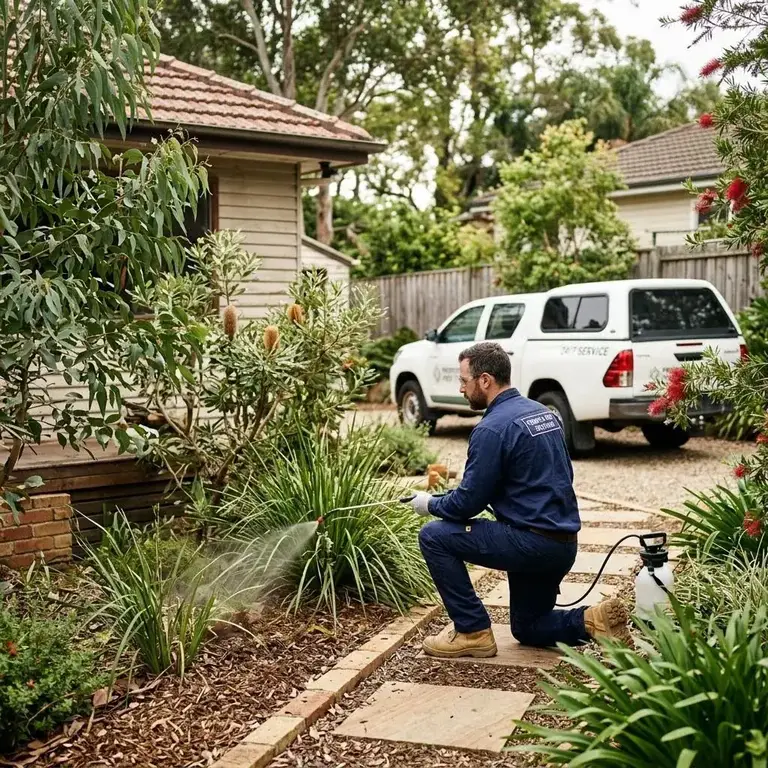
Actives such as bifenthrin and deltamethrin are the workhorses of residual perimeter sprays. They disrupt sodium channels in the insect nervous system, causing paralysis. Applied at label rates (often 0.01 to 0.05 percent dilutions), they bind to surfaces and stay lethal for weeks to months.
Neonicotinoids and phenylpyrazoles
Imidacloprid and fipronil act on nerve receptors and are prized for their non-repellent behaviour. Insects cannot detect them, so they walk through the treated zone, pick up a dose and transfer it to nestmates through grooming and contact — a “domino” effect used heavily in ant and termite work. That transfer effect is the real “e” factor: elimination of the colony, not just the foragers.
Insect growth regulators
IGRs such as pyriproxyfen do not kill adults at all. They mimic juvenile hormones so eggs and larvae never mature, collapsing a population over one or two breeding cycles. This is why flea and cockroach programs pair a knockdown active with an IGR.
Warning Signs You Need a Chemical Treatment, Not a Gadget
If pests are established rather than occasional, chemical treatment by a licensed technician is usually the only realistic fix. Watch for these indicators around your home:
- Recurring ant trails that reappear within days of spraying, suggesting the nest is untouched.
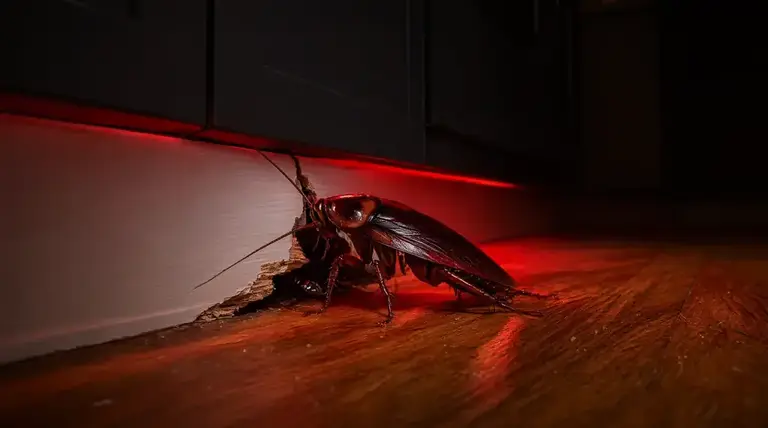
- Cockroach droppings or egg cases in kitchens, bathrooms or behind appliances — a sign of an established, breeding population.
- Mud tubes on slab edges, stumps or walls, indicating active termites that no surface spray will stop.
- Flea bites or scratching pets persisting after a DIY bomb, because eggs and larvae survive without an IGR.
- Spider webbing rebuilding within a week of being knocked down.
- Money already spent on gadgets and home remedies — if you’ve tried the options in our guides to Ultrasonic Pest Repellers: The Honest Truth and DIY Pest Remedies That Don’t Work (And What Does), it’s time for professional chemistry.
Formulation Matters as Much as the Active
The same active ingredient can behave very differently depending on how it is formulated. Gels concentrate bait where cockroaches feed, dusts flow into wall voids and roof spaces, and micro-encapsulated sprays release the active slowly for longer residual life.
- Baits: slow-acting so the forager survives long enough to share the dose.
- Residual sprays: bind to surfaces for lasting contact kill.
- Dusts: ultra-fine particles that cling to insect bodies in voids.
Dose, timing and delay by design
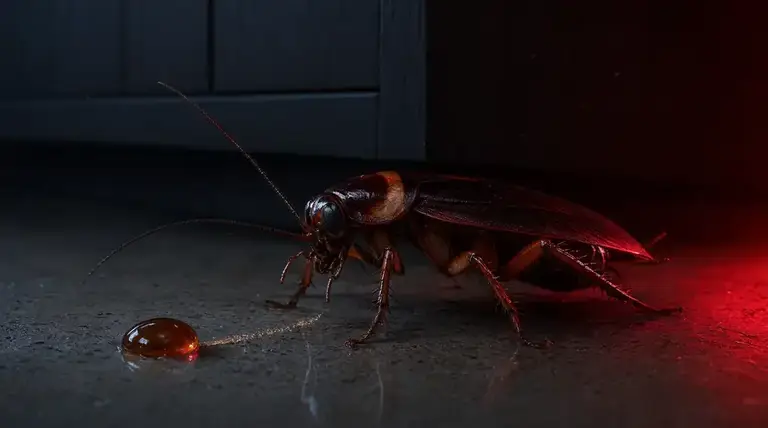
Effective baits are intentionally slow-acting: they use a low dose with delayed toxicity so foragers survive long enough to return and share the active ingredient through feeding and grooming. That hours-to-a-day delay lets exposure spread beyond visible insects, collapsing the hidden colony rather than merely knocking down a few individuals.
Resistance and rotation
Insects breed fast and can develop resistance to an overused active within a few generations. This is well documented in German cockroaches and in bed bugs against older pyrethroids. Professionals counter it by rotating between chemical families with different modes of action, so pests never face the same pressure long enough to adapt. It is one more reason repeatedly buying the same supermarket spray tends to lose effectiveness over time.
DIY vs Professional Chemical Treatments
Retail sprays are mostly fast knockdown with little residual and often a repellent action, which scatters colonies rather than eliminating them. Licensed technicians select the right mode of action for the target species and rotate actives to slow resistance — increasingly important with resistant German cockroach and bed bug strains in Australia.
| Factor | DIY retail products | Professional treatment |
|---|---|---|
| Mode of action | Mostly fast knockdown pyrethroids | Matched to species: non-repellents, IGRs, baits |
| Residual life | Days at best | Weeks to months on treated surfaces |
| Colony impact | Often repels and scatters the nest | Delayed toxicity collapses the colony |
| Resistance management | Same active every time | Rotated chemical families |
| Safety oversight | User reads the label | Licensed technician, APVMA label rates, re-entry advice |
What Professional Chemical Treatments Cost in Australia (2025-26)
Professional pest control pricing across the Australian market varies with pest type, property size and the chemicals and formulations required. The ranges below reflect typical 2025-26 industry rates charged by pest control companies across Australian metro and regional areas — they’re a guide to what the market generally charges, not a quote from any one provider.
| Service | Typical market rate (AUD) | What’s included/notes |
|---|---|---|
| General pest spray (cockroaches, spiders, ants, silverfish) | $180–$350 | Internal/external residual spray, gel baits, roof void and subfloor dusting where accessible |
| Cockroach program (German cockroaches) | $250–$450 | Gel baiting plus IGR; may include a follow-up visit |
| Flea treatment | $200–$400 | Knockdown active combined with an insect growth regulator |
| Ant treatment (non-repellent) | $200–$380 | Fipronil or imidacloprid perimeter treatment for colony transfer |
| Termite chemical barrier | $2,000–$5,000+ | Trench-and-treat or drill-and-inject around slab or stumps; priced per linear metre |
These figures are typical Australian market rates — what the industry generally charges for this kind of work. Aussie Pest Strike typically comes in well under these market rates while still using professional-grade chemicals and licensed technicians. For an exact quote tailored to your property and pest problem, give us a call on [aps_phone].
Seasonal Pest Pressure and When Treatments Work Hardest
Pest activity in Australia peaks through the warmer months, when insects breed fastest and chemical treatments face the heaviest pressure. The chart below shows typical relative activity across the year for common household pests Australia-wide.
Jan
Feb
Mar
Apr
May
Jun
Jul
Aug
Sep
Oct
Nov
Dec
Typical Australia-wide household pest activity: peaking December to February, easing through winter, and building again from September. Northern regions stay elevated year-round; a spring treatment gives residual products the best head start before summer pressure hits.
Most people judge a treatment on the first 24 hours, but that’s not how good chemistry works. A slow bait or a non-repellent spray looks quiet for a few days while the colony is actually collapsing. The best result is the one where you stop seeing pests two weeks later and they stay gone.
Skip repeated supermarket sprays — they cost more over time and can scatter colonies or accelerate resistance. For any established infestation, book a licensed technician who will identify the species, select the right mode of action and formulation, apply APVMA-registered products at label rates, and rotate actives on follow-up visits. Ask exactly which chemical family is being used and why before you sign off.
Frequently Asked Questions
How do modern pest control chemicals actually kill pests?
Most modern pest control chemicals rarely kill on contact. Instead, they target an insect's nervous system, disrupt its growth cycle, or spread a lethal dose through the colony. Pests walk through treated zones, pick up a controlled dose and carry it back to nestmates through grooming and feeding, so the hidden colony collapses rather than just the few insects you can see.
What are the main chemical families used in professional pest control?
The main families are synthetic pyrethroids such as bifenthrin and deltamethrin, which disrupt sodium channels in the insect nervous system; neonicotinoids like imidacloprid and phenylpyrazoles like fipronil, which act on nerve receptors and are non-repellent; and insect growth regulators such as pyriproxyfen, which stop eggs and larvae from maturing. Each family has a different mode of action, allowing technicians to match the chemistry to the pest.
Why do professional treatments last longer than supermarket sprays?
Professional products use non-repellent actives that bind to surfaces for weeks to months, while retail sprays mostly offer fast knockdown with little residual life. Retail sprays often repel rather than eliminate, scattering colonies into new harbourage. Professional treatments also pair knockdown actives with baits and growth regulators, so exposure spreads through the colony instead of stopping at the visible insects.
What is an insect growth regulator and how does it work?
Insect growth regulators (IGRs) such as pyriproxyfen do not kill adult insects at all. They mimic juvenile hormones so eggs and larvae never mature into breeding adults, collapsing a population over one or two breeding cycles. This is why flea and cockroach programs combine an IGR with a knockdown active — the adults die off while the next generation never develops.
Why is delayed toxicity in baits so important?
Effective baits are intentionally slow-acting, using a low dose with delayed toxicity so the forager survives long enough to return to the nest and share the active ingredient through feeding and grooming. That hours-to-a-day delay lets exposure spread beyond the visible insects, collapsing the hidden colony rather than merely knocking down a handful of individuals at the bait station.
How does formulation change how a chemical behaves?
The same active ingredient can behave very differently depending on formulation. Gels concentrate bait where cockroaches feed, dusts flow as ultra-fine particles into wall voids and roof spaces and cling to insect bodies, micro-encapsulated sprays release the active slowly for longer residual life, and residual sprays bind to surfaces for lasting contact kill. Formulation matters as much as the active itself.
What signs suggest I need a chemical treatment rather than gadgets or DIY sprays?
Warning signs include ant trails reappearing within days of spraying, cockroach droppings or egg cases in kitchens and bathrooms, mud tubes on slab edges or stumps indicating active termites, flea bites persisting after a DIY bomb because eggs and larvae survive without an IGR, and spider webbing rebuilding within a week of being knocked down. These indicate established populations that surface sprays cannot reach.
Why do professionals rotate chemicals between treatments?
Insects breed fast and can develop resistance to an overused active within a few generations, which is well documented in German cockroaches and in bed bugs against older pyrethroids. Professionals counter this by rotating between chemical families with different modes of action, so pests never face the same pressure long enough to adapt. Repeatedly buying the same supermarket spray tends to lose effectiveness for the same reason.
How would Aussie Pest Strike assess the warning signs described in this article before treating my home?
A licensed technician would inspect for the specific indicators covered in this article: recurring ant trails pointing to an untouched nest, cockroach droppings or egg cases behind appliances, mud tubes on slab edges suggesting termite activity, persistent flea activity needing an insect growth regulator, and fresh spider webbing. Based on what they find, they select the right mode of action — non-repellents, baits or IGRs — matched to the species and applied at APVMA label rates.
What should I do next if I have tried DIY sprays and the pests keep coming back?
If retail sprays have only scattered colonies or stopped working, the practical next step is a professional assessment using targeted chemistry. Aussie Pest Strike uses licensed technicians who can identify the pest, choose the appropriate mode of action — such as gel baits, dusts, non-repellent perimeter treatments or growth regulators — and rotate actives to manage resistance. Contacting them for a quote tailored to your property and pest problem is a sensible starting point.
Sources & further reading
Found Something
Dangerous?
Don’t touch it. Don’t spray it. Keep kids and pets clear, take a photo from a safe distance, and call us — or book a free inspection and we’ll come to you.
02 7235 0050