How toRead a PestInspection Report
How to read — a pest inspection report is read by working from the summary of findings first, then checking which areas were inspected, which were not, and...
A pest inspection report is read by working from the summary of findings first, then checking which areas were inspected, which were not, and what the inspector recommends next — every section, right down to item e on the checklist, tells part of the storey. Across Australia, these reports follow AS 4349.3 (timber pest inspections), so once you understand the layout and the language, you can read a report from any licensed company with confidence.
Too many homeowners and buyers flip straight to the photos, panic at one alarming image, and miss the bigger picture. This guide walks you through a pest inspection report section by section — the structure, the findings, the phrases that matter, the costs of acting on them, and when pest control or further investigation is genuinely warranted — so you can turn the document into decisions rather than stress.
- Read the summary of findings first, then the scope and limitations, then the detailed findings — never judge a report on one photo.
- A “not inspected” or “inaccessible” notation is a red flag for unknown risk, not a clean bill of health.
- Prioritise anything marked “active termites” or “high-risk”, then fix conducive conditions like moisture and timber-to-ground contact.
- Reports are point-in-time assessments under AS 4349.3 — most agents and lenders treat them as current for around three months.
- “Further inspection recommended” means book the specialist check before you sign anything.
Why Reading a Pest Inspection Report Matters in Australia
Australia has some of the most termite-prone housing stock in the world, and the report is often the only document standing between a buyer and tens of thousands of dollars in hidden timber damage. From tropical Queensland to temperate Victoria, subterranean termites are active in every mainland state, and the risk shifts with climate and construction style.
Queenslanders and older weatherboard homes on stumps offer subfloor access but also endless timber-to-ground contact points. Brick veneer homes on concrete slabs hide termite entry behind the slab edge and weep holes, while homes with tight subfloors (under 400 mm clearance) frequently carry “not inspected” notations. Warm, humid conditions along the eastern seaboard accelerate termite foraging, which is why a report that was clear in winter can look very different by spring. Understanding how the document works — including item e in the findings schedule — lets you weigh those risks properly rather than relying on gut feel.
This applies whether you own a 1920s cottage (see our guide to Pest Control in Older Australian Homes) or a brand-new estate build, where owners often wrongly assume they’re immune (read Pest Control for New Builds: What Australian Owners Miss).
The Structure of an AS 4349.3 Report
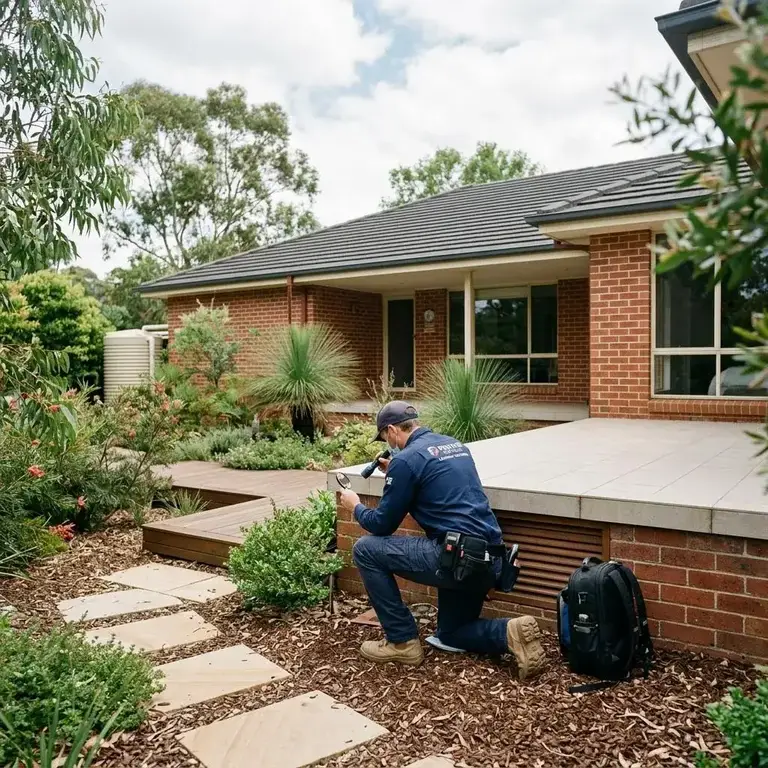
Every compliant pest inspection report follows the same skeleton: property details and conditions first, then scope, then findings, then conclusion and recommendations. Reading in that order stops you fixating on one alarming photo before you understand the whole picture.
The opening pages record the property address, inspection date, weather conditions on the day (recent rain matters, because moisture drives termite movement), and the inspector’s licence number — always verify this against your state’s licensing register. From there, the document moves through the scope of inspection, the detailed findings, and a concluding summary.
Scope and limitations come first
The scope section tells you exactly what the inspector could and could not access, and it is arguably the most important part of the report. Subfloors, roof voids and gardens are frequently listed as “not inspected” because of tight crawl space (under 400 mm clearance), stored goods, heavy insulation or locked areas.
A limitation is not a clean bill of health for that zone — it is a flag that further investigation may be warranted. If a large portion of the home was inaccessible, factor that into your decision and consider an invasive follow-up before committing.
Warning Signs to Look For in the Findings Section
The findings section is where the report earns its fee: inspectors record evidence across the four timber pest categories — subterranean termites, borers, wood decay fungi, and chemical delignification (weathering) — and rate each by activity and severity. Watch for these key notations:
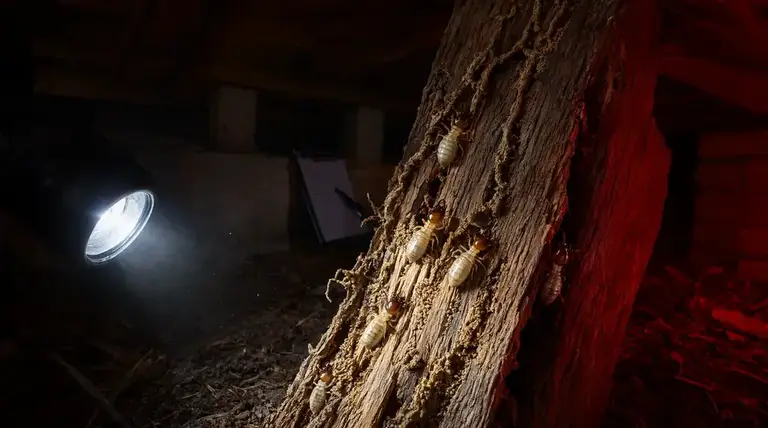
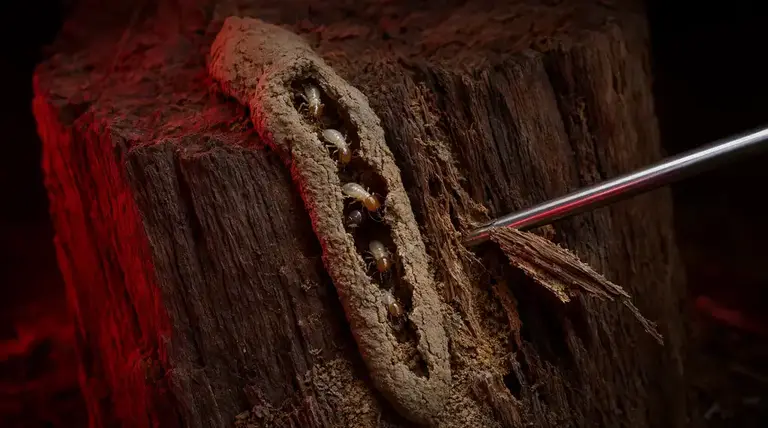
- Active termites: live insects or fresh mud workings found on the day — this demands urgent action, not negotiation.
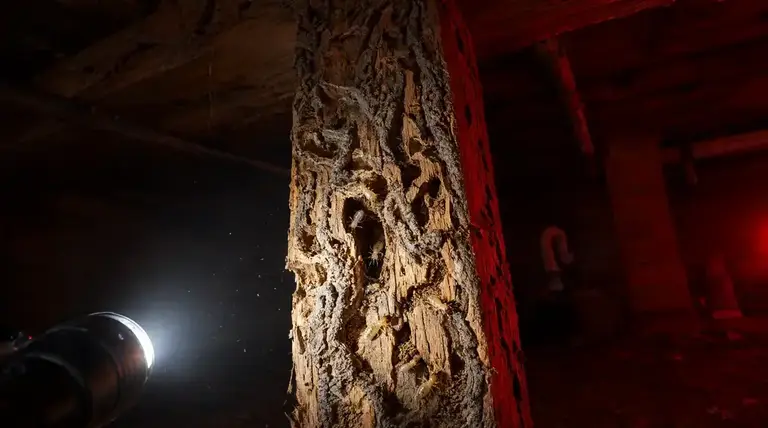
- Evidence of previous activity: old damage or spent workings with no live termites; still relevant for structural assessment and future risk.
- Conducive conditions: moisture, timber-to-ground contact, leaking plumbing or poor drainage that invites pests back.
- High-risk areas: zones the inspector could not fully see — treat the risk here as unknown, not absent.
- Wood decay fungi: rot that weakens timbers and signals chronic moisture problems termites love.
- Borer damage: flight holes and frass in flooring or framing, common in older hardwood timbers.
DIY Reading vs Professional Interpretation
You can and should read your own report — but there’s a difference between reading words on a page and understanding what they mean for your specific construction type. A licensed technician interprets findings in context: whether old borer damage is historic or active, whether conducive conditions can be fixed cheaply, and whether “further inspection” is precautionary or serious.
| Factor | Reading it yourself | Professional interpretation |
|---|---|---|
| Cost | Free (report already paid for) | Often included with the inspection or a free follow-up visit |
| Grasp of jargon | Limited; easy to misread severity ratings | Translates AS 4349.3 language into plain actions |
| Risk judgement | Prone to over- or under-reacting to single findings | Weighs activity, severity and accessibility together |
| Next steps | Guesswork on treatment vs monitoring | Clear plan: treatment, invasive inspection, or repairs |
Costs: Inspections and Acting on the Report (AUD, 2025–26)
Across the Australian market, homeowners typically pay between $250 and $600 for a timber pest inspection report, with follow-up costs depending entirely on what the findings say. The figures below are the ranges the industry generally charges — always get itemised quotes from licensed operators before committing.
| Service | Typical market rate (AUD) | What’s included/notes |
|---|---|---|
| Standard timber pest inspection (AS 4349.3) | Industry range: $250 – $450 | Visual inspection of accessible areas, written report with photos |
| Combined building & pest inspection | Industry range: $450 – $700 | Structural plus timber pest assessment; best value when buying |
| Invasive/further inspection | Industry range: $300 – $800 | Thermal imaging, borescope, removal of linings where recommended |
| Termite treatment (chemical barrier or baiting) | Industry range: $2,000 – $5,000+ | Licensed technicians only; market pricing varies with home size and method |
| Annual monitoring/re-inspection | Industry range: $200 – $400 | Keeps barriers compliant and catches new activity early |
If you’re purchasing, a combined Pre-Purchase Building & Pest Inspection is almost always better value than booking separately under typical market rates, and our Pre-Purchase Termite Inspection: What Every Buyer Must Know guide covers the buying-specific angles in detail.
One more thing worth knowing: Aussie Pest Strike typically comes in well under these typical Australian market rates, without cutting corners on thoroughness or compliance. For an exact quote tailored to your property, give us a call on [aps_phone] — we’ll talk you through what you need and what it’ll cost, straight up.
Seasonal Termite and Timber Pest Activity in Australia
Timber pest activity peaks in the warm, wet months — roughly October through March — when termites forage hardest and swarmers take flight, though in tropical northern Australia pressure stays high nearly year-round. Reports written in cooler months can understate risk, so factor seasonality into how you read one.
Jan
Feb
Mar
Apr
May
Jun
Jul
Aug
Sep
Oct
Nov
Dec
Indicative subterranean termite activity across temperate southern Australia; northern regions see elevated activity year-round due to warmth and humidity.
Turning the Report Into Action
A pest inspection report is a decision tool, not a verdict — prioritise anything marked active or high-risk, then systematically fix conducive conditions. Leaking taps, blocked weep holes, garden beds banked against weatherboards and timber stored under the house are all cheap fixes that dramatically lower your risk profile.
If the report flags live termites, treatment by a licensed technician should happen before anything cosmetic — disturbing workings yourself can scatter the colony and make treatment harder. Any chemical treatment should be carried out by a licensed pest control technician using APVMA-registered products, and you should ask about service warranties and follow-up schedules. For standalone termite concerns, our Termite Inspections & Reports service provides a full AS 4349.3-compliant assessment with plain-language explanation of every finding.
Nine times out of ten, the panic comes from the limitations page, not the findings page. People see “active termites” and assume the house is falling down, or they see “not inspected” and assume it means fine. Read the scope first, ring the inspector, and get the inaccessible areas checked — that one phone call changes everything.
Read the summary, scope and findings in order, list every item rated active or high-risk, and book any recommended further inspection before making a purchase or renovation decision. If anything in the report is unclear, have a licensed technician walk you through it on site — a 30-minute conversation beats a week of worrying.
Frequently Asked Questions
What order should I read a pest inspection report in?
Start with the summary of findings, then read the scope and limitations section, and only then move to the detailed findings. This stops you fixating on one alarming photo before you understand the whole picture. The report follows the AS 4349.3 structure: property details and conditions first, then scope, then findings, then conclusion and recommendations.
What does a 'not inspected' or 'inaccessible' notation mean in my pest report?
It is not a clean bill of health for that zone — it is a flag that unknown risk may exist there. Subfloors with under 400 mm clearance, roof voids blocked by insulation or stored goods, and locked areas are commonly listed as inaccessible. If a large portion of the home was not inspected, factor that into your decision and consider an invasive follow-up inspection before committing.
What are the four timber pest categories covered in an AS 4349.3 report?
Inspectors record evidence across subterranean termites, borers, wood decay fungi, and chemical delignification (weathering), rating each by activity and severity. Wood decay fungi signals chronic moisture problems that termites love, while borer damage shows as flight holes and frass in older hardwood flooring or framing. Each category is assessed separately so you can prioritise what needs urgent attention.
What should I do if my report says 'active termites' were found?
Treat it as urgent rather than something to negotiate over. Live insects or fresh mud workings found on the day demand action before anything cosmetic. Do not disturb the workings yourself, as this can scatter the colony and make treatment harder. Any chemical treatment must be carried out by a licensed technician using APVMA-registered products.
How long is a pest inspection report considered current?
A pest inspection report is a point-in-time assessment under AS 4349.3, and most agents and lenders treat it as current for around three months. Seasonality matters too: termite activity peaks from October to March, so a report that was clear in winter can look very different by spring, especially along the warm eastern seaboard where foraging accelerates.
What does 'further inspection recommended' actually mean?
It means you should book the specialist check before signing anything, particularly if you are purchasing the property. A licensed technician can tell you whether the recommendation is precautionary or serious, based on the construction type and what was accessible. Invasive inspections may involve thermal imaging, borescopes, or removal of linings where recommended.
What are conducive conditions and why do they matter in a pest report?
Conducive conditions are factors that invite timber pests back: moisture problems, timber-to-ground contact, leaking plumbing, poor drainage, garden beds banked against weatherboards, and timber stored under the house. They are usually cheap fixes that dramatically lower your risk profile, so address them systematically after dealing with anything marked active or high-risk.
Why should I verify the inspector's licence number on the report?
The opening pages of a compliant report record the inspector's licence number alongside the property address, inspection date, and weather conditions on the day. You should verify this number against your state's licensing register before relying on the findings. Recent rain noted in the conditions matters too, because moisture drives termite movement and affects what the inspector could observe.
When is it worth asking Aussie Pest Strike for an on-site assessment after reading my report?
If your report contains 'not inspected' notations, active termite findings, or conducive conditions you cannot assess yourself, an on-site assessment helps translate the document into a clear plan. A licensed technician can weigh activity, severity, and accessibility together, tell you whether old damage is historic or current, and recommend whether treatment, invasive inspection, or repairs come first.
Can Aussie Pest Strike help me interpret confusing jargon in my existing pest report?
Yes. Reading a report yourself is free, but severity ratings and AS 4349.3 language are easy to misread, leading to over- or under-reacting to single findings. Aussie Pest Strike can walk you through the summary, scope limitations, and findings schedule item by item, explaining what each notation means for your specific construction type and what practical next steps make sense.
Sources & further reading
Found Something
Dangerous?
Don’t touch it. Don’t spray it. Keep kids and pets clear, take a photo from a safe distance, and call us — or book a free inspection and we’ll come to you.
02 7235 0050