Jumping Spiders: TheTiny Huntersin Your Home
Jumping spiders the — the jumping spider is a small, curious, and completely harmless hunter that you will often spot patrolling sunny windowsills and...
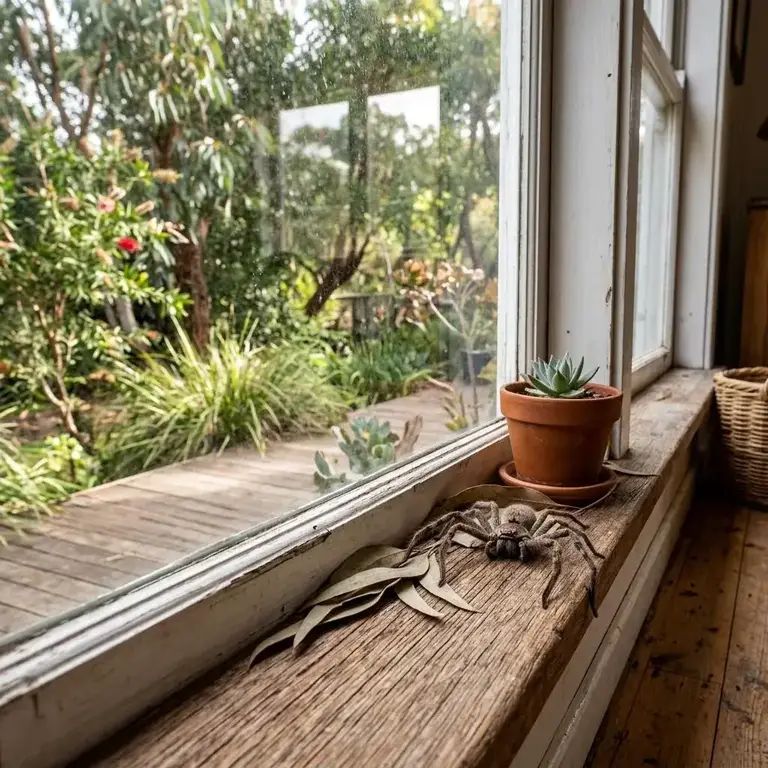
Spot a tiny spider on the windowsill that turns to look back at you before hopping away? You’ve almost certainly met a jumping spider — one of the most common and most harmless spiders found in Australian homes. From Brisbane’s Queenslanders to Melbourne’s brick veneer suburbs, these compact hunters patrol sunny walls and glass doors right across the country, and they’re far more friend than foe.
A jumping spider is a small, active daytime predator from the family Salticidae that hunts prey by sight and pounces rather than catching it in a web. Australia is home to more than 400 species, and none pose a medical threat to humans. That said, not every spider in your home is a harmless jumper — and knowing the difference matters. If you’re ever unsure what you’re looking at, our Spider Control & Removal team can identify and treat problem species quickly.
- Australia has more than 400 jumping spider species; none are medically dangerous to people or pets.
- They’re active daytime hunters that eat flies, mosquitoes, moths and other spiders — free, natural pest control.
- Bites are extremely rare, defensive only, and usually milder than a bee sting.
- Sightings peak in spring and summer, especially December to February, and track local insect activity.
- If spider numbers climb or you’re finding genuinely dangerous species instead, a licensed treatment is the reliable fix.
Why Jumping Spiders Thrive in Australian Homes
Jumping spiders thrive here because Australia’s warm climate and sun-drenched housing styles give them exactly what they need: light, warmth and a steady supply of insects. Unlike web-builders that lurk in dark corners, salticids are cold-dependent daytime hunters, so they concentrate where sunshine and prey overlap.
Our housing stock plays a big role. Elevated Queenslanders with wraparound verandahs and open windows offer endless sunny hunting ledges. Brick veneer homes across Sydney, Melbourne and Perth have external walls that warm quickly in the morning sun, drawing insects and the spiders that chase them. Even slab-on-ground homes with big north-facing glass doors create perfect hunting territory along window tracks and door frames.
Long, hot summers in Queensland and northern Western Australia keep activity high for much of the year, while southern states see a clear spring–summer peak and a quiet winter. Either way, if insects are getting inside — and in Australia, they always do — jumping spiders will follow.
How to Identify a Jumping Spider: Warning Signs and Key Features
The clearest sign of a jumping spider is a small, stocky spider that moves in short hops, turns to “watch” you, and never builds a snare web. If a tiny spider on your wall tracks movement and leaps several times its own body length, it’s almost certainly a salticid rather than anything dangerous.
- Size: Body length usually 4–12 mm — small and compact, never large or long-legged.
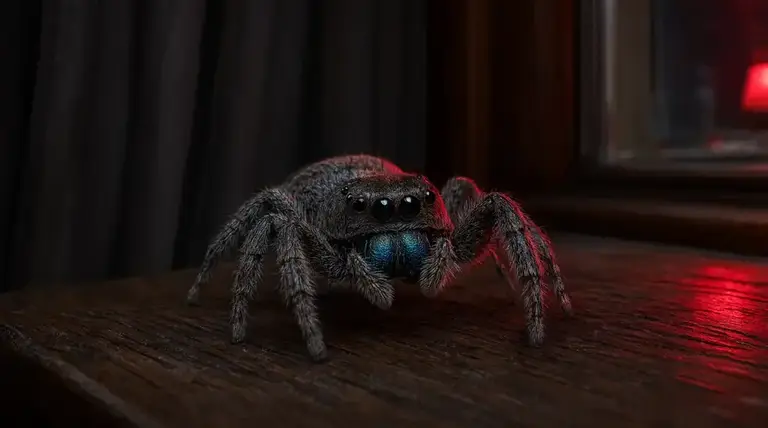
- Eyes: Two huge forward-facing eyes in a row of eight, giving them remarkable vision and that famous “curious stare”.
- Legs: Short, stocky legs built for pouncing, not the long running legs of a huntsman.
- Colour: Often boldly patterned; the northern green jumping spider (Mopsus mormon) is one of Australia’s largest and most striking at up to 18 mm.
- Silk: No webs — only a small silk retreat behind picture frames or in window tracks, plus a safety drag-line while hunting.
- Timing: Active during the day, especially on bright, warm mornings on sunlit walls and windowsills.
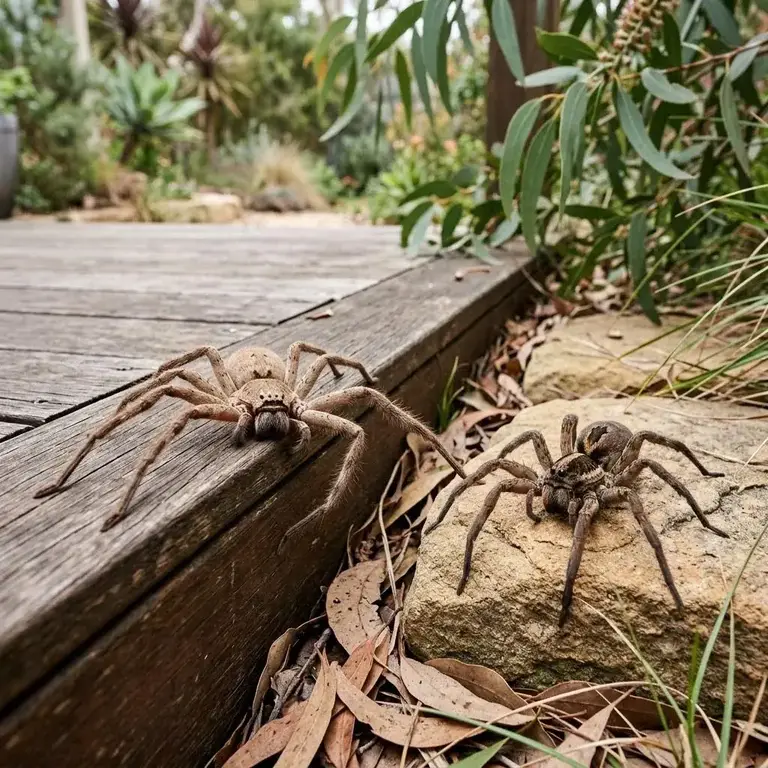
If instead you’re seeing large flattened spiders scuttling at night, check our guide on Huntsman Spiders: Dangerous or Harmless Housemates?. And if you spot a glossy black spider with a red stripe or a stocky dark spider in a messy ground web, read our pages on the Redback Spider: Identification, Bites and Safe Removal and Funnel-Web Spider: Identification, Danger and Control — those two genuinely warrant caution.
DIY vs Professional Spider Management
For jumping spiders alone, DIY is almost always enough — they’re solitary, territorial and never reach the crowded populations that web-building spiders produce. Professional pest control becomes worthwhile when you’re seeing high spider numbers generally, dangerous species, or the underlying insect problem feeding them all.
| Approach | Best for | Limitations |
|---|---|---|
| Catch and release (cup and card) | The odd jumping spider indoors | Does nothing about prey insects attracting more |
| Reduce attractants (warm-white globes, screens, sealing gaps) | Lowering all spider activity naturally | Takes weeks; won’t help with established infestations |
| Supermarket sprays | Quick knockdown of a visible spider | Short residual, easy to over-apply, no ongoing protection |
| Licensed professional treatment | Heavy activity, dangerous species, whole-property protection | Higher upfront cost — but includes inspection and warranty |
Remember: chemical treatments should always be applied by licensed technicians following APVMA-registered label directions. No treatment can be called “100% safe” or “guaranteed”, which is exactly why professional application matters.
What Does Spider Pest Control Cost in Australia?
Across the Australian pest control industry, professional spider treatment typically costs between $150 and $450 AUD for a standard home, depending on property size, construction type and the species involved. Larger homes, subfloor access or combined general pest treatments generally sit toward the higher end of the market range.
| Service | Typical market rate (AUD) | What’s included/notes |
|---|---|---|
| Inspection and identification | Free – $120 | Species ID, harbourage assessment, written quote |
| Targeted spider treatment (unit/townhouse) | $150 – $250 | External perimeter, eaves, window frames, web removal |
| Full home spider treatment (3–4 bed house) | $220 – $350 | Internal and external treatment, roof void and subfloor where accessible |
| Combined general pest + spider package | $280 – $450 | Covers spiders, cockroaches, ants; cuts the prey insects spiders follow |
| Annual maintenance plan | $300 – $550/year | Scheduled visits, service warranty between treatments |
These are typical market rates and they vary by state and property — a high-set Queenslander with a subfloor costs more to treat than a small slab home, so an inspection is the only way to pin down an accurate figure.
Here’s the good news: Aussie Pest Strike typically comes in well under these market rates. For an exact quote tailored to your property, give us a call on [aps_phone] today.
Jumping Spider Seasonal Activity in Australia
Jumping spider activity peaks from late spring through summer and drops sharply over the southern winter. Because these spiders are cold-dependent hunters, warm bright months bring the most sightings, while cool months see them sheltering in their silk retreats.
Jan
Feb
Mar
Apr
May
Jun
Jul
Aug
Sep
Oct
Nov
Dec
Indicative activity pattern for southern and temperate Australia. In northern Queensland and the Top End, activity stays moderate to high year-round, with a wet-season spike as insect numbers boom.
Rising jumping spider numbers in December–February usually signal one thing: plenty of prey. Swap bright white outdoor globes for warm-white or yellow ones to cut the insect swarm around lights, fit flyscreens, and seal gaps around doors and windows. Reduce the food supply and spider activity drops naturally.
In twenty years of treating Australian homes, jumping spiders are the one species I tell people to leave alone — they’re doing free pest control for you. The real issue is when a homeowner thinks they’ve got jumpers and we find redbacks under the outdoor setting instead. If you’re not sure what you’re looking at, get it identified before you assume it’s harmless.
Leave the odd jumping spider be — it’s a beneficial hunter, not a threat. But if spiders of any kind are building up around your home, or you can’t confidently rule out redbacks, funnel-webs or white-tails, book a professional inspection. A targeted treatment now, before the summer peak, is cheaper and easier than dealing with an established problem in January.
Frequently Asked Questions
Are jumping spiders dangerous to humans or pets?
No. Bites are extremely rare and defensive only, and they are usually milder than a bee sting. Jumping spiders are solitary, territorial hunters that avoid contact with humans, so the odd spider indoors is best left alone rather than treated as a threat.
How do I identify a jumping spider in my home?
Look for a small, stocky spider with a body length of 4–12 mm, two large forward-facing eyes among a row of eight, and short legs built for pouncing. It moves in short hops, turns to watch you, is active during the day on sunlit walls and windowsills, and builds no snare web — only a small silk retreat behind picture frames or in window tracks.
Why do I keep seeing jumping spiders around my windows and doors?
Jumping spiders are cold-dependent daytime hunters that concentrate where sunshine and prey overlap. Sunlit external walls, window tracks, glass doors and verandah ledges attract insects, and the spiders follow that food supply. Sightings peak from late spring through summer, especially December to February, so rising numbers usually signal plenty of prey insects getting inside.
What do jumping spiders eat?
Jumping spiders are active daytime predators that hunt by sight and pounce on their prey rather than catching it in a web. They eat flies, mosquitoes, moths and other spiders, which makes them a form of free, natural pest control around Australian homes. Reducing the insect activity around your home will naturally reduce jumping spider numbers as well.
When is jumping spider season in Australia?
In southern and temperate parts of Australia, jumping spider activity peaks from late spring through summer and drops sharply over winter, when they shelter in their silk retreats. In northern Queensland and the Top End, activity stays moderate to high year-round, with a wet-season spike as insect numbers boom. Warm, bright months bring the most sightings.
Can I get rid of jumping spiders myself?
Yes, DIY is almost always enough for jumping spiders because they are solitary and never reach crowded populations. Catch and release with a cup and card handles the odd indoor spider, while reducing attractants helps longer term: swap bright white outdoor globes for warm-white or yellow ones, fit flyscreens, and seal gaps around doors and windows to cut their insect food supply.
Which spiders in my home should I be worried about instead of jumping spiders?
Not every indoor spider is a harmless jumper. A glossy black spider with a red stripe may be a redback, and a stocky dark spider in a messy ground web may be a funnel-web — both genuinely warrant caution. Large flattened spiders scuttling at night are likely huntsmen, which are generally harmless but often mistaken for something worse. Get any uncertain spider identified before assuming it is harmless.
Why does housing style affect how many jumping spiders I see?
Housing design shapes where sunshine and insects overlap. Elevated Queenslanders with wraparound verandahs and open windows offer endless sunny hunting ledges. Even slab homes with big north-facing glass doors create hunting territory along window tracks and door frames.
How can Aussie Pest Strike tell whether I have harmless jumpers or something dangerous?
Homeowners often assume small spiders indoors are jumping spiders, but similar-looking species can include redbacks under outdoor furniture or funnel-webs in ground webs. Aussie Pest Strike technicians inspect and identify the species present before recommending anything, so you know whether you are looking at a beneficial hunter doing free pest control or a genuinely risky spider that warrants targeted treatment.
When should I book a professional inspection instead of leaving jumping spiders alone?
Leave the odd jumping spider be, but book an inspection if spider numbers are building up around your home, if you cannot confidently rule out redbacks, funnel-webs or white-tails, or if an underlying insect problem is feeding them all. Aussie Pest Strike can assess harbourage points and identify species, ideally before the summer peak makes an established problem harder to manage.
Sources & further reading
Found Something
Dangerous?
Don’t touch it. Don’t spray it. Keep kids and pets clear, take a photo from a safe distance, and call us — or book a free inspection and we’ll come to you.
02 7235 0050