Spider EggSacs: Identification andSafe Removal
Spider egg sacs can hatch hundreds of spiders. Learn to identify and safely remove them by species, and when to call a pro. Free inspection available.
Finding a spider egg sac around your home is the clearest sign that spiders aren’t just passing through — they’re breeding on your property. Across Australia, from humid Queenslander verandas to brick veneer garages in Melbourne and Sydney, a single overlooked sac can release dozens to hundreds of spiderlings into your walls, sheds and subfloors within weeks.
A spider egg sac is a silk-wrapped bundle produced by a female spider that can hold anywhere from a dozen to several hundred eggs, depending on the species. Identifying which spider made it tells you whether removal is a quick DIY job or a task best left to a licensed pest control technician — especially when redbacks or funnel-webs are involved.
- A single spider egg sac can contain a dozen to several hundred eggs — early removal stops one spider becoming an infestation.
- Most Australian spiders lay through the warmer months (September to February), so spring is the critical removal window.
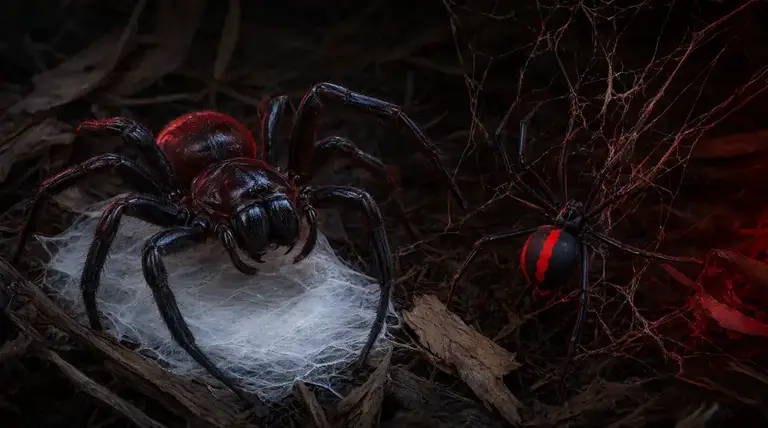
- Redback sacs are round, papery and cream-coloured, often strung in multiples; never handle them bare-handed.
- Vacuuming and sealing the sac is the safest DIY method — never crush a sac against a wall.
- Recurring sacs, roof-void activity or venomous species warrant professional spider treatment.
Why Spider Egg Sacs Matter in Australian Homes
Australia’s long warm season gives spiders an extended breeding window, which means egg sacs appear earlier, hatch faster and keep coming for more months of the year than in cooler climates. Our housing styles make the problem worse: older Queenslanders on stumps offer shaded subfloor voids, brick veneer homes have weep holes and wall cavities, and slab-on-ground builds still leave gaps around garages, eaves and downpipes where sacs accumulate undisturbed.
In practical terms, a sac found in a Brisbane shed in September will likely hatch by mid-spring, while one in a Perth garage or a Sydney alfresco area can go unnoticed until the December–February spider surge. Left alone, a single redback female can seed an entire shed with hundreds of spiderlings in one season, and ballooning hatchlings spread them to neighbouring rooms, fences and gardens. That’s why sac removal is really about population control, not just tidying up a web.
Warning Signs: How to Spot a Spider Egg Sac
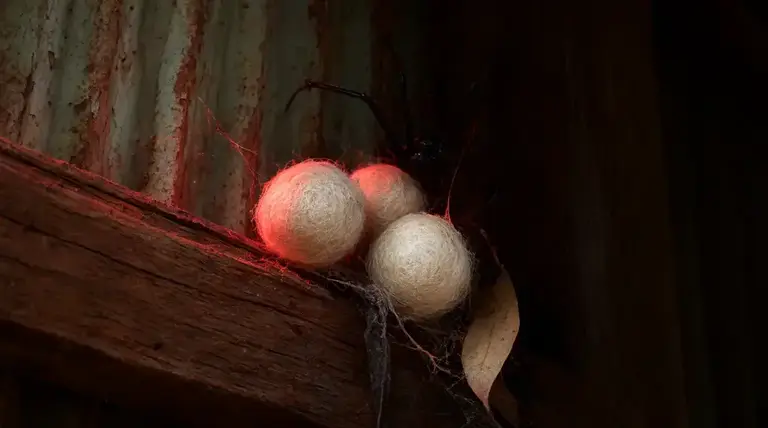
Most sacs are round or teardrop-shaped, cream to tan, and 5–15 mm across, tucked into sheltered, low-traffic spots. Check under eaves, in wall cracks, behind furniture, inside garages and sheds, and among stored boxes, pots and firewood. Use this checklist:
- Round, papery, cream sacs about 10–12 mm, strung in multiples in a messy web — classic redback sign; a female can produce thousands of eggs across her life. See our guide on Redback Spider: Identification, Bites and Safe Removal.
- Greyish, fluffy sacs hidden deep in a funnel-shaped web — black house spider, common around window frames and eaves.
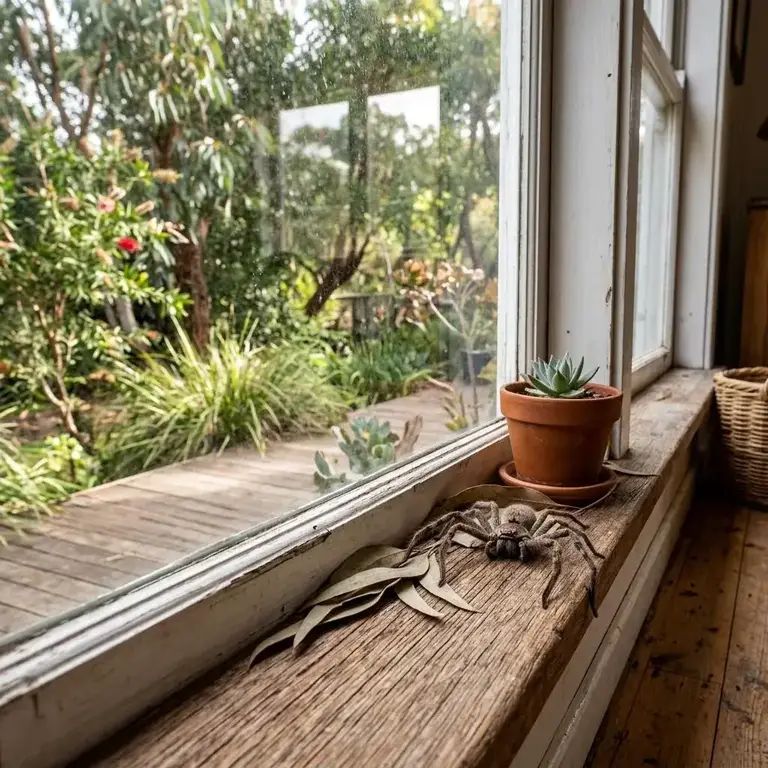
- A flat, white, oval silk disc, sometimes guarded by a large spider — huntsman; the female can be defensive, so approach carefully. Read more in Huntsman Spiders: Dangerous or Harmless Housemates?
- Fluffy golden-brown sacs on fences and foliage — garden orb weavers, generally harmless but prolific.
- Sacs in ground-level burrows or moist, sheltered soil areas in NSW or Queensland — treat these as potentially funnel-web related and keep clear. Our article on Funnel-Web Spider: Identification, Danger and Control explains why.
- Multiple sacs appearing in the same area across consecutive seasons — a sign of an established breeding population needing more than spot removal.
DIY vs Professional Spider Egg Sac Removal
A single sac from a harmless species is a reasonable DIY job: vacuum it up, seal the bag and dispose of it outside. Anything involving redbacks, multiple sacs, wall voids or roof spaces shifts the risk–reward balance firmly toward a licensed pest control technician with the right products and access equipment.
| Factor | DIY Removal | Professional Treatment |
|---|---|---|
| Best for | Single sac, harmless species, easy access | Redbacks, funnel-webs, multiple or recurring sacs |
| Method | Vacuum with nozzle, seal and bin the bag; or scrape into soapy water | Vacuuming plus APVMA-registered residual treatment by a licensed technician |
| Reach | Eye-level webs, garages, outdoor furniture | Roof voids, wall cavities, subfloors, high eaves |
| Lasting effect | Short-term; adults re-lay within weeks | Barrier treatment deters re-nesting for months |
| Safety | Fine with gloves and care; risky near venomous species | Technician assumes the bite risk; products applied to label rates |
Whatever you do, never crush a sac with your bare hand or squash it against a wall — crushing scatters viable eggs and, in some species, releases dozens of live spiderlings at once. Sealing and disposing of the intact sac is always safer and more effective. For a full rundown of the pro approach, see what professional spider treatment involves, and our house spider identification guide if you’re unsure of the species.
How Much Does Spider Egg Sac Removal Cost in Australia?
Across the Australian pest control industry, professional spider treatment typically commands between $180 and $550 depending on service scope, property size and access. The ranges below reflect typical 2025–26 market rates charged by licensed pest control operators across metro and regional areas — they’re industry benchmarks, not any single company’s pricing.
| Service | Typical market rate (AUD) | What’s included/notes |
|---|---|---|
| Inspection and quote | $0–$150 | Species identification, sac location audit, treatment plan; many operators in the market quote free |
| General spider treatment (standard home) | $180–$320 | Web and sac removal plus external residual spray to eaves, windows, fences |
| Targeted redback treatment | $200–$350 | Sheds, garages, outdoor furniture, stored items; multiple sacs treated |
| Roof void / subfloor treatment | $250–$450 | Dusting or misting of inaccessible voids where sacs can’t be reached by hand |
| Annual barrier program | $300–$550/yr | Scheduled seasonal treatments timed to the breeding cycle; best for recurring problems |
Market pricing varies with property size, construction type and spider pressure, so treat these as indicative industry ranges rather than fixed quotes from any particular provider.
It’s worth knowing that Aussie Pest Strike typically comes in well under these market rates while still delivering a thorough, licensed treatment. For an exact quote tailored to your property, give the team a call on [aps_phone].
Seasonal Spider Egg Sac Activity in Australia
Egg sac activity peaks from late spring through summer, with December and January the busiest months nationwide. Most Australian house and garden spiders lay through the warm months, and eggs incubate for roughly two to four weeks depending on temperature — so removing sacs in August and September, before the summer surge, delivers the biggest reduction for the least effort.
Jan
Feb
Mar
Apr
May
Jun
Jul
Aug
Sep
Oct
Nov
Dec
Typical spider egg sac activity across Australia: sacs build from September, peak over December–February as hatching accelerates, then taper off through autumn and winter. Northern regions see a longer, flatter season.
Newly hatched spiderlings often disperse by “ballooning” — releasing a strand of silk that catches the breeze and carries them many metres to new sites. That’s why clearing one corner of the garage doesn’t stop spiders appearing elsewhere, and why pairing sac removal with gap sealing and a residual treatment matters. Our guide to spider-proofing your home covers the exclusion side in detail.
Every sac we vacuum out of a shed in August is a couple of hundred spiders the homeowner never has to deal with in January. The mistake we see most is people squashing sacs against the wall — all that does is scatter the next generation across the room. Remove it whole, seal it, bin it, and treat the area so they don’t come back.
Remove any accessible spider egg sac from harmless species yourself in early spring using the vacuum-and-seal method. If you find redback sacs, multiple sacs, or anything in roof voids, subfloors or wall cavities, book a professional treatment — a licensed technician can remove the sacs safely and apply a residual barrier that stops re-nesting through the summer peak.
Frequently Asked Questions
What does a spider egg sac look like?
Most spider egg sacs are round or teardrop-shaped, cream to tan in colour, and roughly 5–15 mm across. They are silk-wrapped bundles produced by a female spider and can hold anywhere from a dozen to several hundred eggs depending on the species. You will usually find them tucked into sheltered, low-traffic spots such as under eaves, behind furniture, or inside garages and sheds.
How can I tell if an egg sac belongs to a redback spider?
Redback egg sacs are round, papery and cream-coloured, typically about 10–12 mm across, and are often strung in multiples within a messy web. A single redback female can produce thousands of eggs over her lifetime, so finding several sacs is a serious warning sign. Never handle redback sacs with bare hands — this is a job best left to a licensed pest control technician.
Where do spiders commonly lay their egg sacs around Australian homes?
Common hiding spots include under eaves, in wall cracks, behind furniture, inside garages and sheds, and among stored boxes, pots and firewood. Housing styles influence where sacs accumulate: Queenslanders on stumps offer shaded subfloor voids, brick veneer homes have weep holes and wall cavities, and slab-on-ground builds leave gaps around garages, eaves and downpipes where sacs go undisturbed.
When is the best time to remove spider egg sacs?
Most Australian house and garden spiders lay through the warmer months, from September to February, with activity peaking in December and January. Eggs incubate for roughly two to four weeks depending on temperature. Removing sacs in August and September, before the summer surge, delivers the biggest reduction in spider numbers for the least effort.
How do I safely remove a spider egg sac myself?
For a single sac from a harmless species, vacuum it up using a nozzle attachment, seal the bag securely, and dispose of it outside. Alternatively, scrape the intact sac into soapy water. Never crush a sac against a wall or squash it with your bare hand — crushing scatters viable eggs and can release dozens of live spiderlings at once. Sealing and disposing of the whole sac is always safer.
When should I call a professional instead of removing a spider egg sac myself?
Call a licensed pest control technician if you find redback sacs, funnel-web-related sacs near ground-level burrows, multiple or recurring sacs, or anything located in roof voids, wall cavities or subfloors. These situations carry bite risk or signal an established breeding population that needs more than spot removal. Professionals can remove sacs safely and apply residual treatments that deter re-nesting for months.
Why do new spiders keep appearing after I remove one egg sac?
Newly hatched spiderlings disperse by ballooning — releasing a strand of silk that catches the breeze and carries them many metres to new sites. This means clearing one corner of the garage won't stop spiders appearing elsewhere on the property. Pairing sac removal with gap sealing and a residual treatment is what actually reduces re-nesting through the breeding season.
What do huntsman and black house spider egg sacs look like?
Huntsman sacs are flat, white, oval silk discs, sometimes guarded by a large female who can be defensive, so approach carefully. Black house spider sacs are greyish and fluffy, hidden deep within a funnel-shaped web, and are common around window frames and eaves. Garden orb weavers produce fluffy golden-brown sacs on fences and foliage; they are generally harmless but prolific layers.
What happens during an Aussie Pest Strike inspection for spider egg sacs?
An inspection typically covers species identification and a full audit of where egg sacs are located on your property, including hard-to-reach areas like roof voids, subfloors and wall cavities. The technician assesses whether you are dealing with harmless species or venomous ones such as redbacks, then outlines a treatment plan suited to your home's construction and the level of spider pressure observed.
Should I ask Aussie Pest Strike about a barrier treatment after finding recurring egg sacs?
If sacs keep appearing in the same area across consecutive seasons, that points to an established breeding population rather than a one-off problem. It's worth asking about a scheduled seasonal barrier program timed to the breeding cycle, which combines web and sac removal with residual treatment to eaves, fences and other surfaces to deter re-nesting through the summer peak.
Sources & further reading
Found Something
Dangerous?
Don’t touch it. Don’t spray it. Keep kids and pets clear, take a photo from a safe distance, and call us — or book a free inspection and we’ll come to you.
02 7235 0050