Spiders in Cars: WhyIt Happens andHow to Stop It
Spiders in cars enter through seals and vents chasing insects. Learn why it happens and how to keep spiders out of your car. Free inspection available.
Finding spiders in car interiors is one of the most common pest complaints we hear from drivers across Australia — and the good news is that spiders in your car are almost always sheltering, not nesting. Whether you’re commuting in Sydney, parked under a gum tree in Brisbane or running a work ute in regional Victoria, spiders slip in through door seals, vents and open windows chasing warmth and the insects drawn to your cabin lights. A huntsman appearing on the windscreen at 100 km/h is startling but rarely dangerous, and a few simple habits will keep spiders out of your car for good.
In this guide we’ll cover exactly how spiders get into vehicles, which Australian species you’re most likely to meet behind the wheel, why parked cars are such attractive shelter, and the practical steps — from DIY prevention to professional pest control — that actually work. You’ll also find realistic 2025-26 pricing, a seasonal activity chart and straight answers to the questions drivers ask us most.
- Spiders in cars are sheltering, not nesting — they enter through seals, vents and open windows.
- Huntsmen are the most common car spider and are essentially harmless; redbacks in wheel arches and mirrors are the bigger concern.
- The real danger while driving is the driver’s reaction — always pull over safely before dealing with a spider.
- Simple habits — windows up, park away from foliage, vacuum regularly — prevent most problems.
- Recurring spiders usually mean a nearby nest in your garage or garden; professional spider control treats the source.
Why Spiders in Car Problems Are So Common Across Australia
Spiders in car cabins are common in Australia because our climate keeps spiders active for most of the year, and our outdoor lifestyle — street parking, caravans, boats and utes — gives them endless opportunities to climb aboard. From humid Queensland summers to cool southern winters, Australian conditions suit spiders almost year-round.
Australian housing patterns make it worse. Many homes — whether brick veneer in the suburbs, a high-set Queenslander or a house on a concrete slab — have gardens, shrubs and trees planted right against driveways and carports. Foliage overhanging a parked car acts as a bridge, letting spiders and the insects they hunt drop or climb aboard overnight. Cars stored in cluttered garages face the same issue, because shelves, boxes and stored timber are prime spider habitat, and your vehicle is simply the warmest, driest hidey-hole in the room.
Vehicles that sit unused are the highest risk. A second car, a caravan, a boat trailer or a work ute left over a long weekend gives a spider time to build a web undisturbed — and undisturbed webs are exactly what redbacks favour.
How Spiders Get Into Your Car
Spiders get into cars through small gaps — perished door seals, air vents, the cabin intake at the base of the windscreen — or by hitching a ride on gear you load in. Understanding the entry routes is the first step to keeping them out.
Cars offer everything a spider wants: shelter from weather, tight hiding spots behind trims and under seats, and a steady supply of insects trapped inside the cabin or drawn to lights at night. A parked car heats up and cools down through the day, creating warm, dry pockets that spiders find ideal.
Common Entry Points
- Door and window seals, especially on older vehicles with perished rubber.
- Air vents and the cabin air intake near the base of the windscreen.
- Open windows and doors while parked, particularly under trees or near garden beds.
- Hitchhiking on bags, firewood, camping gear and shopping.
Warning Signs You Have Spiders in Your Car
The clearest warning signs of spiders in your car are fresh webbing in exterior crevices, silken egg sacs in hidden corners, and repeated sightings after you’ve already removed one spider. Run through this checklist regularly — especially if the car sits unused or parks near garden beds.
- Fine webbing in wheel arches, side mirrors or around the tow bar — the classic redback signature on vehicles that sit still.
- Silky white egg sacs tucked under seats, in door pockets, the boot or behind sun visors.
- A large, flat, fast-moving spider darting across the dash when the cabin warms up — almost always a huntsman.
- Heavy insect activity inside the cabin — moths, flies and mozzies are the food source drawing spiders in.
- Repeat appearances within days of removing a spider, which points to a nest nearby in your garage, carport or garden rather than a one-off hitchhiker.
Which Spiders Turn Up in Cars — and Are They Dangerous While Driving?
The huntsman is the classic Australian car spider and is essentially harmless; redbacks are the genuine concern, favouring undisturbed exterior spots like wheel arches and side mirrors. While driving, the spider itself is far less dangerous than a panicked reaction to it.
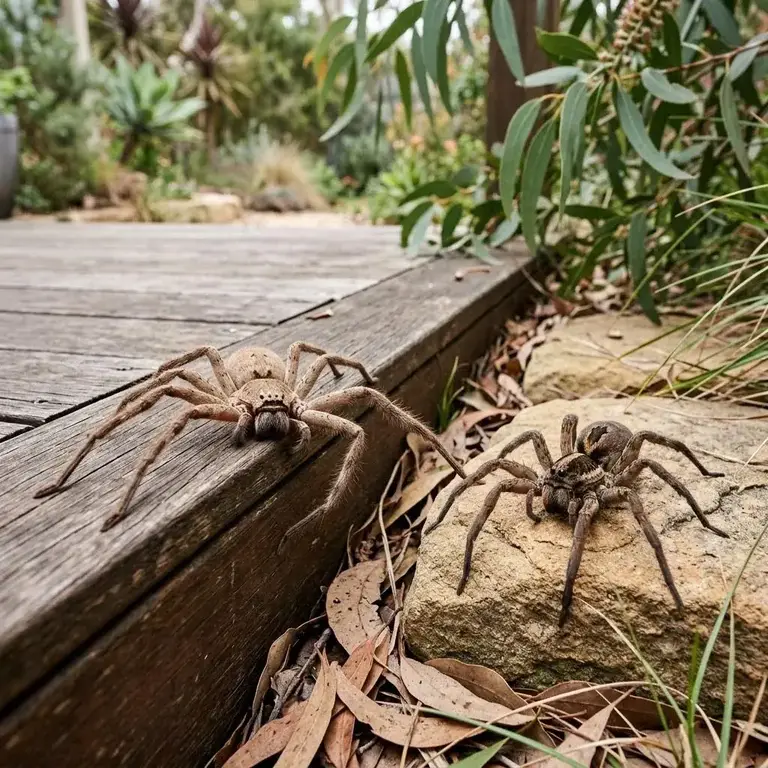
Huntsmen are fast and flat-bodied, squeezing behind sun visors and door trims, then bolting across the dash when the cabin warms up. Alarming, yes — but huntsman bites are rare and cause only minor local pain, as our guide to Huntsman Spiders: Dangerous or Harmless Housemates? explains. Redbacks are a bigger worry because they lurk where hands go — wheel arches, tow bars, mirror housings — so check these spots if the car has sat unused. Our Redback Spider: Identification, Bites and Safe Removal page covers identification and what to do if bitten. In eastern Australia, be aware of funnel-webs around garden beds and garages near bushland; see our Funnel-Web Spider: Identification, Danger and Control guide for details.
Australian road-safety messaging is clear: if a spider appears while driving, keep your eyes on the road, indicate, and pull over safely before dealing with it. Swerving or flapping at a huntsman causes far more harm than the spider ever could, and panic-braking on a highway is genuinely dangerous. Slow gradually, stop somewhere safe, then open the doors and deal with it calmly.
DIY Prevention vs Professional Pest Control
Most spider-in-car problems can be handled yourself with good habits, but recurring spiders — especially redbacks — usually mean a nest in your garage or garden that needs professional pest control to treat the source. Here’s how the two approaches compare.
| DIY approach | Professional approach |
|---|---|
| Keep windows up, park away from trees and garden beds | Inspection of garage, carport and surrounding garden to locate nests |
| Vacuum interior, boot and door pockets to remove egg sacs | Licensed application of APVMA-registered treatments to harbourage areas |
| Park in full sun with doors open to flush spiders out | Targeted treatment of eaves, fences, sheds and clutter zones feeding the problem |
| Replace perished door seals and remove food scraps | Ongoing prevention plan and follow-up if spiders return |
A word of caution: resist the urge to fumigate the cabin with an aerosol. The residue lingers in an enclosed space you breathe in, and it rarely reaches the crevices where spiders actually hide. Park in full sun with the doors open for an hour, then vacuum thoroughly — under the seats, the boot and the door pockets where egg sacs collect. Chemical treatments around your property should always be handled by a licensed technician, and our Spider Control & Removal service is built exactly for that. The same prevention thinking applies to your home — our spider-proofing guide shows how, and what professional spider treatment involves walks through the process.
What Does Spider Pest Control Cost in Australia? (2025-26)
Across the Australian pest control industry, professional spider treatment generally sits between $150 and $450 depending on property size, the species involved and whether a one-off treatment or an ongoing plan is needed. The figures below are typical market rates charged by Australian operators in 2025-26 — not a quote from any single company. What you’ll actually pay depends on your home and the severity of the problem.
| Service | Typical market rate (AUD) | What’s included/notes |
|---|---|---|
| Inspection and quote | Free – $90 | Assessment of garage, garden and entry points; often free with treatment |
| Standard exterior spider treatment | $150 – $280 | Eaves, fences, carport, garage perimeter and web removal |
| Redback/funnel-web targeted treatment | $220 – $450 | Direct treatment of harbourages, subfloor or garden nest sites |
| Annual pest control plan | $350 – $600/yr | Scheduled treatments covering spiders and general pests |
Here’s the good news: Aussie Pest Strike typically comes in well under these market rates, so there’s a strong chance your treatment will cost less than the figures above. For an exact quote tailored to your property, give the team a call on [aps_phone].
Seasonal Spider Activity in Australian Vehicles
Spider activity in and around vehicles peaks from late spring through autumn, when warmth and insect numbers are highest, and dips during the cooler southern winter months. Northern Australia sees strong activity almost year-round due to the milder climate.
Jan
Feb
Mar
Apr
May
Jun
Jul
Aug
Sep
Oct
Nov
Dec
Indicative spider activity around Australian vehicles by month. Activity peaks in December-February when heat and insects are abundant, and troughs in June-July in southern states. Tropical regions remain moderate to high all year.
Nine times out of ten, when a customer keeps finding spiders in their car, the car isn’t the problem — the garage or the hedge beside the driveway is. Treat the source and the car takes care of itself. And whatever you do, don’t spray aerosol around a cabin you’re going to sit in and breathe.
Start with the free fixes: windows up, park away from foliage, vacuum weekly and check wheel arches and mirrors on any vehicle that sits unused. If spiders keep coming back — or you spot redback webbing anywhere near where hands or kids go — book a licensed technician for a targeted treatment of your garage, carport and garden. Treating the source once is cheaper and safer than chasing spiders around your dash for months.
Frequently Asked Questions
How do spiders get into cars?
Spiders enter cars through small gaps such as perished door and window seals, air vents, the cabin air intake at the base of the windscreen, or open windows while parked. They also hitchhike on bags, firewood, camping gear and shopping. Once inside, they shelter in tight spots behind trims and under seats, drawn by warmth and the insects trapped in the cabin.
Why are spiders attracted to parked cars?
A parked car offers everything a spider wants: shelter from weather, warm dry pockets as the cabin heats and cools through the day, tight hiding places, and a supply of insects inside the cabin or drawn to lights at night. Cars that sit unused for long periods are highest risk, because spiders have time to build undisturbed webs — exactly what redbacks favour.
What are the warning signs of spiders in my car?
Look for fine webbing in wheel arches, side mirrors or around the tow bar (the classic redback signature), silky white egg sacs under seats, in door pockets, the boot or behind sun visors, a large flat spider darting across the dash when the cabin warms up, heavy insect activity inside the cabin, and repeat sightings within days of removing a spider.
Which spiders are most likely to be found in Australian cars?
Huntsmen are the classic car spider — fast, flat-bodied and essentially harmless, though their bites can cause minor local pain. Redbacks are the genuine concern, lurking where hands go: wheel arches, tow bars and mirror housings. In eastern Australia near bushland, funnel-webs may also turn up around garden beds and garages, so identification matters before handling anything.
What should I do if a spider appears while I'm driving?
Keep your eyes on the road, indicate, and pull over safely before dealing with it. Slow gradually rather than panic-braking, stop somewhere safe, then open the doors and deal with the spider calmly. Swerving or flapping at a huntsman causes far more harm than the spider itself ever could, so resist the urge to react suddenly at speed.
How can I prevent spiders from getting into my car?
Keep windows up, park away from trees and garden beds, vacuum the interior, boot and door pockets regularly to remove egg sacs, replace perished door seals, and remove food scraps that attract insects. Parking in full sun with doors open for an hour can flush spiders out. Avoid fumigating the cabin with aerosols, as residue lingers in an enclosed space you breathe.
When should I call a professional about spiders in my car?
Recurring spiders usually mean a nest nearby in your garage, carport or garden rather than one-off hitchhikers. A professional will inspect those areas to locate nests, apply licensed APVMA-registered treatments to harbourage areas such as eaves, fences, sheds and clutter zones, and set up an ongoing prevention plan with follow-up if spiders return.
When is spider activity around vehicles highest?
Spider activity in and around vehicles peaks from late spring through autumn, when warmth and insect numbers are highest, and dips during cooler southern winter months. Northern Australia sees strong activity almost year-round due to its milder climate. If your car sits unused during peak season, check wheel arches, mirrors and tow bars before reaching into them.
Can Aussie Pest Strike help me tell whether it's spiders or another pest in my car?
Yes. Insect activity inside a cabin can point to several pests, and egg sacs or webbing can be mistaken for other signs. Aussie Pest Strike technicians can inspect your vehicle's surroundings — garage, carport and garden — identify which species is actually present, and distinguish a spider problem from other insect issues before recommending targeted treatment of the source.
What happens during an Aussie Pest Strike inspection for recurring car spiders?
If spiders keep appearing in your vehicle, an Aussie Pest Strike technician will assess your garage, carport and surrounding garden to locate the nests feeding the problem, then treat harbourage areas such as eaves, fences, sheds and clutter zones. You'll receive a clear explanation of what was found, the treatment approach, and practical prevention steps to keep spiders out of your car.
Sources & further reading
Found Something
Dangerous?
Don’t touch it. Don’t spray it. Keep kids and pets clear, take a photo from a safe distance, and call us — or book a free inspection and we’ll come to you.
02 7235 0050