Midges vsMosquitoes: What’s ActuallyBiting You?
Midges vs mosquitoes: learn to tell the bites apart, where each breeds and how to protect your family. Book a free Aussie Pest Strike assessment today.
If you’re being bitten at dusk near the coast or a creek and the bites are tiny, intensely itchy and arriving in clusters, you’re almost certainly dealing with biting midges rather than mosquitoes. Searches for “midges australia” spike every summer across the country — from Brisbane and the Gold Coast to Darwin and Perth’s estuary suburbs — because these insects are a genuine nationwide nuisance, not just a tropical one.
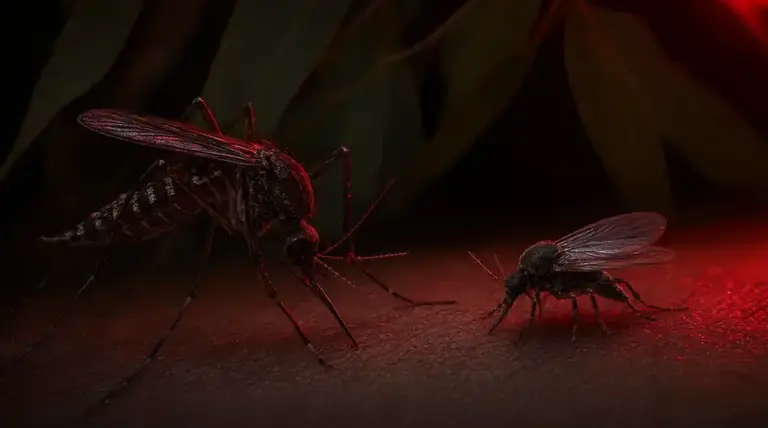
Midges vs mosquitoes is a comparison worth understanding properly: biting midges are a fraction of the size of mosquitoes, bite in swarms and pass through standard flyscreens, while mosquitoes are larger, hum audibly and leave more spaced-out welts. In plain terms, biting midges (Culicoides species) are 1–3 mm blood-feeding flies that breed in tidal mud and moist organic matter, whereas mosquitoes are 3–6 mm flies that breed in standing fresh water. Knowing which one is biting you changes everything about how you fight back — and whether you need professional pest control at all.
- Biting midges are 1–3 mm, silent, and bite in clusters at dawn and dusk; mosquitoes are 3–6 mm, hum audibly and leave individual welts.
- Midges breed in tidal mud, mangroves and rotting seaweed — draining containers around your home won’t touch them.
- Mosquitoes breed in any standing water, so source reduction works; midges require fine 0.6 mm mesh screening and avoidance strategies.
- Midgies are mostly a nuisance, while mosquitoes carry the real disease risk, including Ross River virus.
- Professional pest control starts from around $150–$350 for a residential mosquito and midge treatment, depending on block size and severity.
Why Midges Australia-Wide Are a Bigger Problem Than You Think
Midges matter across Australia because our climate and housing styles give them ideal conditions almost everywhere. Coastal suburbs from the Gold Coast to Darwin cop the worst of them, particularly on still, humid evenings within a kilometre of estuaries, mangroves and tidal creeks.
Australian housing makes the problem worse in specific ways. Classic Queenslanders with wide verandas are built for outdoor living exactly when midges are most active. Brick veneer homes on concrete slabs often sit on low-lying coastal blocks near tidal zones, and older homes with subfloor ventilation can trap the damp conditions both pests favour. Add a long, humid wet season in the north and warm summers down south, and biting pressure extends across most of the calendar year in many regions. Mosquitoes compound the issue — our guide to mosquito control for your backyard explains why suburban blocks provide so much breeding habitat.
Telling the Bites Apart: Warning Signs Checklist
The pattern, timing and location of your bites is the most reliable way to identify the culprit. Run through this checklist before spending a cent on treatment.
- Bite size and pattern: clusters of many tiny, intensely itchy bites at once point to midges; individual, spaced-out welts point to mosquitoes.
- Time of day: bitten in the two hours around dawn or dusk on a still, low-wind evening? Likely midges. Bitten from dusk into the night? More likely mosquitoes.
- Sound: an audible hum before the bite means mosquito; midges are silent — you feel the bite before you ever see the insect.
- Location: bites near tidal mudflats, mangroves, estuaries or damp sand suggest midges; bites anywhere near standing fresh water suggest mosquitoes.
- Insect size: if the insect is barely visible (1–3 mm, the “no-see-um”), it’s a midge; a visible 3–6 mm insect with long legs and an obvious proboscis is a mosquito.
- Screen penetration: bites occurring indoors despite standard flyscreens strongly indicate midges, which pass through 1 mm mesh with ease.
DIY vs Professional Midges Australia Treatment
DIY works well for personal protection and screening, but it has hard limits — especially against midges, which breed in tidal zones outside your property. Professional pest control adds barrier treatments, correct identification and commercial-grade application that off-the-shelf products can’t match.
| Approach | Best for | Limitations |
|---|---|---|
| DIY repellents (DEET or picaridin) | Personal protection against both pests | Needs frequent reapplication against midges; doesn’t reduce populations |
| DIY source reduction (draining containers) | Container-breeding mosquitoes | Does nothing for midges breeding in tidal mud a street away |
| Fine 0.6 mm midge-proof mesh | Keeping midges out of coastal homes | Upfront installation cost; pointless if mosquitoes are the real problem |
| Professional barrier treatment | Suppressing adult mosquitoes in shaded vegetation | Limited effect on midges drifting in from tidal zones |
| Professional identification and plan | Anyone unsure which pest they have | Costs more than guessing, but avoids wasted effort |
The practical takeaway: for midges, your best DIY defence is fine screening on doors and windows, a fan on the deck (weak-flying midges can’t handle a gentle breeze), light-coloured loose long sleeves at dusk, and timing outdoor events for the middle of the day. For mosquitoes, work through our complete standing water breeding checklist and consider a professional mosquito and midge control treatment for stubborn infestations.
What Does Midge and Mosquito Treatment Cost in Australia?
Across the Australian market, homeowners generally pay between $150 and $550 for professional midge or mosquito work in 2025-26, depending on block size, pest pressure and whether screening upgrades are needed. The figures below are typical industry rates charged by pest control operators nationally — they’re a guide to the market, not a quote from any one company.
| Service | Typical market rate (AUD) | What’s included/notes |
|---|---|---|
| Inspection and pest identification | $0–$150 | Often free with treatment; confirms midge vs mosquito |
| Residential mosquito barrier treatment | $150–$350 | Treatment of shaded vegetation and resting sites; lasts weeks |
| Large acreage or severe infestation | $350–$550+ | Bigger blocks, repeat visits or combined treatments |
| Fine midge-proof mesh supply and install | $250–$800+ | Per home, varies with number of doors and windows |
| Seasonal treatment program | $400–$900/year | Scheduled visits through peak season for coastal properties |
Whichever operator you choose, chemical treatments should always be applied by a licensed technician using APVMA-registered products — no reputable operator will claim any treatment is 100% safe or guaranteed, and you should be wary of anyone who does.
It’s worth knowing that Aussie Pest Strike typically comes in well under these typical market rates, without cutting corners on licensing or product quality. For an exact quote tailored to your property, give the team a call on [aps_phone].
Seasonal Activity: When Midges and Mosquitoes Peak in Australia
Biting pressure peaks in the warmer, wetter months from roughly October to April, with the worst conditions on still, humid evenings after rain or high tides. Southern states see a shorter, sharper summer season, while northern Australia deals with activity nearly year-round.
Jan
Feb
Mar
Apr
May
Jun
Jul
Aug
Sep
Oct
Nov
Dec
Indicative national activity pattern for biting midges and mosquitoes in Australia. Pressure peaks through the humid summer months and dips in winter, though tropical northern regions remain active most of the year.
This seasonal pattern matters for your health too. While midges are mostly a nuisance and don’t transmit the human diseases mosquitoes do, mosquitoes carry genuine risks — our article on Ross River virus and what Australian families should know covers the symptoms and prevention in detail. Heavy scratching of midge bites can also lead to secondary infection, so don’t dismiss them entirely. For a state-by-state breakdown, see our mosquito season by state guide.
The most common mistake we see on coastal jobs is homeowners spending weeks draining containers for midges that are actually breeding in tidal mud a street away. Once you know which insect you’re dealing with, the right strategy is obvious — fine mesh and avoidance for midges, source reduction and barrier treatment for mosquitoes. A proper identification up front saves people a lot of money and frustration.
First, identify the pest using the checklist above. If it’s midges, invest in 0.6 mm midge-proof mesh, use DEET or picaridin repellent, run fans on outdoor areas and avoid dawn and dusk exposure near estuaries. If it’s mosquitoes, eliminate standing water and book a professional barrier treatment through a licensed pest control technician. Unsure? Book an inspection before spending money on the wrong fix.
Frequently Asked Questions
How can I tell if midges or mosquitoes are biting me?
Look at the bite pattern, timing and location. Clusters of many tiny, intensely itchy bites at once point to midges, while individual, spaced-out welts point to mosquitoes. Bites in the two hours around dawn or dusk on still evenings suggest midges; bites from dusk into the night suggest mosquitoes. Bites near tidal mudflats or mangroves indicate midges, whereas bites near standing fresh water indicate mosquitoes.
What is the size difference between biting midges and mosquitoes?
Biting midges (Culicoides species) are tiny blood-feeding flies measuring just 1–3 mm — so small they are often called no-see-ums, and you usually feel the bite before you ever see the insect. Mosquitoes are larger at 3–6 mm, with long legs and an obvious proboscis, and they often announce themselves with an audible hum before biting.
Can midges get through standard flyscreens?
Yes. Biting midges are small enough to pass through standard 1 mm flyscreen mesh with ease, which is why bites occurring indoors despite screens strongly indicate midges rather than mosquitoes. To keep them out of coastal homes, fine 0.6 mm midge-proof mesh is recommended for doors and windows. Standard screening is generally adequate against larger mosquitoes but will not stop midges.
Where do midges breed compared with mosquitoes?
Biting midges breed in tidal mud, mangroves and rotting seaweed in coastal and estuarine zones, as well as moist organic matter. Mosquitoes breed in any standing fresh water, such as containers around the yard. This distinction matters because draining containers around your home helps control mosquitoes but does nothing for midges breeding in tidal mud a street away from your property.
Do midges carry diseases like mosquitoes do?
Midges are mostly a nuisance and do not transmit the human diseases that mosquitoes do. Mosquitoes carry genuine health risks in Australia, including Ross River virus. That said, midge bites should not be dismissed entirely, because heavy scratching can lead to secondary infection. Correct identification of which insect is biting you helps you focus on the right prevention strategy.
When are midges and mosquitoes most active in Australia?
Biting pressure peaks in the warmer, wetter months from roughly October to April, with the worst conditions on still, humid evenings after rain or high tides. Southern states experience a shorter, sharper summer season, while northern Australia deals with activity nearly year-round. Midges bite mainly in the two hours around dawn and dusk on low-wind evenings.
What DIY methods work against midges?
For personal protection, use repellents containing DEET or picaridin, though these need frequent reapplication against midges. Around the home, install fine 0.6 mm midge-proof mesh on doors and windows, run fans on decks because weak-flying midges cannot handle a gentle breeze, wear light-coloured loose long sleeves at dusk, and time outdoor events for the middle of the day. Draining containers will not help against midges.
Why is professional treatment limited against midges?
Professional barrier treatments work well for suppressing adult mosquitoes resting in shaded vegetation, but their effect on midges is limited because midges drift in from tidal breeding zones outside your property. This is why correct identification matters first: midges call for fine mesh screening and avoidance strategies, while mosquitoes respond to source reduction combined with barrier treatments applied by a licensed technician.
What should I discuss with an Aussie Pest Strike technician about midges versus mosquitoes?
A technician can help confirm whether you are dealing with midges or mosquitoes before you spend money on the wrong fix. Useful points to discuss include where and when your bites occur, whether insects have been seen indoors through screens, conditions on your block such as proximity to estuaries or standing water, and which combination of fine mesh screening, source reduction or barrier treatment suits your situation.
What is a practical next step if I am unsure whether midges or mosquitoes are biting me?
Start by working through the identification checklist: note the bite pattern, time of day, location and whether you heard humming before bites. If the answer remains unclear, arrange a professional inspection before investing in mesh upgrades or barrier treatments. Aussie Pest Strike offers inspection and pest identification, which confirms what you are dealing with so your money goes towards the right strategy.
Sources & further reading
Found Something
Dangerous?
Don’t touch it. Don’t spray it. Keep kids and pets clear, take a photo from a safe distance, and call us — or book a free inspection and we’ll come to you.
02 7235 0050