Pool AreaPests: Mosquitoes, Waspsand More
Pool area pest control — pool pests are the mosquitoes, wasps, ants and cockroaches drawn to the warm, humid, water-rich microclimate around a backyard...
Pool pests are the mosquitoes, wasps, ants and cockroaches drawn to the warm, humid, water-rich microclimate around a backyard swimming pool — and in Australia they peak hard between December and February. The fastest way to cut numbers is to dump stagnant water around the surrounds, keep filtration running, and remove food and shelter that attract stingers. Break the backyard triangle of water, warmth and tucker, and the problem drops fast.
Here’s the good news: your pool itself is rarely the breeding site. Chlorinated, moving water is hostile to mosquito larvae. The real trouble sits in the fringe — pot plant saucers, pump pit sumps, folded covers and blocked overflow drains. This guide walks through each pest group, what it actually costs to treat them with professional pest control in 2025-26, and a practical seasonal plan that works whether you’re in a brick veneer in Melbourne, a Queenslander in Brisbane or a slab-on-ground home in Perth.
- Mosquitoes breed in still water around the pool — saucers, buckets, sagging covers — not in chlorinated pool water itself.
- European wasps are the highest-risk poolside pest in summer; never disturb a nest yourself.
- Weekly source reduction (draining covers, emptying saucers, clearing skimmer boxes) prevents most infestations.
- Professional treatment for poolside pests typically runs $150-$450 AUD depending on the pest and property size.
- December to February is peak season Australia-wide; book treatments in late spring for best results.
Why Pool Pests Matter Across Australia (the “o” Factor: Water, Warmth, Food)
Pool areas attract pests because three factors converge poolside: standing water in the surrounds, radiant warmth from paving, and a steady supply of insects that other pests feed on. In summer, evaporation and splash-out create damp perimeters that hold moisture for days — ideal breeding and drinking conditions.
Australia’s climate amplifies the problem. In Queensland and northern NSW, humid subtropical summers mean mosquitoes stay active nearly year-round, while in southern states like Victoria and South Australia, intense heatwaves above 35°C drive wasps to pools in large numbers to drink. Housing style matters too: older Queenslanders on stumps often have damp subfloor areas near the pool zone, brick veneer homes weep moisture through cavity vents, and slab homes channel irrigation runoff along paving edges. Wherever you live, the pool surrounds act as a pest magnet — and the “o” combination of moisture, heat and food scraps is what keeps them coming back.
Mosquitoes
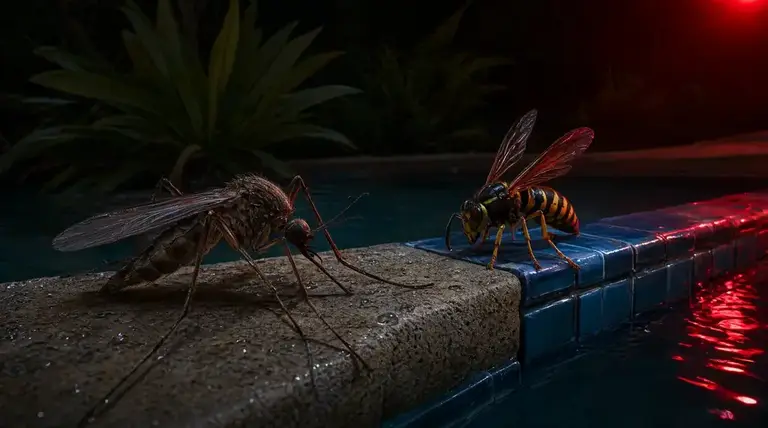
Container-breeding species such as Aedes notoscriptus can complete their lifecycle in 7-10 days in water as shallow as a bottle cap. They ignore the chlorinated pool and target saucers, uncovered buckets and pooled rainwater on covers. A single sagging cover holding 2-3cm of rainwater can produce hundreds of adults. Check blocked gutters near the pool area too — they’re a commonly missed breeding ground.
Wasps and Bees
Paper wasps and European wasps (Vespula germanica) come to pools to drink, especially in heatwaves. European wasps are the higher risk — they scavenge aggressively around food and can sting repeatedly. Learn to identify them before attempting any nest work; misidentification is how people get swarmed.
Ants and Cockroaches
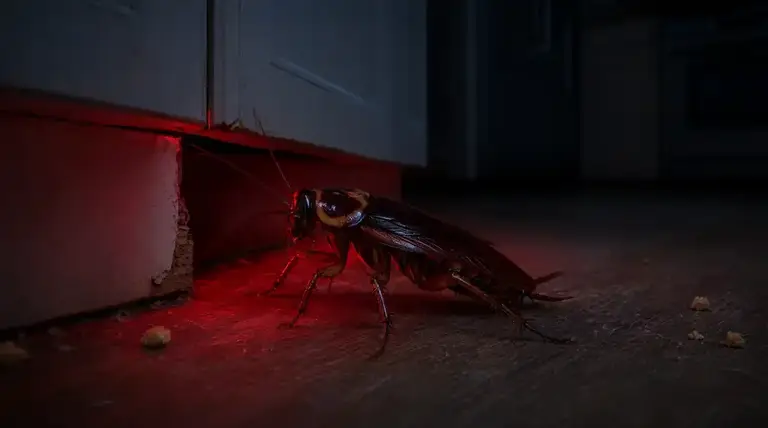
Ants trail toward spilled soft drink and sunscreen residue on pool furniture, while cockroaches shelter in warm pump housings and skimmer boxes overnight. Both signal a hygiene or harbourage issue in the surrounds, not a problem with the pool itself.
Warning Signs You Have a Pool Area Pest Problem
The clearest warning sign is seeing adult mosquitoes or wasps repeatedly in the same spots around your pool — that means a breeding site or nest is within metres, not kilometres. Work through this checklist weekly during summer.
- Mosquitoes active at dusk around the pool fence — a container breeding site is nearby, usually within 50-100 metres of where you’re being bitten.
- Wriggling larvae in saucers, buckets or cover puddles — tip the water out immediately; the lifecycle completes in 7-10 days.
- Wasps hovering at the waterline or on damp paving — they’ve marked your pool as a drinking station, and a nest is likely within 100-200 metres.
- Ant trails crossing pool paving toward furniture — sugary residue from drinks and sunscreen is feeding them; follow the trail to find the nest.
- Cockroach droppings or egg cases in the pump housing or skimmer box — warm, dark equipment cavities are prime overnight harbourage.
- Paper wasp nests under fence rails, eaves or pool furniture — small grey umbrella-shaped combs mean an active colony you should not spray yourself.
DIY vs Professional Pool Pest Control
Source reduction and hygiene are genuinely effective DIY tasks — you can solve most mosquito and ant pressure yourself. Chemical treatments, wasp nest removal and recurring infestations belong with a licensed technician who uses APVMA-registered products applied correctly around water features.
| Task | DIY | Professional |
|---|---|---|
| Draining covers, emptying saucers | Yes — weekly, free | Not needed |
| Mosquito barrier treatment | Limited — repellents only | Yes — residual treatment of resting surfaces |
| Wasp nest removal | No — high sting risk | Yes — licensed removal, especially European wasps |
| Ant nest treatment | Baits can work if placed correctly | Yes — for recurring or multiple nests |
| Cockroach treatment (pump housing) | Gel baits, with care near equipment | Yes — targeted dusting and baiting |
What Pool Area Pest Control Costs in Australia (2025-26)
Across the Australian market, professional pest control around a pool area generally sits between $150 and $450 AUD for a standard residential treatment, with wasp nest removal at the lower end and combined summer programs at the higher end. Industry rates vary with property size, pest species and access.
| Service | Typical cost (AUD) | What’s included/notes |
|---|---|---|
| Wasp nest removal (single nest) | $150-$280 | Nest treatment and removal; European wasp nests may cost more |
| Mosquito barrier treatment | $200-$350 | Residual spray on foliage, fences and resting surfaces; lasts 4-8 weeks |
| Ant treatment (external) | $180-$300 | Nest location, baiting and perimeter treatment |
| Cockroach treatment | $200-$350 | Gel baits, dusting of harbourages including pump housings |
| Combined summer pool-area program | $350-$450 | Multi-pest treatment plus follow-up visit; best value for Dec-Feb |
If you’re preparing a property for sale or a new tenant, pest condition around outdoor entertaining areas is increasingly scrutinised — our Moving House? The Pest Checklist Nobody Gives You covers what to check before handover. Renters with a pool should also know that persistent pest problems can be a landlord responsibility; see Pest Control in Rentals: Your Rights as a Tenant and the companion guide on Landlord Pest Control Obligations in Australia.
Worth noting: the figures above reflect typical Australian market rates, and Aussie Pest Strike typically comes in well under these. For an exact quote on your property, give us a call on [aps_phone].
Seasonal Activity: When Pool Pests Peak
Pool area pest activity peaks from December to February across most of Australia, builds through spring, and drops sharply in winter in southern states. In tropical north Queensland, expect the “high” months to stretch across most of the wet season.
Jan
Feb
Mar
Apr
May
Jun
Jul
Aug
Sep
Oct
Nov
Dec
Indicative pool area pest activity across southern and eastern Australia. Mosquitoes and wasps peak Dec-Feb, taper through autumn, and rebuild from September. Northern regions see elevated activity year-round, aligned to the wet season.
Nine times out of ten, when we get called to a “mosquito problem at the pool”, the pool is innocent. The breeding site is a sagging cover, a sump pit or a row of pot plant saucers ten metres away. Fix the fringe and you fix the problem — chemicals are the back-up, not the first move.
Run the filtration pump daily, drain pool covers weekly, empty saucers or fill them with sand, keep bins lidded and trim vegetation 30cm back from the pool fence. If wasps or mosquitoes persist after two weeks of source reduction — or you’ve found a nest — book a licensed technician. Treatments near water need the right products and application methods, and a combined summer program booked in November gives the best protection through the Dec-Feb peak.
Pool Area Pests: Frequently Asked Questions
Are mosquitoes and other pool pests breeding in my swimming pool?
No — a properly chlorinated, circulating pool will not support mosquito larvae. They breed in the still water around it, such as pot plant saucers, buckets and rainwater pooled on sagging covers. Target those sources instead of the pool, and keep the pump running daily so surface water keeps moving.
How do I keep wasps away from my pool?
Remove their water and food sources: cover drinks, use lidded bins, clean up food scraps quickly and never leave sugary spills on pool furniture. During heatwaves, wasps drink at the waterline, so reduce splash-out puddles where possible. If a nest is nearby, have it professionally removed rather than disturbing it yourself.
Why are there ants all over my pool paving?
Warm paving and sugary residue from spilled drinks and sunscreen draw ants to trail across pool surrounds. Rinse the paving, store food indoors and address the nest source rather than spraying the trails, which only kills the workers you can see. Persistent trails usually mean a nest in nearby garden beds or paving joints.
Battling mosquitoes, wasps or ants around your pool this summer? Aussie Pest Strike provides licensed pest control across Australia, with every job backed by a free on-site inspection. Call Aussie Pest Strike on [aps_phone] to book your inspection today and reclaim the pool area before the December peak hits.
Sources & further reading
Found Something
Dangerous?
Don’t touch it. Don’t spray it. Keep kids and pets clear, take a photo from a safe distance, and call us — or book a free inspection and we’ll come to you.
02 7235 0050