Laundry Pests:Silverfish, Spiders andMoisture Lovers
Laundry pests silverfish — laundry pests are the moisture-loving insects and spiders that gather in the warm, humid conditions of an Australian laundry...
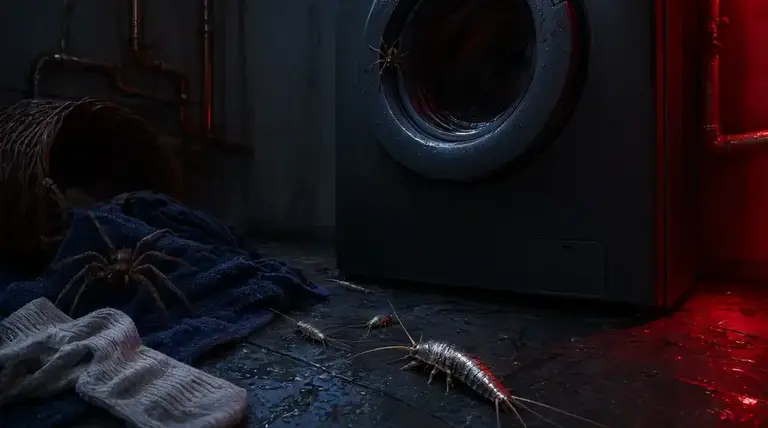
Laundry pests are the moisture-loving insects and spiders that gather in the warm, humid conditions of an Australian laundry — chiefly silverfish, black house spiders, cockroaches and the occasional slater. If you’ve spotted a silvery shape darting behind the washing machine or webs thickening in the corner above the trough, you’re looking at a room that has become a pest habitat, and the fix comes down to one thing: managing humidity and eliminating the damp harbourage behind machines and under tubs.
The laundry combines everything pests want — warmth from appliances, water from taps and hoses, dark cavities, and cellulose in cardboard boxes and stored linen. This guide breaks down exactly who moves in, why they chose your laundry, what it costs to deal with them, and a treatment sequence that actually lasts. Whether you’re in a Brisbane Queenslander, a Perth brick veneer or a Melbourne unit with an internal European laundry, the biology is the same.
- Silverfish, spiders, cockroaches and slaters all gather in laundries for one reason — moisture. Fix the damp and you fix the pest problem.
- Silverfish thrive at 75–95% relative humidity; populations collapse once you hold a room below roughly 50%.
- German cockroaches sheltering in washing machine motor housings can seed an entire house within months.
- DIY moisture control handles most cases; persistent infestations need a licensed crack-and-crevice treatment (typically $180–$350 AUD).
- December to February is peak laundry pest season across most of Australia — ventilate hard through summer.
Why Laundry Pests Thrive in a Humid Australian Home
Australian laundries are pest hotspots because our climate and housing stock create exactly the warm, damp, undisturbed conditions these species need. In a typical home, the laundry is the wettest room after the bathroom — and often the least ventilated.
Consider the housing context. Older Queenslanders and weatherboard homes on stumps have subfloor voids where a slow hose drip keeps the soil humid year-round, letting slaters and cockroaches migrate straight up through floor waste drains. Post-war brick veneer homes often have laundries tacked onto the back with a single external door and a 5–10mm gap under the threshold — an open door for anything that crawls. Modern slab-on-ground homes and apartments hide laundries in internal cupboards with no window at all, so humidity from every wash cycle has nowhere to go. In coastal cities such as Perth, Brisbane and the Gold Coast, where ambient humidity is naturally high, mechanical ventilation in the laundry is usually essential rather than optional.
Add warmth — a washing machine motor housing sits comfortably around 30°C — plus food in the form of cardboard, linen starch and wallpaper paste, and you have a complete ecosystem. That’s why laundry pest control always starts with the environment, not the spray can.
Who Lives in Your Laundry
Four groups account for almost every laundry pest callout in Australia: silverfish, spiders, cockroaches and slaters. Each tells you something specific about the moisture conditions in the room.
Silverfish (Lepisma saccharina) are the signature laundry pest. These 12–19mm wingless insects thrive at 75–95% humidity and feed on the starch in linen, cardboard and wallpaper paste. They can live 2–8 years and survive weeks without food, so they persist quietly long after you think you’ve dealt with them. The same humidity-driven biology covered in our guides to silverfish in the bathroom and broader bathroom pest control applies directly to laundries.
Spiders — mostly black house spiders and daddy long-legs — colonise the dark corners behind machines, feeding on the smaller insects the moisture attracts. Most are harmless, but identify what you’re dealing with using our house spider identification guide before reaching into undisturbed voids.
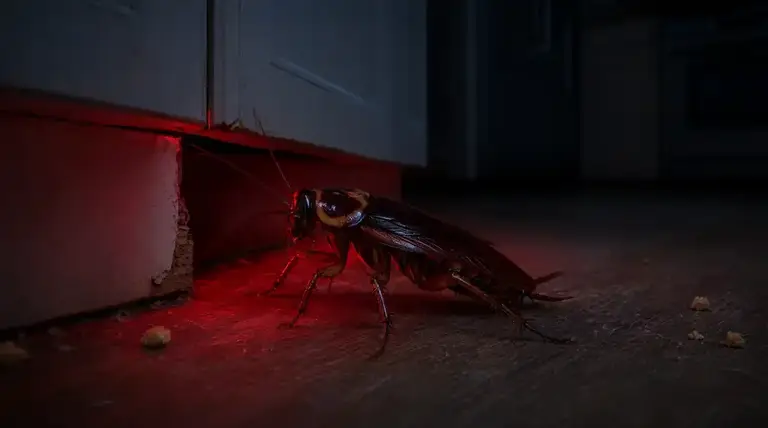
Cockroaches and slaters round out the list. German cockroaches shelter in the warm motor housing of washing machines, while slaters (woodlice) creep in under damp door thresholds. German cockroaches breed rapidly — a single female can produce 300–400 offspring in her lifetime — so an appliance harbourage in the laundry can quietly seed the whole house within months if left unchecked.
Warning Signs You Have a Laundry Pest Problem
The clearest signs of laundry pests are physical evidence near appliances, storage and drains — most infestations announce themselves well before you see a live insect. Work through this checklist:
- Yellow stains or tiny holes in stored linen and clothing — classic silverfish feeding damage on starched fabrics.
- Pepper-like droppings behind the washing machine — silverfish or cockroach faecal spotting along skirtings and wall cavities.
- Irregular notches in cardboard boxes and paper — silverfish rasping the surface for starch and cellulose.
- Webbing thickening in corners and behind the trough — black house spiders building up populations on abundant insect prey.
- A musty smell or visible condensation — the room is sitting above 60% relative humidity, which is pest-magnet territory.
- Slaters along the door threshold after rain — a damp subfloor or leaking connection feeding moisture under the room.
- Cast skins in drawers and cupboards — silverfish moult throughout their long lives, leaving translucent scales behind.
DIY vs Professional Laundry Pest Control
Most laundry pest problems respond well to DIY environmental fixes, because every pest here is driven by dampness — remove the moisture and the food, and populations crash on their own. Reserve professional treatment for infestations that persist after you’ve dried the room out, or for German cockroach activity, which almost always needs licensed intervention.
| Factor | DIY approach | Professional treatment |
|---|---|---|
| Best for | Light silverfish, spiders, slaters driven by humidity | Recurring silverfish, German cockroaches, wall-void harbourage |
| Method | Ventilation, leak repair, decluttering, vacuuming, door sweeps | Targeted residual crack-and-crevice application by a licensed technician |
| Reach | Open surfaces and accessible gaps only | Skirting gaps, wall voids, behind cabinetry, cornice runs |
| Cost | $0–$120 (fans, door sweeps, storage tubs) | $180–$350 typical for a targeted internal treatment |
| Longevity | Permanent if humidity stays below ~50% | Weeks to months of residual protection |
A note on renters and landlords: if a hidden leak or failed waterproofing is driving the infestation, responsibility for repairs and treatment often sits with the property owner. Read up on pest control in rentals and your rights as a tenant, and if you own an investment property, check your landlord pest control obligations in Australia before a minor damp issue becomes a bond dispute.
Laundry Pest Control Costs in Australia (2025–26)
Across the Australian pest control industry, professional laundry pest treatment generally sits between $180 and $600 AUD depending on the pest, the size of the home and whether the problem extends into wall voids or the subfloor. The table below shows typical market rates Australian operators charge for 2025–26.
| Service | Typical market rate (AUD) | What’s included / notes |
|---|---|---|
| Pest inspection (laundry and wet areas) | $120–$250 | Moisture check, harbourage identification, written findings; often credited toward treatment |
| Targeted silverfish / spider treatment | $180–$350 | Crack-and-crevice residual to skirtings, wall voids, cabinetry and cornices |
| German cockroach treatment | $250–$450 | Gel baiting plus residual; usually requires a follow-up visit |
| Whole-of-home general pest spray | $250–$600 | Internal and external treatment; best value when laundry pests have spread |
These figures are general industry benchmarks, and all chemical treatments should be applied by a licensed pest technician using APVMA-registered products, strictly to label directions. No reputable operator will claim any treatment is 100% safe or guaranteed — be wary of anyone who does.
Aussie Pest Strike typically comes in well under these market rates, so it’s worth getting a tailored figure before you commit. Call us on [aps_phone] for an exact quote on your laundry pest problem.
Seasonal Activity: When Laundry Pests Peak in Australia
Laundry pest activity peaks through the humid summer months from December to February and stays elevated into early autumn, before dropping away through the cooler, drier winter. Coastal Queensland and northern NSW see the longest peak; southern states see a sharper winter decline.
Jan
Feb
Mar
Apr
May
Jun
Jul
Aug
Sep
Oct
Nov
Dec
Indicative activity pattern based on typical industry experience: humidity drives a sharp summer peak (Dec–Feb), with activity falling through winter as indoor and ambient humidity drops. Tropical and coastal regions may see elevated activity year-round.
A Simple Treatment Sequence
Work through four steps in order — dry out, declutter, vacuum, then treat — because each step makes the next one effective. Skipping straight to sprays without fixing the moisture is the single most common reason laundry pests return.
- 1. Dry out. Install an exhaust fan or leave a window ajar during and after washing. Check tap connections and machine hoses for slow drips, and run a dehumidifier in enclosed internal laundries through December to February.
- 2. Declutter. Swap cardboard storage boxes for sealed plastic tubs and remove stacked paper — this eliminates the silverfish food supply.
- 3. Vacuum. Pull the machine out quarterly, vacuum behind and under appliances, and wipe the wall cavity. This lifts eggs, webs and droppings.
- 4. Treat. For persistent activity, a licensed technician applies targeted residual product into skirting gaps, behind cabinetry and along cornices — the exact runs silverfish use at night — giving weeks of protection that surface sprays can’t match.
Also fit a brush-style door sweep to the external laundry door and keep the floor waste drain clear with its trap topped up, so it doesn’t become a pest highway. The pay-off is quick: silverfish populations decline sharply once relative humidity drops below about 50%, because the eggs simply fail to develop. If you’re relocating, fold these checks into your move — our moving house pest checklist shows you exactly what to inspect before the boxes arrive.
Nine times out of ten, a laundry with silverfish has a leak or a ventilation problem behind it. I can treat the room, but unless that moisture is sorted the insects will be back within a season. Pull the machine out, find the damp, and half the job is done before we even open the kit.
Start with moisture: ventilate the room, fix any leaks, remove cardboard and fit a door sweep — this resolves most silverfish, spider and slater problems within weeks at minimal cost. If pests persist after the room is dry, or you see German cockroaches around appliances, book a licensed technician for a targeted crack-and-crevice treatment. Don’t spray around washing machines and dryers yourself; get it done properly.
Frequently Asked Questions
Why do laundry pests gather in the laundry rather than other rooms?
The laundry combines everything moisture-loving pests need: warmth from appliance motors, water from taps, hoses and drains, dark undisturbed cavities behind machines and under tubs, and food such as cardboard, linen starch and wallpaper paste. It is often the wettest room after the bathroom and frequently the least ventilated, so humidity builds with every wash cycle and creates a complete pest habitat.
Which pests are most commonly found in Australian laundries?
Four groups account for almost every laundry pest callout: silverfish, spiders (mostly black house spiders and daddy long-legs), cockroaches — particularly German cockroaches sheltering in washing machine motor housings — and slaters, which creep in under damp door thresholds. Each species signals something about the room's moisture conditions, and all of them are drawn by the same underlying dampness.
What conditions do silverfish need to thrive in a laundry?
Silverfish thrive at 75–95% relative humidity and feed on the starch in linen, cardboard and wallpaper paste. They are wingless insects measuring 12–19mm, can live 2–8 years, and survive weeks without food, which means they persist quietly long after you think the problem is dealt with. Populations collapse once you hold the room below roughly 50% relative humidity.
What warning signs indicate a laundry pest problem?
Look for yellow stains or tiny holes in stored linen, pepper-like droppings behind the washing machine, irregular notches in cardboard boxes, webbing thickening in corners and behind the trough, slaters along the door threshold after rain, cast skins in drawers and cupboards, and any musty smell or visible condensation suggesting the room sits above 60% relative humidity.
Can I fix a laundry pest problem myself?
Most laundry pest problems respond well to DIY environmental fixes because every pest involved is driven by dampness. Ventilation, leak repair, decluttering, vacuuming and door sweeps address open surfaces and accessible gaps, typically costing little beyond fans, sweeps and storage tubs. If populations persist after you have dried the room out, or if German cockroaches are present, professional treatment is usually needed.
When should I call a licensed pest technician for my laundry?
Call a licensed technician for infestations that persist after you have dried out and decluttered the room, for German cockroach activity, which almost always needs licensed intervention, or when harbourage extends into wall voids, skirting gaps, cabinetry or cornice runs that DIY methods cannot reach. Technicians apply targeted residual crack-and-crevice treatments using APVMA-registered products strictly to label directions.
How do I get rid of laundry pests permanently?
Work through four steps in order: dry out, declutter, vacuum, then treat. Fixing the moisture first makes every later step effective, while spraying without addressing humidity fails because the habitat remains attractive. If you keep relative humidity below roughly 50%, silverfish populations collapse and the results of environmental fixes can be permanent; residual treatments then add weeks to months of protection.
When is laundry pest season in Australia?
Laundry pest activity peaks through the humid summer months from December to February and stays elevated into early autumn before dropping away through cooler, drier winter. Coastal Queensland and northern NSW experience the longest peak, southern states see a sharper winter decline, and tropical or coastal regions may see elevated activity year-round. Ventilate hard through summer.
Can Aussie Pest Strike confirm they treat laundry pests like silverfish and German cockroaches in my area?
Aussie Pest Strike deals with the full range of laundry pests covered in this guide, including silverfish, black house spiders, German cockroaches and slaters. Because treatment approaches differ depending on whether the problem is humidity-driven silverfish or an appliance harbourage of German cockroaches, it is worth contacting them directly to check availability in your area and discuss your specific situation.
Should I get an inspection before booking laundry pest treatment with Aussie Pest Strike?
Yes. A laundry and wet-area inspection identifies the moisture source, locates harbourages behind machines, under tubs and in wall voids, and provides written findings that shape the right treatment sequence. Aussie Pest Strike can assess whether your problem needs simple environmental fixes or targeted crack-and-crevice treatment, and inspection findings are often credited toward any subsequent treatment you book.
Sources & further reading
Found Something
Dangerous?
Don’t touch it. Don’t spray it. Keep kids and pets clear, take a photo from a safe distance, and call us — or book a free inspection and we’ll come to you.
02 7235 0050