Smoky BrownCockroaches: TheOutdoor Invader
Smoky brown cockroaches — the smoky brown cockroach ( Periplaneta fuliginosa ) is a large, uniformly dark mahogany-brown species, 25 38 mm long, that lives...
Smoky brown cockroaches are one of the most common large roaches Australian homeowners encounter, especially through the warmer months when they fly in from the garden on humid nights. The smoky brown cockroach (Periplaneta fuliginosa) is a large, uniformly dark mahogany-brown species, 25–38 mm long, that lives outdoors and flies readily toward lights — and that single habit explains most of the “mystery” cockroach sightings reported across Queensland, northern NSW and other warm parts of the country.
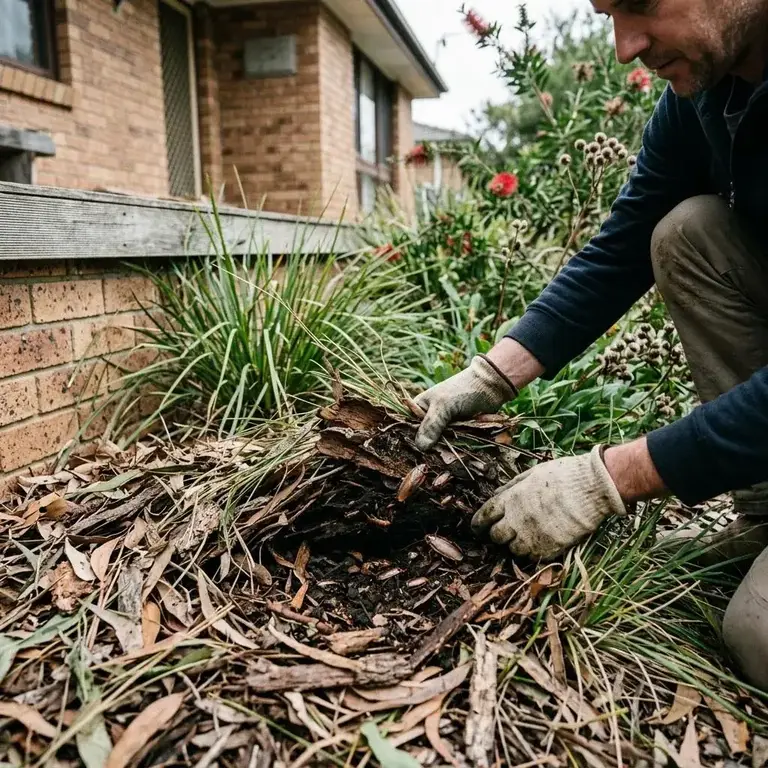
Unlike the German cockroach, which breeds inside kitchens and bathrooms, the smoky brown is a peridomestic invader: it breeds outdoors in mulch, leaf litter, tree hollows, roof voids and gutters, then wanders or flies inside attracted by light and moisture. Understanding that difference is the key to controlling it, because treating the kitchen alone will never fix a problem that starts in the garden. This guide covers identification, behaviour, warning signs, DIY versus professional pest control, realistic Australian costs for 2025-26, and the seasonal patterns that drive smoky brown activity.
- Smoky brown cockroaches are outdoor breeders that enter homes at night, drawn by light and moisture — they rarely nest indoors.
- They dehydrate quickly, so damp harbourage such as blocked gutters, heavy mulch and roof-void debris sustains them.
- Exterior treatment, moisture control and light management outperform indoor spraying for this species.
- Peak activity runs from late spring through summer (November to February) in most of Australia.
- Professional perimeter and roof-void treatments typically cost $180–$450 AUD depending on property size and access.
Why Smoky Brown Cockroaches Matter in Australia
Smoky brown cockroaches matter because Australian climate and housing give them ideal conditions: warm, humid summers, leafy suburbs and roof voids that stay damp for months. They are a common night-time visitor to Queensland and northern NSW homes, but they also turn up across coastal NSW, Victoria’s milder regions and anywhere irrigation keeps gardens moist through summer.
Housing style plays a big role. Elevated Queenslanders with open subfloors, older brick-veneer homes with weep holes, and slab-on-ground houses with heavy garden beds hard against the walls all offer harbourage within metres of the back door. Properties backing onto bushland, or blocks with mature trees, dense mulched garden beds and irrigated lawns, will almost always see more smoky brown activity than dry, open blocks — simply because the outdoor harbourage is richer. Roof voids accessed via overhanging branches are a particular favourite, which is why so many infestations are first noticed when a roach drops out of a downlight or appears in an upstairs bathroom.
It’s also worth knowing what you’re dealing with before you act. Smoky browns are frequently confused with the American cockroach, another large peridomestic species common in Australian drains and subfloors. Correct identification matters because harbourage and treatment differ between species.
How to Identify the Smoky Brown Cockroach
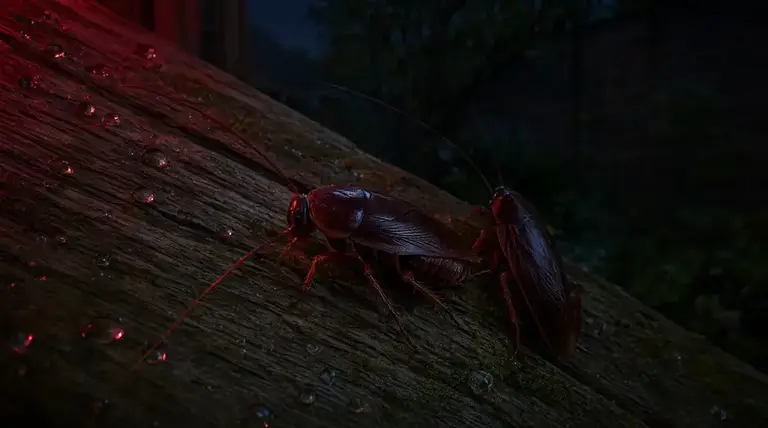
The standout feature of the smoky brown cockroach is its even, glossy, dark mahogany colour — there are no pale markings anywhere on the body. Adults measure 25–38 mm, the wings extend well past the tip of the abdomen, and it is a confident, strong flier, which immediately separates it from non-flying household species.
How it compares with the other large roaches you’re likely to see in Australia:
| Species | Length | Distinguishing mark |
|---|---|---|
| Smoky brown | 25–38 mm | Uniform dark mahogany, no markings |
| Australian | 30–35 mm | Yellow thorax bands and wing streaks |
| American | 35–40 mm | Pale yellowish figure-8 on head |
Nymphs look quite different from adults — they are dark with distinctive pale bands across the body — so don’t assume a small banded roach is a different species. A female produces a dark egg case (ootheca) containing around 20 eggs and hides it in bark, mulch or roof-void debris. Nymphs take several months to reach adulthood in warm conditions, and because breeding happens outdoors, a handful of roaches seen inside can point to a much larger population living in your gutters, garden beds or a neighbouring tree hollow.
Warning Signs of Smoky Brown Cockroach Activity
The clearest warning sign is large dark roaches appearing at night near windows, doors or light fittings, particularly after warm, humid evenings. Because this species lives outdoors, the signs often show up around the exterior and roofline before you ever see one in the kitchen.
- Night-time fliers at windows and doors — roaches landing on flyscreens or flying straight in when a door opens after dark.
- Roaches dropping from downlights or ceiling vents — a strong indicator of activity in the roof void above.
- Droppings in the roof void, garage or along external walls — small dark pellets near harbourage areas.
- Dark egg cases in mulch, bark or stored timber — check garden beds against the house and any stacked firewood.
- Damp, blocked gutters with leaf build-up — prime smoky brown harbourage right above your living areas.
- Roaches in bathrooms and laundries overnight — they follow moisture, so wet areas are where visitors end up.
If several of these apply, it’s worth working through the full list of 7 signs of a cockroach infestation you shouldn’t ignore to gauge how established the problem is. And if the roaches you’re seeing are small, tan and clustered in the kitchen rather than large and dark, you may be dealing with a different issue entirely — our guide to German cockroach infestations and why they’re so hard to kill explains that species in detail.
DIY vs Professional Treatment
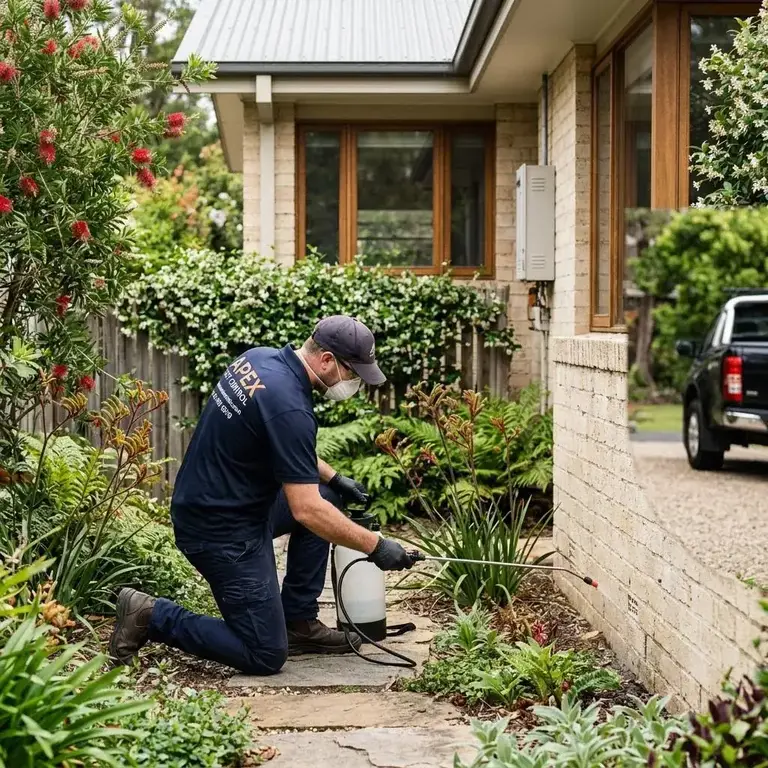
DIY steps genuinely help with smoky brown cockroaches because so much of the problem is environmental — but they rarely eliminate an established outdoor population on their own. The most effective DIY measures target moisture, light and access: clear gutters, trim branches away from the roofline, switch outdoor lighting to warm-white globes, thin out heavy mulch against walls, and seal gaps around eaves, vents, weep holes and plumbing penetrations. These changes reduce night-time visits noticeably. What they can’t do is knock down a breeding population in a tree hollow two doors down, which is where a licensed technician’s perimeter and roof-void treatment earns its keep.
| Factor | DIY approach | Professional treatment |
|---|---|---|
| Best for | Occasional visitors, prevention | Recurring nightly activity, roof-void populations |
| Typical cost | $30–$120 (globes, sealant, gutter clean) | $180–$450 depending on property size |
| Targets the source | Partially — habitat reduction only | Yes — exterior harbourage and entry points treated |
| Roof void access | Difficult and unsafe for most homeowners | Included, with dusts or baits suited to voids |
| Lasting protection | Weeks to months, weather-dependent | Typically 3–12 months with a service warranty |
Any chemical treatment should be carried out by a licensed pest-control technician using APVMA-registered products applied to label directions — particularly in roof voids, subfloors and around water tanks. Our cockroach control and treatment service is built around exactly this exterior-first approach.
Smoky Brown Cockroach Treatment Costs in Australia (2025-26)
Across the Australian pest control industry, a professional smoky brown cockroach treatment typically costs between $180 and $450, with the market rate driven by property size, roof-void access and whether a follow-up visit is included. The ranges below reflect what the industry generally charges in 2025-26; exact quotes vary by region and property.
| Service | Typical market rate (AUD) | What’s included / notes |
|---|---|---|
| General cockroach treatment (unit / small home) | $180–$280 | Internal and external spray, gel baits, entry-point advice |
| Perimeter + roof-void treatment (standard house) | $250–$380 | External barrier spray, roof-void dusting, weep-hole and eave treatment |
| Large home / Queenslander / subfloor access | $320–$450 | Adds subfloor or void treatment, extended perimeter on larger blocks |
| Follow-up / seasonal maintenance visit | $120–$200 | Re-treatment ahead of summer peak, often discounted with a plan |
A word of caution on unusually cheap quotes: exterior treatments need enough product and time to cover the full perimeter, garden beds and roof void. A $99 “spray and go” job that treats only the kitchen misses the point entirely for this species.
It’s worth noting that Aussie Pest Strike typically comes in well under these typical Australian market rates while still delivering the full perimeter, roof-void and baiting treatment this species demands. For an exact quote tailored to your property, give us a call on [aps_phone].
Seasonal Activity: When Smoky Browns Strike
Smoky brown cockroach activity peaks in Australia from November through February, when warm, humid nights drive flight and feeding, and drops to its lowest levels through the southern winter. In Queensland and northern NSW, meaningful activity can persist for most of the year, while southern states see a sharper summer spike.
Jan
Feb
Mar
Apr
May
Jun
Jul
Aug
Sep
Oct
Nov
Dec
Indicative activity pattern for temperate and subtropical Australia. Activity climbs from September, peaks across the Dec–Feb summer when warm humid nights favour flight, and falls away through winter. Northern regions typically run 15–20% higher through the cooler months than the chart shows.
The practical takeaway: book a perimeter treatment in late spring (October–November) and you intercept the population before peak flight season, rather than chasing individual roaches all summer.
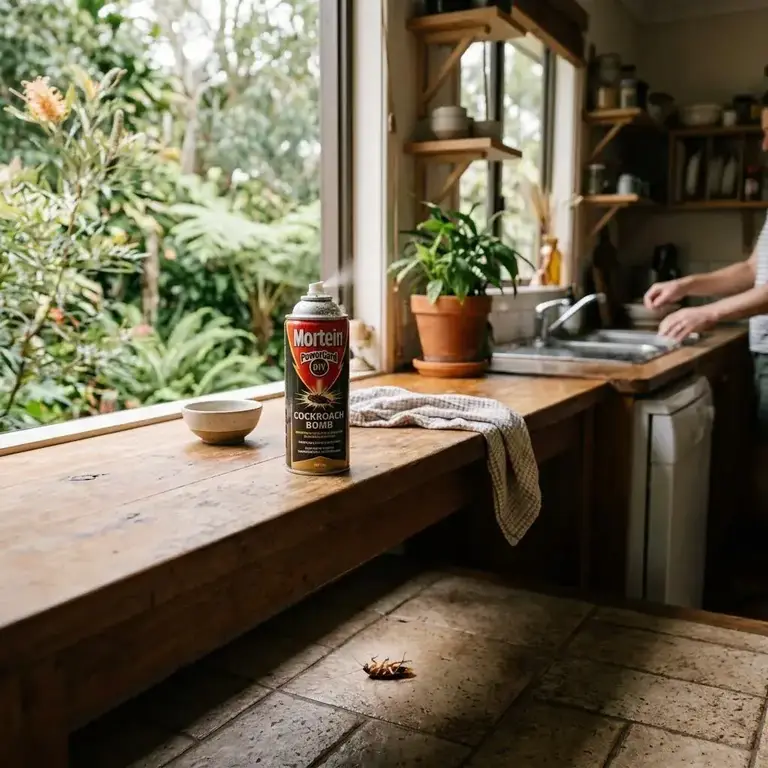
Nine times out of ten, when a customer says cockroaches keep appearing from nowhere at night, it’s smoky browns coming in from the gutters or the mulch bed against the house. Spraying the kitchen does almost nothing for this species — you have to treat the perimeter and the roof void, and get the moisture and lighting sorted, or they’ll just keep flying back in.
If you’re seeing more than the occasional smoky brown cockroach indoors — especially roaches dropping from downlights or appearing most nights through summer — don’t wait for it to settle down on its own. Start with the free fixes (gutters, branches, warm-white globes, sealing gaps), then book a professional exterior and roof-void treatment in spring. That combination targets the outdoor population at its source and is the only approach we’ve seen deliver a full season of relief.
Frequently Asked Questions
How do I identify a smoky brown cockroach?
Smoky brown cockroaches are large, uniformly dark mahogany-brown roaches with no pale markings anywhere on the body. Adults measure 25–38 mm, their wings extend well past the tip of the abdomen, and they are confident, strong fliers. Nymphs look different, being dark with distinctive pale bands across the body, so a small banded roach may still be this species.
Why do smoky brown cockroaches keep flying into my house?
Smoky browns are outdoor breeders that fly readily toward lights on warm, humid nights, which explains most mystery sightings in Queensland and northern NSW homes. They are drawn to light and moisture rather than nesting indoors, so you will often see them at windows, doors or light fittings after humid evenings, especially between November and February when activity peaks.
Where do smoky brown cockroaches breed?
Unlike German cockroaches, which breed inside kitchens and bathrooms, smoky browns are peridomestic invaders that breed outdoors. They favour mulch, leaf litter, tree hollows, roof voids and gutters, then wander or fly inside attracted by light and moisture. A handful of roaches seen indoors can point to a much larger population living in your gutters, garden beds or a neighbouring tree hollow.
What warning signs indicate smoky brown cockroach activity?
Key signs include large dark roaches appearing at night near windows, doors or light fittings; roaches dropping from downlights or ceiling vents, which suggests roof-void activity; small dark droppings in the roof void, garage or along external walls; dark egg cases hidden in mulch, bark or stored timber; damp gutters with leaf build-up; and roaches turning up overnight in bathrooms and laundries where moisture attracts them.
How is the smoky brown cockroach different from the American cockroach?
Both are large peridomestic species common around Australian homes, but they differ in appearance. Smoky browns measure 25–38 mm with uniform dark mahogany colouring and no markings, while American cockroaches are slightly larger at 35–40 mm with a pale yellowish figure-8 marking on the head. Correct identification matters because harbourage locations and treatment approaches differ between the two species.
What DIY steps help reduce smoky brown cockroaches?
Effective DIY measures target moisture, light and access: clear blocked gutters, trim branches away from the roofline, switch outdoor lighting to warm-white globes, thin out heavy mulch against walls, and seal gaps around eaves, vents, weep holes and plumbing penetrations. These changes noticeably reduce night-time visits, but they rarely eliminate an established outdoor breeding population on their own.
Why does indoor spraying fail against smoky brown cockroaches?
Treating the kitchen alone will never fix a problem that starts in the garden. Smoky browns breed outdoors in mulch, tree hollows, roof voids and gutters, so an interior spray misses the source entirely. Exterior treatment, moisture control and light management outperform indoor spraying for this species, because knocking down the outdoor harbourage is what actually reduces the population.
When are smoky brown cockroaches most active in Australia?
Activity peaks from November through February, when warm, humid nights drive flight and feeding, and drops to its lowest levels through the southern winter. In Queensland and northern NSW, meaningful activity can continue for longer due to the warmer climate. Scheduling prevention and treatment ahead of the summer peak gives the best results for most Australian homes.
I have tried the prevention steps in this guide but still see smoky brown cockroaches nightly. How can Aussie Pest Strike help?
If clearing gutters, trimming branches and sealing gaps has not stopped recurring nightly activity, the breeding population is likely established in outdoor harbourage such as tree hollows, heavy mulch or the roof void. Aussie Pest Strike focuses on an exterior-first approach, treating perimeter harbourage, entry points and roof voids rather than just spraying indoors, which suits this species. Contacting them for a quote tailored to your property is a sensible next step.
Can smoky brown cockroaches survive indoors once they get inside my home?
Because treatment costs vary with property size, roof-void access and whether subfloor work is needed, the practical next step is requesting a quote specific to your home. Aussie Pest Strike delivers full perimeter, roof-void and baiting treatments suited to smoky brown cockroaches, and typically comes in under typical Australian market rates. Reaching out before the November-to-February peak allows treatment to be timed ahead of the season.
Sources & further reading
Found Something
Dangerous?
Don’t touch it. Don’t spray it. Keep kids and pets clear, take a photo from a safe distance, and call us — or book a free inspection and we’ll come to you.
02 7235 0050