Bed BugEggs: Identificationand Removal
Bed bug eggs are pearly-white 1 mm ovals cemented in seams and cracks. Learn to identify and remove them, and why they resist sprays. Book a free inspection.
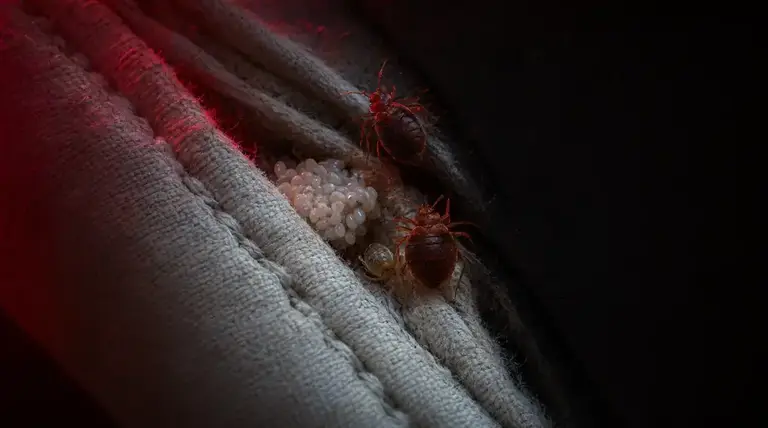
Bed bug eggs are pearly-white, elongated ovals about 1 mm long — roughly the size of a pinhead or a grain of salt — cemented in tight clusters into cracks, seams and crevices near where people sleep. Think “e” for eggs: if you remember one letter when inspecting your bedroom, make it “e”, because finding bed bug eggs is the surest sign you have an active, breeding infestation rather than a single hitchhiker. A female lays one to seven eggs a day, and those eggs are far harder to kill than the adults.
This guide covers how to identify bed bug eggs, where to look for them in Australian homes, why they defeat most DIY sprays, what removal costs in 2025–26, and when to call a licensed technician. Whether you are in a Sydney apartment, a Melbourne brick veneer or a raised Queenslander, the biology is the same — and so is the solution.
- Bed bug eggs are about 1 mm long, pearly white, sticky, and laid in clusters — not scattered or loose like dust.
- Eggs hatch in 6–10 days and their shells resist most residual insecticides, which is why one-off sprays fail.
- Vacuuming and steam at around 100°C physically remove or kill eggs on reachable surfaces, but deep harbourages need professional heat or a timed chemical program.
- Fresh, plump eggs mean a breeding population; empty translucent shells mean some have already hatched.
- Professional bed bug treatment in Australia typically ranges from about $250 for a single room to $1,500+ for whole-home heat treatment (AUD, 2025–26).
Bed Bug Eggs: Why ‘E’ for Early Detection Matters in Australia
Finding eggs early matters because Australia’s warm climate accelerates the bed bug lifecycle, letting populations double quickly inside heated and air-conditioned homes. In most of the country, indoor temperatures sit in the ideal 20–30°C band for Cimex lectularius almost year-round, so eggs hatch faster and generations overlap.
Housing style plays a role too. Older Queenslanders on stumps have timber floors, gaps around skirting and wall linings that give bed bugs endless harbourage close to the bed. Brick veneer homes and modern apartments on concrete slabs have fewer wall voids, but bed heads, ensemble bases and bedside furniture still provide tight crevices. High-density living in Sydney, Melbourne and Brisbane apartment blocks makes spread between units easy — our article on how bed bugs actually spread (and how they don’t) explains the real pathways, from luggage and second-hand furniture to shared laundry rooms.
Domestic and international travel keeps reintroducing bed bugs into Australian homes, and because they are not tied to hygiene, any household can pick them up. The earlier you confirm eggs — remember “e” for eggs, the breeding evidence — the cheaper and simpler treatment is.
Warning signs: how to identify bed bug eggs
Under close inspection, a bed bug egg resembles a miniature grain of rice: white, slightly translucent and curved, with a faint eye spot appearing at one end after about five days. Eggs are laid in batches and glued firmly in place, so they do not brush away like dust. Use this checklist when inspecting:
- Size and colour: About 1 mm long, pearly white and elongated — the size of a pinhead or a grain of salt.
- Clustering: Found in groups stuck together, never scattered singly like lint or crumbs.
- Attachment: Cemented in place with a sticky coating; they resist brushing and stay put when you run a finger over them.
- Company they keep: Usually alongside dark faecal spotting, pale shed skins and live bugs in the same crack or seam.
- Location: Concentrated near the head of the bed, thinning out with distance from where the host sleeps.
- Hatched vs unhatched: Empty shells look translucent and collapsed; live eggs are plump and opaque.
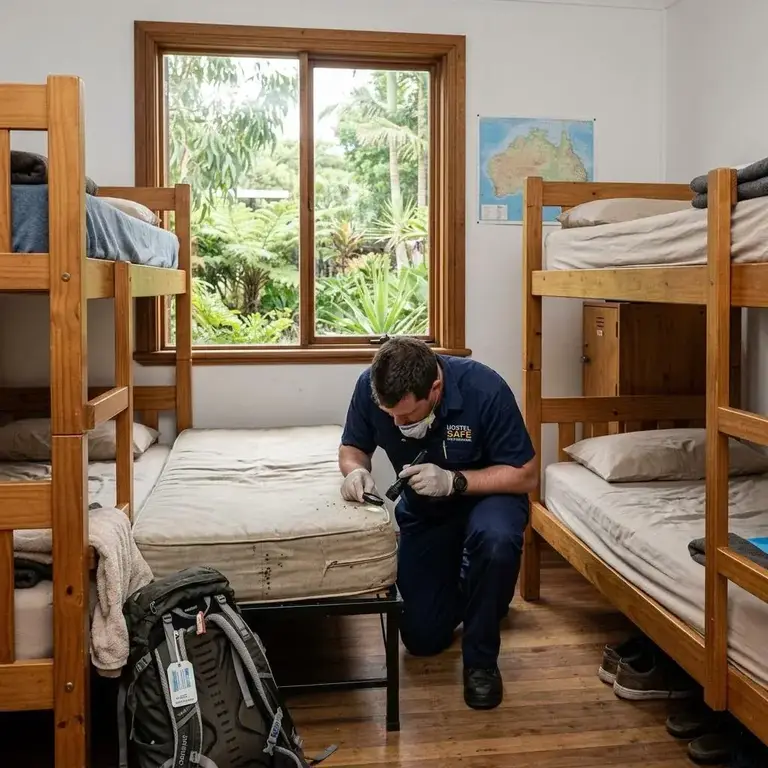
Eggs at 1 mm sit right at the edge of what the naked eye can resolve, so tools help. A bright torch held at a low, raking angle throws shadows that make glossy clusters stand out against fabric, and a magnifying glass or phone camera in macro mode confirms the tell-tale shape. Work methodically from the head of the bed outward, checking mattress seams, piping, tags and tufts, bed frame screw holes and joints, bedside drawer runners, and behind loose wallpaper or cracked skirting.
Don’t confuse eggs with lint, mould specks or rice-shaped dust. The consistent 1 mm size, the sticky attachment and the nearby faecal spotting give them away. If you have also noticed bites, our guide to bed bug bites identification and first steps helps you connect the dots.
DIY vs professional removal of bed bug eggs
DIY methods physically remove reachable eggs, but professional treatment is needed for eggs hidden deep in harbourages because their shells resist most residual insecticides. A quick spray kills adults and nymphs yet leaves eggs to hatch 6–10 days later, restarting the infestation — this is the central problem with DIY pest control for bed bugs.
| Approach | Effect on eggs | Limitations |
|---|---|---|
| Vacuuming with crevice tool | Physically lifts many eggs; bin the sealed bag immediately | Cannot reach deep cracks, wall voids or inside furniture frames |
| Steam (~100°C) | Kills eggs on contact where steam reaches | Poor penetration into thick mattresses and tight joints |
| Off-the-shelf sprays | Unreliable — egg shells resist most insecticides | Eggs hatch after treatment; misuse risks resistance |
| Professional heat treatment | Lethal temperatures throughout the room kill all stages in one visit | Higher upfront cost; no residual protection |
| Professional timed chemical program | Follow-up visits target newly hatched nymphs before they breed | Requires multiple visits over several weeks |
The trade-offs between the two professional options are covered in detail in our comparison of heat vs chemical bed bug treatment. Chemical treatments should only be applied by licensed technicians using APVMA-registered products, in line with label directions.
Bed bug egg and infestation treatment costs in Australia
Across the Australian pest control industry, professional bed bug treatment generally costs between $250 and $1,500+ AUD depending on the method, the number of rooms and the severity of the infestation. The figures below are typical 2025–26 market rates charged across the industry and vary by city and property size.
| Service | Typical market rate (AUD) | What’s included / notes |
|---|---|---|
| Inspection and quote | $0–$150 | Often free with treatment; confirms eggs, harbourages and extent |
| Chemical treatment, single room | $250–$450 | Initial spray plus timed follow-up for hatched eggs |
| Chemical program, whole home | $600–$1,200 | Multiple rooms and 2–3 visits over several weeks |
| Heat treatment, whole home | $1,200–$1,800+ | Single-visit lethal heat; kills eggs, nymphs and adults |
| Mattress encasements and interceptors | $50–$150 | Ongoing monitoring and protection after treatment |
These are general Australian market rates, not quotes from any one provider. Early action keeps you at the lower end of these industry ranges — once eggs are hatching across multiple rooms, whole-home treatment becomes the realistic option. Our Bed Bug Treatment & Removal service covers every life stage, including the eggs that DIY methods miss.
Here’s the good news: Aussie Pest Strike typically comes in well under these market rates, without cutting corners on treatment quality or follow-up visits. For an exact quote tailored to your property, give us a call on [aps_phone] today.
Seasonal activity: when bed bug eggs hatch fastest
Bed bugs are active all year indoors, but egg development speeds up in warmer months and slows slightly through winter in cooler states. Because Australian homes are heated and air-conditioned, there is no true “off season” — but activity and detection reports typically peak from late spring through summer.
Jan
Feb
Mar
Apr
May
Jun
Jul
Aug
Sep
Oct
Nov
Dec
Indicative relative activity across Australia: egg hatching accelerates in warmer months and summer travel peaks drive more introductions, while winter slows development in cooler southern states — though heated homes stay active year-round.
Nine times out of ten, when a customer says the spray from the hardware store didn’t work, we find fresh eggs tucked into the bed frame joints. Killing the adults is the easy part — if you don’t deal with the eggs, you’re back where you started in a fortnight. That’s why we time every treatment around the hatch cycle.
If you have found bed bug eggs, vacuum what you can reach with a crevice tool and bin the sealed bag immediately, then book a licensed pest control technician. Eggs hidden deep in harbourages will survive anything you can buy off the shelf, so choose professional heat treatment for a single-visit knockdown or a timed chemical program with follow-up visits — and act before the next batch hatches.
Frequently Asked Questions
What do bed bug eggs look like?
Bed bug eggs are pearly-white, elongated ovals about 1 mm long — roughly the size of a pinhead or a grain of salt. They are slightly translucent and curved like a miniature grain of rice, with a faint eye spot appearing at one end after about five days. They are laid in clusters and cemented in place with a sticky coating, so they do not brush away like dust or lint.
Where should I look for bed bug eggs in my bedroom?
Work methodically from the head of the bed outward. Check mattress seams, piping, tags and tufts, bed frame screw holes and joints, bedside drawer runners, and behind loose wallpaper or cracked skirting. Eggs are concentrated near where you sleep and thin out with distance from the host. In Queenslanders on stumps, gaps around skirting and wall linings add extra harbourage close to the bed.
How can I tell fresh bed bug eggs from hatched shells?
Fresh, plump eggs are opaque and pearly white, which means an active breeding population is present. Empty shells look translucent and collapsed, indicating some eggs have already hatched. Both may appear in the same crack or seam alongside dark faecal spotting, pale shed skins and live bugs. Finding either confirms breeding activity rather than a single hitchhiker bug.
How do I confirm that what I found is actually bed bug eggs?
Use a bright torch held at a low, raking angle to throw shadows that make glossy clusters stand out against fabric, then confirm with a magnifying glass or your phone camera in macro mode. Genuine eggs show a consistent 1 mm size, sticky attachment that resists brushing, clustering rather than scattering, and nearby faecal spotting — features that distinguish them from lint, mould specks or rice-shaped dust.
Why don't off-the-shelf sprays kill bed bug eggs?
Bed bug egg shells resist most residual insecticides, so a quick spray kills adults and nymphs but leaves eggs to hatch 6–10 days later, restarting the infestation. This is the central problem with DIY pest control for bed bugs. Misuse of sprays also risks resistance developing. Chemical treatments should only be applied by licensed technicians using APVMA-registered products in line with label directions.
Which DIY methods actually remove bed bug eggs?
Vacuuming with a crevice tool physically lifts many reachable eggs — bin the sealed bag immediately afterwards. Steam at around 100°C kills eggs on contact where the steam reaches. However, neither method penetrates deep cracks, wall voids, inside furniture frames or thick mattresses, so eggs hidden deep in harbourages will survive anything you can buy off the shelf.
What professional treatment options exist for bed bug eggs?
Two main options exist. Professional heat treatment raises lethal temperatures throughout the room, killing all life stages including eggs in a single visit, though it offers no residual protection. A professional timed chemical program uses follow-up visits over several weeks to target newly hatched nymphs before they breed. The right choice depends on the extent of the infestation and how many rooms are affected.
How quickly do bed bug eggs hatch in Australian homes?
Eggs hatch in 6–10 days, and Australia's warm climate accelerates this further. Most indoor temperatures sit in the ideal 20–30°C band for Cimex lectularius almost year-round, so eggs hatch faster and generations overlap. There is no true off season because homes are heated and air-conditioned, although development slows slightly through winter in cooler southern states.
I have vacuumed and steamed but still found bed bug eggs — how do I arrange practical help from Aussie Pest Strike?
If eggs remain after vacuuming and steaming, they are likely hidden deep in harbourages that DIY methods cannot reach. Aussie Pest Strike can inspect your bedroom, confirm whether eggs are fresh or hatched, and recommend either heat treatment or a timed chemical program suited to your situation. Contacting them for an inspection is the practical next step once your own removal efforts have reached their limit.
How does Aussie Pest Strike time treatments around the bed bug egg hatch cycle?
Because eggs hatch 6–10 days after being laid, killing adults alone leaves the infestation to restart within a fortnight. Aussie Pest Strike times every treatment around this hatch cycle, using follow-up visits in a timed chemical program to target newly hatched nymphs before they breed. If you have spotted eggs near your bed, booking an assessment early keeps treatment simpler than waiting for multiple rooms to become affected.
Sources & further reading
Found Something
Dangerous?
Don’t touch it. Don’t spray it. Keep kids and pets clear, take a photo from a safe distance, and call us — or book a free inspection and we’ll come to you.
02 7235 0050