Bed Bugs inApartments: Who’sResponsible in Australia?
Bed bugs in an apartment? Who pays depends on strata rules and tenancy timing in Australia. Learn who's responsible and book a free on-site inspection.
Bed bugs apartment outbreaks are among the most disputed pest problems in Australia, because unlike a cockroach issue in a freestanding house, it’s rarely clear who should foot the bill. In most Australian apartment buildings, treatment inside a private unit is the occupier’s responsibility, while the owners corporation (body corporate) handles common property — and for renters, responsibility usually hinges on whether the infestation existed at the start of the tenancy.
In plain terms: bed bugs in an apartment are generally the occupier’s problem to fix inside their own lot, unless the bugs came from common property or were present before a tenant moved in. That one question — when and where did the infestation start — drives almost every dispute we see across Sydney, Melbourne, Brisbane and beyond. This guide explains how responsibility is allocated, what treatment realistically costs in 2025–26, and how to protect yourself if a disagreement ends up before a tenancy tribunal.
- Owner-occupiers almost always pay for treatment inside their own unit; the owners corporation is only liable when the source is common property.
- For renters, bed bugs present at move-in are usually the landlord’s cost; bugs that arise during the tenancy often fall to the tenant.
- Document everything — photos, dates, written reports and a professional inspection report decide most disputes at NCAT, VCAT or QCAT.
- Treating one unit while neighbours stay infested wastes money; coordinated building-wide treatment is far more effective.
- Professional bed bug treatment in Australia typically costs $300–$1,500+ per unit depending on severity and method.
Why Bed Bugs in Apartments Are a Growing Australian Problem
Apartments are the perfect environment for bed bugs because shared walls, service conduits and high resident turnover let infestations spread silently between units. Australian housing makes this worse: high-rise developments in Sydney and Melbourne, older brick walk-ups with wall cavities, and Queenslander-style buildings converted into flats all give these 4–5 mm insects easy pathways between lots.
Our warm climate also plays a role. Bed bugs breed faster in heated or naturally warm indoor environments, and most Australian apartments sit comfortably in the 20–28°C range where a bed bug can complete its life cycle in as little as five to six weeks. Add in constant movement of residents, guests, luggage and second-hand furniture, and you have ideal conditions for introduction and reintroduction. Understanding how bed bugs actually spread (and how they don’t) is essential, because they don’t fly or jump — they hitchhike on belongings and crawl through gaps in shared walls, around pipe penetrations and along electrical conduits.
Bed Bugs Apartment Warning Signs: What to Look For
The earliest signs of a bed bugs apartment infestation are usually bites, dark spotting on bedding, and live insects hiding in mattress seams and furniture joints. Catching these signs early matters enormously in a strata setting, both for limiting spread and for establishing a timeline if responsibility is later disputed.
- Bites in lines or clusters — small, itchy welts often appearing in rows of two or three on exposed skin after sleeping. Our guide to bed bug bites: identification and your first steps walks through how to tell them apart from mosquito or flea bites.
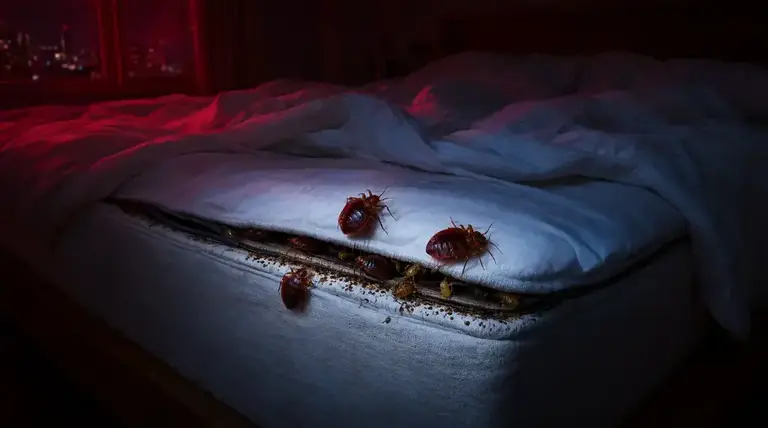
- Dark faecal spotting — rust-coloured or black dots on sheets, mattress piping, bedheads and nearby walls, about the size of a felt-tip pen mark.
- Shed skins and eggs — pale, translucent casings left behind as nymphs moult, plus tiny white eggs in cracks and fabric folds.
- Live bugs — apple-seed-sized, flat, reddish-brown insects hiding in mattress seams, ensemble bases, behind skirting and inside bedside furniture.
- A sweet, musty odour — noticeable in heavier infestations, caused by the bugs’ scent glands.
- Reports from neighbours — if the unit next door or below has confirmed bed bugs, inspect immediately, as migration through shared walls is common.
Owner-Occupiers, Renters and Body Corporates: Who’s Responsible?
In short: if you own and live in your unit, treatment inside your lot is almost always your cost; renters’ responsibility depends on timing; and the owners corporation pays only where common property is the source. Here’s how each situation plays out.
Owner-occupiers. Treatment inside your lot is your responsibility in nearly all cases. The owners corporation is typically only liable where the source is common property — shared hallways, a common laundry, or a defect in shared walls that allowed bugs to migrate. Even then, proving a common-property source is difficult without a professional inspection report.
Renters. The key question is when the infestation began. Bugs present at move-in are generally the landlord’s responsibility, because a property must be provided in a reasonably clean and habitable condition. Bugs that arise during the tenancy are often the tenant’s cost, particularly if linked to the tenant’s belongings or travel. Rules differ by state — NSW, Victoria and Queensland each have their own residential tenancy legislation, and tribunals such as NCAT in NSW, VCAT in Victoria and QCAT in Queensland resolve disputes. Report suspected bed bugs to the agent in writing immediately, because documented timing is central to any claim.
Protecting yourself in a dispute. Photograph live bugs, spotting or bites and note the date. Keep a copy of every written report to the agent or owners corporation. Retain the professional inspection report, which can indicate how long an infestation has likely been present. Tribunals weigh this evidence heavily, and acting and recording early protects both your health and your hip pocket.
DIY vs Professional Treatment
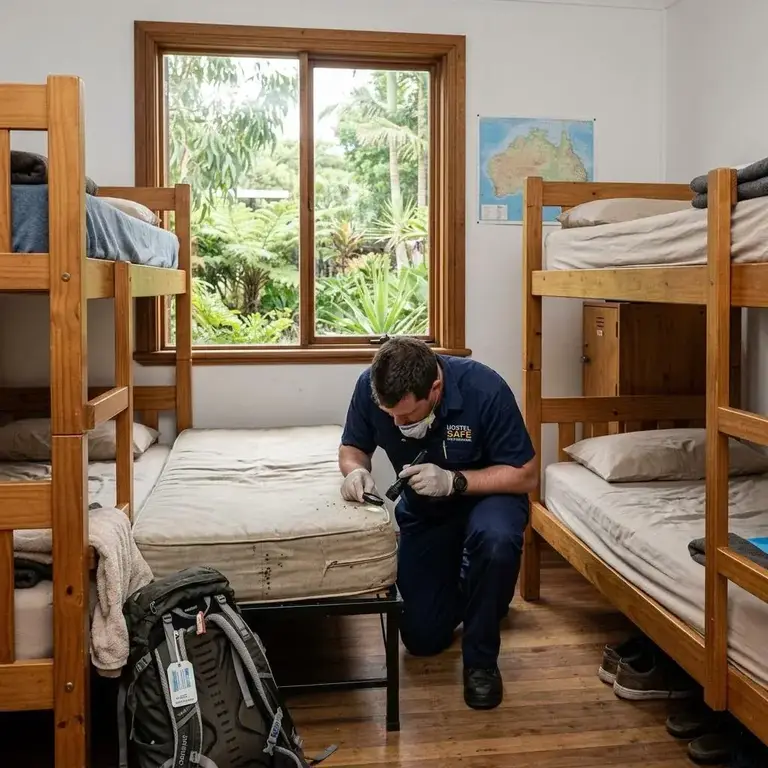
DIY sprays and foggers from the hardware shop rarely eliminate a bed bugs apartment infestation and often scatter the bugs deeper into wall cavities — a serious problem when the next hiding spot is the neighbouring unit. Professional pest control combines inspection, targeted treatment and follow-up visits, which is why it’s the only realistic option in multi-unit buildings.
| Factor | DIY approach | Professional treatment |
|---|---|---|
| Effectiveness | Low — misses eggs and hidden harbourages; foggers scatter bugs | High — targeted to harbourages with follow-up visits |
| Spread risk to neighbours | High — disturbed bugs migrate through shared walls | Low — contained, coordinated approach |
| Documentation for disputes | None | Written inspection and treatment reports for agents, owners and tribunals |
| Typical cost (AUD) | $50–$200 in products, often repeated | $300–$1,500+ depending on severity and method |
| Safety | Risk of misuse in bedrooms and around children or pets | Licensed technicians apply APVMA-registered products per label directions |
The two main professional options are heat and chemical treatment — our comparison of bed bug treatment: heat vs chemical explains where each works best. In apartments, chemical treatment is more common because whole-building heat treatment is logistically difficult, but licensed technicians will recommend the right approach for your situation. For a full rundown of what’s involved, see our Bed Bug Treatment & Removal service page.
Bed Bug Treatment Costs in Australia (2025–26)
Across the Australian pest control industry, professional bed bug treatment for a single apartment typically runs between $300 and $1,500, depending on the size of the unit, severity of infestation and treatment method. These are typical market rates — what licensed operators generally charge — not a quote from any one company. Whole-building or multi-unit coordinated programs cost more upfront at market rates, but are far cheaper than repeated single-unit failures.
The table below shows typical Australian market rates for common bed bug services, so you know what the industry generally charges before you book.
| Service | Typical market rate (AUD) | What’s included/notes |
|---|---|---|
| Inspection and written report | $150–$300 | Often credited toward treatment; key evidence for tenancy disputes |
| Chemical treatment, 1-bedroom unit | $300–$600 | Usually 2–3 visits; APVMA-registered products applied by licensed technicians |
| Chemical treatment, 2–3 bedroom unit | $450–$900 | Includes follow-up inspection and retreatment if required |
| Heat treatment, single unit | $800–$1,500+ | Single-visit kill of all life stages; preparation required |
| Multi-unit coordinated program | Quoted per building | Arranged via owners corporation; most effective for building-wide outbreaks |
Those figures reflect what the Australian market generally charges. Aussie Pest Strike typically comes in well under these market rates for the same licensed, APVMA-compliant work — so call [aps_phone] today for an exact quote tailored to your property.
When Are Bed Bugs Most Active in Australia?
Bed bugs are active year-round in Australian apartments because indoor heating and warm climates keep temperatures in their preferred range, but reported infestations typically peak from late spring through summer. Increased holiday travel, student moves and end-of-lease turnover from November to February drive more introductions into buildings.
Jan
Feb
Mar
Apr
May
Jun
Jul
Aug
Sep
Oct
Nov
Dec
Typical pattern of reported bed bug activity in Australian apartments. Peaks in December–February reflect summer travel and tenancy turnover; activity never drops to zero because heated interiors allow year-round breeding.
The biggest mistake we see in strata buildings is one unit treating while the neighbour does nothing — the bugs just come straight back through the wall. Get an inspection report first, put everything in writing to the agent or body corporate, and push for a coordinated response. It’s cheaper for everyone in the long run.
Don’t wait for the blame game to finish before acting. Report the problem in writing the day you find it, book a licensed pest control inspection to establish a timeline, and treat your unit promptly — then push the owners corporation for a building-wide assessment if other units may be affected. Early documentation protects your health, your bond and your legal position.
Frequently Asked Questions
Who pays for bed bug treatment in an apartment in Australia?
Owner-occupiers almost always pay for treatment inside their own unit. The owners corporation (body corporate) is typically only liable when the source is common property, such as shared hallways, a common laundry or a defect in shared walls that allowed bugs to migrate. Proving a common-property source usually requires a professional inspection report.
Are bed bugs at move-in the landlord's responsibility for renters?
Generally yes. If bed bugs were present when a tenant moved in, the landlord is usually responsible because rental properties must be provided in a reasonably clean and habitable condition. Bugs that arise during the tenancy are often the tenant's cost, particularly if linked to their belongings or travel. Report suspected bed bugs to your agent in writing immediately, because documented timing is central to any claim.
What are the early warning signs of bed bugs in an apartment?
Look for bites appearing in lines or clusters on exposed skin after sleeping, dark rust-coloured or black faecal spotting on sheets and mattress piping, pale shed skins and tiny white eggs, live reddish-brown insects about apple-seed size hiding in mattress seams and furniture joints, and a sweet musty odour in heavier infestations. Reports from neighbours with confirmed bed bugs also warrant an immediate inspection of your own unit.
How do bed bugs spread between apartment units?
Bed bugs don't fly or jump — they hitchhike on belongings, luggage, guests and second-hand furniture, then crawl through gaps in shared walls, around pipe penetrations and along electrical conduits. Shared walls, service conduits and high resident turnover let infestations spread silently between lots, which is why treating one unit while neighbours stay infested often wastes money.
Why doesn't DIY treatment work well for bed bugs in apartments?
DIY sprays and foggers rarely eliminate an infestation and often scatter bugs deeper into wall cavities, where the next hiding spot may be a neighbouring unit. They miss eggs and hidden harbourages, carry misuse risks around children and pets, and provide no written documentation for disputes. Professional treatment combines inspection, targeted harbourage treatment and follow-up visits, which matters greatly in multi-unit buildings.
What does professional bed bug treatment cost in Australia?
Professional bed bug treatment costs vary with unit size, infestation severity and the method chosen. Chemical treatments are usually the most affordable option, while heat treatments tend to sit at the higher end of the price range. Inspections with written reports are typically charged separately. In apartment buildings, coordinated treatment across multiple units is usually quoted per building rather than per room, so costs depend on how many dwellings need attention.
Should I choose heat or chemical treatment for bed bugs in my apartment?
In apartments, chemical treatment is more common because whole-building heat treatment is logistically difficult. Heat treatment kills all life stages in a single visit but requires thorough preparation, while chemical treatment usually involves two to three visits using APVMA-registered products applied by licensed technicians. A licensed technician can assess your situation and recommend the right approach.
How should I document a bed bug problem if responsibility is disputed?
Photograph live bugs, spotting or bites and note the dates. Keep copies of every written report you send to the agent or owners corporation, and retain the professional inspection report, which can indicate how long an infestation has likely been present. Tribunals such as NCAT, VCAT and QCAT weigh this evidence heavily, so acting and recording early protects both your health and your finances.
Can I check whether Aussie Pest Strike handles bed bugs in apartments?
Yes. Aussie Pest Strike deals with bed bug infestations in apartments and multi-unit buildings, including inspections, chemical and heat treatment options, and written reports useful for tenancy disputes. Because availability and coverage vary by location, contact Aussie Pest Strike directly to confirm they service your area and to discuss the right approach for your building before booking anything.
What's a practical next step if I suspect bed bugs in my apartment unit?
Start by documenting what you find — photograph live bugs, spotting or bites with dates — and report it in writing to your agent or owners corporation straight away, since timing evidence decides most disputes. Then arrange a professional inspection; Aussie Pest Strike can inspect your unit, provide a written report indicating how long the infestation has likely been present, and recommend appropriate treatment options.
Sources & further reading
Found Something
Dangerous?
Don’t touch it. Don’t spray it. Keep kids and pets clear, take a photo from a safe distance, and call us — or book a free inspection and we’ll come to you.
02 7235 0050