Mole Cricketsin Lawns: IDand Control
Mole crickets in — mole crickets damage Australian lawns by tunnelling just below the surface, severing grass roots and leaving spongy, uneven turf that...
When your lawn turns spongy, uneven and patchy despite regular watering, a mole cricket is one of the first suspects an experienced technician will consider. These tunnelling insects thrive in warm, sandy Australian soils and can wreck a healthy couch or buffalo lawn in a single season if left unchecked. This guide covers identification, verification, control options and realistic treatment costs for homeowners Australia-wide.
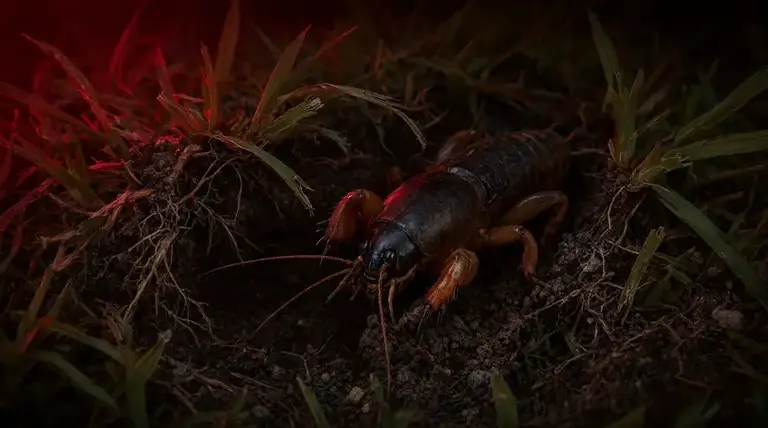
A mole cricket is a burrowing insect — 30–40 mm long with shovel-shaped front legs — that damages lawns by tunnelling through the top 5–8 cm of soil, severing grass roots and leaving spongy turf that dies in irregular patches. Correct identification matters because the symptoms are easily mistaken for drought stress, fungal disease or other lawn pests, and the wrong treatment wastes both time and money.
- Mole crickets tunnel just below the surface, cutting roots and creating spongy, uneven turf with small overnight soil mounds.
- Confirm the pest first with a simple soapy-water drench test before spending on treatment.
- Late spring to early summer is the best control window, when young nymphs are small and near the surface.
- Warm, sandy soils in coastal Queensland, northern NSW and Perth see the heaviest damage.
- Professional pest control typically costs $180–$450 for a standard residential lawn treatment in 2025-26.
Why mole crickets are a serious problem for Australian lawns
Mole crickets matter in Australia because our climate and soil types suit them almost perfectly: warm nights, sandy free-draining soils and irrigated turf give them ideal tunnelling conditions for much of the year. Their galleries loosen the soil around grass roots, so turf dries out from below and dies in irregular brown patches that expand through spring and summer.
The worst damage is reported across coastal Queensland, northern New South Wales and sandy Perth suburbs, where couch and buffalo lawns grown on sand are prime targets. Regular irrigation keeps the top few centimetres of soil soft and workable, which lets crickets tunnel year-round in the north. Compacted clay soils, common in parts of Melbourne and Adelaide, see far fewer problems simply because the insects cannot dig through them easily. Housing style plays a role too: new estates built on sandy fill, and older homes with large irrigated frontages, tend to see repeat infestations, while shaded, well-run established lawns with deep roots cope far better. Because symptoms overlap heavily with drought stress, fungal disease and root-feeding grubs, many homeowners treat the wrong problem for months before getting an accurate diagnosis.
Warning signs of a mole cricket infestation
The clearest warning signs are spongy, raised soil, fresh overnight mounds and turf that lifts easily because its roots have been severed. Check your lawn in the early morning after warm overnight conditions, and run through this checklist before assuming drought or disease is to blame.
- Spongy soil underfoot — the surface feels soft and springy when you walk across it, like treading on a sponge, because of galleries running just beneath.
- Overnight soil mounds — small heaps of loose, fluffed earth pushed up overnight, most visible after dew or light rain.
- Irregular brown patches — dying turf in random shapes rather than round spots, where the sod pulls up easily because roots are cut.
- Churring calls at dusk — a low chirping or churring from the lawn on warm evenings, produced by males calling from their burrows.
- Worsening damage after rain or irrigation — activity spikes when the topsoil is warm and moist, so symptoms often flare after summer storms.
- The soapy water test confirms it — drench a suspect square metre with two tablespoons of dishwashing liquid mixed into a watering can of water; any mole crickets present will surface within minutes.
Identifying the insect itself is straightforward once one surfaces: look for a velvety brown body around 30–40 mm long, spade-shaped forelegs and short wings. Australia has both the introduced changa mole cricket and several native species, all capable of significant tunnelling damage. Don’t confuse them with other turf pests — reading up on lawn grubs and curl grubs and armyworm will help you tell root-eaters and leaf-chewers apart before you treat.
DIY vs professional mole cricket treatment
DIY control can work for small, early infestations using APVMA-registered lawn insecticides and good cultural practice, but widespread tunnelling across a large lawn usually justifies professional pest control. Timing is everything: target young nymphs in late spring to early summer, when they are small and feeding near the surface, rather than hardened adults later in the season.
| Factor | DIY approach | Professional treatment |
|---|---|---|
| Identification | Soapy water test; risk of misidentifying grubs or disease | Licensed technician confirms the pest before any product is applied |
| Products | Hardware-store lawn insecticides, watered in per label | Professional-grade APVMA-registered products applied at calibrated rates |
| Best window | Late spring to early summer, after evening watering | Same window, plus follow-up visits if populations persist |
| Cost | $30–$90 in products | $180–$450 depending on lawn size |
| Best suited to | Small patches caught early | Large, recurring or severe infestations |
If you go the DIY route, mow and dethatch first to reduce shelter, then water lightly before applying a product labelled for mole crickets so the insects move upward into the treated zone. Beneficial nematodes offer a lower-chemical alternative. For anything beyond a few square metres, our Lawn Grub & Garden Pest Treatment service handles identification, treatment and follow-up in one visit.
How much does mole cricket treatment cost in Australia?
Across the Australian pest control industry, professional mole cricket treatment generally sits between $180 and $450 for a standard residential lawn in 2025-26, with larger blocks, severe infestations or follow-up visits pushing market rates higher. DIY products typically retail for well under $100 but carry the risk of treating the wrong pest.
| Service | Typical cost (AUD) | What’s included/notes |
|---|---|---|
| DIY lawn insecticide | $30–$90 | Granules or hose-on spray from hardware stores; follow label rates exactly |
| Inspection and identification | $0–$120 | Confirms pest species and damage extent; often credited toward treatment |
| Standard lawn treatment (up to ~300 m²) | $180–$280 | Professional-grade insecticide application, watering-in advice |
| Large or severe infestations | $280–$450 | Bigger areas, heavier populations, possible follow-up visit |
| Lawn renovation after damage | $150–$500+ | Aeration, top-dressing and oversowing to repair tunnelled areas |
These figures reflect typical Australian market rates and vary by region, lawn size and access, so treat them as general industry ranges rather than fixed quotes. Chemical treatments should always be applied by licensed technicians using APVMA-registered products — no pest control product can be called completely risk-free, and label directions exist for good reason.
It’s worth knowing that Aussie Pest Strike typically comes in well under these market rates for mole cricket treatment, without cutting corners on product quality or service. For an exact quote tailored to your lawn, give us a call on [aps_phone] today.
Seasonal mole cricket activity across Australia
Mole cricket activity peaks from late spring through summer, with the heaviest tunnelling between October and February in most regions. In tropical Queensland and the Top End, warm soils keep them active almost year-round, while southern states see a clear winter lull.
Jan
Feb
Mar
Apr
May
Jun
Jul
Aug
Sep
Oct
Nov
Dec
Indicative activity pattern for temperate and subtropical Australia. Peak tunnelling coincides with warm, moist soils from October to February; activity drops sharply through the southern winter. Northern Queensland may see elevated activity in every month.
This pattern is why late spring to early summer is the prime treatment window: nymphs hatch and feed near the surface while still small and vulnerable. It’s also when other warm-season invaders — such as Portuguese millipedes after autumn rains — start competing for your attention, so a seasonal inspection schedule pays off.
Most lawns we get called out to for “drought stress” turn out to have tunnelling damage underneath. The soapy water test takes five minutes and saves people hundreds on the wrong treatment. Treat early in the season, while the nymphs are small, and a healthy lawn will recover on its own in a few weeks.
Run the soapy water test now — it takes five minutes and confirms the culprit for free. If mole crickets surface, treat in late spring to early summer with an APVMA-registered product, and keep the lawn vigorous with balanced fertiliser and deep, infrequent watering. For anything beyond a few patchy square metres, book professional pest control so the pest is identified correctly and treated at the right rate the first time.
Frequently Asked Questions
What does a mole cricket look like?
A mole cricket is a burrowing insect with a velvety brown body around 30–40 mm long, spade-shaped forelegs built for digging, and short wings. Australia has both the introduced changa mole cricket and several native species. If one surfaces during a soapy water test, these features make it easy to tell apart from grubs or other lawn pests.
What damage do mole crickets do to lawns?
Mole crickets tunnel through the top 5–8 cm of soil, severing grass roots as they go. This leaves turf feeling spongy and uneven underfoot, with irregular brown patches where the sod lifts easily because its roots are cut. A healthy couch or buffalo lawn can be wrecked in a single season if the infestation is left unchecked.
How do I confirm I have mole crickets and not drought stress or disease?
Run a soapy water drench test: mix two tablespoons of dishwashing liquid into a watering can of water and pour it over a suspect square metre. Any mole crickets present will surface within minutes. The test takes about five minutes and helps you avoid spending money treating the wrong problem, since symptoms overlap heavily with drought stress, fungal disease and root-feeding grubs.
What are the warning signs of a mole cricket infestation?
Key signs include spongy soil underfoot, small mounds of loose earth pushed up overnight, irregular brown patches where turf pulls up easily, low churring calls from males at dusk on warm evenings, and damage that flares after rain or irrigation. Check in the early morning after warm overnight conditions for the clearest evidence of tunnelling activity.
Where in Australia are mole crickets worst?
Regular irrigation keeps topsoil soft enough for year-round tunnelling in the north. Compacted clay soils common in parts of Melbourne and Adelaide see far fewer problems because the insects cannot dig through them easily. The practical next step is to note the signs, inspect the relevant area carefully, and seek property-specific advice if the issue continues.
When is the best time to treat mole crickets?
Late spring to early summer is the prime control window, when young nymphs have hatched and are feeding near the surface while still small and vulnerable. Tunnelling peaks between October and February in most regions, though tropical Queensland and the Top End may see activity almost year-round. Treating hardened adults later in the season is far less effective.
Can I treat mole crickets myself, or should I call a professional?
You can treat mole crickets yourself if the infestation is small and caught early. Mow and dethatch the lawn first, water lightly, then apply an APVMA-registered lawn insecticide according to label directions so crickets move up into the treated zone. For widespread or recurring tunnelling across a large lawn, a professional pest controller is usually worthwhile, as they can confirm the identification and select the most suitable treatment approach.
How much does professional mole cricket treatment cost?
Professional mole cricket treatment costs vary with lawn size, how severe the infestation is, and whether follow-up visits are needed. Many pest control companies charge for an initial inspection, though some credit that fee toward treatment if you proceed. Because pricing differs between providers and regions, the best approach is to request quotes from a few local operators and compare what each service includes before booking.
How can Aussie Pest Strike help me deal with mole crickets in my lawn?
Aussie Pest Strike can confirm whether spongy turf and brown patches are actually caused by mole crickets before any product is applied, then treat at the right time of season when nymphs are vulnerable. Technicians use APVMA-registered products at calibrated rates and can advise on follow-up visits if populations persist, plus repair steps like aeration and oversowing for damaged areas.
What should my next step be if I suspect mole crickets in my lawn?
Start with the free five-minute soapy water test on a suspect square metre. If mole crickets surface, note how widespread the damage is across your lawn. For anything beyond a few patchy square metres, contact Aussie Pest Strike so a technician can identify the pest correctly and recommend an appropriate treatment plan timed to the late spring to early summer window.
Sources & further reading
Found Something
Dangerous?
Don’t touch it. Don’t spray it. Keep kids and pets clear, take a photo from a safe distance, and call us — or book a free inspection and we’ll come to you.
02 7235 0050