Mosquitoes Breeding inPot Plants:The Overlooked Source
Mosquitoes breeding in pot plants are an overlooked backyard source. Learn how to stop them in a few chemical-free steps. Free quote from Aussie Pest Strike.
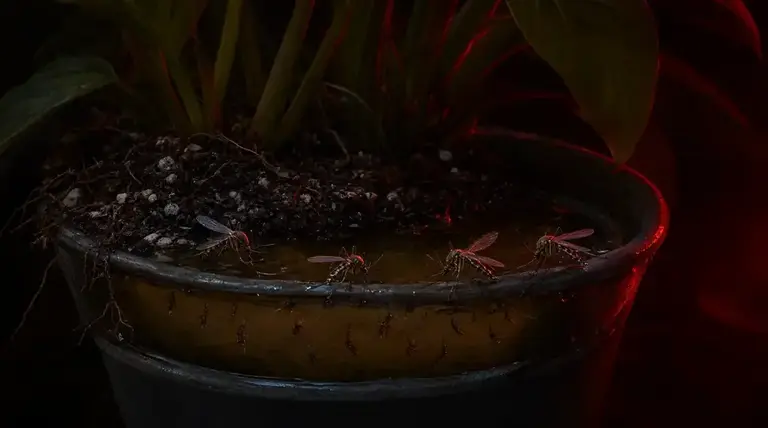
For mosquitoes pot plants are prime real estate: the saucer under your favourite fern can be one of the most productive nurseries in an Australian backyard. It sounds unlikely, but that shallow pool is a five-star breeding site, holding enough stagnant water for container-loving species to hatch, wriggle and rise as biters in about a week. A single neglected saucer can turn out hundreds across summer, long after the soil looks dry.
To put it plainly: mosquitoes breeding in pot plants refers to container-breeding mosquito species laying eggs in the standing water that collects in saucers, self-watering reservoirs, bromeliad cups and undrained decorative pots, where larvae develop into biting adults in as little as 7 to 10 days. Tackling these sites is one of the highest-impact, lowest-cost things any Australian household can do — and it is the first thing our technicians check on any Mosquito & Midge Control job.
- Pot plant saucers holding even a centimetre of water for a week can produce a full generation of mosquitoes.
- The Australian backyard mosquito Aedes notoscriptus is a classic container breeder; its eggs survive drying for months on saucer walls.
- Tipping out water is not enough — scrubbing removes the eggs that hatch again after the next watering or rain.
- Self-watering pots and bromeliads are the sneakiest hidden sources; flush them weekly in warm months.
- If mosquitoes persist after you clear every container, a licensed pest control technician can find the source you have missed.
Why mosquitoes pot plants breeding matters across Australia
Pot plants matter because Australia’s climate lets container-breeding mosquitoes complete their life cycle in around 7 to 10 days for much of the year. In warm conditions between 25 and 30 degrees — a normal summer day from Brisbane to Perth — an egg laid on the damp wall of a saucer on Monday can be a biting adult by the following week.
Australian housing makes this worse, not better. Queenslanders on stumps, brick veneer homes on slabs and rendered coastal builds all share one feature: outdoor living. Verandahs, decks, courtyards and balconies are where we put our potted herbs, ferns and ornamentals, and they are exactly where we sit in the evening when mosquitoes are most active. The breeding site and the victim end up a metre apart.
There is also a genuine health dimension. The backyard container breeder Aedes notoscriptus is widespread across the mainland states, and mosquito bites in Australia carry the risk of Ross River virus and other mosquito-borne illnesses. Our article on Ross River Virus: What Australian Families Should Know covers symptoms and why reducing bites around the home is the most practical defence. One saucer of wrigglers next to the barbecue area is not a trivial issue.
Warning signs your pots are breeding mosquitoes — the “o” checklist
The clearest sign is tiny larvae — wrigglers — hanging at the water surface in a saucer and darting down when you move the pot. Work through this checklist around your garden, balcony or courtyard.
- Saucers that stay wet for days — any saucer holding a centimetre of clear water for a week is enough for a full generation of larvae.
- Self-watering pots with hidden reservoirs — the water is sealed from view, so these get forgotten for weeks at a time.
- Bromeliads and leaf-axil plants — water held in the central cup and leaf joints is a ready-made nursery.
- Decorative pots and urns without drainage — rain and watering collect with nowhere to go.
- Trays under hanging baskets — they catch every watering and stay shaded and cool.
- More bites near the house than in the open yard — container breeders fly only short distances, so biting pressure concentrated around the deck points to a source within metres.
The problem is easy to overlook precisely because the water looks harmless. Clear, clean-looking water breeds mosquitoes just as well as a swampy puddle — larvae live at the surface, breathing through a siphon, so look for that characteristic hanging-and-darting movement.
DIY fixes versus professional mosquito control
You do not need chemicals to break the breeding cycle in pot plants; you need to deny mosquitoes standing water and physically remove their eggs. DIY works well when pots are the only source, but persistent biting usually means a bigger or hidden source — and that is where a licensed pest control technician earns their fee.
| Approach | What it involves | Best for |
|---|---|---|
| Weekly tip-and-scrub | Empty every saucer and scrub the walls with a brush to remove clinging eggs | Every household; the essential first step |
| Sand-filled saucers | Fill saucers with clean sand nearly to the rim so pots draw moisture but no open water remains | Hot climates where plants need constant moisture |
| Flushing bromeliads and reservoirs | Hose out leaf axils; flush and refill self-watering reservoirs weekly | Gardens with water-holding plants |
| Larvicide briquettes or horticultural oil | Break the water surface or kill larvae where water cannot be removed | Ornamental ponds and pots that must hold water |
| Professional inspection and treatment | Full property audit, source identification, barrier treatments by a licensed technician | Persistent biting or sources you cannot find |
Scrubbing matters because Aedes eggs cling to container walls and can survive drying for months, hatching the next time water returns. Simply tipping the water out is not always enough, which is why an emptied saucer beneath mosquitoes pot plants can produce larvae again days after the next rain. A quick scrub with a brush removes the eggs physically and resets the container. Any larvicide products should be APVMA-registered and used exactly to label directions; for anything beyond basic household larviciding, use a licensed technician.
What does mosquito pest control cost in Australia?
DIY pot plant fixes cost almost nothing, while across the Australian market a professional mosquito inspection and treatment typically runs from around $150 to $450 depending on property size and treatment scope. The ranges below reflect typical 2025–26 Australian industry pricing — they’re what pest control companies generally charge, not a quote from any one provider.
| Service | Typical market rate (AUD) | What’s included/notes |
|---|---|---|
| DIY tip-and-scrub routine | $0–$20 | Scrubbing brush, clean sand for saucers; weekly effort |
| Larvicide briquettes / horticultural oil | $15–$60 | For water features and pots that must hold water; APVMA-registered products only |
| Professional mosquito inspection | $0–$150 | Full property audit of breeding sites; many providers inspect free with treatment |
| Barrier/residual spray treatment | $180–$450 | Treatment of resting surfaces, foliage and harbourage by a licensed technician |
| Seasonal program (multiple visits) | $400–$900 | Repeat treatments across the warm season for high-pressure properties |
These figures are general market rates across the Australian industry. Aussie Pest Strike typically comes in well under these prices, so for an exact quote tailored to your property, give us a call on [aps_phone] today.
Seasonal activity: when pot plant mosquitoes peak
Container-breeding mosquito activity peaks in the warm, wet months — roughly November to March across most of Australia — and drops away through the cooler southern winter, though tropical regions stay active nearly year-round. The chart below shows typical relative activity for backyard container breeders on a national average.
Jan
Feb
Mar
Apr
May
Jun
Jul
Aug
Sep
Oct
Nov
Dec
Activity peaks in the hot, wet months of December to February when the egg-to-adult cycle shortens to about a week. Northern Australia sees strong activity year-round; southern states dip sharply from June to August but rebound fast in spring.
Pot plants as part of a bigger mosquito picture
Pot plants are one item on a longer list of hidden water sources around the average Australian home. Once you have dealt with every saucer, reservoir and bromeliad, check the rest of your yard against our Standing Water: The Complete Mosquito Breeding Checklist — buckets, tarpaulins, bird baths, blocked gutters and old tyres all do the same job for mosquitoes.
Removing every breeding site is the foundation of effective backyard control, and it is covered step by step in our guide Mosquito Control for Your Backyard: What Actually Works. Breeding-source reduction first, then barrier treatments and personal protection — in that order — is the approach that genuinely moves the needle.
Nine times out of ten, when a customer tells me they have no idea where the mosquitoes are coming from, I find wrigglers in a pot plant saucer within five minutes of walking in. People check the obvious stuff like the pond, but they water their pots every day in summer and never look underneath. Tip it, scrub it, fill it with sand — that one habit solves more mosquito problems than any spray can on its own.
Start this weekend: tip out and scrub every saucer, fill the ones you need with sand, flush bromeliads and self-watering reservoirs, then audit the rest of the yard with our standing water checklist. If biting continues after two weeks of diligent source removal, book a professional inspection — there is a hidden or neighbouring source, and a licensed technician will find it.
Frequently Asked Questions
How do mosquitoes breed in pot plants?
Container-breeding species such as Aedes notoscriptus lay eggs in the standing water that collects in pot saucers, self-watering reservoirs, bromeliad cups and undrained decorative pots. In warm conditions of about 25 to 30 degrees, an egg can develop into a biting adult in as little as 7 to 10 days, so even one centimetre of water held for a week can produce a full generation.
Why is tipping water out of pot plant saucers not enough?
Aedes eggs cling to the walls of containers and can survive drying for months, hatching again the next time water returns from rain or watering. Simply emptying a saucer leaves those eggs behind. Scrubbing the walls with a brush physically removes them and resets the container, which is why tip-and-scrub is recommended rather than tipping alone.
What are the warning signs that my pots are breeding mosquitoes?
Look for tiny larvae, called wrigglers, hanging at the water surface and darting down when you move the pot. Other signs include saucers staying wet for days, forgotten self-watering reservoirs, water sitting in bromeliad cups and leaf joints, trays under hanging baskets, undrained decorative urns, and more bites near the house than in the open yard.
Which mosquito breeds in Australian pot plants?
The backyard container breeder Aedes notoscriptus is the classic culprit across mainland states. It lays eggs on damp container walls, including saucers, and its eggs survive drying for months before hatching when water returns. Because these mosquitoes fly only short distances, biting pressure concentrated around your deck or verandah usually points to a breeding source within metres.
Are self-watering pots and bromeliads really a mosquito risk?
Yes, they are among the sneakiest hidden sources. Self-watering pots have sealed reservoirs that stay out of sight and are easily forgotten for weeks at a time. Bromeliads hold water in their central cups and leaf axils, creating ready-made nurseries. In warm months, flush bromeliad leaf axils with a hose and flush and refill self-watering reservoirs weekly.
What is the sand-filled saucer method for stopping mosquitoes?
Filling saucers with clean sand nearly to the rim lets pots draw moisture through the sand while leaving no open standing water where mosquitoes can lay eggs. It suits hot climates where plants need constant moisture and you cannot simply empty saucers each week. Combined with regular scrubbing, it denies mosquitoes the open water they need to breed.
When do pot plant mosquitoes peak in Australia?
Container-breeding activity peaks during the warm, wet months, roughly November to March across most of Australia, with the highest pressure from December to February when the egg-to-adult cycle shortens to about a week. Northern Australia sees strong activity nearly year-round, while southern states dip sharply from June to August but rebound quickly in spring.
Can mosquitoes from pot plants spread disease?
Mosquito bites in Australia carry the risk of Ross River virus and other mosquito-borne illnesses, and container breeders like Aedes notoscriptus are widespread on the mainland. A single neglected saucer can produce hundreds of adults over summer, often right beside outdoor living areas. Reducing bites around the home by removing breeding sites is the most practical defence.
How would an Aussie Pest Strike technician check whether my pot plants are the source?
A technician starts with a full property audit focused on breeding sites, and pot plant saucers are typically the first thing checked. They look for wrigglers hanging at the water surface, inspect self-watering reservoirs and bromeliad cups, assess decorative pots without drainage, and trace biting pressure around decks and verandahs back to nearby sources you may have missed.
When should I call Aussie Pest Strike about mosquitoes breeding in my pots?
If you have tipped out and scrubbed every saucer, filled needed ones with sand, flushed bromeliads and reservoirs, and biting still persists, a hidden or larger source is likely. Aussie Pest Strike can arrange a licensed technician to identify the missed breeding site and discuss treatment options suited to your property, building on the source-reduction work you have already done.
Sources & further reading
Found Something
Dangerous?
Don’t touch it. Don’t spray it. Keep kids and pets clear, take a photo from a safe distance, and call us — or book a free inspection and we’ll come to you.
02 7235 0050