Australian MosquitoSpecies: Which OnesBite You
Mosquito species australia — australia has more than 300 mosquito species, but only a handful regularly bite people around the home, and knowing which is...
For anyone searching mosquito species australia, the short answer is that more than 300 kinds live here, yet only a few regularly bite people around the home — and knowing which is which tells you how much to worry. From the A to O of local mozzies, the main biters are the saltmarsh mosquito, the common banded mosquito and the container-breeding Aedes group.
An Australian mosquito species guide is a practical identification resource that matches the mosquitoes biting you to their breeding habits and the diseases they can carry, so you can target control where it actually works. This guide breaks down the key Australian mosquito species, when they bite, where they breed and what that means for your family.
- Only a small number of Australia’s 300-plus mosquito species bite people; the saltmarsh mosquito, common banded mosquito and backyard Aedes do most of the damage.
- Different species carry different diseases — Ross River virus, Murray Valley encephalitis and dengue — so identification shapes your real risk.
- Container-breeding mosquitoes are the easiest to control because you can tip out their breeding water.
- Geography matters: dengue risk is largely confined to northern and central Queensland.
- Professional pest control identifies the dominant species first, because wetland breeders and container breeders need completely different treatments.
Why mosquito species australia matter nationwide
The species biting you determines both your disease risk and the right control strategy, because Australian mosquitoes breed in very different environments. A mosquito that breeds in coastal saltmarsh five kilometres away cannot be fixed by tipping out a pot plant base, and vice versa.
Australia’s climate range drives huge regional variation. Coastal communities near wetlands and mangroves deal with large seasonal surges of saltmarsh mosquitoes after high tides and heavy summer rain, which is why local councils in these areas run larval monitoring programs. In the southern capitals — Sydney, Melbourne, Adelaide and Perth — the dengue-carrying Aedes aegypti is not established, so households there face nuisance biting and Ross River virus risk rather than dengue. Housing style plays a role too: Queenslander homes with open subfloors and verandas, shaded brick veneer gardens and dense courtyard plantings all create the still, humid microclimates mosquitoes favour. Our Ross River Virus: What Australian Families Should Know guide explains the health side in more detail.
The species that actually bite you: A to O of the main offenders
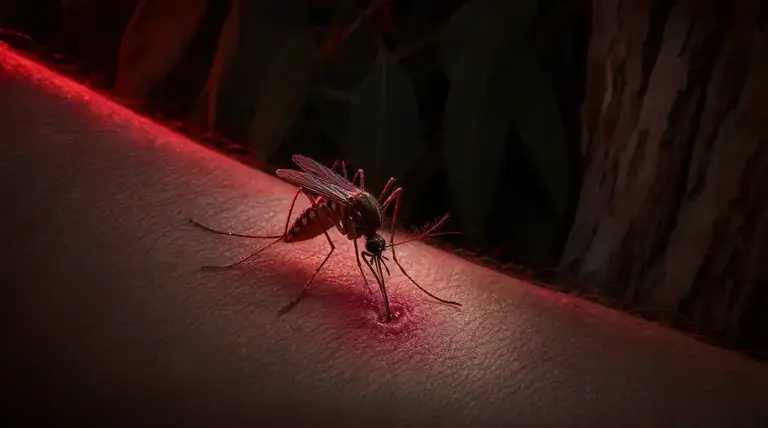
Only female mosquitoes bite, needing a blood meal to develop their eggs. Among the hundreds of Australian mosquito species, a small number account for most backyard bites and disease transmission.
- Aedes vigilax (saltmarsh mosquito): a fierce daytime biter that can fly 5 km or more from coastal wetlands, and a major Ross River virus vector.
- Culex annulirostris (common banded mosquito): a dusk and night biter linked to Ross River virus and Murray Valley encephalitis, breeding in freshwater pools.
- Aedes notoscriptus (common backyard mosquito): breeds in containers around the home — pot plant bases, buckets, bird baths — and bites during the day.
- Aedes aegypti: the dengue vector, largely confined to northern and central Queensland.
Warning signs: which mosquito is biting you?
You rarely see the culprit clearly, so behaviour, timing and location are your best identification clues. Use this checklist to narrow down the species and the risk.
- Daytime bites near the coast: bites received on the beach, near mangroves or in coastal suburbs in daylight point strongly to the saltmarsh mosquito.
- Still-evening backyard bites: bites arriving on a calm evening in the garden are more likely the common banded mosquito or backyard Aedes.
- Bites around pot plants and containers: persistent daytime biting close to the house usually means Aedes notoscriptus is breeding in water-holding containers on your property.
- Surges after rain or king tides: a sudden explosion of mosquitoes after heavy summer rain or high tides suggests wetland breeders are flying in from off-site.
- Bites with no visible insect: if you are being bitten but never see the culprit, biting midges may be to blame instead — our comparison of midges vs mosquitoes helps you work out what is actually feeding on you.
DIY vs professional mosquito control
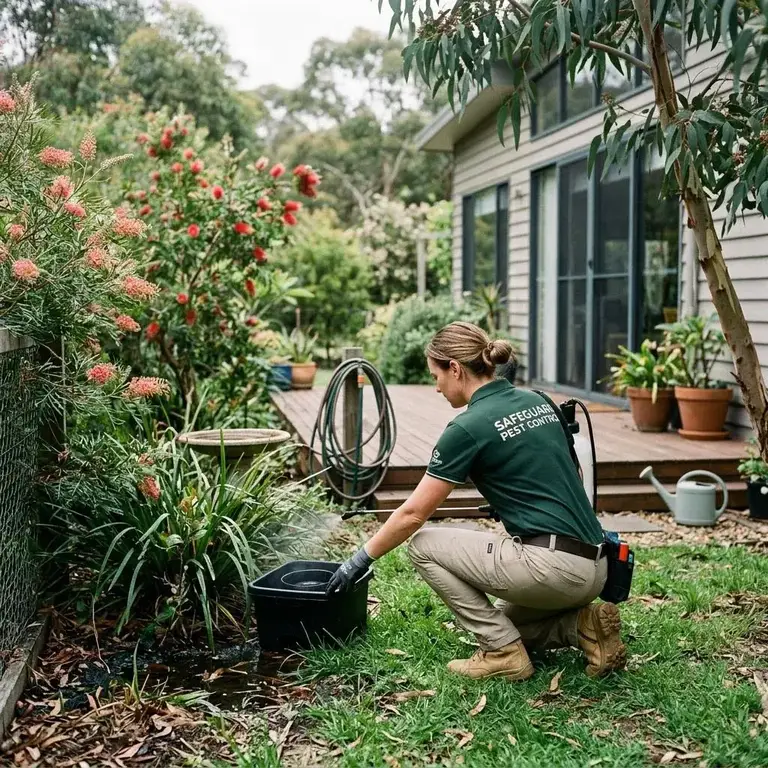
Container breeders like Aedes notoscriptus are the easiest to manage yourself because they breed in water you can tip out; wetland-breeding species usually need professional pest control. Effective Mosquito Control for Your Backyard: What Actually Works starts with removing breeding sites before it targets the adults.
| Approach | Best for | Limitations |
|---|---|---|
| DIY source reduction (tipping out containers, screening rainwater tanks) | Backyard Aedes breeding on your property | No effect on mosquitoes flying in from wetlands or neighbours’ yards |
| DIY repellents, coils and fans | Short-term personal protection outdoors | Protects people, not the property; wears off quickly |
| Professional Mosquito & Midge Control | Heavy or persistent pressure, coastal properties, outdoor entertaining areas | Higher upfront cost; residual treatments need periodic reapplication |
Any chemical treatment should be carried out by a licensed technician using APVMA-registered products applied to label directions — no treatment is risk-free, and correct application for mosquito species australia is what keeps it effective and appropriate around families and pets.
Mosquito control costs in Australia (2025–26)
Across the Australian market, households are generally quoted between roughly $180 and $450 for a professional mosquito treatment, depending on block size, vegetation density and how many visits are needed across the season. The prices below reflect typical industry-wide ranges for 2025–26 — what pest control companies in Australia generally charge, not a quote from any single provider.
| Service | Typical market rate (AUD) | What’s included/notes |
|---|---|---|
| Inspection and breeding-site audit | Industry range: $0–$120 | Species and source identification; most companies waive this with a treatment quote |
| Single residual barrier treatment | Industry range: $180–$320 | Foliage and resting-surface treatment around a standard suburban block |
| Seasonal program (3–4 visits) | Industry range: $450–$850 | Repeat treatments through the warm months; suited to coastal and wetland-adjacent homes |
| Large acreage or waterfront property | Industry range: $350–$700+ per visit | Priced on area treated and access; may include larval site advice |
Worth knowing: Aussie Pest Strike typically comes in well under these general market rates. For an exact quote on your property, give us a call on [aps_phone] and we’ll sort you out.
Seasonal mosquito activity in Australia
Mosquito pressure peaks in the warm, wet months from late spring through early autumn, with the highest activity typically between December and March. Southern regions quieten right down over winter, while northern Australia stays active for much of the year.
Jan
Feb
Mar
Apr
May
Jun
Jul
Aug
Sep
Oct
Nov
Dec
Indicative national pattern: activity builds from September, peaks December–March with heat, summer rain and high tides, then drops away through the southern winter. Northern and coastal regions often remain active well beyond this curve.
Nine times out of ten, the worst backyard problems we see come down to containers the owner forgot about — a pot plant base or a tarp holding rainwater. But if you’re near saltmarsh, no amount of tipping out will stop mosquitoes flying in, and that’s when a properly targeted barrier treatment earns its keep.
Start with the Standing Water: The Complete Mosquito Breeding Checklist and empty every water-holding container weekly. If bites continue — especially near the coast or wetlands — book a professional inspection so the dominant species can be identified and treated at the source, not just swatted at the surface.
Frequently Asked Questions
How many mosquito species are there in Australia and how many actually bite people?
Australia is home to more than 300 mosquito species, but only a small number regularly bite people around the home. The main offenders are the saltmarsh mosquito (Aedes vigilax), the common banded mosquito (Culex annulirostris) and container-breeding Aedes such as Aedes notoscriptus, along with Aedes aegypti in parts of Queensland. Knowing which species is biting you helps you understand your disease risk and target control where it will actually work.
Which Australian mosquito species carry Ross River virus?
According to this guide, two of the main biters are linked to Ross River virus: the saltmarsh mosquito (Aedes vigilax), which breeds in coastal wetlands and can fly five kilometres or more, and the common banded mosquito (Culex annulirostris), which breeds in freshwater pools and bites at dusk and night. The common backyard mosquito Aedes notoscriptus also contributes to biting around homes. Only female mosquitoes bite, needing a blood meal to develop their eggs.
Where in Australia is dengue a risk from mosquitoes?
Dengue risk in Australia is largely confined to northern and central Queensland, where the dengue-carrying mosquito Aedes aegypti is established. This regional difference is why geography matters when assessing which mosquito species are biting you and what diseases they may carry.
How can I tell which mosquito species is biting me?
Behaviour, timing and location are your best clues. Daytime bites near the coast, beaches or mangroves point strongly to the saltmarsh mosquito. Calm-evening bites in the garden suggest the common banded mosquito or backyard Aedes. Persistent daytime biting close to the house usually means Aedes notoscriptus breeding in containers on your property. Sudden surges after heavy summer rain or king tides indicate wetland breeders flying in from off-site.
Where do backyard mosquitoes like Aedes notoscriptus breed?
Aedes notoscriptus, the common backyard mosquito, breeds in water-holding containers around the home, including pot plant bases, buckets and bird baths. It bites during the day, so persistent daytime biting close to the house usually points to this species. Because it breeds in water you can access, it is one of the easiest mosquitoes to control yourself — simply tip out and empty every water-holding container weekly to break its breeding cycle.
Why can't I control saltmarsh mosquitoes by tipping out water at home?
Saltmarsh mosquitoes breed in coastal wetlands and saltmarsh, often five kilometres or more from your home, so removing containers on your property has no effect on them. They fly in after high tides and heavy summer rain, causing large seasonal surges in coastal suburbs near mangroves and wetlands. Local councils in these areas run larval monitoring programs. If you live near saltmarsh, professional pest control that identifies and targets the source is usually needed.
Which months of the year are mosquitoes most active in Australia?
Mosquito pressure peaks in the warm, wet months from late spring through early autumn, with the highest activity typically between December and March, driven by heat, summer rain and high tides. Activity builds from September and then drops away through the southern winter. Northern Australia and coastal regions often remain active well beyond this national pattern, staying active for much of the year rather than quietening down over winter.
What should I do if I keep getting bitten but never see the culprit?
If you are being bitten but never see the insect responsible, biting midges may be to blame instead of mosquitoes. Midges and mosquitoes behave differently, and working out which one is actually feeding on you matters because the control strategies differ. Comparing midges versus mosquitoes using timing, location and bite patterns can help you identify the culprit before deciding whether to focus on container removal, personal protection or professional treatment.
I have emptied all my containers but still get bitten near the coast — how do I arrange help?
If you have followed the prevention steps in this article, such as emptying water-holding containers weekly, and bites continue — especially near the coast or wetlands — the next step is booking a professional inspection. Aussie Pest Strike can identify the dominant species on your property, because wetland breeders flying in from saltmarsh need completely different treatments to container breeders. Contact Aussie Pest Strike to discuss an inspection and a targeted approach suited to your location.
How do I get a treatment plan matched to the mosquito species around my home?
Because different species need different strategies — container breeders respond to source reduction while wetland breeders need barrier treatments — a species-specific plan starts with identification. Aussie Pest Strike begins by identifying which mosquitoes are actually biting you, then recommends the appropriate approach, whether that is a residual barrier treatment for coastal pressure or advice on managing backyard breeding sites. Reach out to Aussie Pest Strike to arrange an inspection tailored to your property and local conditions.
Sources & further reading
Found Something
Dangerous?
Don’t touch it. Don’t spray it. Keep kids and pets clear, take a photo from a safe distance, and call us — or book a free inspection and we’ll come to you.
02 7235 0050