Ants AroundPet Bowls:Safe Prevention
Ants around pet food? Learn safe, pet-friendly ways to keep ants away from bowls without spray. Book a free pet-safe inspection with Aussie Pest Strike.
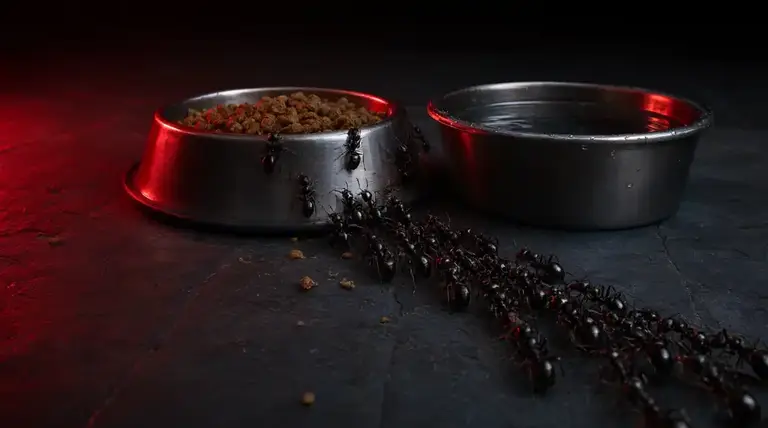
For ants pet food is a steady, high-value target in Australian homes: one scout finds a full bowl of kibble, lays a pheromone trail, and soon the colony is marching in. The safe fix is to make the bowl physically hard to reach, clean up spills and erase the scent trail — never spray insecticide near where your dog or cat eats.
Put simply, ant control around pet feeding areas means using physical and scent barriers — water moats, scheduled feeding, vinegar wipes and out-of-reach bait stations — rather than chemicals applied near food. Here is how to keep your pets and the ants apart without risk, and when to call a licensed pest control technician to deal with the nest itself.
- Ants find pet bowls because kibble is rich in fats and proteins — fresh food attracts them just as readily as stale food.
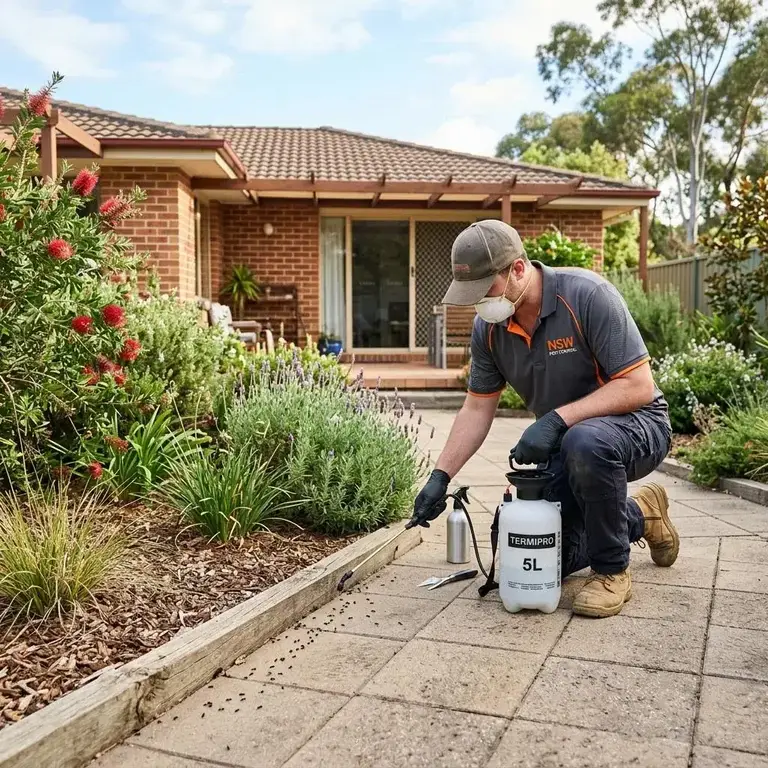
- Never spray insecticide near feeding areas: residue transfers to paws and is swallowed during grooming.
- A water moat under the bowl is the most reliable, chemical-free barrier for Australian conditions.
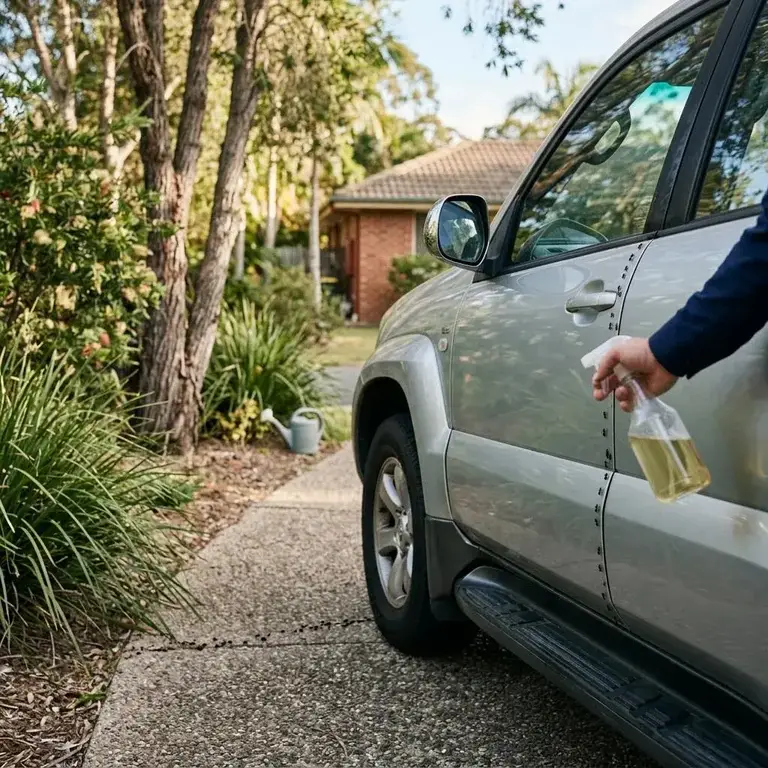
- Wipe feeding areas with vinegar to erase the pheromone trails that guide the colony back.
- If a trail returns within hours of cleaning, the nest is nearby and professional colony treatment is the lasting fix.
Why ants pet food invasions are common across Australia
Pet bowls are ant magnets because dry kibble is packed with fats and proteins, while wet food adds moisture — everything a foraging colony needs in one spot, at floor level, refreshed daily. Australian conditions make it worse: in the warmer states, coastal brown ants and black house ants forage aggressively through summer and relay food back to the nest around the clock, and the humid December-to-February peak means a single missed crumb can trigger a full trail within hours.
Housing style plays a role too. Homes on concrete slabs often see ants entering through hairline cracks and pipe penetrations straight into kitchens and laundries, while older Queenslanders and homes with subfloors give colonies sheltered voids to nest in directly beneath the feeding area. Brick veneer homes commonly harbour coastal brown ant nests in the cavity and garden beds against the wall — a short commute to the dog’s bowl on the back deck. Knowing which of the common Australian ant species found in homes you are dealing with matters, because sugar-feeding ants and coastal brown ants respond to different bait types.
Warning signs the colony has locked onto your pet’s bowl
The clearest sign is a visible, organised trail of ants travelling to and from the bowl — one or two wanderers are scouts, but a steady line means the nest already knows the address. Watch for these indicators before the problem escalates.
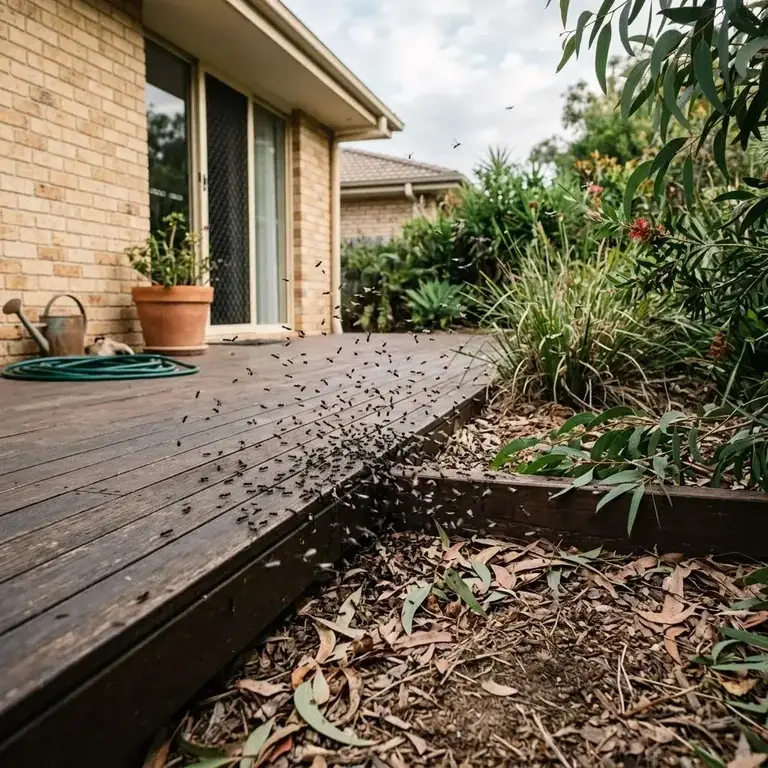
- Continuous two-way trail — ants moving in both directions along skirting boards, benchtop edges or deck boards, showing an established pheromone highway.
- Trail reforms within hours — you wipe the area and ants return the same day, which points to a nest very close by, often under the slab or in the garden bed outside.
- Ants inside the kibble bag or storage container — the colony has found the source, not just the bowl.
- Small soil mounds or grit — fine dirt appearing along pavers, wall junctions or window tracks near the feeding area, typical of coastal brown ant nesting.
- Ants in other rooms — scouts branching into pantries and bathrooms suggest a large colony; the same species often overlap with silverfish and pantry pest problems in warm, humid kitchens.
- Pet refusing food — some dogs and cats will not eat from a bowl crawling with ants, so behavioural changes at mealtimes are a genuine early clue.
DIY pet-safe prevention vs professional treatment
For most households, the ants n pet bowls issue can be managed with physical and scent barriers — a water moat, scheduled feeding, vinegar cleaning and raised stands are all entirely safe around animals. Professional treatment becomes the smarter option when the nest is established nearby and DIY barriers only manage the symptom, because licensed technicians use species-matched gel baits in lockable stations placed out of your pet’s reach, targeting the queen rather than the foragers.
| Method | How to use it | Pet safety / limitations |
|---|---|---|
| Water moat | Stand the bowl in a shallow tray of water; ants will not cross it | Fully pet-safe; refresh water daily, most reliable outdoors |
| Scheduled feeding | Offer food for 20-30 minutes, then remove it | Fully pet-safe; removes the food source entirely |
| Vinegar wipe-down | Clean the feeding area to erase pheromone trails | Pet-safe; needs repeating for at least a week |
| Raised stand | Raise bowls and coat legs with a smooth barrier | Pet-safe; determined ants may still bridge gaps |
| Diatomaceous earth | Thin line around the feeding station | Broadly pet-safe but fails the moment it gets damp |
| Professional baiting | Species-matched gel bait in lockable stations, placed out of reach | Applied by licensed technicians; treats the colony at its source |
Consistency matters more than the product: ants keep testing the area for days after a trail disappears, so hold any routine for at least a week before deciding it has worked. And whatever you do, skip the surface spray — as our guide to why ant sprays often make the problem worse explains, repellent sprays can split the colony and scatter it into new areas, including right back to the bowl. Because rodents and ants are drawn to the same spilled kibble, our advice on pet food and rodent attraction pairs well with these tips — storing kibble in a sealed container helps on both fronts and keeps food fresher through humid summers.
What does professional ant treatment cost in Australia?
For persistent ants pet food bowls keep attracting, typical Australian market rates for professional ant pest control sit between $180 and $450 AUD for a standard residential treatment in 2025-26, depending on property size, species and how many nests need treating. Across the industry, larger properties, severe infestations or multiple colonies can push higher, and many homeowners move onto an ongoing service plan for year-round protection.
| Service | Typical market rate (AUD) | What’s included / notes |
|---|---|---|
| Inspection and species identification | $0 – $120 | Often free with treatment; confirms ant species and nest locations |
| Standard internal/external ant treatment | $180 – $320 | Gel baiting in tamper-resistant stations plus targeted perimeter treatment |
| Severe or multi-nest infestation | $300 – $450+ | Multiple colonies, subfloor or wall-cavity nesting, follow-up visit included |
| Ongoing pest management plan | $45 – $80 per month | Quarterly visits covering ants and common household pests, with service warranty |
A proper ant control and nest treatment service starts with species identification — critical because sugar ants and coastal brown ants respond to different bait types, and switching baits at the wrong moment can stall the whole treatment. For heavy black ant activity specifically, targeted black house ant control deals with the source rather than the foragers you can see.
It’s worth knowing that Aussie Pest Strike typically comes in well under these general market rates while still delivering a full, warranty-backed treatment. For an exact quote tailored to your property and ant problem, give us a call on [aps_phone].
Seasonal ant activity around pet bowls in Australia
Ant pressure on pet bowls peaks between December and February, when heat and humidity drive aggressive foraging, and drops to its lowest point in mid-winter in southern states. In Queensland and northern NSW, activity stays moderate to high almost year-round, while southern homes still see indoor trails through winter wherever heating keeps wall cavities warm.
Jan
Feb
Mar
Apr
May
Jun
Jul
Aug
Sep
Oct
Nov
Dec
Typical ant foraging pressure on pet bowls across Australia: peaking December-February during hot, humid weather, easing through autumn, and bottoming out in June-July before rebuilding from early spring.
Nine times out of ten, when a customer shows us ants at the dog’s bowl, the nest is within a metre or two of the back door. People waste weeks spraying the trail when what actually works is blocking access at the bowl and baiting the colony well away from the pet. Identify the species first — get that wrong and even the best bait won’t touch the problem.
Start today with a water moat under each bowl, move to scheduled 20-30 minute feeding, and wipe the area with vinegar to break the pheromone trail. If ants are still returning within hours after a week, the colony is established nearby — book a licensed technician for species identification and baiting in pet-safe, lockable stations rather than reaching for a spray.
Frequently Asked Questions
Why are ants attracted to my pet's food bowl?
Pet bowls are ant magnets because dry kibble is packed with fats and proteins, while wet food adds moisture — everything a foraging colony needs in one spot, at floor level, refreshed daily. One scout finds the bowl, lays a pheromone trail back to the nest, and soon an organised line of ants is marching in. Fresh food attracts ants just as readily as stale food, so even a clean-looking bowl can draw them.
Is it safe to spray insecticide near my pet's feeding area?
No. Never spray insecticide near where your dog or cat eats — residue transfers to paws and is swallowed during grooming. Repellent surface sprays can also split the colony and scatter it into new areas, including right back to the bowl. Stick to physical and scent barriers such as water moats, scheduled feeding and vinegar wipes, which are entirely safe around animals.
How does a water moat keep ants away from pet bowls?
Stand the bowl inside a shallow tray of water so ants cannot cross to reach the food. It is fully pet-safe and considered the most reliable, chemical-free barrier for Australian conditions, especially outdoors. Refresh the water daily so it stays effective, and check that the bowl or tray edges do not create a bridge for determined ants to walk across.
What is scheduled feeding and how does it help with ants?
Scheduled feeding means offering your pet food for 20–30 minutes, then removing the bowl until the next mealtime. This removes the food source entirely rather than leaving kibble sitting out around the clock, so ants have nothing to trail towards. It is fully pet-safe and works well combined with a water moat and vinegar cleaning of the feeding area.
Why should I wipe the feeding area with vinegar?
Ants follow pheromone trails laid by scouts that found the bowl. Wiping the feeding area with vinegar erases these scent trails, breaking the highway that guides the colony back to the food. It is pet-safe, but you need to repeat the wipe-down consistently for at least a week, because ants keep testing the area for days after a trail disappears.
What signs show the colony has locked onto my pet's bowl?
Look for a continuous two-way trail of ants along skirting boards, benchtops or deck boards; a trail that reforms within hours of cleaning; ants inside the kibble bag or storage container; small soil mounds near pavers or wall junctions typical of coastal brown ants; scouts branching into other rooms; or your pet refusing to eat from a crawling bowl.
When should I call a professional instead of using DIY barriers?
If ants are still returning within hours after a week of consistent water moats, scheduled feeding and vinegar cleaning, the nest is established nearby — often under the slab, in a subfloor or garden bed. DIY barriers only manage the symptom at that point. A licensed technician can identify the species and use gel baits in lockable stations placed out of your pet's reach, targeting the queen and colony at its source.
Does the season affect how many ants I see at the pet bowl?
Yes. Ant pressure on pet bowls peaks between December and February, when heat and humidity drive aggressive foraging, and drops to its lowest point in mid-winter in southern states. In Queensland and northern NSW, activity stays moderate to high almost year-round, while southern homes still see indoor trails through winter wherever heating keeps wall cavities warm.
How would Aussie Pest Strike assess the signs of ants around my pet's bowl?
A technician starts with inspection and species identification, because sugar-feeding ants and coastal brown ants respond to different bait types. They will look for the indicators described here — a steady two-way trail, soil mounds along wall junctions or pavers, entry points through slab cracks or cavities, and how quickly trails reform after cleaning. Pinpointing whether the nest sits under the slab, in a subfloor or in garden beds against the wall determines where baiting is targeted.
How can Aussie Pest Strike help with Ants Around Pet Bowls: Safe Prevention?
After identifying the species, a technician applies species-matched gel baits in tamper-resistant, lockable stations placed well out of your pet's reach, targeting the queen rather than just the foragers you can see. For severe or multi-nest infestations involving subfloor or wall-cavity nesting, follow-up visits may be included. Meanwhile you can keep using water moats and scheduled feeding at the bowl itself, since those remain safe alongside professional baiting done elsewhere.
Sources & further reading
Found Something
Dangerous?
Don’t touch it. Don’t spray it. Keep kids and pets clear, take a photo from a safe distance, and call us — or book a free inspection and we’ll come to you.
02 7235 0050