Mouse vs Rat:How to Tell WhatYou’re Dealing With
Mouse vs rat identification comes down to size, droppings and behaviour. Learn the key differences and why they change the treatment. Free quote available.
Scratching in the ceiling, droppings behind the fridge, a flash of movement at two o’clock in the morning — most Australian homeowners have been there. The first question our technicians hear is always the same: is it a mouse or a rat? Put simply, mouse vs rat comes down to size and proportions: a house mouse is 7–10 cm in body length with a slender tail and large ears, while a rat runs 16–25 cm with a thicker body, blunter snout and coarser fur — and telling them apart is the single most important step in any rodent control plan.
Getting that identification wrong is the classic mistake — call it option “o”, the one most homeowners never consider until weeks of effort have been wasted. Rats and mice need different bait sizes, trap types and entry-proofing standards, so a misidentification means every dollar and hour of pest control lands in the wrong place. This guide walks you through exactly how to tell what you’re dealing with, anywhere in Australia.
- A house mouse is 7–10 cm long with rice-grain droppings (3–6 mm); a rat is 16–25 cm with capsule-shaped droppings (10–20 mm).
- Mice are curious and investigate traps quickly; rats are neophobic and avoid new objects for days.
- A mouse squeezes through a 6–7 mm gap; a rat needs roughly 20 mm — so proofing standards differ.
- Misidentification wastes weeks: mouse traps won’t reliably kill rats, and mouse-sized bait stations exclude them.
- Professional rodent treatment in Australia typically ranges from $180–$600+ AUD depending on species, property size and proofing needs.
Why Mouse vs Rat Identification Matters in Australian Homes
Correct identification matters because Australian housing gives rodents everything they need, and each species exploits a different weakness. Roof rats dominate our roof voids, Norway rats work low around foundations, and house mice slip into wall cavities — and each requires a different control strategy.
Our climate and construction styles shape the problem. Older Queenslanders on stumps offer open subfloor access and wall cavities that rodents treat as highways. Post-war brick veneer homes have weep holes and gaps around pipes that mice walk straight through. Even modern slab-on-ground builds develop cracks around plumbing penetrations and garage door seals. Add a mild winter in most capital cities and an autumn temperature drop that pushes rodents indoors, and you have year-round pressure with a clear seasonal spike.
The species mix matters too. Roof rats (Rattus rattus) are Australia’s most common urban rat, nesting high in roof voids and running along fence lines and power cables — we cover their habits in depth in our guide to Roof Rats in Australia: Behaviour, Risks and Control. Norway rats (Rattus norvegicus) burrow low around foundations, sheds and drains. House mice (Mus musculus) stay within 3–10 metres of their nest, nibbling little and often. Knowing which one you have determines where traps go, what size gaps you seal, and how urgent the job is.
The Quick Size and Shape Comparison
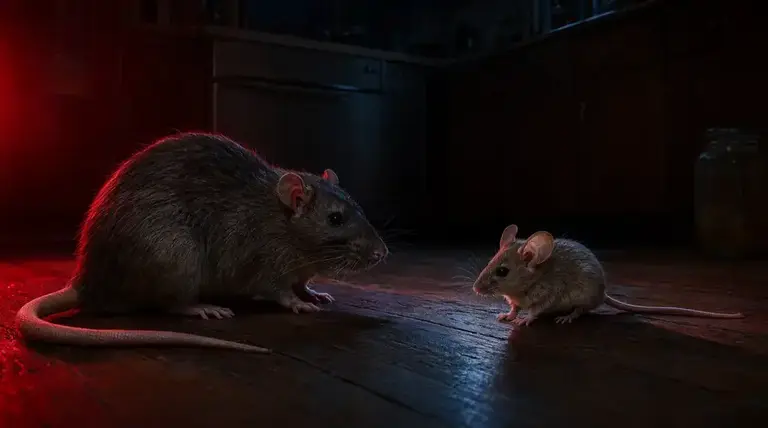
At a glance, a mouse is small, light and large-eared with a pointed snout; a rat is heavyset with smaller ears, a blunt snout and a thick, scaly tail. The table below puts the key differences side by side.
| Feature | House Mouse | Rat (Roof/Norway) |
|---|---|---|
| Body length | 7–10 cm | 16–25 cm |
| Weight | 12–30 g | 200–500 g |
| Ears | Large relative to head | Smaller relative to head |
| Snout | Pointed, triangular | Blunt, heavier |
| Droppings | 3–6 mm, rice-grain | 10–20 mm, capsule shaped |
| Entry gap needed | 6–7 mm | ~20 mm |
Behaviour tells them apart too. The house mouse is inquisitive — it will investigate new objects, including traps, within hours, and it nibbles little and often across many food sources. The rat is neophobic, meaning it avoids new objects for several days, which is why freshly set traps and bait stations often sit untouched at first. That behavioural gap alone changes how a professional program is run: mouse jobs can move fast, while rat jobs require patience, pre-baiting and careful placement.
Warning Signs: A Checklist to Reveal the Culprit
The fastest way to identify your rodent is to read the physical evidence it leaves behind. Work through this checklist before you touch a trap — and cross-reference it with our Signs of Rats or Mice in Your Home: The Full Checklist.
- Droppings: tiny rice-like pellets (3–6 mm) scattered widely suggest mice; larger capsule-shaped droppings (10–20 mm), often in clusters, indicate rats.
- Gnaw marks: mice leave fine 1–2 mm scrapes on packaging and skirting; rats leave broader gouges and can chew through soft concrete, timber and electrical wiring.
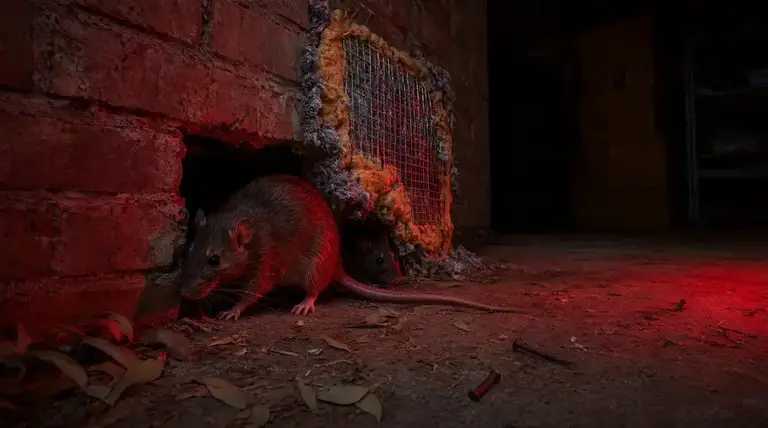
- Entry gaps: a mouse fits through 6–7 mm — about the width of a pencil; a rat needs around 20 mm. Check weep holes, pipe penetrations and garage door seals.
- Noise: light, fast scratching high in walls or the ceiling at night often means roof rats; faint rustling in cupboards or behind appliances points to mice.
- Smell: mice give off a sharp, musky ammonia odour in enclosed spaces; rats produce a heavier, muskier smell, often strongest near nests and runs.
- Grease marks and tracks: rats leave dark rub marks along walls and beams from the oil in their fur; mice leave fainter smudges and fine tail-drag lines in dust.
Read several signs together rather than relying on one. A juvenile rat can be mouse-sized, and poor lighting makes a mouse look bigger than it is. If the evidence is mixed or you’re unsure, that’s exactly when a professional inspection pays for itself.
DIY vs Professional Rodent Control
For a single confirmed mouse caught early, DIY snap traps and good hygiene can work. For rats, recurring activity, or any sign of nesting in the roof or subfloor, professional Rodent Control & Removal is the faster and more reliable path — licensed technicians have access to commercial-grade equipment, lockable bait stations and the training to place them safely around kids and pets.
| Factor | DIY Approach | Professional Service |
|---|---|---|
| Species identification | Guesswork from limited evidence | Trained ID from droppings, runs and nest sites |
| Traps and baits | Retail products, often wrong size or placement | Commercial-grade, tamper-resistant stations |
| Entry-point proofing | Obvious gaps only; 6 mm vs 20 mm standard often missed | Full exclusion audit matched to the species |
| Safety | Risk of misuse around children and pets | APVMA-compliant products applied by licensed technicians |
| Likely outcome | Partial results; reinfestation common | Elimination plus prevention, with follow-up |
Our article on Rat Control: How Professionals Actually Eliminate Rats shows why rat jobs in particular defeat most DIY attempts: neophobia, breeding rates and hidden entry points mean surface-level trapping rarely finishes the job.
What Does Rodent Treatment Cost in Australia?
In 2025–26, professional rodent treatment across Australia typically costs between $180 and $600+ AUD, depending on the species, property size, severity and whether proofing work is included. The figures below reflect typical Australian market rates — what the industry generally charges — so treat them as a guide only, as every property is different.
| Service | Typical market rate (AUD) | What’s included/notes |
|---|---|---|
| Inspection and species ID | $0–$150 | Often free with treatment booking; confirms mouse vs rat |
| Mouse treatment (standard home) | $180–$320 | Bait stations, traps, one follow-up visit |
| Rat treatment (roof or subfloor) | $250–$450 | Tamper-resistant stations, roof void access, follow-ups |
| Rodent proofing and exclusion | $300–$800+ | Sealing entry points to species-appropriate standard |
| Ongoing monitoring program | $60–$120 per visit | Quarterly checks for high-pressure properties |
Proofing is where the real value lies. A treatment removes the rodents you have; Rodent Proofing & Exclusion stops the next wave getting in. Sealing to a 6–7 mm standard blocks mice but leaves any 20 mm gap wide open for rats — another reason accurate identification comes first.
These are general industry rates, not our prices. Aussie Pest Strike typically comes in well under the market figures above, so for an exact quote tailored to your property, give us a call on [aps_phone].
Seasonal Rodent Activity in Australia
Rodent pressure peaks in the cooler months, when falling temperatures and dwindling outdoor food drive both mice and rats into homes, sheds and roof voids. Activity never drops to zero in most of Australia, but the autumn-to-winter surge is when most infestations are first noticed.
Jan
Feb
Mar
Apr
May
Jun
Jul
Aug
Sep
Oct
Nov
Dec
Indicative rodent activity pattern across Australia: activity builds through autumn, peaks in June–July as rodents shelter indoors, then eases through spring and summer. Breeding continues year-round in heated homes, so indoor populations can persist in any month.
Nine times out of ten, the homeowner has been treating the wrong animal. They set mouse traps for what turns out to be a juvenile roof rat, or they seal the big gaps and miss the pencil-width holes mice actually use. Spend five minutes on identification first and the whole job gets easier — skip it and you’re chasing your tail for weeks.
Don’t buy a single trap until you’ve confirmed the species. Photograph any droppings next to a coin for scale, note where the noise is coming from, and check the size of any entry gaps. If anything points to rats — or if activity has lasted more than a week — book a professional inspection. Correct ID, species-matched treatment and proper exclusion proofing will cost less than months of failed DIY.
Mouse vs Rat: Frequently Asked Questions
How can I tell if I have a mouse or rat problem?
Check the droppings and the animal’s size. Rice-grain droppings (3–6 mm) and a small, pointed-snout rodent indicate mice, while capsule-shaped droppings 10–20 mm long and a larger, blunt-snouted animal indicate rats. Gnaw mark width, entry gap size and smell provide supporting evidence.
Can mice and rats live in the same house?
It is uncommon. Rats will prey on and displace mice, so finding clear signs of both at once is unusual and usually means one species is dominant. If you see mixed evidence, a professional inspection can confirm which pest is active and where it is nesting.
Do baby rats look like mice?
Juvenile rats are often mistaken for mice because of their similar body size, a common pest control mix-up. The giveaways are proportions: young rats have larger heads and feet relative to their body and a thicker tail than an adult mouse. Droppings over 6 mm also point to a rat, regardless of the animal’s size.
Not sure whether it’s mice or rats scratching in your walls or ceiling? Aussie Pest Strike will identify the species, map the entry points and tailor a pest control treatment and proofing plan to your home. Call Aussie Pest Strike on [aps_phone] to book a free on-site inspection and quote with our licensed technicians today — the sooner the ID is right, the sooner your home is rodent-free.
Sources & further reading
Found Something
Dangerous?
Don’t touch it. Don’t spray it. Keep kids and pets clear, take a photo from a safe distance, and call us — or book a free inspection and we’ll come to you.
02 7235 0050