Rodent Droppings:AnIdentification Guide
Rodent droppings an — rodent droppings are one of the clearest ways to confirm you have rats or mice and to work out which species and how many. Mouse...
Rodent droppings are one o the clearest, most reliable signs that rats or mice have moved into your home — and knowing how to read them tells you which species you’re dealing with, how many, and whether the problem is current. This guide covers rodent droppings identification across Australia, from the house mouse in a Melbourne brick veneer to roof rats running the ceiling void of a Queenslander. Whether you’re in Sydney, Brisbane, Perth or a regional town, the identification rules are the same: size, shape, freshness and location tell the story.
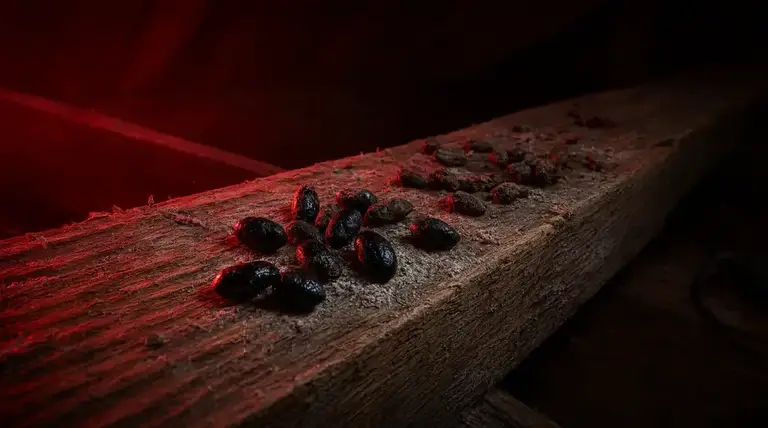
Rodent droppings identification is the process of matching the size, shape, colour and location of faecal pellets to a specific rodent species, so you can confirm an infestation and choose the right treatment. Mouse droppings are 3–6 mm, dark and rice-grain shaped; rat droppings are 10–20 mm and capsule shaped. Fresh droppings are dark, moist and shiny, while old ones are grey, dry and crumble — and that difference tells you whether the activity is happening right now.
- Mouse droppings are 3–6 mm and rice-like; rat droppings are 10–20 mm and capsule shaped.
- Fresh droppings are dark, soft and glistening; old droppings are grey, dry and crumbly — a mix means an active infestation.
- Location matters: droppings in the roof void or on high shelves point to roof rats; clusters at floor level near burrows suggest Norway rats.
- Never sweep or vacuum droppings dry — dampen with disinfectant, wear gloves and a P2 mask, and bag the waste.
- Droppings confirm a live problem, so pair identification with professional Rodent Control & Removal for a lasting fix.
Why rodent droppings matter in Australian homes
Droppings are usually the first hard evidence of rodents in an Australian home, and they let you act before the population explodes. A single rat produces around 40 droppings a day and a mouse up to 80, so even a light scattering can confirm activity within days of rodents moving in.
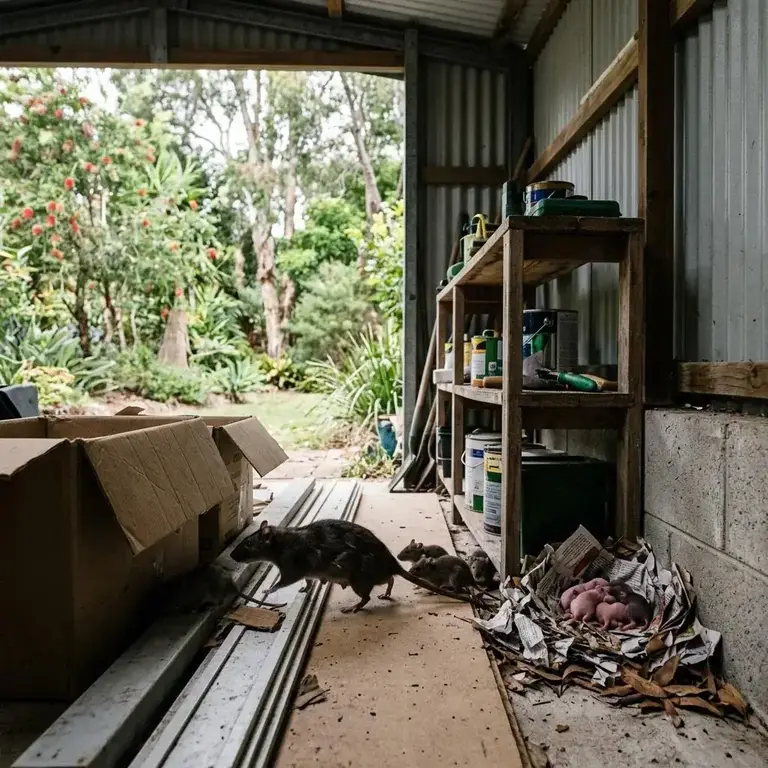
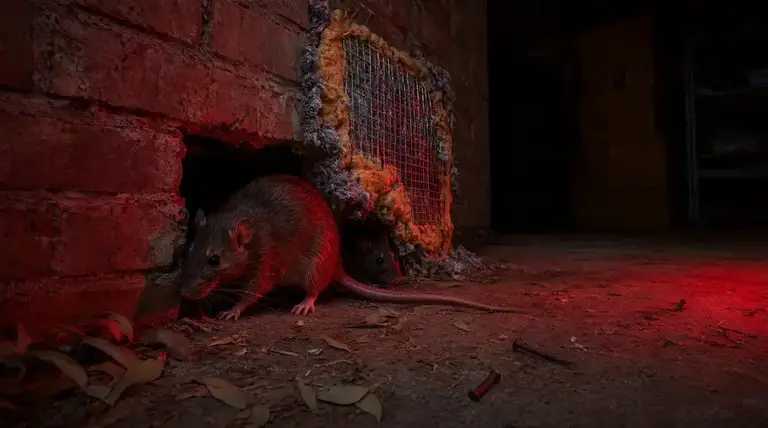
Australian housing makes droppings especially useful as a diagnostic tool. Homes on stumps or with subfloor voids — common in older Queenslanders and weatherboard cottages — give Norway rats ground-level entry points, and their droppings turn up along skirting boards, under the house and near drains. Brick veneer homes on concrete slabs tend to see mice in wall cavities and pantries. In roof voids, particularly in leafy suburbs with fruit trees and dense vegetation, roof rats leave droppings along beams and insulation. Our warm climate also means rodents breed for much of the year, so droppings found in winter shouldn’t be dismissed as “old” without a freshness check. Catching these signs early, alongside the full signs of rats or mice in your home checklist, keeps a small problem from becoming a structural and health issue.
Identifying droppings by species
You can identify the rodent species from its droppings by measuring the size and checking the shape: mice leave 3–6 mm pointed pellets, roof rats leave 10–13 mm curved spindle-shaped pellets, and Norway rats leave 15–20 mm blunt-ended capsules. Match this against body size evidence — gnaw marks, footprints and burrows — to confirm the culprit.
| Type | Size | Shape | Species |
|---|---|---|---|
| Mouse | 3–6 mm | Pointed both ends, rice-like | House mouse |
| Roof rat | 10–13 mm | Curved, pointed ends | Roof rat (Rattus rattus) |
| Norway rat | 15–20 mm | Blunt ends, capsule | Norway rat (Rattus norvegicus) |
Roof rats leave slightly smaller, spindle-shaped droppings scattered along raised runways — beams, pipes and the tops of walls — while Norway rats leave larger, blunt-ended droppings clustered near ground-level burrows and feeding sites. Because roof rat behaviour in Australia is so different from ground-dwelling species, confirming which one you have changes the entire treatment plan, from bait placement to proofing strategy.
Warning signs: how to read rodent droppings
The age, quantity and location of droppings tell you whether the infestation is active, how big it is, and where the rodents are travelling. Use this checklist to assess what you’ve found before deciding on next steps.
- Fresh droppings: dark brown or black, soft and glistening, laid within the last day or two. Very fresh pellets may still be slightly odorous and soft to the touch, meaning a rodent passed through within hours.
- Old droppings: pale grey, hard and dusty, crumbling when pressed — evidence of past activity rather than a live problem.
- A mix of fresh and old: points to an ongoing, active infestation. Clear all visible droppings, then recheck the same spots after two or three nights; new pellets confirm current activity and map the travel routes.
- Heavy scattering: with a rat producing roughly 40 droppings a day and a mouse up to 80, large volumes signal a larger population needing urgent attention.
- Droppings up high: on shelves, in the ceiling or along beams indicate climbing roof rats.
- Droppings at floor level: clustered near burrows, drains, pet food or the pantry suggest ground-dwelling Norway rats or house mice.
- Supporting evidence: gnaw marks, greasy rub marks along walls, scratching noises at night and nesting material all strengthen the diagnosis.
Cleaning up droppings safely: DIY vs professional
Light, localised droppings can be cleaned up yourself with proper precautions, but heavy contamination — especially in roof voids and subfloors — is safer in the hands of a licensed pest control technician. Rodent droppings carry pathogens including Salmonella and, in Australia, leptospirosis-linked bacteria, so never sweep or vacuum them dry, which sends dangerous particles airborne.
For safe DIY clean-up: ventilate the area first and wear disposable gloves and a P2 mask. Dampen droppings with a disinfectant or bleach solution and leave for 5–10 minutes. Wipe up with paper towel, bag and bin it, then disinfect the surface. Wash your hands thoroughly afterwards, bin the gloves and mask, and launder any contaminated cloths on a hot wash. Cleaning removes the evidence but not the rodents — if fresh droppings keep appearing, you need elimination, not just hygiene.
| Factor | DIY clean-up | Professional service |
|---|---|---|
| Best for | Small, accessible areas (pantry, cupboards) | Roof voids, subfloors, heavy contamination |
| Species ID | Self-assessed, can be wrong | Confirmed on inspection by a licensed technician |
| Eliminates rodents | No — cleaning only | Yes — baiting, trapping and proofing |
| Health risk | Moderate if PPE and method are wrong | Minimised with correct equipment and process |
| Long-term result | Droppings return if rodents remain | Treatment plus exclusion prevents recurrence |
Rodent treatment costs in Australia (2025–26)
Across the Australian pest control industry, professional rodent control generally costs between $200 and $600 for a standard residential treatment, with proofing and exclusion work typically quoted separately. Market rates vary with property size, species, severity and access — a single-storey slab home is usually cheaper to treat than a two-storey Queenslander with a complex roof void. The figures below reflect what the industry generally charges, not any single company’s pricing.
| Service | Typical market rate (AUD) | What’s included/notes |
|---|---|---|
| Inspection and quote | $0–$150 | Species identification, entry-point assessment, treatment plan |
| Standard mouse treatment | $200–$350 | Bait stations and/or traps, one follow-up visit |
| Rat treatment (roof or Norway) | $280–$600 | Tamper-resistant bait stations, roof void treatment, follow-up |
| Rodent proofing & exclusion | $400–$1,500+ | Sealing entry points, mesh, door seals; quoted by scope |
| Severe/ongoing infestation program | $600–$1,200+ | Multi-visit program with monitoring over several weeks |
Any chemical baiting should be carried out by a licensed technician using APVMA-registered products in tamper-resistant stations, placed safely away from children and pets. Our guide to how professionals actually eliminate rats explains what a proper treatment involves.
It’s worth noting that Aussie Pest Strike typically comes in well under these general market rates for equivalent work. For an exact quote tailored to your property, give us a call on [aps_phone].
Seasonal rodent activity in Australia
Rodent pressure in Australia peaks from late autumn through winter, when rats and mice push indoors for warmth and food, and stays elevated into early spring. Activity dips over the hotter months in southern states, though in subtropical Queensland and coastal NSW rodents remain active almost year-round.
Jan
Feb
Mar
Apr
May
Jun
Jul
Aug
Sep
Oct
Nov
Dec
Indicative indoor rodent activity across Australia. Reports climb sharply from April as temperatures fall, peak through June–August, then ease as rodents move back outdoors over summer. Subtropical regions show a flatter curve with year-round activity.
The practical takeaway: autumn is the best time to book Rodent Proofing & Exclusion, sealing entry points before the winter influx rather than after rats are already in the ceiling.
Nine times out of ten, the droppings tell us everything before we’ve even seen a rodent. Size gives us the species, freshness tells us if it’s active, and the trail shows us exactly where to place stations and where to proof. If you’re finding new pellets every few days, don’t wait — the population is already established.
Clean up existing droppings safely using the dampen-and-disinfect method, then run the two-to-three-night recheck test. If fresh droppings appear, book a professional inspection: a licensed technician will confirm the species, map the travel routes and recommend a treatment plus exclusion plan so the problem doesn’t return next winter.
Frequently Asked Questions
How do I tell mouse droppings from rat droppings?
Measure the pellets and check their shape. Mouse droppings are 3–6 mm long, dark, and pointed at both ends like grains of rice. Rat droppings are much larger at 10–20 mm and capsule shaped. Roof rat droppings are 10–13 mm with curved, pointed ends, while Norway rat droppings are 15–20 mm with blunt ends. Matching size and shape against these ranges is the most reliable way to identify the species.
How can I tell if rodent droppings are fresh or old?
Fresh droppings are dark brown or black, soft, moist and glistening, and may have been laid within the last day or two. Very fresh pellets can still be slightly odorous. Old droppings turn pale grey, become hard and dusty, and crumble when pressed, indicating past activity rather than a live problem. Finding a mix of both suggests an ongoing infestation.
What does it mean if I find both fresh and old droppings?
A mix of fresh and old droppings points to an active, ongoing infestation rather than a one-off visit. To confirm current activity, clear all visible droppings, then recheck the same spots after two or three nights. New pellets appearing in those locations confirm the rodents are still present and help map the travel routes they are using through your home.
What does the location of droppings tell me about the species?
Location is a strong clue. Droppings found up high — on shelves, in the ceiling or along beams — indicate climbing roof rats, which travel along raised runways such as pipes and wall tops. Clusters of droppings at floor level near burrows, drains, pet food or the pantry suggest ground-dwelling Norway rats or house mice. Combining location with pellet size helps confirm the culprit.
How many droppings do rats and mice produce each day?
A single rat produces around 40 droppings per day, while a mouse can produce up to 80. This means even a light scattering of droppings can confirm activity within days of rodents moving into your home. Large volumes of droppings signal a bigger population that needs urgent attention, so quantity is a useful indicator of how severe the problem has become.
How should I safely clean up rodent droppings?
Never sweep or vacuum droppings dry, as this sends dangerous particles airborne. Ventilate the area first, then wear disposable gloves and a P2 mask. Dampen the droppings with disinfectant or a bleach solution and leave for 5–10 minutes. Wipe up with paper towel, bag the waste and bin it, then disinfect the surface. Wash your hands thoroughly afterwards and launder any contaminated cloths on a hot wash.
When should I call a professional instead of cleaning droppings myself?
Light, localised droppings in accessible areas like pantries or cupboards can be handled yourself with proper precautions. Heavy contamination, especially in roof voids and subfloors, is safer left to a licensed pest control technician with the right equipment. Importantly, cleaning removes evidence but not rodents — if fresh droppings keep appearing after cleaning, you need elimination through baiting, trapping and proofing, not just hygiene.
Do seasonal changes affect the size or appearance of rodent droppings?
Rodent pressure peaks from late autumn through winter, when rats and mice move indoors seeking warmth and food, and stays elevated into early spring. Reports climb sharply from April, peak between June and August, then ease over summer. In subtropical Queensland and coastal NSW, rodents remain active almost year-round. Autumn is the ideal time to seal entry points before the winter influx begins.
How would Aussie Pest Strike assess the rodent droppings I've found?
A technician would inspect where you found the droppings and assess their size, shape and freshness to identify whether house mice, roof rats or Norway rats are present. They would check supporting signs such as gnaw marks, greasy rub marks along walls, scratching noises and nesting material, then examine likely entry points and travel routes. This confirms whether the infestation is active and shapes the right treatment plan.
What should I do next after identifying rodent droppings in my home?
Once droppings confirm rodent activity, arrange a professional inspection so the species can be confirmed and an appropriate treatment plan put in place. Aussie Pest Strike can assess your situation and recommend baiting, trapping and proofing to eliminate the rodents and prevent them returning. Cleaning up droppings alone won't solve the problem, so pairing safe clean-up with proper elimination gives a lasting result.
Sources & further reading
Found Something
Dangerous?
Don’t touch it. Don’t spray it. Keep kids and pets clear, take a photo from a safe distance, and call us — or book a free inspection and we’ll come to you.
02 7235 0050