Norway Ratsin Australia: Behaviourand Control
Norway rats in — the Norway rat ( Rattus norvegicus ), also called the brown rat, is the largest rat commonly found in Australia, reaching 200-500 g with a...
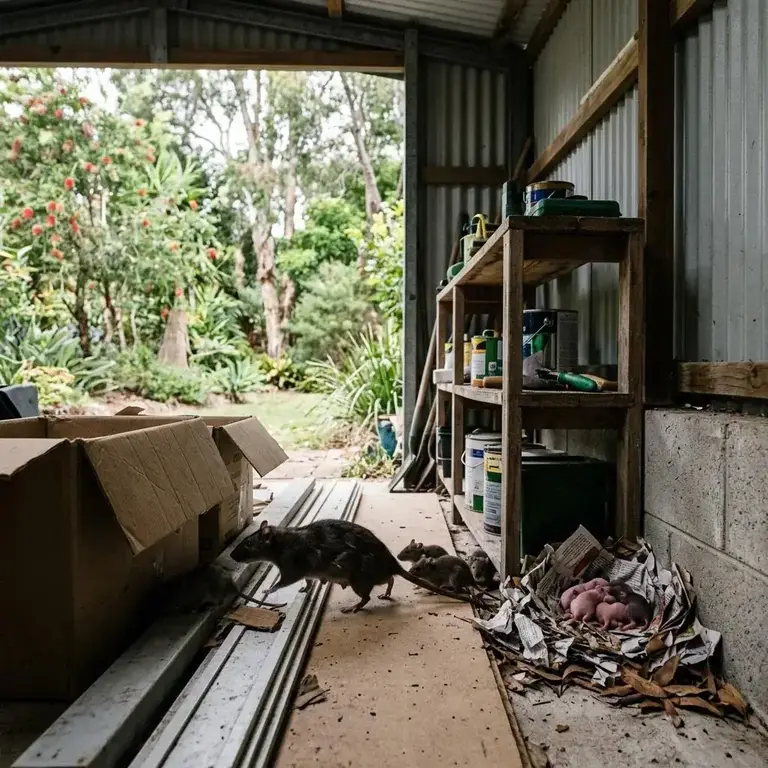
The Norway rat (Rattus norvegicus), also called the brown rat or sewer rat, is the largest rat commonly found across Australia, and it’s a serious problem in homes and businesses from Sydney to Perth. A norway rat typically weighs 200-500 g with a stocky body up to 25 cm long, and unlike its climbing cousin the roof rat, it lives at ground level — burrowing into soil, drains and building foundations. That’s exactly why effective control starts below ground level, not in the roof.
Put simply: a norway rat is a ground-dwelling, burrowing rodent that nests outdoors and enters buildings to feed, so controlling it means targeting burrows, entry points and food sources together. In this guide we’ll cover how to identify the species, the warning signs to watch for, realistic DIY and professional pest control options, current Australian pricing, and when to call in a licensed technician.
- The Norway rat is Australia’s largest common rat — stocky, brown-grey, with a tail shorter than its body — and it burrows at ground level rather than nesting in roofs.
- Daytime sightings, large blunt-ended droppings (15-20 mm) and fresh burrow holes along fence lines or under sheds signal an active infestation.
- Traps alone rarely resolve an established burrow system; exclusion, habitat reduction and a structured baiting program work best.
- Professional rodent control in Australia typically costs $250-$600 for an initial treatment program, with proofing quoted separately.
- Activity peaks through autumn and winter as rats push closer to shelter and food — act early, before the colony grows.
Why the norway rat matters in Australian homes and businesses
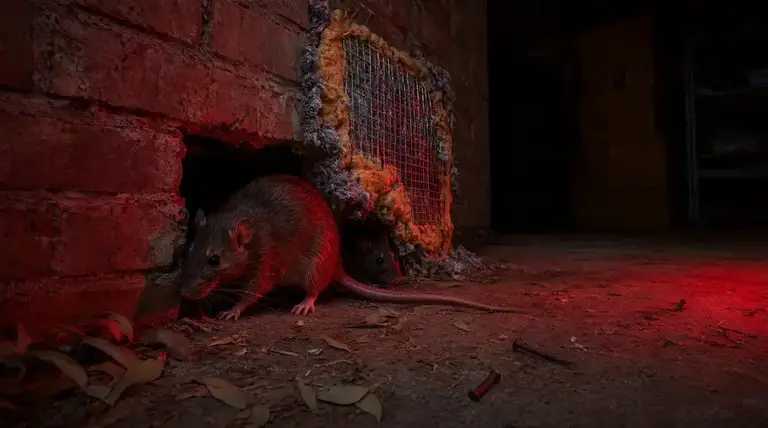
Norway rats matter because they damage property, contaminate food and spread disease — and Australian housing gives them plenty of opportunity. They’re the classic “sewer rat” of Australian cities, thriving around drains, canals, rubbish areas and older ground-level buildings, and they readily enter structures through sewer and stormwater lines.
Housing style plays a big role. Homes on suspended subfloors — including classic Queenslanders and older weatherboard houses — offer sheltered voids and soft soil ideal for burrowing. Brick veneer homes on slabs aren’t immune either: gaps around pipe penetrations, weep holes and deteriorating door sweeps give a determined rat everything it needs. In newer estates, construction disturbance often displaces burrow systems into neighbouring yards. Add our climate — mild winters in the south, year-round warmth in Queensland — and populations can breed across most of the year, with pressure spiking as temperatures drop.
Health-wise, these rats contaminate food preparation areas, foul stored goods with droppings and urine, and gnaw constantly — including on electrical wiring, which creates a genuine fire risk. For food businesses, an active infestation can mean failed inspections and reputational damage. It’s not a pest to tolerate.
Warning signs of a Norway rat infestation
The clearest signs of Norway rats are burrow holes in soil, large blunt-ended droppings, gnaw marks at ground level and greasy rub marks along walls and runs. Because they’re nocturnal, you’ll usually see the evidence before you see the animal. Work through this checklist:
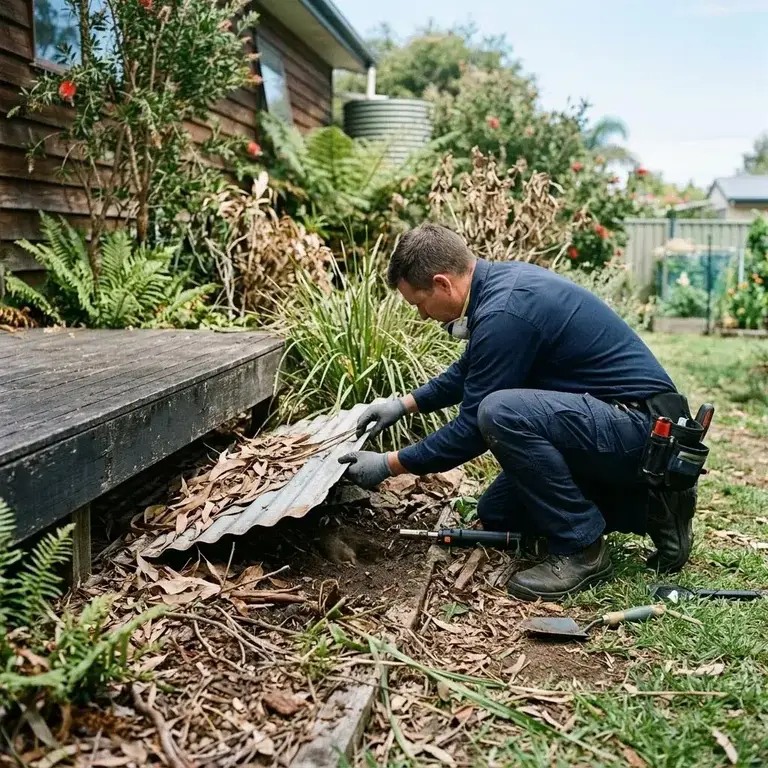
- Burrow holes — 50-100 mm openings with smooth, worn entrances along fence lines, under sheds, beside compost bins and near drains or waterways.
- Droppings — large, blunt-ended pellets 15-20 mm long, clustered near burrows and feeding areas (distinct from the smaller pointed droppings of other rodents).
- Gnaw marks — broad, rough gnawing low on door frames, skirting, pipes and stored materials; rats must gnaw to keep their incisors in check.
- Grease marks and runs — dark, oily smears along walls, fences and pipes where bodies repeatedly brush past.
- Noises at night — scratching and scurrying at ground level, in subfloors or inside wall cavities after dark.
- Daytime sightings — seeing rats in daylight usually indicates a heavy infestation or an overcrowded burrow being displaced.
- Pet behaviour — dogs fixating on a shed corner, compost heap or subfloor access point.
For a room-by-room walkthrough, see our full checklist of signs of rats or mice in your home. If you’re seeing activity high in the roof instead, you may be dealing with a different species — our guide to roof rats in Australia explains the difference.
Norway rat behaviour that drives control
Three behaviours shape every successful control program: burrowing, limited foraging range and neophobia. Understanding them tells you where to place traps and stations — and why patience matters.
Burrowing and foraging. Norway rats dig extensive burrow systems with multiple entrances, typically along fence lines, under sheds, beside compost bins and near drains. They forage within roughly 25-45 metres of the nest and are strong swimmers, which is why they so often enter buildings via sewer and stormwater lines. Control that ignores the burrows only ever treats the symptoms.
Neophobia. Like all rats, they’re wary of new objects, so traps and bait stations may sit untouched for several days. Pre-baiting — leaving stations unset with food first — improves success considerably. This is where DIY efforts often fail: people move or rebait equipment too quickly and teach the rats to avoid it.
Nocturnal activity. They feed mostly after dark, so a structured program built around their nightly runs — as outlined in our article on how professionals actually eliminate rats — delivers far better results than scattered trapping.
DIY vs professional Norway rat control
DIY can knock back a small, early-stage problem, but established burrow systems almost always need professional pest control. Because norway rat colonies nest outdoors and enter buildings to feed, lasting results come from combining exclusion, habitat reduction and targeted baiting — not traps alone. Here’s how the two approaches compare:
| Factor | DIY approach | Professional treatment |
|---|---|---|
| Upfront cost | $30-$150 for traps and hardware-store baits | $250-$600 for an initial program |
| Effectiveness | Fine for one or two rats; rarely resolves a burrow system | Targets burrows, runs and entry points systematically |
| Safety | Loose baits risk children, pets and wildlife | Lockable, tamper-resistant stations placed by licensed technicians |
| Exclusion work | Often missed or done partially | Gaps of 20 mm+ identified and sealed properly |
| Follow-up | None — reinfestation common | Scheduled revisits and monitoring until activity stops |
If you go the DIY route, seal entry gaps of 20 mm or more around pipes, vents and door sweeps, clear woodpiles and dense ground cover, manage compost, secure bins, and never leave pet food out overnight. Use lockable bait stations along burrow runs and fence lines, and leave chemical rodenticides to licensed technicians — APVMA-registered products must be used strictly to label directions, and no treatment can be called 100% safe or guaranteed.
Norway rat control costs in Australia (2025-26)
Across the Australian pest control industry, homeowners are generally quoted between $250 and $600 for an initial professional rodent control program, with proofing and ongoing monitoring typically charged separately. What the market charges varies with property size, infestation severity, access (subfloors cost more than slabs) and your city. Typical industry ranges:
| Service | Typical market rate (AUD) | What’s included/notes |
|---|---|---|
| Inspection and quote | $0-$150 | Species ID, burrow mapping, entry-point assessment; often free with treatment |
| Initial baiting/trapping program | $250-$600 | Tamper-resistant stations, placement along runs and burrows, 1-2 follow-up visits |
| Rodent proofing and exclusion | $300-$1,500+ | Sealing gaps, door sweeps, mesh over vents and pipe penetrations |
| Ongoing monitoring (commercial) | $60-$150 per visit | Scheduled station servicing, reporting for compliance |
These are the going rates you’ll see quoted across the Australian market — not any one company’s price list. A proper Rodent Control & Removal program should always be priced after inspection so you only pay for what your property actually needs, and quality Rodent Proofing & Exclusion work is what stops the next colony moving in.
Here’s the good news: Aussie Pest Strike typically comes in well under these typical market rates, without cutting corners on treatment or proofing. Call us on [aps_phone] for an exact quote tailored to your property.
Seasonal Norway rat activity in Australia
Norway rat pressure rises through autumn and peaks in winter as rats push closer to shelter and reliable food, then eases through spring and summer. In southern states the winter spike is pronounced; in warmer northern regions activity stays moderate year-round. The chart below shows typical relative activity by month:
Jan
Feb
Mar
Apr
May
Jun
Jul
Aug
Sep
Oct
Nov
Dec
Typical Norway rat activity pattern across Australia: activity builds from March, peaks through June-August as rats seek warmth and food indoors, then tapers off through spring. Book treatment in early autumn to get ahead of the winter influx.
“Nine times out of ten, when a customer says the traps didn’t work, the burrows were never touched. You have to find where they’re living, not just where they’re feeding. Get the burrows and the entry points, and the rest follows.”
If you’ve found burrow holes, large droppings or ground-level gnawing, act now — before winter drives the colony inside. Start with habitat reduction and sealing obvious gaps, then book a professional inspection so the burrow system itself is treated with a structured baiting and exclusion program. One-off trapping won’t finish the job.
Frequently Asked Questions
How do I tell a Norway rat apart from a roof rat?
A Norway rat is stockier and larger, typically weighing 200-500 g with a body up to 25 cm long, brown-grey in colour, with a tail shorter than its body. It lives and burrows at ground level, nesting outdoors in soil, drains and foundations. A roof rat is the climbing cousin that nests high up in roofs. If you see activity in the roof space, you are likely dealing with a different species.
What do Norway rat burrows and runways look like around buildings?
Look for burrow holes of 50-100 mm with smooth, worn entrances along fence lines, under sheds or near drains; large blunt-ended droppings 15-20 mm long; broad gnaw marks low on door frames, skirting and pipes; dark greasy rub marks along walls and runs; scratching noises at ground level after dark; and rats seen during the day, which usually signals a heavy infestation. Dogs fixating on sheds or compost heaps can also be a clue.
Why do Norway rats enter homes through drains and sewers?
Norway rats are strong swimmers and readily travel through sewer and stormwater lines, which is why they are often called sewer rats. They thrive around drains, canals, rubbish areas and older ground-level buildings, and they enter structures through these water lines as well as gaps around pipe penetrations, weep holes and deteriorating door sweeps. This is why effective control starts below ground level rather than in the roof.
What is neophobia and why does it make DIY rat control fail?
Neophobia is a rat's wariness of new objects. Norway rats may leave traps and bait stations untouched for several days before approaching them. Pre-baiting, where stations are left unset with food first, improves success considerably. DIY efforts often fail because people move or rebait equipment too quickly, teaching the rats to avoid it. Patience and a structured program built around their nightly runs deliver far better results than scattered trapping.
Can traps alone get rid of a Norway rat problem?
Traps alone rarely resolve an established burrow system. Norway rats dig extensive burrows with multiple entrances and forage within roughly 25-45 metres of the nest, so control that ignores the burrows only treats the symptoms. Lasting results come from combining exclusion, habitat reduction and targeted baiting. Trapping can help knock back one or two rats early on, but an established colony usually needs professional treatment.
What can I do myself to reduce Norway rat activity?
Seal entry gaps of 20 mm or more around pipes, vents and door sweeps, clear woodpiles and dense ground cover, manage compost, secure bins and never leave pet food out overnight. Use lockable bait stations along burrow runs and fence lines. Leave chemical rodenticides to licensed technicians, because APVMA-registered products must be used strictly to label directions, and loose baits risk children, pets and wildlife.
How do seasonal changes affect Norway rat breeding and movement?
Activity builds from March, peaks through June to August as rats push closer to shelter and reliable food, then eases through spring and summer. In southern states the winter spike is pronounced, while warmer northern regions such as Queensland see moderate activity year-round. Because populations can breed across most of the year in Australia's climate, acting early before the colony grows makes control much easier.
Why are Norway rats a serious problem for Australian homes and businesses?
They damage property, contaminate food preparation areas, foul stored goods with droppings and urine, and gnaw constantly, including on electrical wiring, which creates a genuine fire risk. Homes on suspended subfloors, such as Queenslanders and older weatherboard houses, offer sheltered voids and soft soil ideal for burrowing. For food businesses, an active infestation can mean failed inspections and reputational damage.
How would Aussie Pest Strike assess the signs of Norway rats around my property?
An assessment would start with species identification, confirming the large blunt-ended droppings, ground-level gnaw marks and greasy rub marks point to Norway rats rather than roof rats. The technician would map burrow holes along fence lines, under sheds and near drains, check subfloor voids and slab penetrations, and identify entry points of 20 mm or more. This inspection shapes a treatment program targeting burrows, runs and food sources together.
What should I do next if I have found fresh burrow holes near my shed or fence line?
Avoid disturbing or flooding the burrows, note their locations and any droppings or rub marks nearby, and secure food sources such as bins, compost and pet food in the meantime. Then arrange an inspection so the burrow system can be properly mapped before any baiting begins. Aussie Pest Strike can assess the activity and recommend whether exclusion work, habitat reduction or a structured baiting program suits your situation.
Sources & further reading
Found Something
Dangerous?
Don’t touch it. Don’t spray it. Keep kids and pets clear, take a photo from a safe distance, and call us — or book a free inspection and we’ll come to you.
02 7235 0050