Moisture Meters inPest Inspections:Why They Matter
Moisture meters in pest inspections reveal the damp that hides termites. Learn how they work, what readings mean, and book a free on-site quote today.
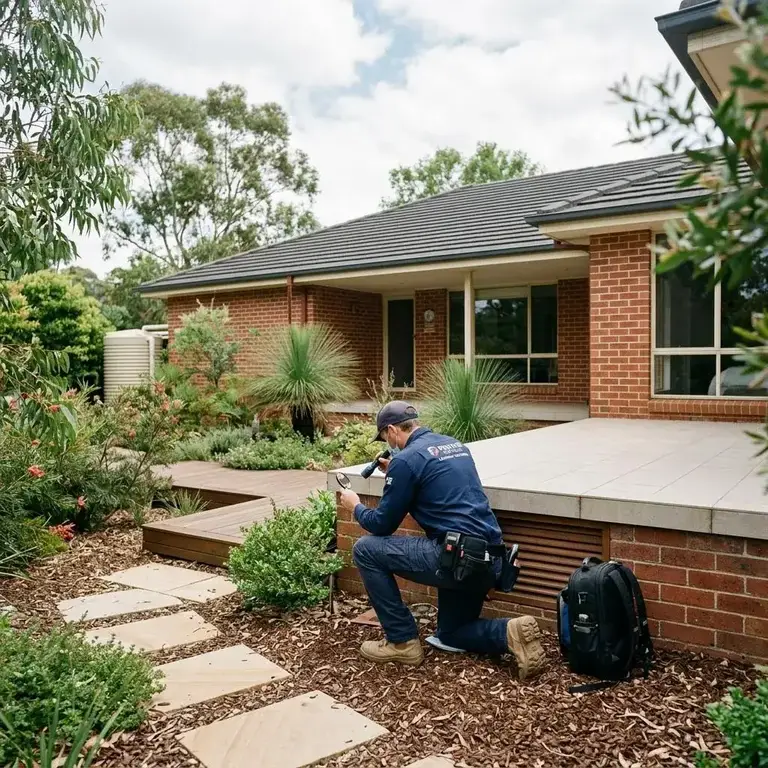
A moisture meter matters in pest inspections because termites need moisture to survive, so unusually damp timber or wall areas often reveal hidden activity long before you see visible damage. This non-invasive tool lets a licensed inspector detect high readings behind walls and under floors without cutting anything open — and understanding how it works helps you interpret why an inspector lingers over a seemingly normal wall in your home.
A moisture meter is a handheld device that measures the water content of timber, plaster and masonry, giving an inspector a fast, non-destructive way to locate damp zones that attract timber pests. In Australian homes — from elevated Queenslanders with subfloors to brick veneer on a concrete slab — those damp zones are precisely where termites and wood decay fungi do their worst work. This guide explains why the tool matters, what high readings actually mean, and how it fits into a professional pest control inspection.
- Termites depend on moisture, so damp timber or plaster is one of the earliest warning signs of hidden activity.
- A moisture meter is non-invasive — pinless models read up to roughly 20–30 mm below the surface without marking walls.
- A high reading is a prompt to investigate, not proof of termites; inspectors combine it with sounding, thermal imaging and visual checks.
- Fixing leaks, subfloor ventilation and drainage removes the conducive conditions termites rely on.
- Professional Termite Inspections & Reports that include moisture metering typically cost $250–$450 AUD in 2025–26.
Why o Moisture Signals Pest Risk in Australian Homes
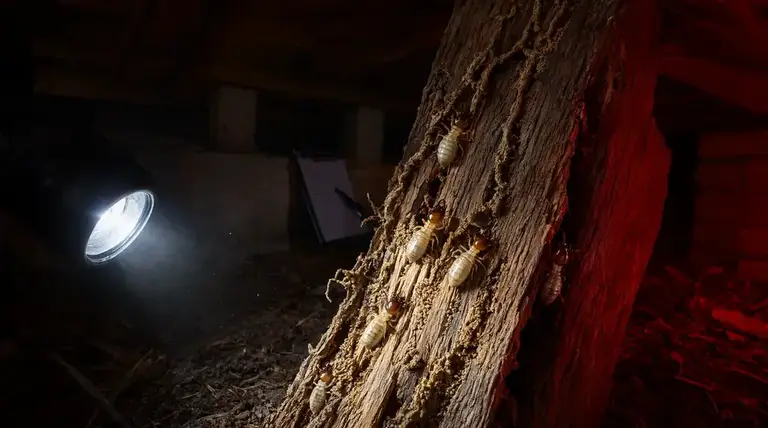
Moisture signals pest risk because subterranean termites such as Coptotermes acinaciformis — the most destructive termite species in Australia — must maintain humidity inside their mud workings to avoid drying out. Where they are active in a wall cavity or behind skirting, the surrounding timber and plaster almost always show raised moisture levels.
Wood decay fungi, another serious timber pest, also require damp conditions to establish, so a high moisture reading is a shared warning sign for multiple problems at once. This matters even more in Australia’s climate. Coastal Queensland and New South Wales combine heat with heavy summer rainfall, keeping subfloors and wall cavities humid for months. Elevated Queenslanders and older weatherboard homes with suspended timber floors trap damp air beneath the house, while brick veneer homes on slabs can develop damp at the slab edge where drainage is poor. Older housing stock carries extra risk, which is why we cover the topic in depth in our guide to pest control in older Australian homes. Even brand-new homes aren’t immune — construction moisture, poorly graded drainage and gardens built against weep holes create damp zones within the first year, as explained in our article on pest control for new builds and what Australian owners miss.
Because damp both attracts termites and feeds decay fungi, a moisture reading gives the inspector a map of where to look hardest. That is the same link we explore in our guide on termites and the moisture connection.
Warning Signs: What a High Moisture Reading Can Mean
A high moisture reading usually means one of four things: concealed termite workings, a plumbing or roof leak, rising damp, or condensation in a poorly ventilated room. Use this checklist to understand what your inspector is looking for:
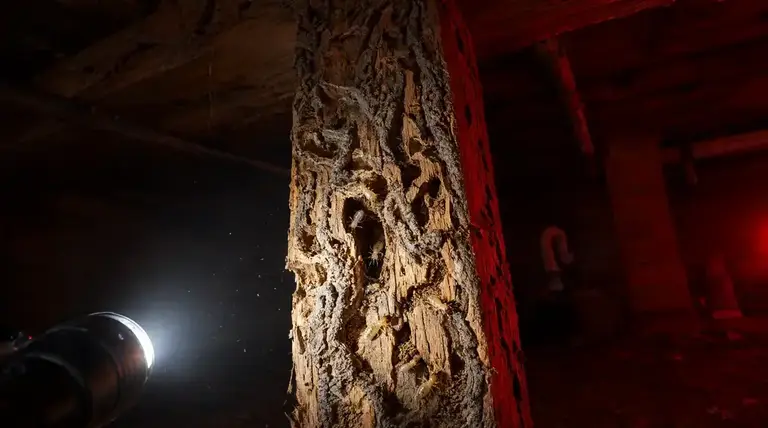
- Active termite workings concealed in the wall cavity or subfloor, keeping the surrounding timber damp.
- A plumbing or roof leak — a slow drip from a pipe, shower recess or flashing creating conducive conditions over months.
- Rising damp from poor site drainage, failed damp-proof courses or inadequate subfloor ventilation.
- Condensation in poorly ventilated bathrooms, laundries and kitchens, especially in winter.
- Damp skirting boards near external walls where garden beds or mulch sit above weep holes.
- Musty smells or soft, spongy timber when pressed, which often accompanies elevated readings.
Important: a high reading isn’t proof of termites on its own. It’s a flag that tells a licensed inspector where to concentrate further checks with other tools and visual evidence.
DIY Moisture Meters vs Professional Inspection
You can buy a basic moisture meter from a hardware store for under $50, and it will tell you whether a wall is damp. What it won’t tell you is why it’s damp, whether termites are present, or how the reading compares to reference points across the whole building. That interpretation — built from thousands of inspections — is what you pay a licensed technician for.
| Factor | DIY moisture meter | Professional inspection |
|---|---|---|
| Upfront cost | $20–$100 for the meter | $250–$450 per inspection |
| Accuracy of interpretation | Raw number only; no reference points or diagnosis | Readings compared against dry reference points; cause identified |
| Termite confirmation | Not possible | Combined with sounding, thermal imaging and visual evidence |
| Written report | None | Formal report suitable for property transactions |
| Best use | Monitoring a known leak or damp spot | Annual inspections, pre-purchase checks, suspected activity |
Inspection Costs in Australia (2025–26)
Across the Australian market, a professional pest inspection that includes moisture metering generally costs between $250 and $450 AUD for a standard home, with combined building and pest inspections running higher. Industry pricing varies with property size, construction type (subfloor access adds time) and location. The typical market rates charged across the industry are below:
| Service | Typical market rate (AUD) | What’s included / notes |
|---|---|---|
| Standard termite inspection with moisture meter | $250–$450 (typical industry range) | Interior, exterior, roof void and subfloor where accessible; moisture readings, sounding, written report |
| Inspection with thermal imaging added | $350–$550 (typical industry range) | Adds thermal camera scan of walls and wet areas |
| Pre-Purchase Building & Pest Inspections | $450–$700 (typical industry range) | Combined structural and timber pest report for buyers |
| Large or complex properties | $500–$800+ (typical industry range) | Acreage, multi-storey, extensive subfloor or difficult access |
For buyers, our pre-purchase termite inspection guide explains exactly what to expect from the report before you sign a contract.
The figures above reflect what the industry generally charges. Aussie Pest Strike typically comes in well under these market rates, so for an exact quote on your property, call us on [aps_phone] today.
Seasonal Moisture and Termite Activity in Australia
Moisture-related termite risk peaks in the warm, wet months from October through March across most of Australia, when rainfall and humidity keep timber damp and termite colonies are most active. Activity dips in the cooler, drier winter months, though heated homes and coastal humidity mean the risk never drops to zero.
Jan
Feb
Mar
Apr
May
Jun
Jul
Aug
Sep
Oct
Nov
Dec
Indicative moisture-related termite risk across a typical Australian year. Risk climbs with spring and summer rainfall and humidity, peaks over the wet season, and eases through the cooler, drier winter months. Tropical northern regions stay elevated for longer.
Moisture Meters as Part of a Bigger Toolkit
No single instrument confirms termites — a moisture meter is one tool among several, and a thorough inspector pairs it with thermal imaging, sounding and hard-won experience. Together these tools reduce reliance on guesswork and inform the findings you read in a formal report.
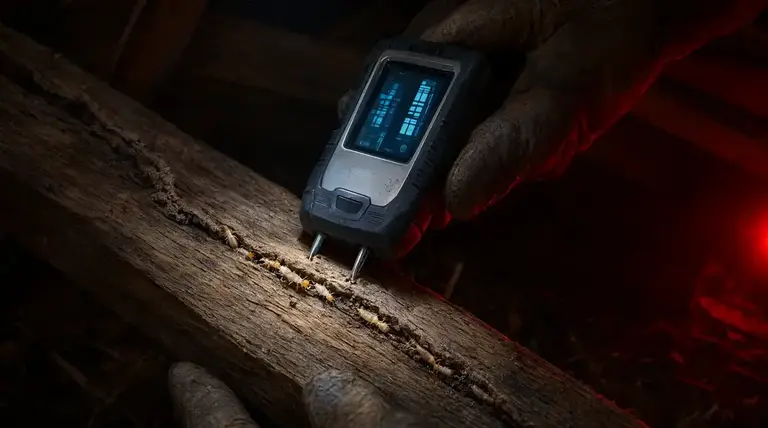
Most inspectors use a pin or pinless meter. Pinless models read moisture up to around 20–30 mm below the surface without marking walls, making them ideal for a non-invasive inspection of plasterboard and skirting. Readings are relative: the inspector compares a suspect area against dry reference points elsewhere in the room, so a “high” number only means something in context. Here’s how the meter fits alongside the other standard tools:
| Tool | Detects | Invasive? |
|---|---|---|
| Moisture meter | Damp timber and plaster | No |
| Thermal camera | Temperature anomalies in wall cavities | No |
| Tapping / sounding | Hollow or damaged timber | No |
| Borescope | Contents of wall cavities | Minimally |
Read more about the imaging side in our guide to thermal imaging for termite detection. Certain zones consistently produce high readings, so an experienced inspector heads straight for them: the base of wet-area walls in bathrooms, laundries and kitchens; skirting boards near external walls; the subfloor of suspended timber homes; and any point where a plumbing line runs inside a wall. Slab-edge intrusion — where termites enter at the junction of the concrete slab and brickwork — is a classic Australian entry route that a moisture reading can help flag early.
“The moisture meter is usually the first tool out of my kit, because damp tells me where to spend my time. Nine times out of ten, a high reading at the base of a shower wall leads us straight to either a leak or termite workings — sometimes both. But the number on the screen is only the start of the conversation, never the end of it.”
Fixing the Moisture, Not Just Recording It
Reducing moisture is one of the most effective termite prevention steps a homeowner can take, because damp conditions are what attract and sustain timber pests in the first place. Acting on a high reading protects your home long after the inspector has left.
Practical fixes include improving subfloor ventilation, repairing leaking taps, shower recesses and downpipes, redirecting stormwater drainage away from footings, and keeping garden beds and mulch clear of weep holes and slab edges. These steps remove the conducive conditions an inspector would otherwise flag year after year. Where treatment is required, only licensed technicians should apply termiticides and other chemical products in line with APVMA-registered label directions — a reputable pest control provider will always explain the product, its limitations and any warranty terms before starting work. For a full picture of the process, see our guide on what happens during a professional pest inspection.
Book a professional timber pest inspection at least once a year — more often if your home has a subfloor, a history of leaks, or sits in a high-rainfall region. Ask upfront whether the inspection includes moisture metering and thermal imaging; if it doesn’t, you’re paying for guesswork. And if an inspection flags a high reading, treat the moisture source as urgently as any termite finding.
Frequently Asked Questions
Why do pest inspectors use moisture meters during an inspection?
Termites need moisture to survive, so unusually damp timber or plaster often reveals hidden activity before visible damage appears. A moisture meter is a handheld device that measures water content in timber, plaster and masonry, letting a licensed inspector locate damp zones behind walls and under floors without cutting anything open. Because wood decay fungi also need damp conditions, a high reading flags multiple timber pest risks at once.
What does a high moisture reading actually mean?
A high reading usually points to one of four causes: concealed termite workings in a wall cavity or subfloor, a plumbing or roof leak, rising damp from poor drainage or failed damp-proof courses, or condensation in poorly ventilated rooms. It is not proof of termites on its own. Instead, it tells the inspector where to concentrate further checks using sounding, thermal imaging and visual evidence.
How does a pinless moisture meter work without damaging walls?
Pinless models read moisture up to roughly 20–30 mm below the surface without marking walls, making them ideal for non-invasive checks of plasterboard and skirting. Readings are relative rather than absolute: the inspector compares a suspect area against dry reference points elsewhere in the room. That means a high number only has meaning in context, which is why interpretation by an experienced technician matters.
Which areas of a home produce the most high moisture readings?
Certain zones consistently produce elevated readings, so experienced inspectors check them first: the base of wet-area walls in bathrooms, laundries and kitchens; skirting boards near external walls where garden beds or mulch sit above weep holes; the subfloor of suspended timber homes such as Queenslanders; and any point where a plumbing line runs inside a wall. Slab-edge junctions are another classic Australian entry point worth flagging.
Can I use a DIY moisture meter instead of a professional inspection?
A DIY moisture meter can indicate that a wall or timber is damp, but it cannot explain the cause, detect termite activity, or interpret readings in context. A professional inspection compares readings against dry reference points, uses sounding and visual evidence to confirm findings, checks accessible areas throughout the building, and documents everything in a written report suitable for property transactions.
How does Australia's climate affect moisture-related termite risk?
Moisture-related termite risk peaks in the warm, wet months from October through March, when rainfall and humidity keep timber damp and colonies are most active. Coastal Queensland and New South Wales keep subfloors and wall cavities humid for months, while tropical northern regions stay elevated for longer. Risk eases through cooler, drier winter months but never drops to zero, especially in heated homes and coastal areas.
How do I fix the conditions that cause high moisture readings?
Fixing leaks, improving subfloor ventilation and correcting drainage removes the conducive conditions termites rely on. Practical steps include repairing slow drips from pipes, shower recesses or flashing, addressing rising damp from poor site drainage or failed damp-proof courses, ventilating bathrooms, laundries and kitchens to reduce condensation, and keeping garden beds and mulch below weep holes so skirting boards near external walls stay dry.
Is a moisture meter the only tool inspectors use to find termites?
No single instrument confirms termites. A thorough inspector pairs the moisture meter with thermal imaging to detect temperature anomalies in wall cavities, tapping or sounding to find hollow or damaged timber, and sometimes a borescope for minimally invasive views inside wall cavities. Together these tools reduce guesswork and support the findings recorded in a formal inspection report.
What information should I provide Aussie Pest Strike when booking a moisture-related pest inspection?
When contacting Aussie Pest Strike about suspected damp or termite activity, it helps to describe your property type — such as an elevated Queenslander with a subfloor or brick veneer on a slab — plus any known leaks, musty smells, soft timber or damp skirting boards you have noticed. Mentioning whether you need a standard termite inspection, thermal imaging added, or a pre-purchase combined report helps them advise on what your inspection should cover.
What should I do next if my own moisture meter shows a high reading?
Treat the reading as a prompt to investigate, not proof of termites. Note where the reading was taken, check for leaks or condensation sources nearby, and arrange a professional inspection so the cause can be properly identified with sounding, thermal imaging and visual evidence. Aussie Pest Strike can assess the area, compare readings against dry reference points and explain what repairs or treatment may be needed based on their findings.
Sources & further reading
Found Something
Dangerous?
Don’t touch it. Don’t spray it. Keep kids and pets clear, take a photo from a safe distance, and call us — or book a free inspection and we’ll come to you.
02 7235 0050