Termite Baiting vsChemical Barriers:Which Is Better?
Termite Baiting vs Chemical Barriers — Termite baiting vs — Termite baiting aims to eliminate the whole colony by having workers carry a slow-acting bait...
Termite baiting and chemical barriers are the two dominant termite management systems used on Australian homes, and choosing between them is one of the most consequential decisions a property owner can make. Termite baiting works by eliminating the entire colony — workers carry a slow-acting bait back to the nest until the queen dies — while a chemical barrier creates a continuous treated zone of soil around the building that kills termites as they try to enter.
Neither system is universally “better”. The right choice depends on your construction type, soil conditions, landscaping and whether you have active termites on site right now. This guide breaks down how each system works, what they cost in 2025-26, and how Australian conditions tip the balance, so you can make an informed decision with your pest control technician rather than guessing.
- Termite baiting eliminates the colony — foragers share a slow-acting bait through the nest, collapsing it (including the queen) in roughly 8-16 weeks.
- Chemical barriers protect the structure — a non-repellent treated zone kills termites as they tunnel through, and typically lasts 5-8 years.
- Your property decides the winner — construction type, soil, paving and activity level matter more than any generic recommendation.
- Combining both is common practice — baiting knocks out an active colony, then a barrier provides durable ongoing protection.
- Both need professional oversight — installation and monitoring by a licensed technician is essential for either system to work.
Why the Termite Baiting vs Barrier Question Matters Across Australia
It matters because Australia has some of the most aggressive termite pressure in the world, and the wrong system — or no system — leaves your biggest asset exposed. Termite damage is excluded from virtually all standard home insurance policies, so the cost of an undetected attack falls entirely on you.
In humid, high-pressure regions like Brisbane, the Gold Coast and northern NSW, Coptotermes colonies forage hard year-round, and a robust treated zone or a well-serviced bait program is essential rather than optional. Further south, homes in established Melbourne and Adelaide suburbs still face serious risk from species like Coptotermes frenchi and Nasutitermes, particularly in older housing stock with subfloor access.
Housing style shapes the decision too. Homes on concrete slabs with accessible perimeters are ideal candidates for a chemical treated zone applied by trenching and rodding. Elevated Queenslanders and houses with extensive paving, decking or landscaping often favour in-ground baiting, because trenching around them would be disruptive and costly. Reactive clay soils that crack and move can also compromise a barrier’s continuity over time — one reason regular re-inspection is built into both approaches. If you haven’t had a recent assessment, booking Termite Inspections & Reports is the logical first step before committing to either system.
Warning Signs You Need a Termite Management System Now
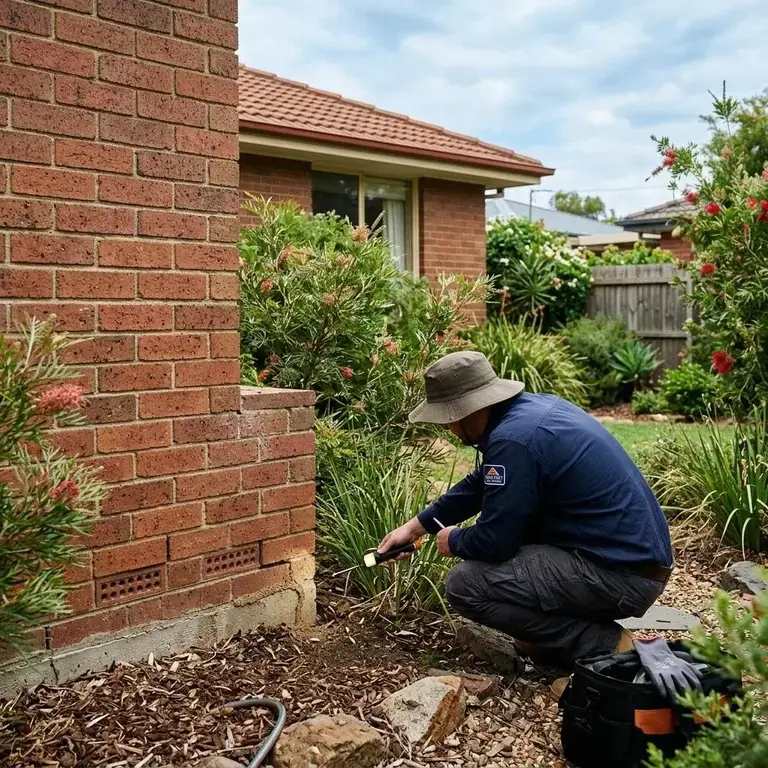
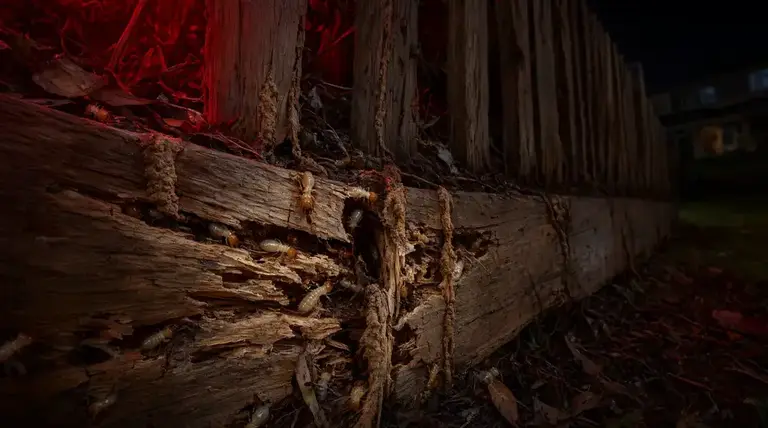
If you spot any of the signs below, you may already have active termites — which typically pushes the recommendation towards termite baiting to eliminate the colony, followed by longer-term protection. Don’t disturb anything you find; disturbed termites simply relocate and become harder to treat.
- Mud tubes on walls, piers or slab edges — pencil-width tunnels termites build to travel between nest and food source while staying humid.
- Hollow-sounding timber — skirting boards, door frames or floorboards that sound papery or hollow when tapped.
- Discarded wings near windowsills — evidence that alates (flying termites) have swarmed and may be establishing a new colony nearby.
- Sagging floors or tight-fitting doors — structural timber damage can warp frames and make doors and windows stick.
- Fine frass or dust — piles of termite droppings or chewed material near timber.
- Faint clicking in walls — soldier termites bang their heads to signal danger when the nest is disturbed.
For a fuller checklist, see our guide on 10 Warning Signs of Termites in Australian Homes, and our explainer on Termite Inspection: What It Includes and Why It Matters if you want to know what a professional assessment covers.
How Each System Works
In short: termite baiting aims to destroy the colony at its source, while a chemical barrier aims to stop termites reaching your home in the first place. Both use modern active ingredients that termites can’t detect, but they deliver them in very different ways.
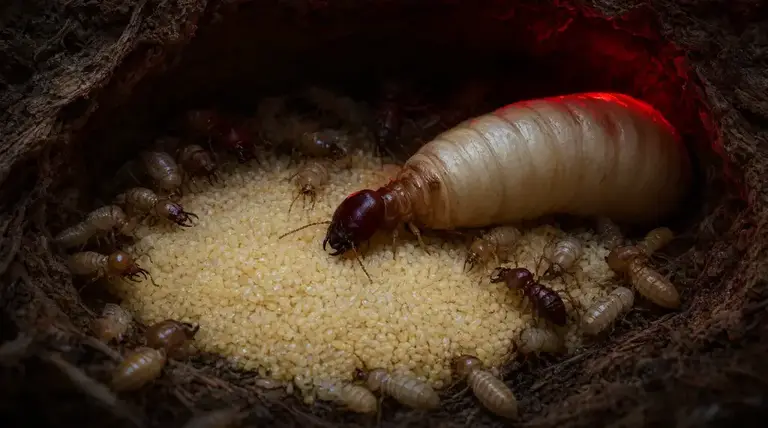
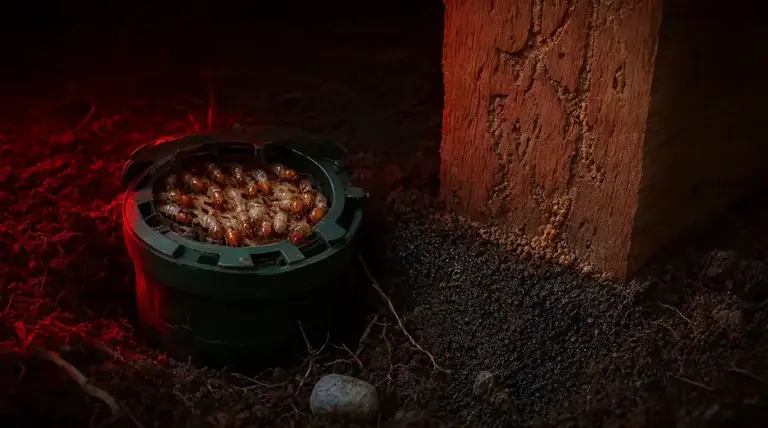
Termite baiting. In-ground bait stations are installed around the property, typically 2-4 metres apart, and monitored regularly. Once termites feed, an active ingredient such as a chitin-synthesis inhibitor (which stops termites moulting) is added. Foragers share it through the colony via trophallaxis, and over roughly 8-16 weeks the colony collapses — including the queen. Baiting’s strength is true colony elimination rather than simply repelling the attack elsewhere.
Chemical barriers (treated zones). A liquid termiticide is applied to the soil around and under the structure to create a continuous treated zone. Modern non-repellent products like fipronil or imidacloprid are undetectable to termites, so they tunnel through, pick up a lethal dose and transfer it to nest-mates. The strength here is immediate, long-lasting structural protection. For a deeper dive, read What Is a Termite Barrier and How Does It Protect Your Home?
DIY vs Professional Termite Management
Termite management is one area of pest control where DIY is genuinely not recommended. Over-the-counter bait products lack the active ingredients, station design and monitoring protocols of professional systems, and chemical termiticides are restricted-use products that must be applied by licensed technicians. A botched DIY attempt usually just scatters the colony and makes professional treatment harder.
| Factor | DIY approach | Professional installation |
|---|---|---|
| Products available | Retail baits and sprays only | APVMA-registered professional termiticides and bait systems |
| Colony impact | Often scatters or relocates termites | Targets colony elimination or a complete treated zone |
| Compliance | No certification; may breach AS 3660 principles | Installed to AS 3660 design principles with documentation |
| Ongoing assurance | None | Scheduled monitoring, re-inspections and service warranty |
Termite Baiting and Barrier Costs in Australia (2025-26)
Across the Australian market, a baiting system installation generally runs about $2,000-$3,500 plus $300-$600 per year in monitoring fees, while a chemical treated zone typically costs $2,500-$5,000+ depending on perimeter size and access. These are typical industry rates across the country, not quotes — actual pricing shifts with block size, construction type and region.
| Service | Typical market rate (AUD) | What’s included / notes |
|---|---|---|
| Termite inspection | $250-$400 | Full visual and moisture assessment with written report |
| Baiting system installation | $2,000-$3,500 | In-ground stations around perimeter, initial set-up |
| Baiting monitoring (annual) | $300-$600 | Scheduled station checks, bait replenishment, reports |
| Chemical treated zone | $2,500-$5,000+ | Trenching/rodding and termiticide application; lasts ~5-8 years |
| Combined program | Quoted on site | Baiting to eliminate an active colony plus barrier for protection |
On the typical market rates above, a chemical treated zone often works out cheaper per year of protection, while baiting spreads cost across installation plus ongoing monitoring. For a full breakdown of what the industry generally charges, see termite treatment costs in Australia, and remember that both options sit under our Termite Treatment & Barrier Systems service. No pest control treatment using chemicals can honestly be called 100% safe, which is why application should always be handled by licensed technicians following label directions.
It’s worth knowing that Aussie Pest Strike typically comes in well under these typical Australian market rates. For an exact quote tailored to your property, give us a call on [aps_phone] and we’ll sort you out.
Seasonal Termite Activity in Australia
Termites are active year-round in Australia, but visible activity — especially swarming alates — peaks in the warm, humid months from October through March. Winter sees lower surface activity in southern states, though colonies in heated or humid subfloors keep feeding.
Jan
Feb
Mar
Apr
May
Jun
Jul
Aug
Sep
Oct
Nov
Dec
Typical Australian termite activity pattern: swarming and foraging peak from October to March in warm, humid conditions, easing through the southern winter — but never stopping entirely, especially in Queensland and northern NSW.
“Most of the homes where we install termite baiting have either confirmed activity or paving right up to the walls — situations where trenching just isn’t practical. But when the perimeter’s open and the soil’s cooperative, a treated zone gives you years of protection with minimal fuss. Honestly, the jobs I’m happiest with are the combined ones: bait the colony out, then lock the building down with a barrier.”
Choose based on your property, not a generic answer. Confirmed active termites, difficult soil or extensive paving point to baiting; an accessible perimeter and a preference for fewer service visits point to a chemical treated zone — and many homes benefit from both. Whichever path you take, installation should comply with the design principles in AS 3660. Book an on-site assessment first so the recommendation matches your building, drainage and the species involved.
Frequently Asked Questions
How does termite baiting eliminate a colony?
In-ground bait stations are installed around the property, typically two to four metres apart, and monitored regularly. Once termites feed on the station, a slow-acting active ingredient such as a chitin-synthesis inhibitor is added. Foraging workers share the bait through the colony via trophallaxis, and over roughly eight to sixteen weeks the entire colony collapses, including the queen.
What is a chemical termite barrier and how does it work?
A chemical barrier is a continuous treated zone of soil created around and under the structure using a liquid termiticide applied by trenching and rodding. Modern non-repellent products such as fipronil or imidacloprid are undetectable to termites, so they tunnel through the zone, pick up a lethal dose and transfer it to nest-mates. A properly installed treated zone typically lasts five to eight years.
Which system is better for homes with paving or decking around the perimeter?
Homes with extensive paving, decking or landscaping close to the walls often favour in-ground baiting, because trenching the soil for a chemical barrier would be disruptive and costly in those situations. Bait stations can be installed with far less disturbance. If the perimeter is open and accessible, a chemical treated zone becomes more practical.
Is baiting or a chemical barrier better if I have active termites right now?
If you have confirmed active termites on site, the typical recommendation is termite baiting first, because it eliminates the colony at its source rather than just repelling the attack elsewhere. Many technicians then follow up with a chemical barrier for durable ongoing protection once the colony has collapsed. Combining both systems is common practice.
Can I install termite baits or a barrier myself?
DIY is genuinely not recommended for either system. Over-the-counter bait products lack the active ingredients, station design and monitoring protocols of professional systems, and chemical termiticides are restricted-use products that must be applied by licensed technicians. A botched DIY attempt usually just scatters the colony, making professional treatment harder, and may not comply with AS 3660 principles.
How do soil conditions affect the choice between baiting and a barrier?
Reactive clay soils that crack and move can compromise the continuity of a chemical treated zone over time, which is one reason regular re-inspection is built into both approaches. Soil type also affects how well a liquid termiticide binds and spreads during application. Your technician should assess soil conditions alongside construction type before recommending a system.
When is termite activity highest in Australia?
Termites are active year-round across Australia, but visible activity, especially swarming alates, peaks in the warm, humid months from October through March. Winter sees lower surface activity in southern states, though colonies in heated or humid subfloors keep feeding. In Queensland and northern NSW, colonies such as Coptotermes forage hard year-round.
What warning signs suggest I need a termite management system?
Key signs include mud tubes on walls, piers or slab edges; hollow-sounding timber when tapped; discarded wings near windowsills from swarming alates; sagging floors or tight-fitting doors; fine frass or droppings near timber; and faint clicking in walls. If you find any of these, don't disturb anything — disturbed termites relocate and become harder to treat.
What should I discuss with an Aussie Pest Strike technician about choosing between baiting and a barrier?
Expect to talk through your construction type, whether you have active termites on site, your soil conditions, and how much paving, decking or landscaping sits against the perimeter. Aussie Pest Strike can also explain how each system would work on your specific home, what monitoring or re-inspections involve, and whether a combined program — baiting to knock out an active colony plus a barrier for ongoing protection — makes sense for your situation.
What's the practical next step before committing to a termite treatment system?
The logical first step is booking a professional termite inspection and written report, which Aussie Pest Strike can arrange. An inspection confirms whether termites are active, identifies species and entry points, and assesses your construction and perimeter access. With that information, you and your technician can decide whether baiting, a chemical barrier, or a combined approach suits your property, rather than guessing based on generic advice.
Sources & further reading
Found Something
Dangerous?
Don’t touch it. Don’t spray it. Keep kids and pets clear, take a photo from a safe distance, and call us — or book a free inspection and we’ll come to you.
02 7235 0050