Possum Deterrents: WhatWorks andWhat’s a Myth
Possum deterrents what — the only possum deterrents that reliably work are physical exclusion and habitat changes sealing roof entry points, trimming...
Possum deterrents are products and techniques designed to keep possums out of roofs, gardens and fruit trees without harming them — and in Australia, only a handful genuinely work. If you’ve been losing sleep to thumping overhead, the honest answer is that physical exclusion and habitat changes beat every gadget on the shelf, o matter how convincing the packaging. Sprays, ultrasonic units and mothballs fail within days, while sealing entry points and pruning branches deliver lasting results.
Because brushtail and ringtail possums are protected native wildlife under state laws, deterrence must always be humane and legal — never lethal. This guide separates the proven methods from the myths, so you can spend your money once on what works instead of repeatedly on what doesn’t.
- Roof exclusion — sealing every gap larger than about 5 cm after the possum leaves at dusk — is the single most reliable possum deterrent.
- Tree pruning, trunk collars, removing food sources and installing a nest box are proven supporting measures.
- Ultrasonic repellers, mothballs and bright lights are largely a waste of money; possums habituate within days.
- Possums are protected under Australian wildlife law — harming or relocating them far away is illegal.
- Professional exclusion and roof proofing typically costs $300–$900 (AUD), far less than repeated gadget purchases and ceiling repairs.
Why Possum Deterrents Matter in Australian Homes
Possums thrive in every Australian capital city and regional centre because our suburbs offer exactly what they need: mature trees, abundant food and warm, dry roof voids. From Queenslanders on stumps in Brisbane to brick veneer homes in Melbourne and tile roofs in Perth, almost every housing style has gaps a determined possum can exploit.
The common brushtail (Trichosurus vulpecula) and the smaller ringtail are the two species most often found in ceilings. Both are protected under state wildlife legislation, which means you cannot legally harm them or relocate them far from where they were caught. That legal reality makes deterrence — not removal — the smart long-term strategy. If a possum cannot get into your roof and finds no food nearby, it will move on to a natural den or a tree hollow. Before you act, it’s worth reading Possum in the Roof? What Australian Law Says You Can Do so you understand exactly where you stand.
Climate matters too. In subtropical Queensland and northern New South Wales, possums breed nearly year-round, while in southern states activity peaks in autumn as animals seek winter shelter. Older timber homes with subfloor ventilation, weathered fascias and corrugated roofs offer more entry points than modern slab-on-ground builds — but no home is immune.
Warning Signs a Possum Has Moved Into Your Roof
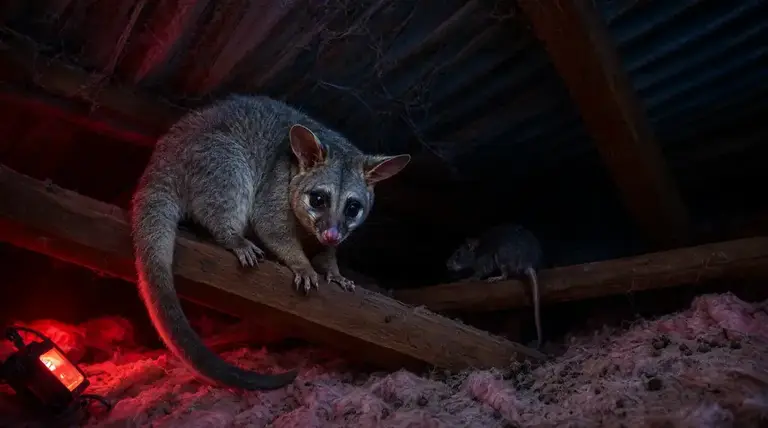
The clearest sign of a possum in your roof is heavy, slow thumping or scratching at night, usually just after dusk and again before dawn. Confirming the intruder before you seal anything is essential — get it wrong and you could trap a protected animal inside your ceiling.
- Loud nocturnal thumping — possums are far heavier than rats, producing slow, deliberate footsteps rather than light scurrying.
- Droppings and urine stains — possum droppings are larger than rodent pellets (roughly 2–3 cm), and urine can stain ceiling plaster and create a strong ammonia smell.
- Visible entry gaps — broken tiles, lifted ridge caps, gaps around eaves or fascia boards larger than 5 cm.
- Rub marks and fur — dark greasy smears around entry points where the animal squeezes through each night.
- Nesting debris — leaves, bark and insulation dragged into one corner of the roof void.
- Garden damage — stripped rose buds, half-eaten fruit and grazed vegetable seedlings near the house.
For a fuller checklist, see our guide to the Signs of a Possum Infestation in Your Roof.
DIY Possum Deterrents vs Professional Pest Control
Some deterrent tasks are genuinely DIY-friendly — pruning branches, securing compost and fitting trunk collars — but roof exclusion at height, and any trapping, is safer and more reliable in the hands of a licensed pest control technician. Here’s how the options stack up.
| Approach | Effectiveness | Notes |
|---|---|---|
| DIY pruning and food removal | Good as prevention | Trim branches 1–2 m from roofline; pick up fallen fruit; secure bins and compost |
| DIY exclusion (sealing gaps) | Good if done correctly | Must be done after dusk once the possum has left; working at height carries risk |
| Ultrasonic devices, lights, mothballs | Poor | Possums habituate within days; mothballs are a health hazard indoors |
| Professional exclusion and proofing | Excellent | Full inspection, humane one-way exit, all gaps sealed, warranty available |
| Licensed trap and release | Good for persistent cases | Must comply with permit conditions; release only within the legal distance |
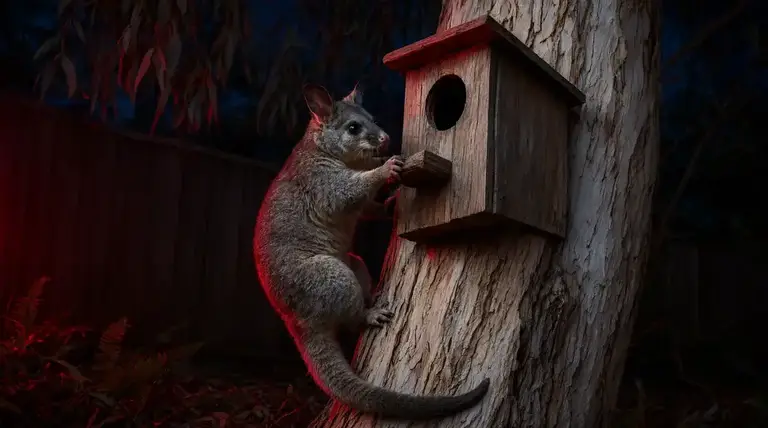
A simple deterrent priority list: first, remove food attractants; second, prune branches back at least 1–2 metres from the roofline; third, wait for the possum to leave at dusk and seal every gap over 5 cm; fourth, mount a nest box so it has an alternative den. Skip the gadgets entirely. For proofing detail, our guide to possum-proofing your roof walks through the process, and for a reality check on home remedies see common pest control myths busted.
Possum Deterrent and Removal Costs in Australia (2025–26)
Across the Australian market, professional possum work typically costs between $250 and $900 (AUD) depending on roof access, the number of entry points and whether trapping is required. Industry-wide, that’s generally cheaper than repeated gadget purchases plus repairing urine-stained plaster and damaged insulation.
| Service | Typical market rate (AUD) | What’s included/notes |
|---|---|---|
| Roof inspection and report | $150–$250 (industry average) | Identification of species, entry points and activity level |
| One-way exit installation and exclusion | $300–$600 (industry average) | Humane exit device plus sealing of all secondary gaps |
| Trap and release (licensed) | $250–$450 (industry average) | Permit-compliant trapping and on-site release within legal distance |
| Full roof proofing (complex roofs) | $600–$900+ (industry average) | Two-storey, tile or Queenslander roofs with multiple entry points |
| Nest box supply and installation | $120–$250 (industry average) | Alternative den mounted in a nearby tree |
These figures reflect typical Australian market rates across the industry in 2025–26. Our Possum Removal & Roof Proofing service bundles inspection, humane exclusion and sealing, and every job follows the steps outlined in Possum Removal in Australia: The Legal Process Explained.
Here’s the good news: Aussie Pest Strike typically comes in well under these market rates for equivalent possum work. For an exact quote tailored to your property, give us a call on [aps_phone] today.
Seasonal Possum Activity Across Australia
Possum roof incursions peak in autumn (March to May) as animals seek warm winter shelter, with a second spike in spring when mothers with young need secure dens. Activity never drops to zero, but winter and autumn are when most homeowners first notice the problem.
Jan
Feb
Mar
Apr
May
Jun
Jul
Aug
Sep
Oct
Nov
Dec
Typical possum roof-entry activity across southern Australia, peaking in autumn as possums seek winter shelter. Northern regions see flatter, year-round activity due to the warmer climate.
Nine times out of ten, the homeowner has already spent a couple of hundred dollars on ultrasonic units and sprays before they call us. Possums are clever and stubborn — the only thing that beats them every time is solid exclusion work done after they’ve left for the night. Seal it properly once and you won’t hear them again.
Don’t buy another gadget. Confirm the animal is a possum, wait until it leaves at dusk, seal every gap over 5 cm, prune branches back 1–2 metres and fit a nest box. If the roof is high, steep or heavily compromised, book a licensed technician for a one-way exit and full proofing — it’s faster, safer and legal.
Possum Deterrents: Frequently Asked Questions
Do ultrasonic possum deterrent devices actually work?
No. Possums quickly habituate to ultrasonic devices and bright lights, usually within days, so they provide no lasting deterrence. Physical exclusion — sealing entry points after the possum leaves at night — combined with pruning and food removal is the only dependable long-term method for Australian homes.
What smell keeps possums away?
No smell reliably keeps possums away. Strong scents like garlic, quassia chips or commercial sprays may briefly discourage possums from garden plants, but they wash off with rain and need constant reapplication. They will never evict a possum already settled in your roof, so treat them as a short-term supplement at best.
Is it legal to get rid of possums myself in Australia?
Yes, but only humanely. You can exclude possums from your roof and use permitted traps, releasing the animal within the legal distance. Harming a possum or relocating it far away is illegal because possums are protected native wildlife under state law. A licensed pest control operator ensures full compliance.
Tired of thumping in the ceiling and deterrents that don’t deliver? Aussie Pest Strike provides humane, legal possum exclusion and roof proofing across Australia. Call Aussie Pest Strike on [aps_phone] to book a free inspection today and get a fixed quote from a licensed technician — one visit, done properly, and your roof stays possum-free.
Sources & further reading
Found Something
Dangerous?
Don’t touch it. Don’t spray it. Keep kids and pets clear, take a photo from a safe distance, and call us — or book a free inspection and we’ll come to you.
02 7235 0050